

The Ultimate Guide to the Best Calk for Windows and Doors
The Ultimate Guide to the Best Calk for Windows and Doors
Stop Losing Money Through Your Windows: The Best Calk for Windows in 2026
Quick Answer: Best Calk for Windows
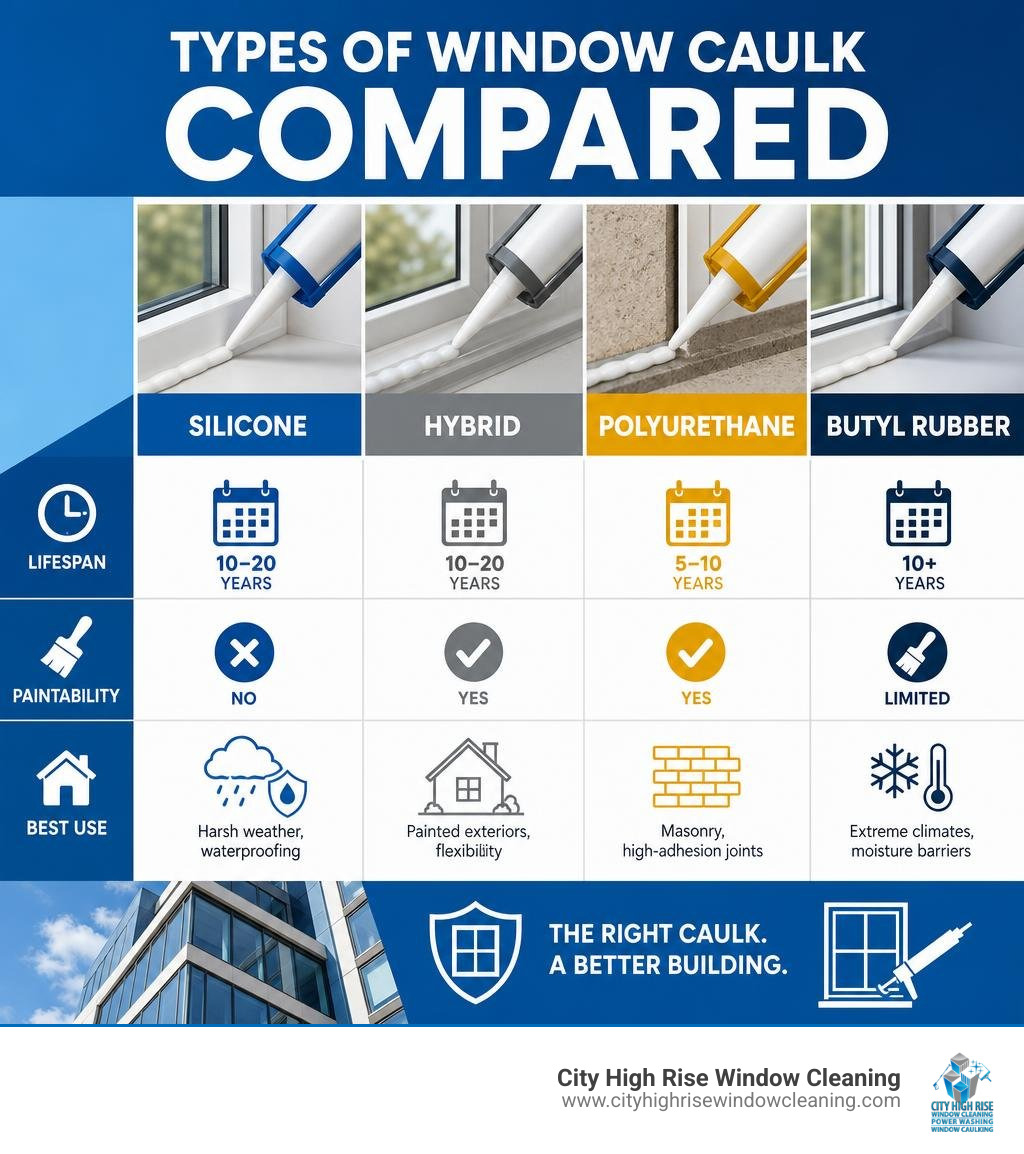
| Caulk Type | Best For | Lifespan | Paintable? |
|---|---|---|---|
| Silicone | Harsh weather, waterproofing | 10-20 years | No |
| Hybrid | Painted exteriors, flexibility | 10-20 years | Yes |
| Polyurethane | Masonry, high-adhesion joints | 5-10 years | Yes |
| Butyl Rubber | Extreme climates, moisture barriers | 10+ years | Limited |
Finding the best calk for windows is one of the simplest ways to protect your building — and one of the most overlooked. A thin line of sealant stands between your interior and the full force of rain, wind, freezing temperatures, and rising energy bills.
Here’s why it matters: properly caulked windows can reduce energy loss by up to 20%. For a high-rise property in New York, New Jersey, or Westchester, that adds up fast.
But not all caulk is created equal. The wrong product cracks, peels, or fails within a year — leaving gaps that invite moisture damage, mold, and drafts.
This guide cuts through the noise and gives you a clear comparison of the top sealant types, the best products on the market, and how to apply them correctly.
I’m Brett Hochman, CEO of City High Rise Window Cleaning, with over 48 years of hands-on experience in exterior building maintenance across the NYC metro area — including facade restoration, waterproofing, and high-rise window caulking on some of the region’s most demanding properties. In that time, I’ve seen how the wrong caulk choice leads to costly repairs, and I’ve put together this guide to help you find the best calk for windows so you can avoid those mistakes entirely.
Must-know best calk for windows terms:
Why Choosing the Best Calk for Windows Matters
Living in the Northeast means dealing with a climate that loves to keep us on our toes. From freezing winter blizzards in Westchester to humid, baking summer heat on Long Island, our buildings take a beating. If your window sealants aren’t up to the task, your property will suffer.
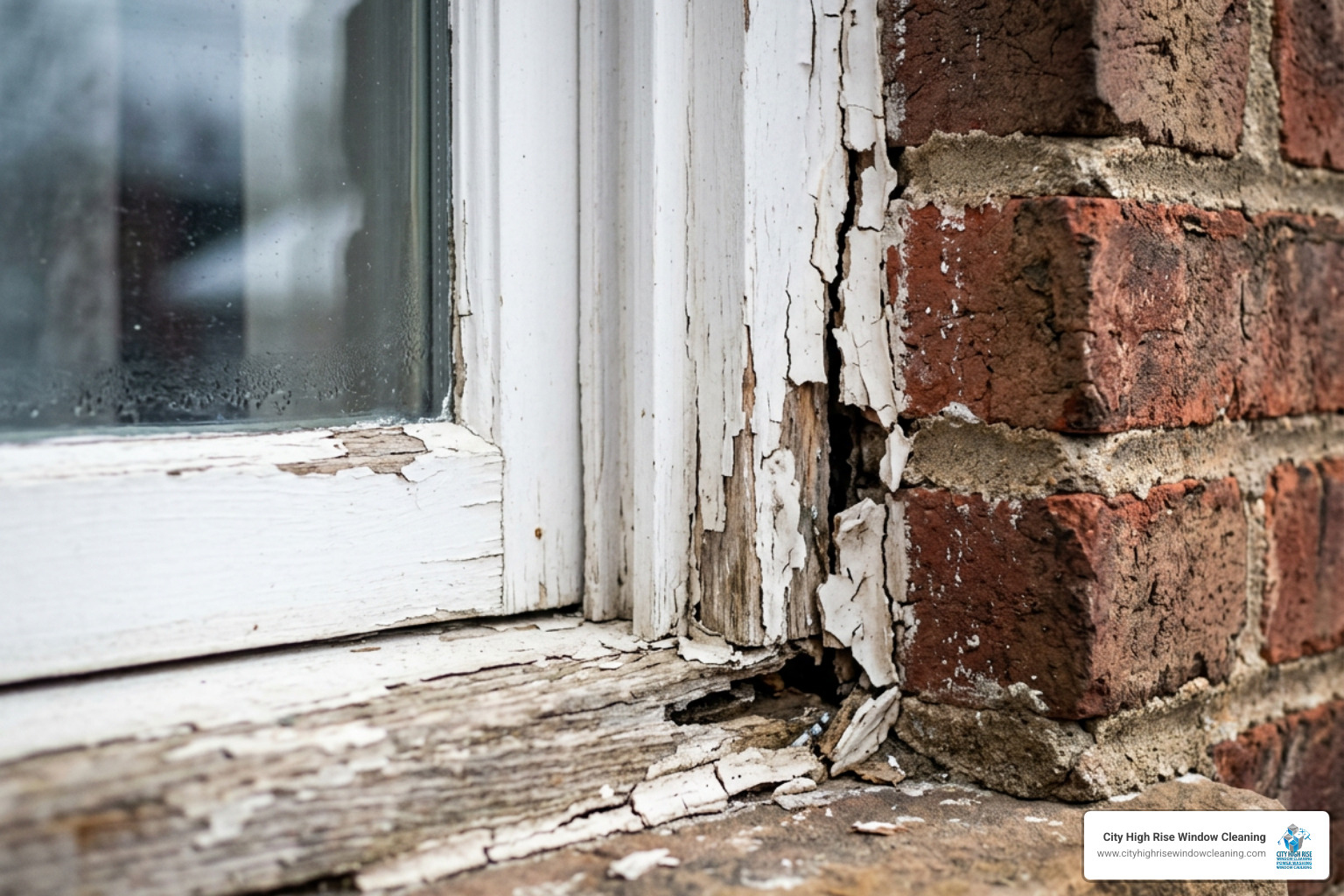
When window caulking begins to dry out, shrink, and crack, it stops acting as a protective barrier. A gap as thin as a credit card is all it takes for drafty air to enter and conditioned air to escape. This forces your heating and cooling systems to work overtime, resulting in skyrocketing utility bills. In fact, failing to maintain your window seals is equivalent to leaving a small window wide open all day long.
Beyond energy loss, compromised caulk lets water seep into the building envelope. Once moisture gets behind your window frames, it triggers a chain reaction of costly damage: peeling paint, discolored drywall, structural wood rot, and toxic mold growth. For high-rise buildings and commercial properties, water intrusion can even damage concrete and steel structures over time.
Investing in the best calk for windows and scheduling regular professional window caulking is the most effective way to prevent these headaches. A high-quality exterior sealant acts as a flexible, waterproof cushion that moves with your building’s natural expansion and contraction, keeping drafts and water exactly where they belong: outside.
Comparing the Top 4 Window and Door Sealant Types
To choose the best calk for windows, you first need to understand the differences between the four primary formulas used in the industry. Each has its own strengths, weaknesses, and ideal applications.
For a comprehensive breakdown of how these chemical bases differ across all home maintenance projects, check out The Home Depot Guide to Types of Caulks and Sealants. If you are specifically dealing with basement installations, you may also find our breakdown on sealing gaps around your basement windows and our guide on caulk wars for basement windows helpful.
Below, we compare the top four formulations to help you determine which one fits your project’s demands.
Silicone Sealants: The Best Calk for Windows in Harsh Climates
Silicone is widely considered the king of exterior window sealants. Its primary strength lies in its incredible flexibility and resistance to the elements. Unlike water-based caulks, 100% silicone does not shrink, crack, or dry out when exposed to intense UV rays and freezing temperatures. It is completely waterproof and offers lifetime mold-free protection.
If you are sealing exterior joints exposed to direct sunlight and heavy rain, silicone is almost always the right choice. It is also the best caulk for sealing window glass directly to frames due to its permanent adhesion and water resistance. You can learn more about its outdoor performance in our article on silicone for outdoor windows.
One of the top-performing products in this category is GE Supreme Silicone Caulk 10.1 oz Window and Door Sealant Black, which offers up to 50% joint movement capability. If you need a white finish that can be painted over (a rare feature for pure silicone), GE Paintable Supreme Silicone Caulk is an excellent alternative.
- Pros: 10 to 20-year lifespan, highly flexible, waterproof, UV and mold resistant.
- Cons: Standard formulas cannot be painted; can be difficult to apply smoothly for beginners; requires chemical solvents or scraping for cleanup.
Polyurethane Sealants: High-Adhesion Toughness
Polyurethane sealants are synthetic rubber-based formulas known for their extreme toughness and superior adhesion. While silicone is highly flexible, polyurethane is incredibly strong and binds exceptionally well to difficult, porous materials like concrete, brick, stone, and older wood.
This makes it the best calk for windows where the window frame meets masonry or concrete siding. Unlike standard silicone, polyurethane is fully paintable, allowing you to match your building’s exterior color scheme perfectly.
- Pros: Superior adhesion to masonry, paintable, highly durable, handles joint movement well.
- Cons: Takes longer to cure (typically 4 to 7 days), less UV resistant than silicone (can become brittle over 5–10 years if exposed to constant direct sunlight), difficult to tool.
Hybrid Sealants: The Best Calk for Windows Requiring Paint
Hybrid sealants represent the cutting edge of sealant technology. By combining the chemical structures of silicone and polyurethane, manufacturers have created a product that offers the premium weatherproofing and flexibility of silicone alongside the paintability and strength of polyurethane.
Hybrids are perfect for high-end residential and commercial projects where you need a durable, long-lasting seal but cannot compromise on aesthetics. They adhere beautifully to wood, vinyl, aluminum, and fiber cement siding.
A standout hybrid product is THICC Window & Door Sealant Caulk, which cures quickly, remains highly flexible, and can be painted within two hours. Another excellent option is GE Pro Seal Max Window & Door, a premium hybrid formula that delivers up to 10x stronger adhesion than standard sealants and is immediately rain-ready.
- Pros: Best of both worlds (flexible and paintable), fast curing times, excellent multi-surface adhesion, low odor.
- Cons: Generally more expensive than pure silicone or polyurethane.
Butyl Rubber Sealants: Heavy-Duty Moisture Barriers
Butyl rubber is a solvent-based sealant that is incredibly sticky and excels at creating a heavy-duty water barrier. It does not “skin over” or harden the way other caulks do, allowing it to remain pliable and water-tight for decades.
Because of its sticky, stringy nature, butyl rubber is rarely used for visible, cosmetic joints around window trims. Instead, it is the go-to choice for hidden joints, lap seams in metal siding, gutters, vents, and sealing the metal flanges of windows during initial installation.
- Pros: Exceptionally waterproof, remains pliable, excellent adhesion to metal and glass.
- Cons: Very messy to apply, limited color options, not suitable for visible aesthetic joints.
Step-by-Step Guide to Applying Window Caulk Like a Pro
Applying caulk may seem like a straightforward DIY task, but achieving a clean, professional seal requires patience and the right technique. A sloppy application not only looks bad but will fail prematurely.
Before you begin, make sure you review our guide on how to avoid cracking under pressure when replacing your old window caulk.
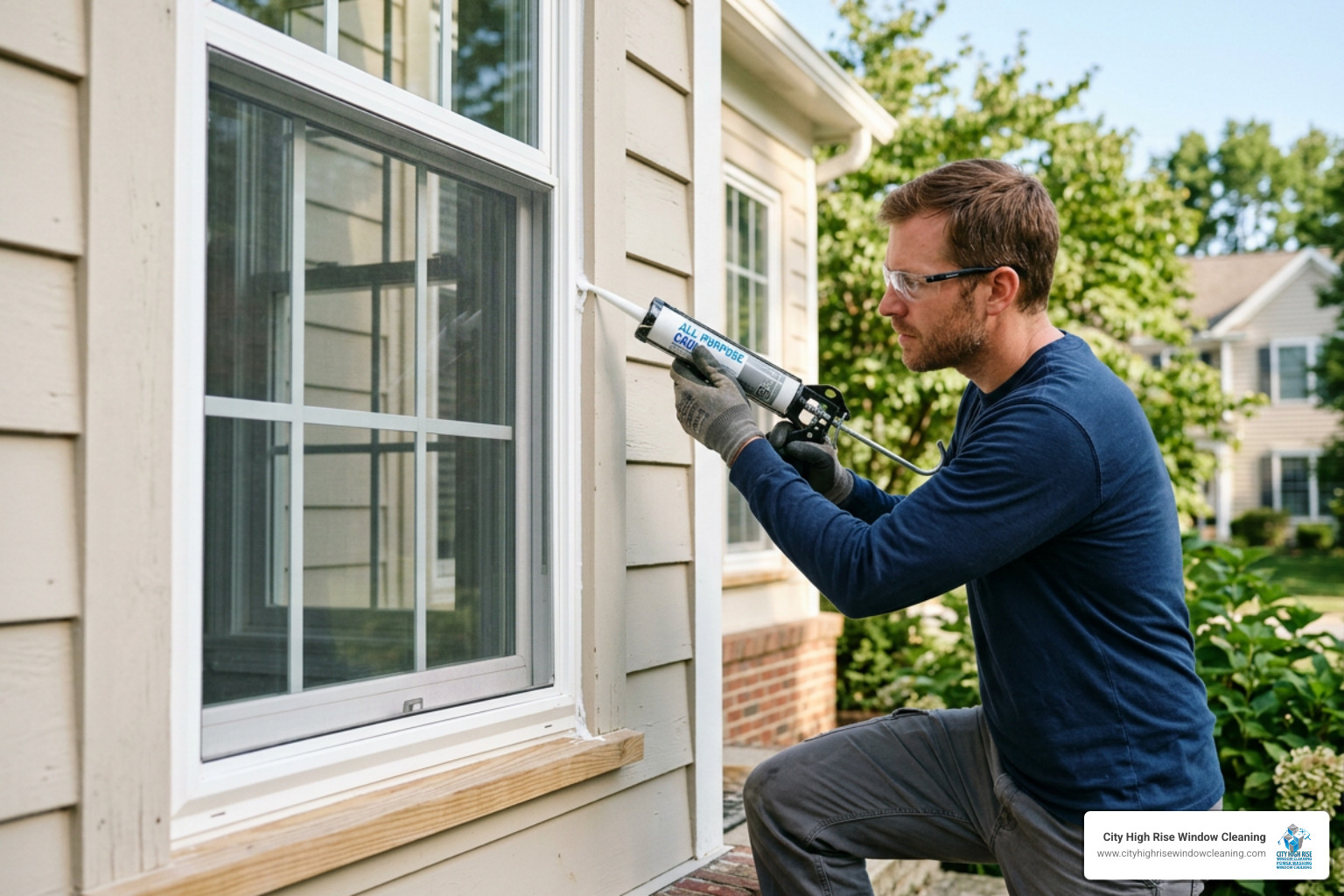
Follow these steps for a long-lasting, professional finish:
- Remove the Old Caulk Completely: Never apply new caulk over old, failing sealant. The new bead will not adhere properly. Use a utility knife, putty knife, or specialized caulk removal tool to scrape away every trace of the old material.
- Clean the Surface: Clean the joint thoroughly using rubbing alcohol or a commercial caulk remover to eliminate dirt, grease, and old residue. Allow the area to dry completely.
- Use a Backer Rod for Large Gaps: Standard caulk should not be used to fill gaps wider than 1/4 inch. For larger gaps, press a foam backer rod into the joint first, then apply the caulk over it. This ensures a proper 2:1 width-to-depth ratio.
- Cut the Nozzle at a 45-Degree Angle: Cut the tip of your caulk tube at a 45-degree angle. Keep the opening small at first; you can always cut it larger if needed. Pierce the inner foil seal using a wire or nail.
- Load and Test: Load the tube into a high-quality caulking gun (preferably one with a thumb-release lever to prevent oozing). Test your bead size on a piece of scrap cardboard.
- Apply with Steady Pressure: Hold the gun at a 45-degree angle and pull it smoothly along the joint. Maintain consistent trigger pressure to ensure an even bead.
- Tool the Bead Immediately: Within 10 to 15 minutes of application, smooth the bead using a caulking tool, a gloved finger, or a damp cloth. Work in small, 6-inch sections to prevent the caulk from skinning over before you can smooth it.
Common Mistakes to Avoid When Sealing Windows
Even experienced DIYers can make mistakes that lead to early sealant failure. To ensure your windows remain draft-free, avoid these common pitfalls:
- Caulking Over Old Sealant: As mentioned, new caulk will not bond to cured, weathered caulk. Skipping the removal step guarantees that your new seal will peel away within months.
- Sealing Weep Holes: This is one of the most dangerous mistakes you can make. Many vinyl and aluminum windows have small drainage slots at the bottom of the exterior frame called weep holes. These holes allow water that gets inside the frame to drain out. Sealing them traps water inside, leading to wood rot, mold, and interior leaks.
- Caulking Moving Parts: Never apply caulk to the sliding tracks, sashes, or any operational components of a window. Doing so will glue the window shut and can damage the balance mechanisms.
- Painting Uncured Caulk: If you are using a paintable hybrid or polyurethane caulk, always check the manufacturer’s label for drying times. Painting over wet or uncured sealant ruins the paint finish and prevents the caulk from curing properly. For more details on the complete process, read our window caulking complete guide.
Frequently Asked Questions About Window Caulking
How often should exterior window caulking be replaced?
On average, exterior window caulking should be inspected annually and replaced every 5 years. While high-quality silicone or hybrid sealants can last 10 to 20 years under ideal conditions, extreme weather exposure, structural settling, and UV radiation can cause stress fractures much sooner. If you notice visible cracks, peeling, or feel drafts, it is time for a replacement.
Can you paint over silicone caulk?
No, standard 100% silicone caulk cannot be painted. Paint will not adhere to its slick surface, causing it to bead up, crack, and peel away. If your project requires a painted finish, you must use a paintable hybrid sealant like THICC Window & Door Sealant Caulk or a specialized paintable silicone formula.
Where should you avoid applying caulk around windows?
You must never apply caulk to:
- Weep holes located at the bottom of exterior window frames.
- Moving window sashes and tracks that allow the window to open and close.
- The gap between the window frame and the siding if the siding manufacturer specifies that this gap must remain open for ventilation or drainage.
Conclusion
Choosing the best calk for windows is a small investment that delivers massive returns in energy savings, comfort, and building protection. Whether you choose the extreme weatherproofing of silicone, the paintability of a hybrid, or the masonry-bonding power of polyurethane, using the right product is key to a long-lasting seal.
While small residential windows can often be handled as a DIY project, high-rise buildings, commercial properties, and large-scale restorations require professional expertise. Working on ladders or scaffolding carries significant safety risks, and commercial facades require specialized commercial sealants.
At City High Rise Window Cleaning, we bring over 30 years of experience to every project across New York City, Long Island, New Jersey, and Westchester. Our commitment to safety, professional service, and our 100% customer satisfaction guarantee makes us the region’s trusted choice for exterior building maintenance. Whether you need high-rise window caulking, facade cleaning, or a complete window restoration, we have the equipment and expertise to get the job done right.
Ready for a free quote? City High Rise Window Cleaning offers 24/7 live consultation. Call 917-749-8342 to speak to a live representative.


