

Historic Window Restoration: Increase Your Property Value Today
Historic Window Restoration: Increase Your Property Value Today
Historic Windows Are an Asset — Here’s How to Protect Them
Historic window restoration is one of the most overlooked ways to protect and increase the value of a property — especially in cities like New York, where architectural heritage is woven into the fabric of neighborhoods from Brooklyn to the Upper West Side.
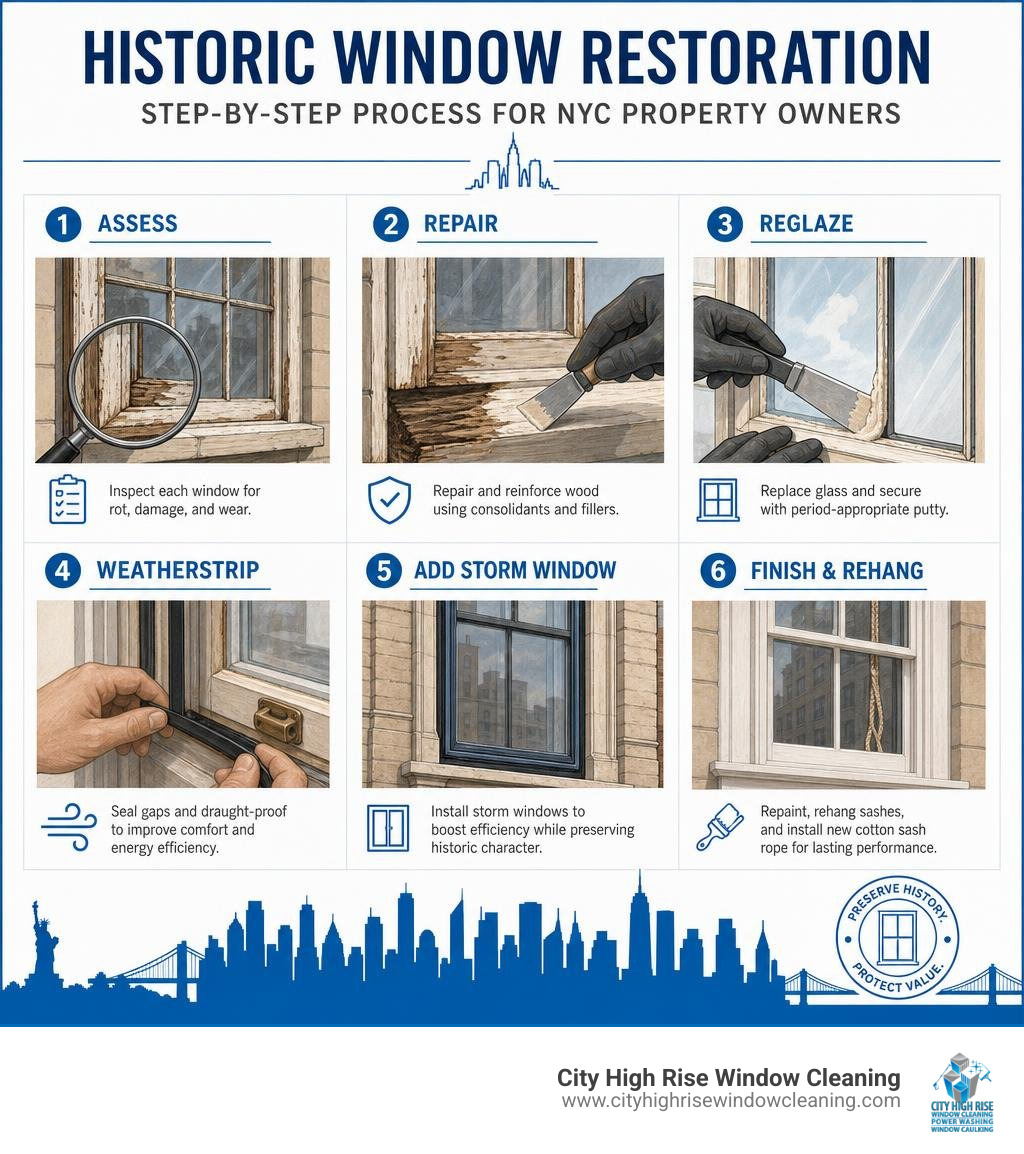
If you’re looking for a quick answer on what historic window restoration involves, here it is:
- Assess each window for wood rot, broken sash ropes, failed glazing, or paint buildup
- Repair deteriorated wood using epoxy consolidants and fillers rather than replacing entire frames
- Reglaze glass panes with period-appropriate putty and, where needed, heritage glass
- Weatherstrip and draught-proof to bring thermal performance up to modern standards
- Add storm windows to achieve energy efficiency without altering the historic profile
- Finish and rehang sashes with quality paint and new cotton sash rope rated to last 60+ years
The difference between restoration and replacement isn’t just aesthetic. Restored original windows — particularly those made from old-growth timber — can outlast modern vinyl or aluminum replacements by decades. And when paired with storm windows, they can exceed current energy code requirements, according to research by the Window Preservation Standards Collaborative.
For property owners and managers across New York, Long Island, Westchester, and New Jersey, the stakes are real. Replacing original windows on a landmarked or historic building can erode both its architectural integrity and its market value — while costing far more than a professional restoration.
I’m Brett Hochman, CEO of City High Rise Window Cleaning, and with nearly five decades of hands-on experience in exterior building maintenance across the NYC metro area, I’ve seen how historic window restoration can transform a building’s appearance, compliance standing, and long-term value. Read on to learn exactly how the process works — and how to get it done right.
Easy historic window restoration word list:
- Building facade repair
- Historic masonry repair
- Commercial facade restoration
Why Choose Historic Window Restoration Over Replacement?
Every week, I talk to building owners in Manhattan, Brooklyn, and Jersey City who are convinced their 100-year-old windows are “beyond saving.” They have been told by replacement window salespeople that their old-growth timber frames are drafty, rotten relics destined for the dumpster.
But here is a industry secret: those salespeople are trying to trap you in a cycle of continuous replacement.
Modern replacement windows are built to become obsolete. Most double-paned vinyl or composite windows have a lifespan of only 10 to 20 years before their seals fail, resulting in foggy glass and lost insulating properties. Once they fail, the entire unit must be thrown away.
In contrast, historic windows are simple, elegant machines. They were built using separate, interchangeable parts—wood, glass, putty, and sash cord—meaning any single component can be repaired or replaced indefinitely.
When you choose to restore rather than replace, the benefits are clear:
- Massive Cost Savings: Professional historic window restoration can save property owners tens of thousands of dollars compared to the astronomical cost of custom, landmark-approved replacements. While a custom replacement window can easily cost $1,500 to $3,000 per opening, restoring the existing window is often a fraction of that cost.
- Superior Materials: Pre-1940 windows were constructed from old-growth timber. This wood grew slowly in dense forests, making it incredibly dense, rich in natural resins, and highly resistant to rot and wood-boring insects. You simply cannot buy this quality of wood at a modern lumber yard.
- Environmental Sustainability: Restoring your windows keeps high-quality materials out of our local landfills in New Jersey and New York. It also eliminates the carbon footprint associated with manufacturing and shipping new vinyl or aluminum windows.
- Preserving Historical Equity: Original windows are the “eyes” of a historic building. Replacing them with flat, modern glass and thick vinyl profiles completely flattens the architectural depth of a facade, instantly stripping away the property’s character and historical value.
Organizations like the Window Preservation Alliance have spent years educating the public on these exact benefits, proving that saving original windows is both economically smart and culturally vital. If you want to dive deeper into the common misconceptions surrounding this choice, take a look at our guide on Debunking the Myths of Window Restoration vs. Replacement.
If you are ready to explore your options, you can read more about our specialized Window Restoration Services.
Comparing Energy Efficiency and Costs: Restored vs. Replacement Windows
The most common argument for replacement windows is energy efficiency. It is true that a bare, unweatherized single-pane window is drafty. However, comparing a bare historic window to a brand-new double-pane window is not a fair fight.
When a historic window is properly restored, weatherstripped, and paired with a high-quality interior or exterior storm window, its thermal performance can actually exceed the 2012 International Energy Conservation Code (IECC) requirements.
Let’s look at the numbers. A high-quality cotton sash rope in a historic double-hung window can last over 60 years. Meanwhile, modern synthetic ropes or spring balances can fail in as little as 10 years due to UV exposure and mechanical wear.
To help you visualize the long-term value, I have put together a comparison table based on industry data:
| Metric | Restored Historic Window (with Storms) | Modern Replacement Window (Vinyl/Composite) |
|---|---|---|
| Average Lifespan | 60 to 100+ years (with basic maintenance) | 10 to 20 years (until seal or frame fails) |
| Upfront Cost | Moderate (often 30% to 70% cheaper than replacement) | Very High (especially for custom landmark sizes) |
| Material Durability | Old-growth timber; highly rot-resistant | Softwoods, vinyl, or aluminum; prone to warping |
| Repairability | 100% repairable (individual parts can be swapped) | Low to none (must replace entire sash or unit) |
| Historical Compliance | Guaranteed approval by LPC and local boards | Highly scrutinized; often rejected |
| Environmental Impact | Low carbon footprint; zero landfill waste | High manufacturing footprint; non-recyclable waste |
By restoring what you have, you break the 15-year replacement cycle and secure a window system that will easily outlive all of us.
Common Problems with Historic Windows and How to Repair Them

Historic windows in the New York metropolitan area face harsh conditions. From the salty, humid air of Long Island to the intense freeze-thaw cycles of Westchester and northern New Jersey, these windows take a beating.
Over my 30+ years in the industry, I have found that almost all historic window issues boil down to a few common, highly treatable problems:
- Wood Rot: Typically found along the bottom rail of the sash or on the window sill where water pools. This is solved by scraping away the soft rot, treating the healthy wood with liquid consolidants, and rebuilding the profile using specialized architectural epoxy. For a deeper dive into this process, check out our Stop the Rot with This Wood Window Restoration Guide.
- Broken Sash Ropes: When the cotton cords that connect the sashes to the internal iron counterweights break, the window will no longer stay open. We fix this by opening the pocket doors in the jamb, removing the old weights, and threading new, heavy-duty spot cord (cotton rope with a nylon core for extra strength) through the pulleys.
- Painted-Shut Sashes: Generations of sloppy paint jobs can glue a window sash firmly to its frame. We use specialized sash splitters and utility knives to carefully break the paint seal without gouging the old-growth wood.
- Lead Paint Hazards: Because almost all historic windows contain lead paint, safety is our absolute priority. We utilize strict containment protocols, including laying 6-mil plastic sheeting, wearing P100 respirators, and using low-dust techniques like wet scraping and HEPA-vacuum extraction.
Window issues often go hand-in-hand with masonry deterioration. Water leaking around a window frame can damage the surrounding brickwork. If you notice cracked mortar or damp interior walls, you should consult our guide on Brick by Brick: A Guide to Historic Masonry Repair and consider coordinating your window work with our professional Facade Restoration Services.
Step-by-Step Historic Window Restoration Techniques
For those interested in the technical aspects of how we restore these beautiful architectural features, here is the professional workflow:
- Sash Removal: We carefully pry off the interior window stops, cut the lower sash cords, slide the lower sash out, remove the parting bead, and repeat the process for the upper sash. Every piece is labeled and numbered.
- Paint Removal: We avoid high-heat guns, which can vaporize lead paint and pose a severe fire risk. Instead, we use low-heat infrared paint removers or gentle chemical peelers to safely strip the wood down to its bare, original state.
- Epoxy Repairs: Once the wood is bare, we apply liquid epoxy consolidant to reinforce any softened wood fibers. We then use structural epoxy paste to rebuild missing profiles, sanding it smooth once cured to match the original wood grain.
- Re-Glazing with Heritage Glass: We remove failed, brittle glazing putty. If original hand-blown or drawn glass is broken, we source authentic period-appropriate glass—such as GoetheGlas, which features the beautiful, irregular, wavy surface typical of 18th and 19th-century windows—to maintain correct light reflection patterns. The glass is bedded in fresh glazing putty and secured with steel glazing points.
- Painting: We apply a high-quality primer and two coats of premium exterior paint. Crucially, we never paint the sides of the sash or the tracks of the jamb. Leaving these areas bare or treated with paste wax allows the wood to breathe, expelling moisture and preventing the window from sticking in humid summer weather.
For a complete, highly detailed technical breakdown of these steps, explore our Timber Window Restoration Complete Guide.
Landmark-Approved Historic Window Restoration for Commercial & Residential Buildings
Restoring windows in a commercial high-rise or a multi-family residential building requires a highly organized, professional approach. Whether we are dealing with classic double-hung wood sashes in a Brooklyn brownstone or heavy steel casement windows in an industrial Soho loft, the goal remains the same: restore structural integrity and weatherproofing without altering the historic profile.
For steel windows, the process involves stripping away layers of rust and old paint, performing weld repairs on damaged frame sections, replacing worn hinges, and applying a high-performance, multi-coat rust-inhibiting paint system. By preserving these original profiles, we ensure the building complies with local historic preservation laws while providing modern draft protection and smooth operation.
Navigating Historic Districts and Listed Building Regulations

If your property is located within a historic district in New York City, Nassau County, Westchester, or northern New Jersey, you cannot simply install any window you find at a local home improvement store.
In NYC, the Landmarks Preservation Commission (LPC) has incredibly strict rules regarding any alterations to landmarked facades. The LPC heavily favors historic window restoration over replacement. In fact, getting a permit to restore your existing windows is generally much faster and simpler than trying to get approval for replacements.
If replacements are absolutely necessary due to extreme, unsalvageable structural damage, the new windows must match the originals exactly in material, dimensions, sash profiles, pane configuration, and glass color.
To ensure your restored windows meet all local energy and weatherproofing regulations without violating landmark guidelines, we always recommend pairing the restoration with high-performance sealant application. You can learn more about this in our Window Restoration Complete Guide and ensure your building is watertight by utilizing our professional High Rise Window Caulking Services.
How to Find Qualified Historic Window Restorers in Your Area
Historic window restoration is a highly specialized trade. It requires a deep understanding of historical architecture, wood chemistry, lead safety, and traditional joinery. A standard general contractor or a modern window installation company simply does not have the tools or training to handle these delicate assets.
When looking for a restorer in the New York, Long Island, New Jersey, or Westchester areas, keep the following in mind:
- Look for local experience: Our tri-state climate demands specific restoration strategies. A restorer must know how to handle the high humidity and salt air of coastal Long Island, as well as the freezing winters of Westchester.
- Ask about lead certification: Ensure the team is fully EPA Lead-Safe Certified.
- Check their portfolio: A qualified restorer should be proud to show you detailed photos of past sash repairs, epoxy work, and historic glazing projects.
For a step-by-step checklist on vetting contractors, read our guide on Finding the Best Window Restoration Services for Your Home.
Frequently Asked Questions About Restoring Old Windows
Is restoring heritage windows more cost-effective than replacement?
Yes, absolutely. Restoring your original windows can save you up to 70% of the cost of full replacement. Furthermore, because restored old-growth wood windows can last another 60+ years with basic maintenance, you avoid the expensive 15-year replacement cycle associated with modern vinyl windows, saving you tens of thousands of dollars over the lifespan of your property.
Can painted-shut or severely rotted original windows be saved?
In almost all cases, yes. Old-growth wood is incredibly resilient. Even if a sill or sash rail looks completely rotted, we can stabilize the remaining healthy wood fibers using liquid epoxy consolidants and rebuild the missing sections with structural wood epoxy. Painted-shut windows can be safely freed using specialized hand tools without damaging the wood.
How do restored heritage windows perform in terms of energy efficiency?
When we restore a window, we don’t just fix the wood; we also install high-quality weatherstripping and draught-proofing systems. When these restored windows are paired with low-profile interior or exterior storm windows, their energy efficiency can meet or even exceed modern energy codes, drastically reducing your heating and cooling bills.
Do I need Landmarks Preservation Commission (LPC) approval for historic window restoration in NYC?
Yes, if your building is an individual landmark or located within an LPC-designated historic district, you will need a permit. However, because restoration preserves the historic fabric of the building, the LPC highly encourages this work, and the permit approval process is typically much faster and more straightforward than applying for window replacements.
Conclusion
Your historic windows are not a liability—they are a valuable, irreplaceable asset. They represent a level of craftsmanship, material quality, and aesthetic beauty that simply cannot be replicated today.
At City High Rise Window Cleaning, we bring over 30 years of specialized exterior building maintenance and restoration experience to properties across New York City, Long Island, New Jersey, and Westchester. We combine traditional craftsmanship with modern safety standards and high-performance materials, all backed by our 100% customer satisfaction guarantee.
Don’t let salespeople convince you to throw away your building’s history. Let us help you protect your investment, lower your energy bills, and dramatically increase your property’s value. Explore our Window Restoration Services today.
Ready for a free quote? City High Rise Window Cleaning offers 24/7 live consultation. Call 917-749-8342 to speak to a live representative.


