

Polyurethane Power: What’s the Best Caulk for Exterior Windows?
Polyurethane Power: What’s the Best Caulk for Exterior Windows?
Stop Wasting Money on the Wrong Caulk: What’s Actually the Best Polyurethane Caulk for Windows?
The best polyurethane caulk for windows depends on your surface material, climate exposure, and whether you need to paint over the seal. Here are the top picks used by professionals:
| Product | Best For | Paintable | Lifespan |
|---|---|---|---|
| Loctite PL S40 | Windows, doors, siding | Yes | 5-10 years |
| OSI Quad | High-adhesion, all-weather | Yes | 5-10 years |
| SikaFlex Construction | Masonry, professional grade | Yes | ~5 years |
| DAP Premium Polyurethane | Commercial projects | Yes | 5-10 years |
Polyurethane caulk bonds hard to wood, masonry, and metal. It flexes with temperature swings. And unlike pure silicone, you can paint right over it.
But it’s not perfect. UV exposure degrades it faster than silicone, it takes 7 to 10 days to fully cure, and choosing the wrong product for your surface can mean redoing the job in just a few years.
For high-rise property owners in New York, New Jersey, and the Tri-State area, a failed window seal isn’t just an aesthetic problem. It means water intrusion, energy loss, and potential structural damage — all expensive.
I’m Brett Hochman, CEO of City High Rise Window Cleaning, and with over 48 years in exterior building maintenance, I’ve seen which polyurethane caulks hold up on high-rises and which ones fail after one New York winter. In this guide, I’ll share exactly what I’ve learned about finding the best polyurethane caulk for windows so you can protect your building with confidence.
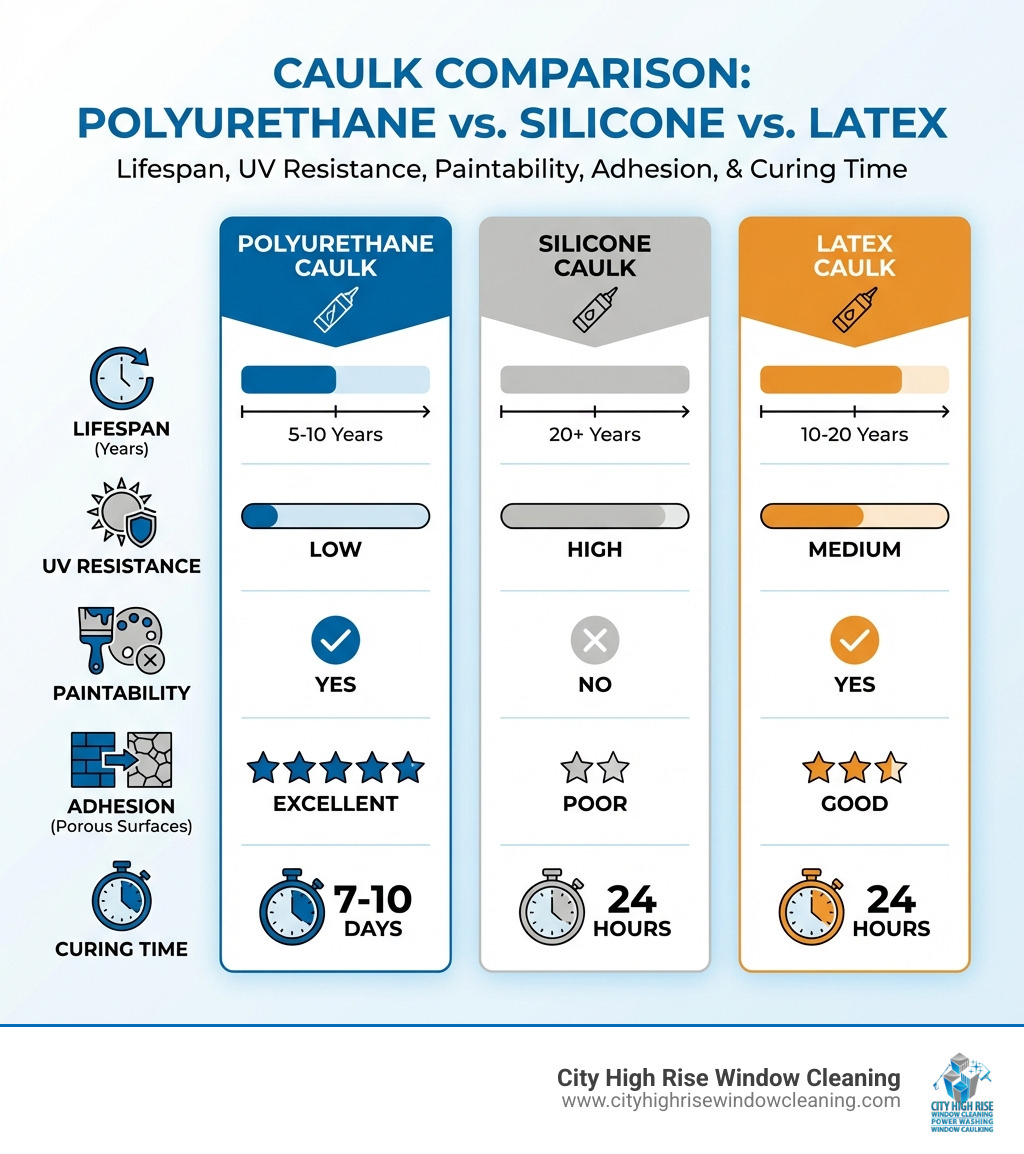
Best polyurethane caulk for windows terms simplified:
Why Polyurethane is the Best Polyurethane Caulk for Windows
In my 30+ years of running City High Rise Window Cleaning, I’ve had many property managers ask me why we don’t just use silicone for everything. While silicone is a “forever” material in terms of UV resistance, it has one major flaw: it doesn’t like to play with others. It won’t stick to certain porous materials well, and you absolutely cannot paint it.
This is where the best polyurethane caulk for windows shines. Polyurethane is an organic compound that acts as both a sealant and a powerful adhesive. If you are sealing a window frame against a brick facade in Brooklyn or a wooden frame in a New Jersey suburb, polyurethane is often your best bet.
Superior Adhesion and Tensile Strength
Polyurethane sealants are known for their incredible “bite.” According to technical comparisons between silicone and polyurethane sealants, polyurethanes offer superior bonding to dissimilar materials. This means if your window is vinyl but your siding is wood, polyurethane creates a bridge that is much harder to tear away than standard latex or even some silicones.
Paintability: The Secret Weapon
In window caulking services, aesthetics matter. Most exterior window frames are painted. If you use silicone, the paint will bead up and peel off like water on a waxed car. Polyurethane is naturally paintable. In fact, painting it is actually a requirement if you want it to last. Because it is an organic material, the sun’s UV rays will eventually dry it out and make it brittle. A layer of high-quality exterior paint acts as a sunscreen, extending its life significantly.
Flexibility and Movement
Windows are constantly moving. Between the heat of a New York summer and the freezing winds of a Jersey winter, your window frames expand and contract. Polyurethane sealants typically offer around 25% elongation. This means they can stretch and compress without breaking the seal, keeping your building airtight and watertight year-round.
Top 7 Professional Sealants: Ranking the Best Polyurethane Caulk for Windows
When you’re standing in the hardware aisle, the options are overwhelming. I’ve narrowed down the field to the absolute heavy hitters that we trust for our New Jersey window caulking company projects and NYC high-rise restorations.
1. Loctite PL S40: The Best Polyurethane Caulk for Windows and Siding
This is often my “desert island” caulk. It is a professional-grade, master-of-all-trades sealant. It’s incredibly tear-resistant, which is vital for windows that experience high wind loads in places like Long Island or coastal New Jersey. It provides a permanent, flexible seal that doesn’t sag during application.
2. OSI Quad: The Contractor’s Choice for High-Adhesion Window Sealing
If you talk to any window installer, they’ll likely mention OSI Quad. It is famous for being an “all-weather” sealant, meaning you can apply it in temperatures ranging from 20°F to 100°F. It is self-tooling, which means it settles into a nice, smooth bead without you having to mess with it too much. Just be aware: standard Quad has about 23% shrinkage, so you need to apply a healthy bead. For more technical details, you can check the OSI Quad Technical Data Sheet.
3. OSI Quad MAX
The “big brother” to the original Quad. It addresses the shrinkage issue (0% shrinkage) and is paintable in just one hour. It’s more expensive, but for high-end window restorations, it’s worth every penny.
4. SikaFlex Construction Sealant
Sika is the king of masonry. If your windows are set into stone, concrete, or brick, SikaFlex is the best polyurethane caulk for windows for that specific application. It has a slightly textured finish that blends perfectly with mortar joints. Sika polyurethane construction sealant is often warranted for only 1 year from the date of installation, so professional application is key to ensuring it lasts longer.
5. DAP Premium Polyurethane
DAP is a household name, but their commercial-grade polyurethane is a different beast than the cheap stuff you find at the grocery store. It’s excellent for expansion joints and comes in gray, white, and black to match most commercial window frames.
6. Loctite PL S30
While often marketed for roofs, I’ve found S30 to be a powerhouse for window sills that take a beating from the rain. It provides up to 10 times the strength of traditional latex caulks.
7. Red Devil 0970 Window and Door Polyurethane
A solid, budget-friendly professional option. It offers great durability and flexibility for residential window projects where you need a reliable seal without the “high-rise” price tag.
Polyurethane vs. Silicone: Performance in NYC and NJ Climates
Living in the Northeast means your windows face a brutal cycle. We have humid summers, salty air near the coast, and freezing winters that cause buildings to shift.
The best polyurethane caulk for windows has to fight against UV degradation. As I mentioned earlier, polyurethanes are organic. Think of them like wood; if left unprotected in the sun, they will eventually gray and crack. Research on sealant durability suggests that while silicone can last 20+ years, polyurethane typically has a lifespan of 5 to 10 years.
Why choose Polyurethane in NYC/NJ then?
- The “Bite” Factor: On older buildings with porous stone or wood, silicone often fails to “grab” the surface. Polyurethane dives into the pores and stays there.
- The Paint Factor: Most of our clients in Westchester and Long Island want their caulk to match their custom-painted trim. You simply can’t do that with silicone.
- Pest Protection: Polyurethane cures into a much harder, “rubbery” plastic than silicone. This makes it much more resistant to pests like carpenter ants or mice trying to chew through your seals.
Step-by-Step: Applying Polyurethane for a Watertight Seal
Applying polyurethane is a bit different than working with standard kitchen and bath caulk. It’s stickier, messier, and much harder to clean up if you make a mistake. Here is how I train my team to do it:
- Remove the Old Junk: Never, ever caulk over old caulk. It won’t stick. Use a putty knife or a specialized scraper to get every bit of the old sealant out.
- The Isopropyl Wipe: Once the joint is empty, wipe it down with isopropyl alcohol or mineral spirits. This removes oils and dust that prevent a good bond.
- Backer Rods are Your Friend: If the gap is wider than 1/4 inch, don’t just fill it with caulk. It will shrink and pull away. Stuff a foam backer rod into the gap first, then caulk over it.
- The 45-Degree Angle: Cut your nozzle at a 45-degree angle. Hold the gun so you are “pushing” the bead into the joint, not “pulling” it along the surface. This forces the sealant into the cracks.
- Tooling (Or Not): Some products like OSI Quad recommend not tooling (smoothing with your finger). If you must tool, use a smoothing agent or a bit of soapy water, but do it fast—polyurethane skins over quickly.
- The Long Wait: Polyurethane caulk requires a curing time of 7 to 10 days before it reaches its full strength. Don’t go poking it the next morning!
Essential Tools List:
- High-quality dripless caulk gun
- Putty knife or 5-in-1 tool
- Isopropyl alcohol and clean rags
- Foam backer rods (various sizes)
- Utility knife
Maintenance and Lifespan: When to Recaulk Your Exterior
How do you know when the best polyurethane caulk for windows has reached the end of its life? I tell my clients to look for three main “Red Flags”:
- The Energy Spike: If your heating or cooling bills suddenly jump, you likely have air infiltration.
- Visible Separation: If you see a gap between the caulk and the window frame (even a hairline crack), water is getting in.
- The “Crumb” Test: Touch the caulk. If it feels hard like a rock or crumbles under your fingernail, the plasticizers have dried out. It’s no longer flexible and needs our window restoration expertise.
In the harsh climates of New York and New Jersey, I recommend a professional inspection every 3-5 years. While the tube might say “50-year durability,” the reality of sunlight and joint movement usually means a 5-to-10-year replacement cycle for polyurethane.
Frequently Asked Questions about Window Caulking
How long does polyurethane caulk take to cure?
Polyurethane typically requires 24 to 48 hours to become tack-free (meaning dust won’t stick to it), but a full cure for maximum durability and chemical resistance often takes 7 to 10 days. Factors like low humidity in the winter can actually slow down the curing process, as polyurethane needs moisture from the air to harden.
Can you paint over polyurethane window caulk?
Yes! Unlike 100% silicone, polyurethane is highly paintable. In fact, I highly recommend painting it. Painting protects the organic polymers from UV damage, which is the primary cause of polyurethane failure. Just wait at least 24-48 hours (or check your specific product’s label) before applying paint.
Is polyurethane better than silicone for exterior windows?
It depends on the goal. Polyurethane is the professional choice for adhesion to porous materials like wood, brick, and masonry, and it’s the only choice if you need to paint. However, if you have a non-porous surface (like glass-to-metal) and you don’t need to paint it, silicone offers better long-term UV resistance.
Does polyurethane caulk shrink?
Yes, most polyurethanes have a shrinkage rate of around 10% to 25% as the solvents evaporate during curing. This is why using a backer rod and applying a slightly “crowned” bead is important. High-end versions like OSI Quad MAX are formulated to have 0% shrinkage.
What is the best way to clean up polyurethane caulk?
Since it’s not water-soluble, you can’t just use a wet rag. You’ll need mineral spirits or a specialized solvent. Once it cures, the only way to remove it is mechanically (scraping or cutting).
Conclusion
Choosing the best polyurethane caulk for windows is about more than just grabbing a tube off the shelf. It’s about understanding the unique needs of your building’s materials and the brutal weather we face here in the Northeast. Whether you’re dealing with a historic brownstone in NYC or a modern office complex in New Jersey, the right sealant is your first line of defense against the elements.
At City High Rise Window Cleaning, we bring 30 years of experience to every project. We don’t just clean glass; we restore and protect the entire building envelope. From New York City to Long Island, New Jersey, and Westchester, we ensure your windows are sealed to the highest safety and professional standards.
Ready for a free quote? City High Rise Window Cleaning offers 24/7 live consultation. Call 917-749-8342 to speak to a live representative.


