

How to Clean Awnings Effectively in 5 Simple Steps
Dirty Awnings Drive Customers Away: Awning Cleaning in 5 Steps to Prevent Damage and Cut Heat 55-77%
Why Regular Awning Cleaning Protects Your Property Investment
Awning cleaning is a straightforward maintenance task that protects your fabric, prevents permanent staining, and dramatically improves curb appeal. Here’s what you need to know to clean your awnings effectively:
Quick Guide to Awning Cleaning:
- Remove loose debris with a broom or soft brush
- Mix a gentle cleaning solution (mild soap + lukewarm water for most fabrics)
- Apply and scrub gently from bottom to top using a soft-bristled brush
- Rinse thoroughly from top to bottom with a garden hose on low pressure
- Air dry completely before retracting to prevent mold and mildew
Key Benefits:
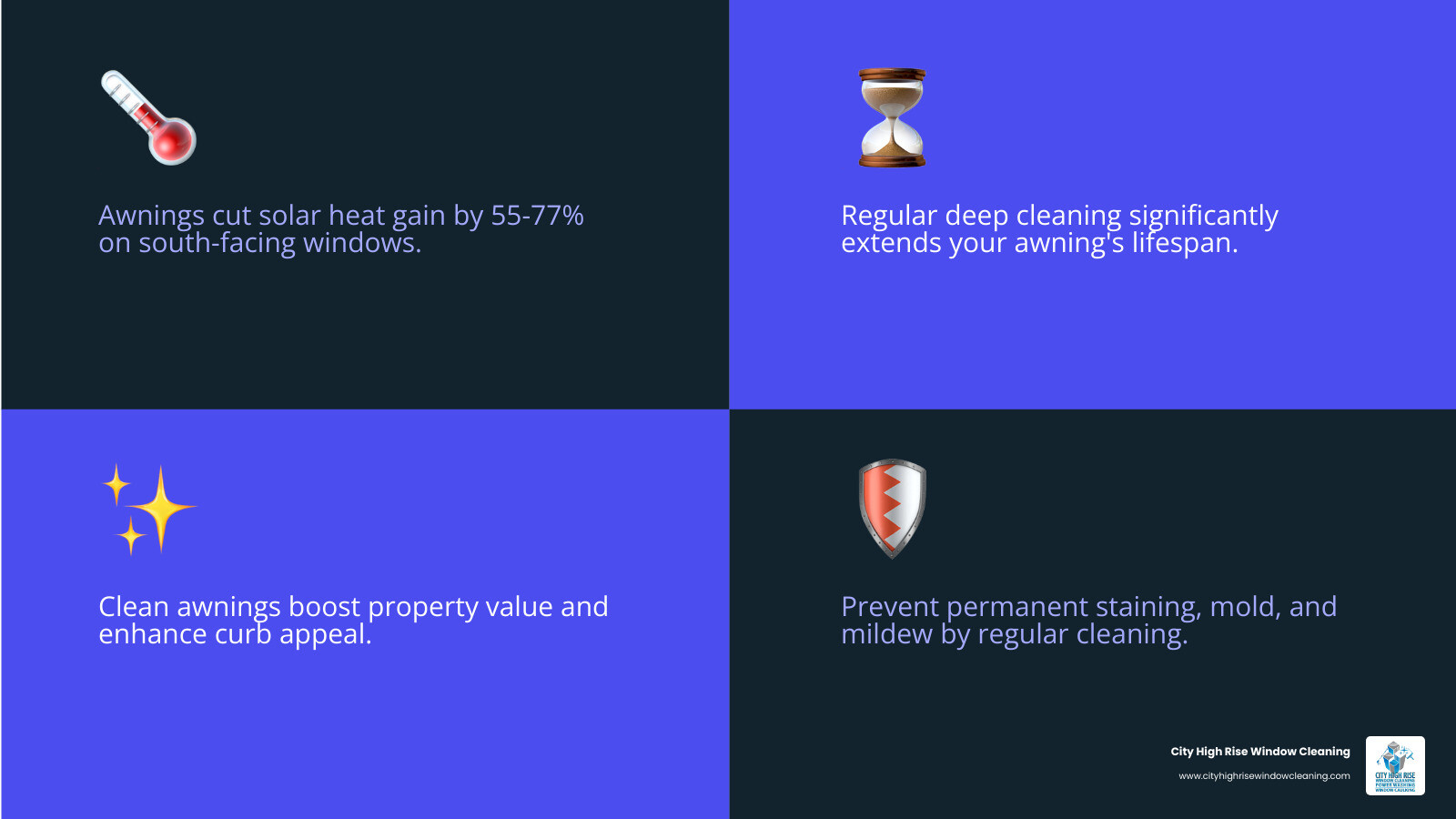
- Awnings reduce solar heat gain by 55-77% on south-facing windows
- Monthly rinsing prevents most dirt, mold, and grime problems
- Annual deep cleaning extends awning lifespan and preserves appearance
- Clean awnings improve property value and professional appearance
A dirty awning doesn’t just look bad; it actively damages your investment. Dirt, mold, mildew, and grime break down protective coatings and weaken the fabric. Acidic bird droppings and sticky tree sap can cause permanent damage, while algae creates ugly stains, especially in the humid climates of New York and New Jersey.
The good news is you can prevent this with simple, routine maintenance. Regular cleaning preserves water-repellent and UV-resistant properties, prevents costly replacements, and maintains a professional appearance for commercial properties.
I’m Brett Hochman, CEO of City High Rise Window Cleaning. Since 1977, my team has maintained thousands of building exteriors across New York, New Jersey, and Long Island. We’ve seen how proper awning cleaning prevents damage and extends fabric life by years.
Prep Work: Tools, Materials, and Awning Types
Before starting, proper preparation is crucial for safety and effectiveness. No awning is worth an injury, so always put safety first.
First, assess your access. If you need a ladder, ensure it’s sturdy and positioned on level, stable ground. Never overreach, and have a spotter if possible. Wear protective gloves, and consider a mask if you’re dealing with heavy dust or visible mold.
During this inspection, check for pre-existing damage like rips, tears, or frayed seams. Cleaning a damaged awning can worsen the problem, so it’s important to know what you’re working with before you start.
What You’ll Need for Awning Cleaning
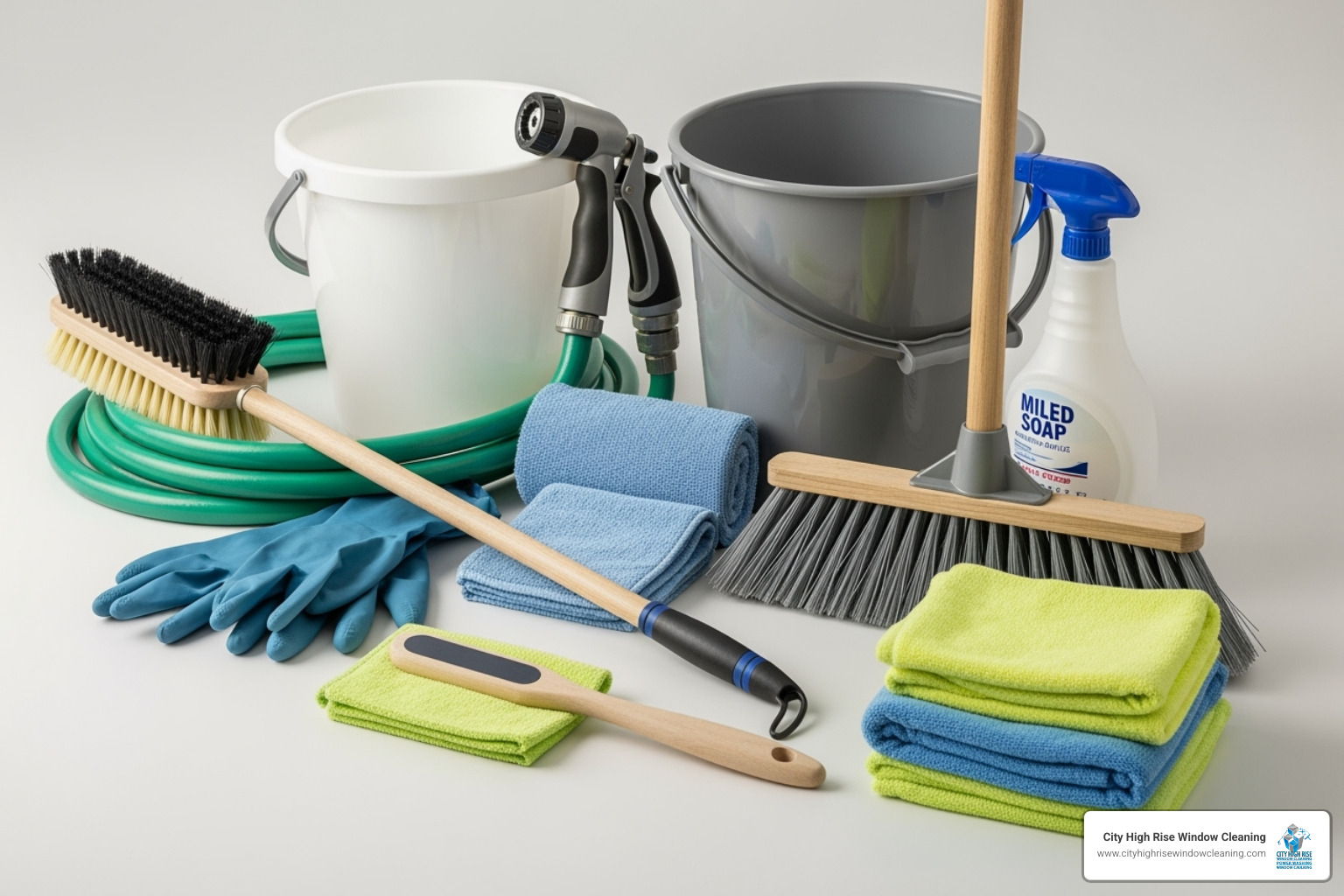
Having the right tools makes the job much easier. You’ll likely have most of these items already:
Here’s what I recommend: a soft-bristled brush with a long handle, a garden hose with an adjustable spray nozzle, at least two buckets, and mild soap like dish soap or gentle laundry detergent. For metal awnings, grab some car wash soap or a specialized metal cleaner.
You’ll also want a sturdy ladder (if needed), protective gloves, microfiber cloths, a broom, and a spray bottle for spot treatments.
Identifying Your Awning Material
Identifying your awning material is the most important step. It determines the correct cleaning solution and technique, as different materials have different needs.
Canvas awnings, made from cotton or blends, are durable but prone to mildew in humid climates like New York and New Jersey. They require gentle, pH-neutral cleaners.
Vinyl awnings have a smooth, waterproof surface that’s easy to clean but requires vinyl-safe products to prevent damage. Avoid harsh janitorial cleaners.
Metal awnings, typically aluminum, are durable and low-maintenance. Clean with mild car wash soap for dirt or a specific aluminum solvent to address rust.
Modern acrylic fabrics like Sunbrella are high-performance, fade-resistant, and durable, with special water-repellent and UV-protective coatings that must be preserved. Learn more about cleaning specific fabrics like Sunbrella directly from the manufacturer.
Using the wrong solution can strip coatings, fade colors, weaken the fabric, and void your warranty. For high-rise or specialty fabric awnings, our team at City High Rise Window Cleaning has the expertise to clean any material correctly across New York, New Jersey, and Long Island.
Here’s a quick reference guide for recommended cleaning solutions:
| Awning Material | Recommended Cleaning Solution |
|---|---|
| Canvas | Mild Soap Solution: Mix a few tablespoons of mild soap (e.g., dish soap) with lukewarm water. Stubborn Stains: For mold/mildew, use a solution of white vinegar and water, or a commercial awning cleaner. Test an inconspicuous area first. |
| Vinyl | Mild Soap Solution: Mix a few tablespoons of mild soap (e.g., dish soap) with lukewarm water. Stubborn Stains: For tougher stains, use a vinyl-specific cleaner. Avoid abrasive cleaners or harsh chemicals like janitorial or floor cleaners, which can damage the material. |
| Metal | Car Wash Soap or Metal Cleaner: Use a mild car wash soap mixed with water. For aluminum awnings, a solvent specifically designed for aluminum is recommended. Rust: A mixture of citric acid or oxalic acid can be used for rust spots, but test first. |
The 5-Step Awning Cleaning Process
With your tools and material identified, you’re ready for awning cleaning. Work on a cool, overcast day to prevent the cleaning solution from drying too quickly and leaving streaks.
Step 1: Remove Loose Debris
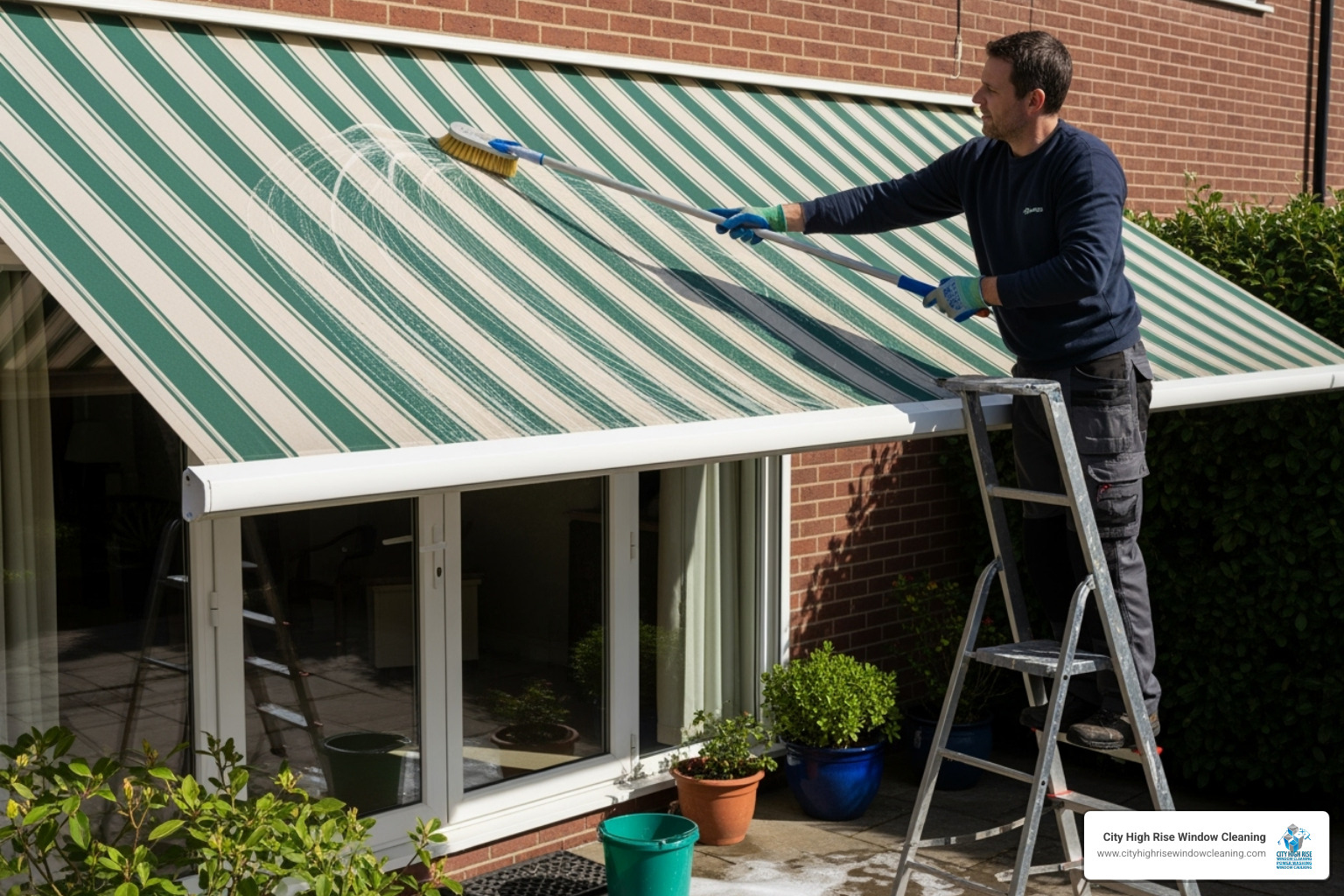
Use a broom or soft brush to sweep away loose leaves, dirt, and cobwebs from the top and underside. This is especially important in leafy areas like Long Island or Westchester. Removing dry debris first makes wet cleaning more effective. Follow with a gentle pre-rinse with a garden hose.
Step 2: Mix a Gentle Cleaning Solution
Prepare a material-specific solution. Always test it on a small, hidden area first to check for discoloration. Never mix different cleaners.
- For Canvas/Fabric Awnings: Mix a few tablespoons of mild soap (like dish soap) in about 2 gallons of lukewarm water.
- For Vinyl Awnings: A similar mild soap solution works well. For tougher dirt, consider a vinyl-specific cleaner.
- For Metal Awnings: A mild car wash soap diluted in water is usually sufficient. For aluminum, use a solvent designed for that metal.
Step 3: Apply Solution and Scrub
Apply the solution from the bottom up to prevent streaking. Gently scrub the top and underside with a soft-bristled brush to loosen dirt without abrading the fabric. Let the solution sit for a few minutes, but do not let it dry.
Step 4: Rinse Thoroughly
This step is critical. Use a garden hose on low pressure to rinse the awning thoroughly from the top down. Removing all soap residue is vital, as it attracts dirt and can damage the fabric or encourage mold growth, especially in humid areas like NYC.
Step 5: Air Dry Completely
To prevent mold and mildew, allow the awning to air dry completely. Keep retractable awnings extended until they are bone dry, as rolling up a damp awning traps moisture. This may take a few hours, but patience is key.
How to Remove Stubborn Stains from Awnings
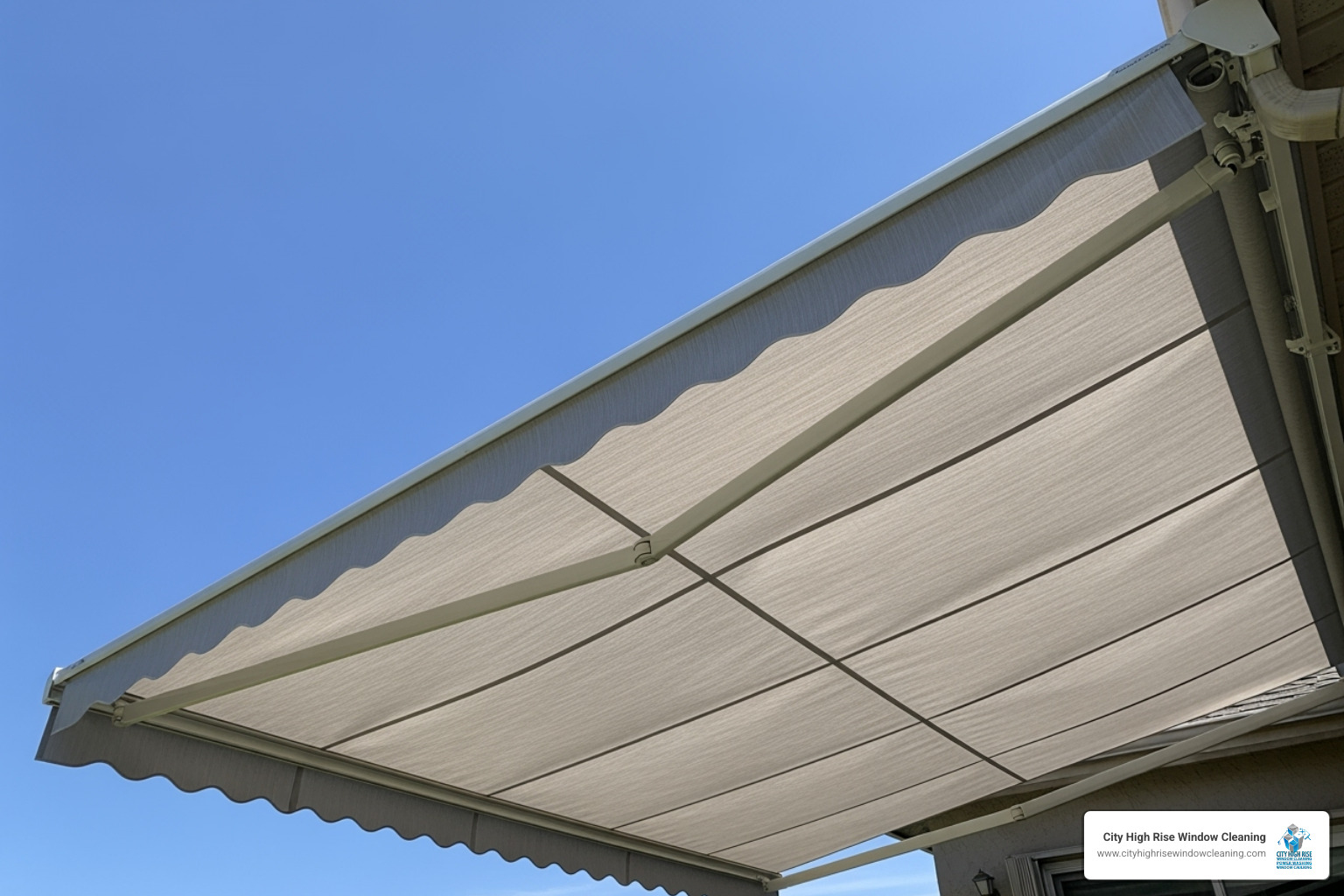
Even with regular awning cleaning, stubborn stains like bird droppings, tree sap, and algae can occur. With the right approach, most can be removed without damaging the fabric. Crucially, always test any cleaning solution on a small, hidden area first to prevent discoloration or damage.
Removing Mold, Mildew, and Algae
In the humid NYC metro area, mold, mildew, and algae are common. A safe first step is a solution of equal parts white vinegar and water. Apply to the stain, let it sit for 5-10 minutes, then gently scrub and rinse thoroughly. The vinegar’s acidity kills mold without harming most fabrics.
For persistent stains, use a specialized, non-bleach mildew remover designed for outdoor fabrics to protect the awning’s coatings.
A word of caution on bleach: it can be very harmful to awning fabrics. Bleach may degrade UV protection, weaken threads, void warranties, and cause permanent streaks or brittleness. When in doubt, follow the fabric manufacturer’s care instructions and always spot test first.
Tackling Bird Droppings, Tree Sap, and Grease
For bird droppings, tree sap, and grease, quick action is essential.
Bird droppings are highly acidic and can etch the fabric. Scrape off any solid matter, then clean immediately with your mild soap solution.
Tree sap can be removed when fresh by dabbing with rubbing alcohol to soften, then gently scraping it away. For dried sap, a commercial tree sap remover may be necessary, but test it on a hidden spot first.
Grease stains from cooking vents or pollution respond well to a good degreaser or strong dish soap solution. Apply, let it penetrate, then scrub and rinse. Regular spot-cleaning is key for commercial properties in areas like Manhattan to prevent major buildup.
The key is to treat stubborn stains quickly with the right products. For severe or hard-to-reach staining, it’s best to call professionals with the proper equipment and experience.
Long-Term Awning Maintenance and Protection
Awning cleaning is about protecting your investment and extending its lifespan by years, much like regular maintenance on a car. Proactive care is far more cost-effective than replacement.
How Often Should You Perform Awning Cleaning?
Here is a recommended cleaning schedule:
- Monthly: A quick rinse with a garden hose prevents dirt from embedding in the fabric. This is especially useful in high-pollen areas or after storms and can reduce the need for deep cleaning.
- Annually: Perform a deep clean at least once a year. In areas with heavy trees (like Westchester) or high urban pollution (like NYC), clean twice a year.
Commercial awnings require more frequent cleaning due to higher exposure and the importance of curb appeal.
Protecting Fabric After Cleaning
Cleaning can diminish an awning’s protective coating over time. After cleaning and drying, apply a fabric protectant or sealant. This restores the water- and UV-repellent barrier and makes future cleanings easier. A sealed awning stays cleaner longer and helps colors remain vibrant.
Some warranties require sealing. It’s a small investment that extends your awning’s life and reduces cleaning frequency.
The Dangers of High Pressure and Harsh Chemicals
Avoid using standard pressure washers and harsh chemicals. The high pressure (2,000-4,000 PSI) can tear fabric, fray seams, and strip protective coatings, leading to costly replacements. Similarly, harsh chemicals like bleach degrade fabric, weaken threads, and can make materials like vinyl brittle.
Professionals use a different approach. Our team at City High Rise Window Cleaning uses controlled-pressure techniques and fabric-safe detergents, like those in our High Rise Hot Water Power Washing service, to clean safely and effectively. The gentle DIY method outlined here—soft brushes, mild soap, and low-pressure rinsing—is the safest way to preserve your awning’s lifespan.
When to Call a Professional for Awning Cleaning
While DIY maintenance can be satisfying, knowing when to call a professional for awning cleaning can save you time, money, and prevent accidents. Some jobs are best left to trained and insured experts.
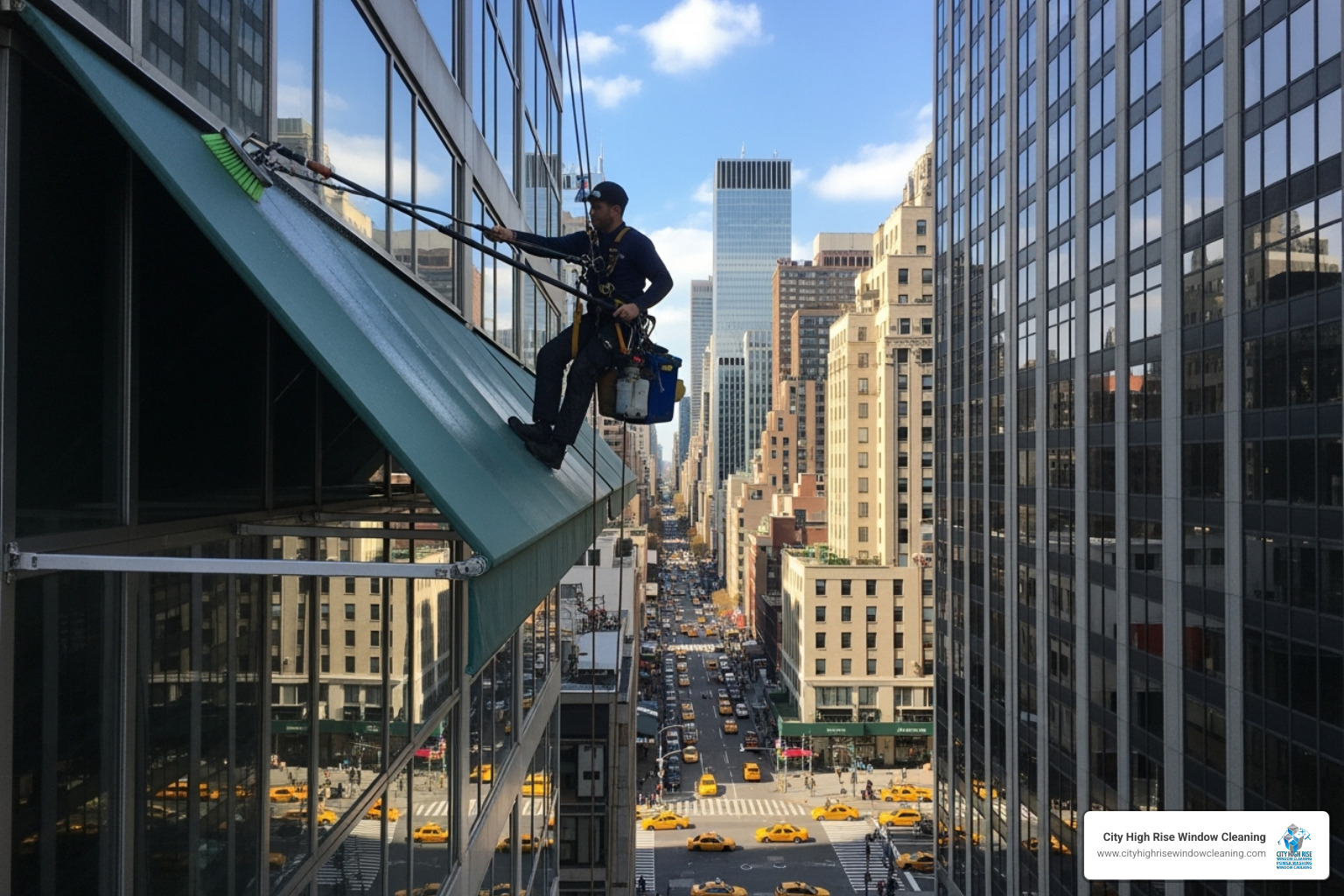
Signs You Need an Expert
- Height and Accessibility: If your awning is on a second story or higher, or is otherwise difficult to reach, professionals have the required safety equipment (scaffolding, lifts) and training.
- Severe Staining: If widespread mold, mildew, or deep-set stains don’t come out with gentle cleaning, experts have access to professional-grade, fabric-safe products.
- Existing Damage: Stop if you see rips, tears, or frayed seams. Cleaning can worsen the damage. A professional can assess the issue, recommend repairs, and then clean the awning safely.
- Lack of Time or Equipment: If you don’t have the right tools, safety gear, or simply the time to do the job correctly, hiring a professional is a practical choice.
Benefits of Hiring a Pro in NY, NJ, & Long Island
When you hire City High Rise Window Cleaning, you get proven expertise and guaranteed results.
- Safety and Insurance: Our team is fully trained, insured, and follows strict safety protocols for working at heights, protecting you from liability. This is essential for services like Commercial High Rise Window Cleaning.
- Professional Equipment: We use industrial-strength, fabric-safe cleaners and controlled-pressure washing systems to achieve a deeper clean without risking damage.
- Fabric Expertise: We have experience with all awning materials, from vintage canvas to modern Sunbrella, and know the precise methods to protect delicate fabrics.
- Guaranteed Results: We promise a streak-free, pristine finish. Our 100% customer satisfaction guarantee means we get the job done right.
- Local Experience: With over 30 years serving the tri-state area, we understand the unique challenges of urban pollution in NYC, salt air on Long Island, and tree debris in Westchester. This local expertise ensures the best results for your property’s Awning Cleaning needs.
Sometimes the smartest DIY decision is knowing when to call the professionals.
Frequently Asked Questions about Awning Cleaning
Here are answers to the most common questions we get about awning cleaning from property owners across New York, Long Island, New Jersey, and Westchester.
What is the best homemade cleaner for awnings?
The best homemade cleaner is a simple solution of mild dish soap (like Dawn) and lukewarm water. This is effective for general dirt and won’t damage fabric coatings. For mildew on colorfast fabrics, a solution of equal parts white vinegar and water is a great option. Always test any cleaner on a small, inconspicuous area first.
Can you use a pressure washer on a fabric awning?
No, you should not use a standard pressure washer on a fabric awning. The high pressure can tear the fabric, damage seams, and strip away protective coatings, drastically shortening its lifespan. Professionals use specialized, controlled-pressure equipment that is safe for awnings; a rental unit is not.
How do you get green algae and mold off an awning?
Start by gently scrubbing the area with a soft brush and a solution of equal parts white vinegar and water. Let it sit for 5-10 minutes before rinsing thoroughly. For tougher stains, use a commercial mold remover designed for outdoor fabrics, ensuring it’s safe for your specific material. Always rinse completely to remove residue. For severe, widespread mold, it’s best to call a professional.
How often should I clean my awnings in NYC, Long Island, NJ, or Westchester?
Give them a quick monthly rinse and perform a deep clean at least once a year. Twice a year is smart near heavy trees, high traffic streets, or coastal salt air.
Whats the safest way to clean a retractable awning?
Work with the awning fully extended, use a soft brush and mild soap solution, rinse thoroughly on low pressure, and keep it extended until completely dry before retracting.
{
  "@context": "https://schema.org",
  "@type": "FAQPage",
  "mainEntity": [
    {
      "@type": "Question",
      "name": "What is the best homemade cleaner for awnings?",
      "acceptedAnswer": {
        "@type": "Answer",
        "text": "A mild dish soap and lukewarm water solution works for general dirt. For mildew on colorfast fabrics, use a 1:1 white vinegar and water mix. Always spot test first."
      }
    },
    {
      "@type": "Question",
      "name": "Can you use a pressure washer on a fabric awning?",
      "acceptedAnswer": {
        "@type": "Answer",
        "text": "No. High pressure can tear fabric, damage seams, and strip protective coatings. Use gentle hand cleaning and low-pressure rinsing."
      }
    },
    {
      "@type": "Question",
      "name": "How do you get green algae and mold off an awning?",
      "acceptedAnswer": {
        "@type": "Answer",
        "text": "Scrub with a soft brush and a 1:1 vinegar-water solution, let sit 5-10 minutes, then rinse thoroughly. For tough stains, use an outdoor fabric-safe mildew remover."
      }
    },
    {
      "@type": "Question",
      "name": "How often should I clean my awnings in NYC, Long Island, NJ, or Westchester?",
      "acceptedAnswer": {
        "@type": "Answer",
        "text": "Rinse monthly and deep clean annually. Increase to twice a year near trees, busy streets, or coastal areas."
      }
    },
    {
      "@type": "Question",
      "name": "Whats the safest way to clean a retractable awning?",
      "acceptedAnswer": {
        "@type": "Answer",
        "text": "Fully extend it, use a soft brush with mild soap, rinse on low pressure, and let it dry completely before retracting."
      }
    }
  ]
}
Conclusion
Regular awning cleaning is a smart investment in your property. It protects the fabric from damage, maintains energy efficiency by reducing solar heat gain up to 77%, and helps you avoid costly premature replacements.
A simple monthly rinse and an annual deep clean can add years to your awning’s life. Applying a fabric sealant after cleaning restores its protective qualities, keeping it functional and vibrant.
Our five-step DIY process is effective for most accessible awnings. However, for high-rise buildings, severe staining, or damaged awnings, it’s time to call the pros. City High Rise Window Cleaning has the specialized equipment and local expertise for the unique challenges of the NYC, Long Island, New Jersey, and Westchester areas. We guarantee safe, streak-free results.
Whether you do it yourself or call us, taking action protects your investment and keeps your property looking its best.
Ready for a pristine, long-lasting awning? Explore our professional Awning Cleaning Services.
Ready for a free quote? City High Rise Window Cleaning offers 24/7 live consultation. Call 917-749-8342 to speak to a live representative.


