

Throwing Shade at Dirt with a Professional Awning Cleaning Service
Throwing Shade at Dirt with a Professional Awning Cleaning Service
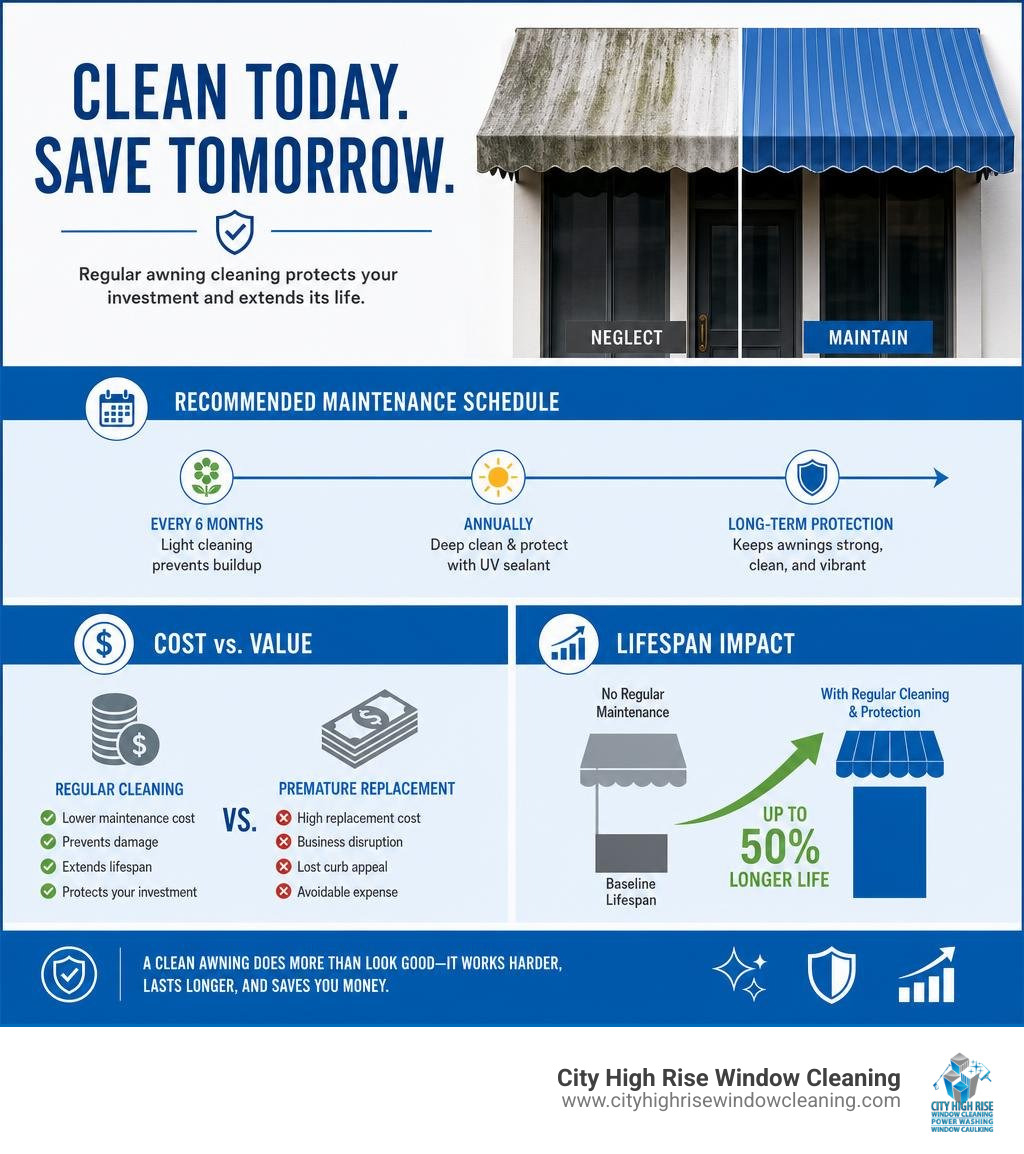
Dirty Awning? An Awning Cleaning Service Can Extend Its Life by 50%
A professional awning cleaning service is the most direct way to remove mold, environmental stains, and years of urban grime from your fabric or vinyl canopy before they cause permanent damage.
Here’s what you need to know at a glance:
| What It Does | Why It Matters |
|---|---|
| Removes mold, mildew, and algae | Prevents fabric rot and structural damage |
| Eliminates soot, grease, and acid rain stains | Restores color and curb appeal |
| Uses soft-wash or low-pressure methods | Protects delicate canvas, vinyl, and acrylic |
| Applies UV and waterproof sealants post-clean | Extends awning lifespan by up to 50% |
| Follows OSHA safety standards | Protects your property and the crew |
For most commercial properties in New York, New Jersey, Long Island, Westchester, and the surrounding metro area, awnings take a beating. Urban pollution, vehicle exhaust, bird droppings, and relentless humidity don’t give fabric or vinyl a break. The result? Faded colors, mold blooms, and a storefront that tells customers the wrong story before they’ve even walked through your door.
Research backs this up. Regular professional cleaning and sealing can extend the life of fabric and vinyl awnings by 30-50%. Clients who commit to annual maintenance programs report their awnings lasting 50% longer than those left to fend for themselves.
That’s not a small number when you consider the cost of full awning replacement.
I’m Brett Hochman, CEO of City High Rise Window Cleaning, and I’ve spent over 30 years in exterior building maintenance across NYC, Long Island, Westchester, and New Jersey, including hands-on experience delivering professional awning cleaning services for commercial high-rises, storefronts, and residential properties. In this guide, I’ll walk you through exactly what professional awning cleaning involves, what to look for in a provider, and how to protect your investment for the long term.
Related content about awning cleaning service:
Why Your Business Needs a Professional Awning Cleaning Service

In a highly competitive market like New York City, Long Island, or Jersey City, your storefront is your handshake. It is the very first thing a potential customer notices. If your awning is covered in dark soot, green algae, or unsightly bird droppings, it sends an immediate, subconscious message: If they don’t care about their own building, do they care about their customers?
Investing in a professional awning cleaning service is not just about aesthetics; it is a critical component of property preservation. When you hire specialists, you prevent the premature decay of expensive materials and keep your brand looking sharp. Attempting to tackle this as a DIY project or handing a pressure washer to an untrained employee often leads to ripped seams, stripped water-repellent coatings, and water damage. To understand the depth of care required, you can read more about Expert Awning Care: Why Professional Cleaners Make a Difference.
Working with a dedicated Awning Cleaning Service ensures that the cleaning agents, water pressure, and agitation methods are perfectly calibrated to your specific awning type.
Choosing the Right Awning Cleaning Service for Fabric and Vinyl
Not all awnings are created equal, and treating a delicate woven fabric the same way you treat a heavy-duty vinyl is a recipe for disaster.
- Woven Acrylic & Canvas: Fabrics like Sunbrella are highly popular because they breathe and look beautiful. However, they are highly susceptible to embedded dirt and organic growth. They require gentle, low-pressure soft washing and specialized soft-bristle brushing to release dirt without fraying the weave. For a deeper look at handling these delicate materials, check out our guide on How to Clean Cloth Awnings.
- Vinyl & Polyester: Vinyl is highly durable and waterproof, but it attracts grease, soot, and atmospheric pollutants like a magnet. If left uncleaned, these pollutants can chemically bond with the plasticizers in the vinyl, causing it to become brittle, crack, and discolor permanently.
- Metal & Aluminum: While tougher than fabrics, metal awnings are prone to oxidation, rust, and chalking. They require restorative chemical washes that lift the oxidized layer without etching the underlying metal.
How a Commercial Awning Cleaning Service Protects Your Brand Image
For restaurants, boutique retail shops, and commercial plazas across the Tri-State area, the awning often displays the business name, logo, and contact information. When dirt and grease accumulate, they obscure your signage and diminish your brand’s visibility.
Restaurants face a unique challenge: commercial kitchen exhaust systems vent grease into the air, which settles directly onto the entry canopies. Over time, this grease turns into a sticky, dark film that traps dust and emits a stale odor. Regular maintenance using specialized hot water extraction and degreasing agents is essential to keep these areas pristine. In many cases, integrating your canopy care with a broader High Rise Hot Water Power Washing program is the most efficient way to keep your entire building exterior looking flawless.
The Damage of Neglect: Mold, Mildew, and Environmental Stains

An awning is designed to stand up to the elements, but without regular maintenance, those elements will eventually win. When moisture from rain, humidity, and morning dew gets trapped in the fibers of a fabric awning—especially in shaded areas that receive little direct sunlight—it creates the perfect breeding ground for mold and mildew.
This organic growth does not just sit on the surface; it actively feeds on organic debris trapped in the fibers, slowly digesting the material and weakening the structural integrity of the canopy. Left unchecked, this leads to rot, tearing, and the need for an expensive replacement. If you are dealing with advanced staining or building-wide grime, combining awning care with a complete Facade Restoration can dramatically improve your property’s overall health and appearance.
The Threat of Organic Growth on Fabric Lifespan
Mold and mildew produce tiny spores that penetrate deep into the fabric’s weave. As they grow, they expand, causing the fibers to stretch, weaken, and eventually snap under wind or snow loads. Additionally, bird droppings contain highly acidic uric acid. If bird droppings are allowed to sit on your canvas or vinyl awning, they will eat through the protective coatings, bleach the color out of the fabric, and cause irreversible structural damage.
For a complete breakdown of how to identify, treat, and prevent these biological threats, take a look at our Awning Cleaning Guide 2025.
Urban Pollutants and Acid Rain in the Tri-State Area
In metropolitan areas like New York City, Jersey City, and Newark, awnings face a relentless bombardment of urban pollutants. Diesel soot, vehicle exhaust, and industrial emissions settle on horizontal surfaces daily. When rain falls, it mixes with these airborne pollutants to create acid rain.
As acid rain drips down your building, it leaves behind dark, stubborn “acid rain drips” and carbon streaks across the face of your awning. If these mineral deposits and carbon particles are not professionally neutralized and washed away, they will permanently stain and degrade the protective UV coatings of your canopy.
Soft Washing vs. Pressure Washing: Safe Cleaning Methods for Every Material
When it comes to cleaning delicate exterior surfaces, using the wrong method can cause instant, costly damage. The table below outlines the clear differences between safe soft washing and aggressive high-pressure washing:
| Cleaning Method | Pressure Level (PSI) | Risk of Damage | Recommended Materials |
|---|---|---|---|
| Soft Washing | Low (under 500 PSI) | Extremely Low | Canvas, Woven Acrylic, Vinyl, Polyester |
| High-Pressure Washing | High (over 2000 PSI) | High (Tears fabric, ruins seams) | Metal, Aluminum, Concrete frames |
To protect your property, it is vital to work with a team that understands when and where to apply these distinct techniques. You can read our Power Wash Awnings Complete Guide to learn more about safe washing practices.
Why High-Pressure Washing Can Destroy Your Awning
Many well-meaning property owners try to clean their awnings using a standard residential pressure washer. This is a massive mistake. High pressure (anything over 1,000 PSI on fabrics) can easily slice through canvas, blow out aged stitching, strip away the manufacturer’s water-repellent treatments, and force water behind the vinyl, leading to hidden mold growth on the metal framing.
High pressure should only be reserved for solid metal awnings or the structural building elements surrounding the canopy.
The Soft Wash Method for Delicate Fabrics
To safely clean fabric and vinyl, we utilize a specialized “soft wash” methodology. This process relies on chemistry rather than raw force to do the heavy lifting:
- Debris Removal: Gently brushing away loose leaves, twigs, and surface dust.
- Chemical Pre-Treatment: Applying specialized, eco-friendly, biodegradable cleaning solutions (such as citrus-based cleaners like Formula 815MX) that break down grease, soot, and organic stains at the molecular level.
- Gentle Agitation: Using soft-bristle hand brushes to work the solution into the weave without damaging the fibers.
- Low-Pressure Rinse: Rinsing the entire surface thoroughly with high-volume, low-pressure water to wash away all dirt and chemical residue.
- Post-Cleaning Protection: Applying a premium waterproof and UV-blocking sealant (like Sunbrella-recommended protectants) to restore water repellency and prevent future sun fading.
For more tips on choosing a service that uses these gentle methods, see our guide on Professional Canopy Cleaning: What to Look for in a Service.
Frequently Asked Questions About Awning Care
How often should I schedule professional awning maintenance?
For most commercial properties in urban or coastal environments, such as Long Island, NYC, Westchester, and New Jersey, I highly recommend scheduling a professional cleaning at least twice per year. Spring service washes away winter road salt and soot, while fall service removes summer pollen, bird droppings, and organic buildup before freezing weather arrives. Restaurants and high-traffic retail storefronts often benefit from quarterly cleanings to manage heavy grease and exhaust buildup. Residential awnings can usually get by with an annual deep clean.
Can professional cleaning restore faded awning colors?
Yes and no. Professional cleaning is incredibly effective at removing the thick, dull layer of atmospheric soot, mold, and environmental grime that hides your awning’s true colors. Once this layer is washed away, the original vibrancy of the fabric is often beautifully restored. However, if the fabric has been physically bleached and damaged by years of direct, unprotected UV exposure, cleaning cannot bring back the lost pigment. This is why applying a UV-protective sealer after every clean is so important.
What safety standards and insurance should a cleaning company have?
Never hire an exterior cleaning company that cannot instantly provide a Certificate of Insurance (COI). For commercial and high-rise properties in the Tri-State area, the company must carry robust General Liability insurance, Auto Insurance, and Worker’s Compensation.
Additionally, ensure their technicians are fully OSHA-compliant and trained in high-access safety. Working at heights over busy sidewalks in New York or New Jersey requires specialized rigging, sidewalk closed signs, and strict adherence to OSHA fall protection standards to protect both the workers and the public.
Is soft washing better than pressure washing for awnings?
For most fabric, canvas, acrylic, vinyl, and polyester awnings, yes. Soft washing uses low pressure and the right cleaning solution to loosen stains without tearing fabric, damaging seams, or stripping protective coatings. High-pressure washing should generally be limited to tougher surfaces like metal awnings or surrounding masonry.
What happens if I delay awning cleaning?
Dirt, mold, mildew, bird droppings, grease, and acid rain can permanently stain the material and weaken the fabric over time. Delaying service can turn a routine cleaning job into a costly repair or full awning replacement.
Conclusion
Your awnings are a major investment that define the exterior character of your property. Leaving them to collect dirt, mold, and urban pollution not only destroys your curb appeal but actively shortens their lifespan, costing you thousands in premature replacement fees.
At City High Rise Window Cleaning, we bring over 30 years of exterior building maintenance experience to every job across New York City, Long Island, New Jersey, and Westchester. Our team provides professional Awning Cleaning along with complementary exterior services such as Facade Restoration and High Rise Hot Water Power Washing to help keep your full property exterior clean, safe, and presentable. We back our work with a 100% customer satisfaction guarantee and a relentless commitment to safety and professional service.
Ready for a free quote? City High Rise Window Cleaning offers 24/7 live consultation.


