

The Ultimate Guide to Spotless Cloth Awnings
How to clean cloth awnings: 5 Spotless Steps
How to Clean Cloth Awnings in NYC: Stop Fabric Damage, Cut Costs, and Make Them Look New in 1 Afternoon
How to clean cloth awnings isn’t just about aesthetics a0 a0it’s about protecting your property from permanent damage. In New York’s harsh urban environment, awnings collect dirt, pollution, bird droppings, and tree sap that can degrade fabric and promote mold growth, potentially costing thousands in premature replacement.
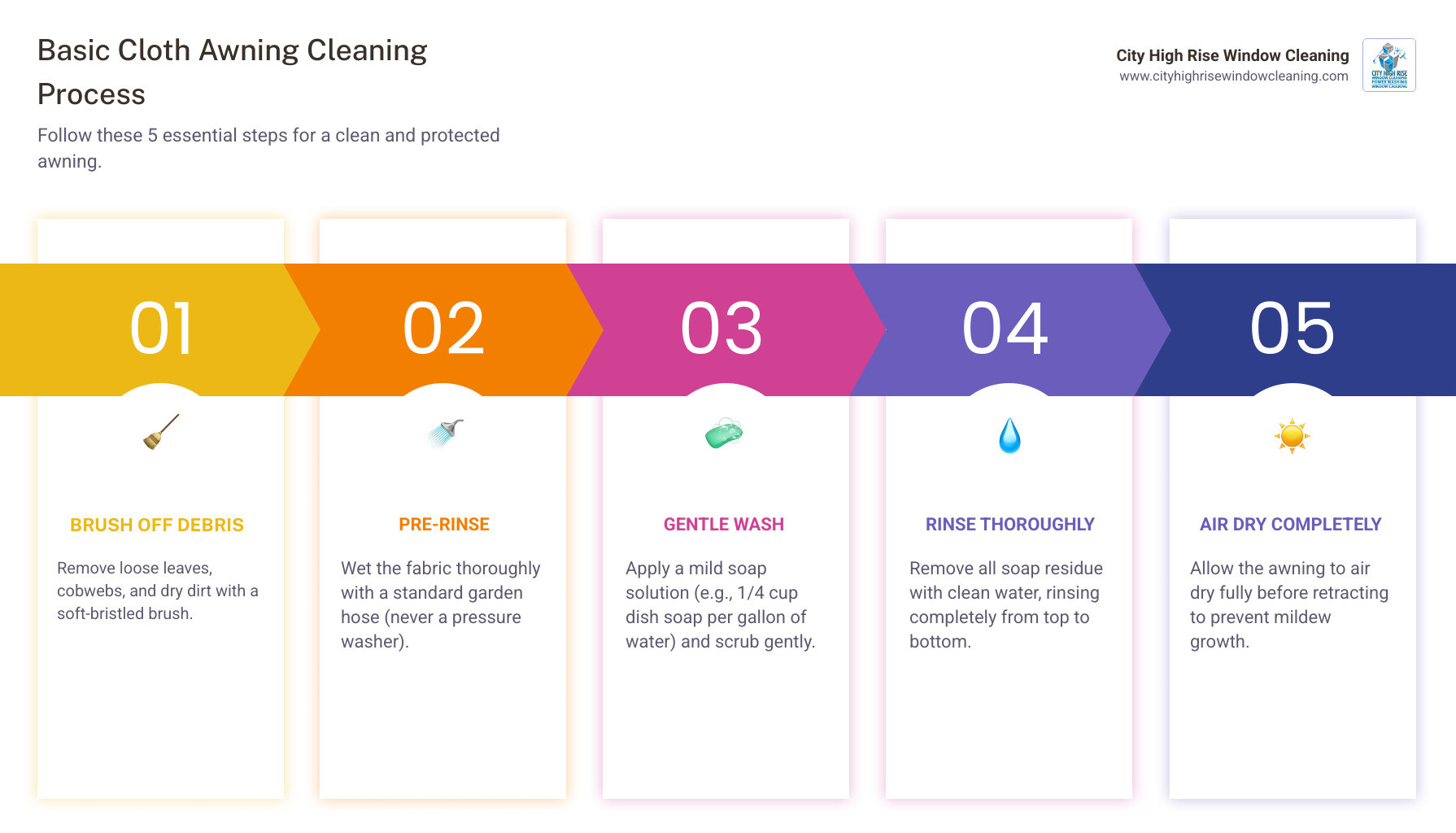
Quick Answer: Basic Cloth Awning Cleaning Process
- Brush off loose debris – Remove leaves, cobwebs, and dry dirt with a soft-bristled brush
- Rinse with water – Use a standard garden hose to wet the fabric (never a pressure washer)
- Wash gently – Apply mild soap solution (1/4 cup dish soap per gallon of water) and scrub with a soft brush
- Rinse thoroughly – Remove all soap residue with clean water from top to bottom
- Air dry completely – Never retract or fold a wet awning to prevent mildew
Dirty awnings don’t just look bad a0 a0they cost you money. According to industry research, accumulated dirt and grime compromise an awning’s core functions: insulation, sun protection, and weather resistance. In New York’s polluted environment, where awnings face extreme temperatures, rain, snow, and airborne contaminants, regular cleaning can extend an awning’s lifespan by years. Mildew doesn’t grow on the fabric itself, but it thrives on the dirt that settles there, creating permanent stains and structural damage if left untreated.
For property managers overseeing high-rise buildings in Manhattan, Long Island, Westchester, or New Jersey, the challenge is even greater. Commercial awnings on upper floors accumulate the same grime but require specialized equipment and safety protocols to clean properly. The stakes are higher too a0 a0a well-maintained awning improves curb appeal and tenant satisfaction, while a neglected one signals poor property management.
I’m Brett Hochman, CEO of City High Rise Window Cleaning, and I’ve specialized in exterior building maintenance across the New York metro area for over 48 years, including professional awning cleaning for both residential and commercial properties. Our team has mastered how to clean cloth awnings safely and effectively on buildings of all heights, from brownstones in Brooklyn to skyscrapers in Midtown. If your awnings are beyond a simple DIY rinse, our dedicated Awning Cleaning team can handle everything for you, often in a single visit.
If you manage larger buildings in NYC, Long Island, Westchester, or New Jersey and need more than just clean awnings, our Commercial High Rise Window Cleaning and High Rise Hot Water Power Washing services can restore the entire facade for a consistent, like-new look.
Getting Started: Supplies and Ideal Conditions
Before you dive into cleaning your cloth awning, a little preparation goes a long way. Think of it like a chef prepping their mise en place – having everything ready makes the process smoother and more effective. This initial stage is crucial, especially when dealing with the unique challenges presented by New York’s urban grime or the pollen and tree sap common in Westchester and Long Island.

The right tools and timing can make all the difference between a frustrating chore and a satisfying restoration.
When is the best season to clean awnings?
When it comes to how to clean cloth awnings, timing is everything. Based on my decades of experience across the New York metro area, I recommend cleaning your awnings at least once, but ideally twice, a year.
The best time for a thorough cleaning is in the spring, right as the weather starts to warm up. Why spring? Because it offers the perfect balance: temperatures are mild enough for you to work comfortably, and there’s usually plenty of sun and gentle breezes to help your awning dry completely. A spring clean prepares your awning for the heavy use of summer, ensuring it looks its best and functions optimally when you need it most. It also allows the fabric to dry out properly, which is crucial for preventing mold and mildew.
A secondary cleaning in the fall is also highly beneficial. This helps remove any accumulated summer grime, pollen, bird droppings, and especially tree sap or leaf tannins that might have settled during the warmer months. Cleaning before winter storage, or before the awning is exposed to winter elements, prevents dirt from embedding itself into the fabric, making future cleaning much easier and reducing the risk of permanent stains or damage. In regions like Westchester, where foliage is abundant, fall cleaning is non-negotiable to tackle those stubborn leaf stains.
Ideal weather conditions for cleaning include a warm, sunny day with low wind. This ensures your cleaning solutions don’t dry too quickly, allowing them to work effectively, and that your awning can air dry thoroughly without being buffeted by strong gusts. Avoid cleaning on extremely hot days as the sun can dry cleaning solutions too quickly, potentially leaving drying stains or watermarks. Similarly, check the forecast – you don’t want rain washing away your hard work before the awning has had a chance to dry!
Essential Cleaning Supplies:
Here’s my go-to list for cleaning cloth awnings:
- Soft-bristled brush or broom: Essential for removing loose debris and gently scrubbing the fabric without damage.
- Garden hose: For rinsing and pre-wetting. A regular garden hose is your friend, not a high-pressure washer!
- Buckets: You’ll need at least two – one for your cleaning solution and one for rinse water.
- Mild soap: Think gentle on fabric. Dish soap (like Dawn), Woolite, Dreft, or Ivory Snow are excellent choices. Avoid harsh detergents.
- Ladder: For reaching higher sections safely. Always ensure it’s stable and on a level surface.
- Protective gloves: To protect your hands from cleaning solutions.
- Drop cloths or tarps: To protect surrounding areas (patios, plants, walls) from runoff, especially if you’re using stronger stain removers.
What are common mistakes to avoid when starting?
When you’re tackling how to clean cloth awnings, knowing what not to do is just as important as knowing what to do. I’ve seen some well-intentioned DIYers make mistakes that can cost them dearly.
- Using a pressure washer: This is perhaps the most common and damaging mistake. While it might seem like a quick fix, the extremely high water pressure from a power washer can wear on your awning’s fabric, tear its fibers, strip protective coatings, and even reduce its lifespan. A gentle garden hose is all you need for rinsing. For other exterior cleaning needs, however, specialized power washing can be highly effective. You can learn more about our Power Washing services if you have other surfaces that need a deep clean.
- Choosing harsh detergents or abrasive cleaners: Strong chemicals like laundry detergents, abrasive powders, or industrial cleaners can strip your awning’s protective finish, bleach its color, or even degrade the fabric over time. Always opt for mild, pH-neutral soaps. Always refer to your awning manufacturer’s cleaning instructions if available.
- Cleaning in direct, hot sun: The scorching sun can dry your cleaning solutions too quickly, leaving behind unsightly watermarks, streaks, or even baking the dirt onto the fabric. It’s best to clean on an overcast day or during cooler parts of the morning or late afternoon.
- Not testing cleaners in an inconspicuous area: Before applying any cleaning solution—especially stain removers or bleach mixtures—to your entire awning, always test it on a small, hidden spot first. This helps ensure it won’t discolor or damage the fabric.
- Retracting a wet awning: Rolling up or folding an awning that isn’t completely dry is an open invitation for mold, mildew, and unpleasant odors. Always allow your awning to air dry thoroughly before retracting it. This is a golden rule for longevity.
Avoiding these pitfalls will save you headaches, potential damage, and ultimately, money in the long run.
The Ultimate Guide on How to Clean Cloth Awnings
Now that you’re prepped and aware of the common mistakes, let’s get down to the nitty-gritty of how to clean cloth awnings. Whether you have a robust canvas awning or a more modern acrylic fabric, the general principles remain the same, though specific stain treatments might vary slightly.
I’ll guide you through the basic steps for a general clean, then tackle those stubborn stains that seem to cling to our New York awnings.
Basic Steps for Cleaning Your Cloth Awning
This is your routine for keeping your awning looking fresh and extending its life.
- Brush off loose debris: Before introducing any water, grab your soft-bristled brush or a broom and thoroughly sweep off all dry debris. This includes leaves, twigs, cobwebs, dust, and any loose dirt. This step is crucial because if you wet the awning first, you risk rubbing this dry grime into the fabric, making stains harder to remove.
- Pre-rinse with a hose: Once the dry debris is gone, gently hose down the entire awning with clean water. A standard garden hose is perfect. This wets the fabric, loosens embedded dirt, and prepares it for the cleaning solution. Rinse from top to bottom to ensure an even saturation.
- Mix a mild cleaning solution: In one of your buckets, mix a solution of mild soap and lukewarm water. A good ratio is about 1/4 cup of mild dish soap (like Dawn) or a gentle fabric soap (like Woolite or Dreft) per gallon of water. For specific materials like Sunbrella, always check their official cleaning guidelines first.
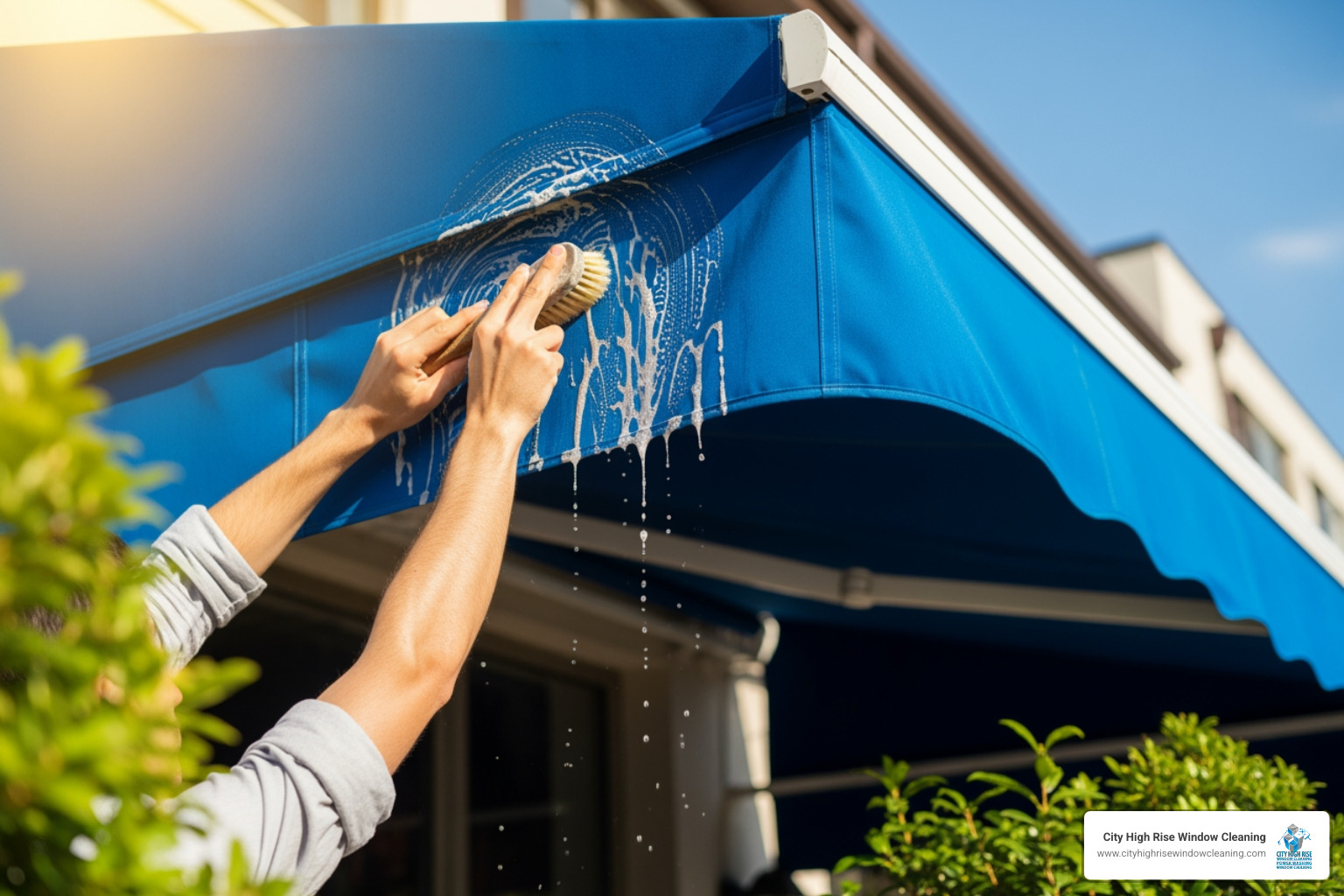
- Gentle scrubbing technique: Apply your cleaning solution to the awning. I recommend working in sections, especially for larger awnings. Use your soft-bristled brush to gently scrub the fabric. A good practice is to scrub from the bottom of a section upwards. This prevents dirty runoff from streaking clean areas. Let the solution soak into the fabric for 5-15 minutes, allowing it to break down the grime. For some fabrics, you can let it soak for up to 20 minutes for a deeper clean.
-
Thoroughly rinse all soap: This is a critical step! Using your garden hose, rinse the entire awning thoroughly with clean water, working from top to bottom. You want to ensure every last bit of soap residue is removed. Leftover soap can attract new dirt faster and might even leave a film on the fabric. Keep rinsing until the water running off the awning is completely clear.
Pro Tip: For particularly dirty awnings, or those requiring a more intense clean, consider the benefits of a professional hot water power washing service. While you should never use a high-pressure washer on your awning fabric, our specialized High-Rise Hot Water Power Washing techniques can be incredibly effective for other parts of your building’s exterior, ensuring a comprehensive clean. You can find more info about our High-Rise Hot Water Power Washing on our site.
How to Clean Cloth Awnings with Stubborn Stains
Some stains need a bit more muscle than a general wash. Here’s how to tackle the most common culprits you’ll find on cloth awnings in the NYC metro area. Always remember to test any solution on an inconspicuous area first!
| Stain Type | DIY Solution |
|---|---|
| Mold & Mildew | Mix 1 cup of bleach and 1/4 cup of mild soap per gallon of water. Apply to the fabric, let it sit for 15 minutes, then rinse thoroughly. For colored fabrics, use a color-safe bleach or a vinegar solution (1 cup vinegar per gallon of water) to avoid discoloration. |
| Grease & Oil | Immediately apply an absorbent like cornstarch to soak up the oil. Let it sit for 10-15 minutes, then scrape it off. Follow with a spot treatment using a mild soap solution before the general wash. |
| Tree Sap | Harden the sap with an ice cube, then carefully scrape off as much as possible. Use a cloth dampened with a small amount of turpentine or a citrus-based cleaner to dab at the remaining stain. Rinse immediately and thoroughly. |
| Bird Droppings | Let the droppings dry completely, then brush off as much as you can. Use a mild soap and water solution to gently scrub the remaining stain. |
| Rust Stains | For light rust stains, a paste of lemon juice and salt can be effective. Apply it to the stain, let it sit in the sun for an hour, then rinse thoroughly. For tougher stains, a commercial rust remover designed for fabric may be necessary. |
For more deep-dive tips on exterior maintenance around New York, Long Island, Westchester, and New Jersey, you can also check our related guide on facade restoration and long-term building care.
FAQ: How to Clean Cloth Awnings in New York, Long Island, Westchester, and New Jersey
How often should I clean cloth awnings in NYC and nearby areas?
At least once a year, but in New York, Long Island, Westchester, and New Jersey a0 a0where pollution, pollen, and storms are common a0 a0twice a year (spring and fall) is ideal to prevent permanent staining and fabric breakdown.
Can I use a pressure washer on my cloth awning?
No. High pressure can tear fibers and strip protective coatings. Use a garden hose only, and leave any pressure-based cleaning to trained pros for other exterior surfaces.
What is the safest cleaner for cloth awnings?
A mild dish soap or gentle fabric soap mixed with lukewarm water is safest for most fabrics. Always check your awning manufacturers care guide and spot test first.
Should I remove my awning for winter in New York and New Jersey?
If your awning is retractable, keep it retracted only after its completely dry and clean. Fixed awnings can stay up, but fall cleaning is important so winter grime doesnt set into the fabric.
When should I call a professional instead of DIY?
If the awning is several stories up, heavily stained with mold, or attached to a high-rise facade, its safer and often cheaper long term to hire a pro. Our Awning Cleaning, Residential High Rise Window Cleaning, and Facade Restoration teams handle these jobs daily across NYC, Long Island, Westchester, and New Jersey.
Ready for a free quote? City High Rise Window Cleaning offers 24/7 live consultation. Call 917-749-8342 to speak to a live representative.


