

Beyond the Squeegee: Mastering Exterior Window Washing for a Streak-Free Shine
Exterior Window Washing: Mastering Streak-Free 2025
Streak-Free Exterior Window Washing in NYC: Fast Service, Fair Pricing, No-Hassle Results
Exterior window washing isn’t just about curb appealit’s about protecting your property investment and getting dependable, professional service at a fair price. According to a recent National Cleaning Survey, 74% of Americans plan to spring clean this year, and 75% say washing windows is their top task. That’s no accident. Dirty windows don’t just look badthey actually degrade over time.
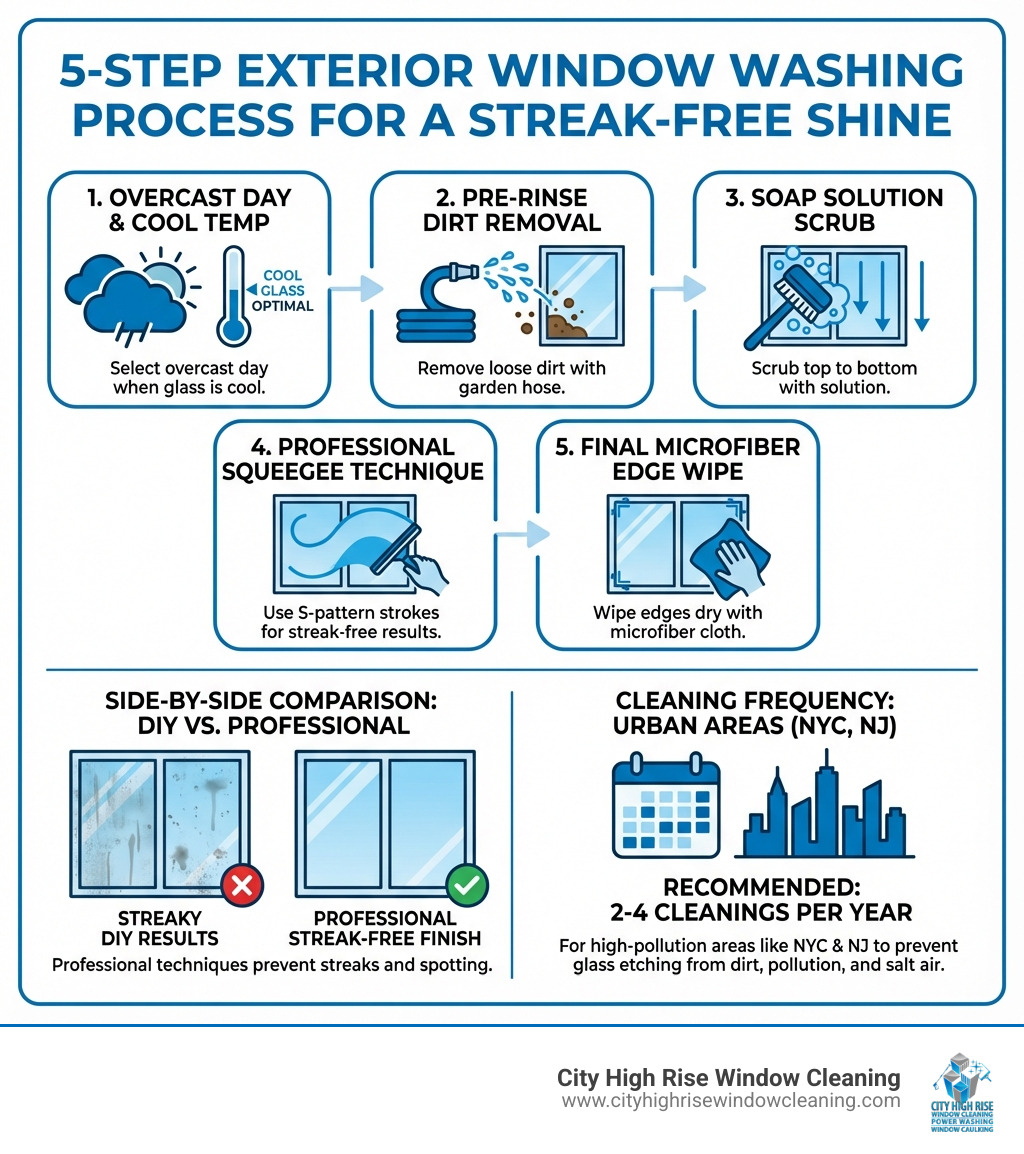
Quick answer: To clean exterior windows properly, follow this sequence:
- Pick the right day – Choose an overcast day when glass is cool
- Pre-rinse – Spray windows with a hose to remove loose dirt
- Apply solution – Use dish soap and water or a vinegar mixture
- Scrub thoroughly – Work top to bottom with a soft brush
- Squeegee dry – Use overlapping S-pattern strokes
- Wipe edges – Clean drips with a microfiber cloth
Here’s what most people don’t realize: dirt, pollution, and mineral deposits can actually etch your glass permanently. In high-pollution areas like Manhattan or Newark, environmental contaminants build up fast. One window cleaning expert put it bluntly: “Over time, a buildup of dirt particles can actually etch or degrade the glass.”
For property owners in New York City, Long Island, Westchester, and New Jersey, this is especially critical. Urban pollution, salt air near the coast, and seasonal pollen create a perfect storm for dirty windows. Industry experts recommend cleaning 2-4 times per year in these conditionsnot just once annually.
I’m Brett Hochman, CEO of City High Rise Window Cleaning, and I’ve been leading exterior building maintenance projects across the NYC metro area since 1977. Over nearly five decades, I’ve seen how proper exterior window washing techniques protect glass, extend window lifespan, and maintain property value for commercial and residential high-rises throughout the region. Our team specializes in both Commercial High Rise Window Cleaning and Residential High Rise Window Cleaning, with quick lead times and transparent pricing for buildings throughout NYC, Long Island, Westchester, and New Jersey.
Exterior window washing definitions:
Timing is Everything: When to Wash Your Windows
Believe it or not, timing is a critical factor when it comes to cleaning windows. You wouldn’t want to bake a cake without checking the oven temperature, and you shouldn’t clean your windows without considering the weather. The goal is to prevent your cleaning solution from drying too quickly, which leads to those frustrating streaks.
The best time of day for exterior window washing is typically early morning or late afternoon, when the sun is less intense. But even more important than the time of day is the general weather condition. I always recommend choosing an overcast day. Sunny days can increase glare, making it difficult to spot missed spots, and the direct sunlight will cause your cleaning solution to evaporate before you can wipe it away, resulting in unfortunate streaking. As one expert notes, “The biggest mistake you can ever make is hosing your windows down… The sun will cause your cleaning solution to dry faster than you can wipe it away.” The primary concern relates to the temperature of the window panes themselves. If they are too warm, you’re fighting a losing battle against evaporation.
When it comes to cleaning frequency, there’s no one-size-fits-all answer, but here in the New York City metro area, we face unique challenges. Urban pollution in Manhattan, heavy pollen in Westchester, and salt air exposure for properties on Long Island and the New Jersey coast mean your windows get dirtier faster than in quieter, less exposed areas. While some suggest once or twice a year is enough, for most homeowners and business owners in our service areas, I’d suggest exterior window washing 2-3 times yearly for optimal results and glass maintenance. Regular cleaning prevents the buildup of grime and environmental pollutants that can not only obscure your view but also etch and degrade the glass over time, potentially leading to costly window restoration down the line. Spring and fall cleaning are popular, with 75% of spring cleaners listing windows as their top task, but don’t overlook a mid-summer or winter cleaning if conditions warrant it.
Gearing Up: Essential Tools & DIY Solutions
Before you dive into exterior window washing, gathering the right tools and materials is crucial. Think of it like a chef preparing their mise en place—having everything ready makes the process smoother and more effective.
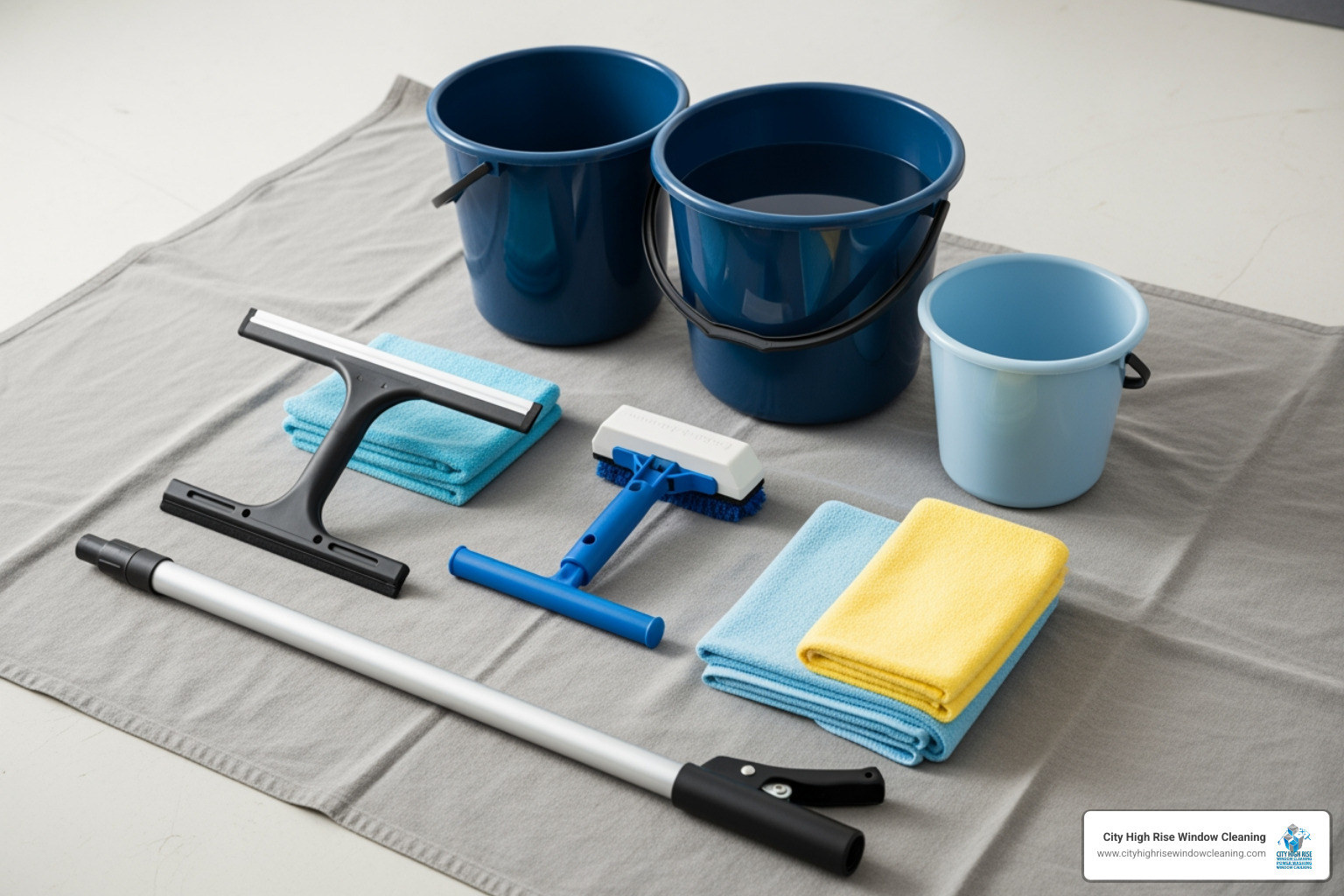
Here’s a list of essential tools I recommend for effective exterior window washing:
- Two-Bucket System: One for your cleaning solution, one for rinsing your scrubber. This prevents spreading dirty water back onto your windows.
- Squeegee: A professional-grade squeegee with a fresh rubber blade (10-12 inches is a good size for most residential windows). This is your secret weapon for streak-free results.
- Microfiber Cloths: Several clean, lint-free microfiber cloths for wiping squeegee blades, detailing edges, and drying sills. Avoid paper towels, which can leave lint.
- Window Scrubber or Sponge Mop: A T-bar with a microfiber sleeve or a large sponge is excellent for applying solution and scrubbing. Look for one with a durable scrub pad for stubborn spots.
- Extension Pole: For reaching higher windows safely from the ground, a sturdy extension pole is invaluable. It can accommodate both your scrubber and squeegee.
- Garden Hose with Sprayer Attachment: For pre-rinsing and final rinsing.
- Optional: Ladder: If an extension pole isn’t enough, use a sturdy ladder, ensuring it’s on stable ground and you follow all safety guidelines (more on this later!).
- Soft Bristle Brush: Great for scrubbing away loose dirt and grime, especially on an extension pole.
When it comes to cleaning solutions, you don’t always need harsh chemicals. Many effective DIY solutions can get the job done:
1. Vinegar and Water Recipe:
– Recipe: 2 cups water, 1/4 cup white vinegar, 1/2 teaspoon dish detergent. (Some sources suggest equal parts vinegar and hot water for extensive grime, or 1 cup distilled water, 1/4 cup white vinegar, and 1/4 cup rubbing alcohol for streak-reducing power.)
– Pros: Inexpensive, natural, effective at cutting through grime and mineral deposits, leaves a streak-free shine. Vinegar is an aggressive detergent that will not streak or spot.
– Cons: The smell of vinegar can be strong, though it dissipates quickly. May not be as effective on extremely heavy, caked-on industrial grime without significant scrubbing.
2. Dish Soap Solution:
– Recipe: A few drops of mild dish soap (like Dawn or Mrs. Meyer’s) in a bucket of warm water. (Some suggest 16 oz hot distilled water and 4 drops of dish soap). It’s important not to overdo it with the soap.
– Pros: Excellent for breaking down grease, dirt, and general grime. Readily available and inexpensive.
– Cons: Using too much soap can lead to excessive suds and a filmy residue, resulting in streaks. “Excess soap creates a film on the surface of the window, which will result in a streaky, cloudy finish.”
Important Note: Avoiding Ammonia
Always avoid cleaners with ammonia or alcohol, as these products can leave residue, resulting in streaking and clouding. They can also damage certain window tints or coatings over time. Pros usually mix their own washing fluids because they are more economical and do not contain unnecessary chemicals.
The Pro’s Step-by-Step Guide to Exterior Window Washing
Getting those sparkling, streak-free windows isn’t just about the right tools and solutions; it’s about technique. Here’s the process I follow, broken down into easy steps:
Step 1: Preparation and Pre-Rinse
Preparation is key to efficiency and preventing re-work.
- Remove Screens: If possible, remove your window screens first. Cleaning them separately will prevent dirt from transferring back onto your freshly cleaned windows.
- Brush Away Cobwebs and Loose Debris: Use a soft brush or broom to sweep away any cobwebs, dust, or loose dirt from the window frames and sills. This prevents debris from streaking across the glass during cleaning.
- Protect Landscaping: If you’re using a cleaning solution, especially a stronger one, consider covering any delicate plants or shrubs directly beneath the windows with a tarp or plastic sheeting.
- Close All Windows: Ensure all windows are fully closed before you begin any water application.
- Pre-Rinse with a Garden Hose: Before applying any cleaning solution, thoroughly spray all window surfaces with a garden hose to remove the initial layer of loose dirt, dust, and pollen. This makes the scrubbing process much smoother. For exterior window cleaning, “a great way to do that is with a garden hose.”
Step 2: The Scrub-Down for Exterior Window Washing
Now it’s time to get down to business and tackle the grime.
- Apply Cleaning Solution: Dip your scrubber or a soft bristle scrub brush into your chosen cleaning solution (remembering the two-bucket system). Ensure it’s saturated but not dripping excessively.
- Work Top-to-Bottom: Begin scrubbing the highest window first, and work your way down. This prevents dirty water from dripping onto already cleaned areas. Apply the solution generously, covering the entire glass surface.
- Scrub Thoroughly: Use firm but not excessive pressure. For stubborn spots like tree sap, bird droppings, or other caked-on grime, use a circular motion or the scrub pad on your scrubber. If needed, for extremely tough spots, you can gently use a plastic scraper, but only on wet glass to avoid scratching. “When there are especially stubborn spots on windows… it’s important not to scrape the window while it’s dry.”
- Keep the Glass Wet: Don’t let the cleaning solution dry on the window before you squeegee. If you’re working on a large window or a warmer day, you might need to reapply solution to keep the glass wet.
Step 3: The Squeegee Technique for a Streak-Free Finish
This is where the magic happens for that professional, streak-free shine.
- Start at the Top: Begin your squeegee pass at the top corner of the window.
- Angle and Pressure: Hold the squeegee at a slight angle (around 15-30 degrees) to the glass, applying consistent, even pressure.
- The S-Pattern (or Straight Pulls): For most windows, an S-pattern (or “fanning”) technique is efficient. Start at the top, pull across, then pivot and pull down, creating an overlapping S-shape. Alternatively, for smaller windows or if you’re new to squeegeeing, straight, overlapping horizontal or vertical pulls work well.
- Overlap Your Strokes: The key to preventing streaks is to overlap your strokes by about an inch with each pass. This ensures you catch all the water and solution.
- Wipe the Blade: After each complete stroke (or S-pattern), wipe your squeegee blade clean with a dry microfiber cloth. This removes dirty water and prevents streaks from previous passes.
- Corner Detailing: For any small areas or corners the squeegee can’t reach, use a clean, damp microfiber cloth to wipe them clean.
Step 4: Final Touches and Screen Cleaning
You’re almost there! These last steps ensure a complete job.
- Clean Window Sills: Wipe down the window sills with a clean, damp microfiber cloth to remove any drips or accumulated dirt.
- Vacuum Tracks: Use a vacuum cleaner with a crevice tool to remove dirt, dust, and dead insects from window tracks. A toothbrush can help with hard-to-reach places.
- Clean Window Screens: If you removed them earlier, now’s the time to clean your screens. Lay them flat, spray them with a hose, and gently scrub with a soft brush and soapy water (a diluted vinegar solution works too). Rinse thoroughly and let them air dry completely before reinstalling.
- Reinstall Screens: Once dry, carefully reinstall your screens.
- Final Inspection: Step back and admire your work. A quick glance from different angles will help you spot any missed spots or lingering streaks.
Tackling Challenges: High Windows & Common Mistakes
Even with the best intentions, exterior window washing can present challenges. Dealing with high windows and avoiding common pitfalls are crucial for safety and achieving a truly pristine finish.

Safely Cleaning Hard-to-Reach Windows
High windows, especially on multi-story homes or commercial buildings in places like Westchester or Long Island, pose a significant safety risk. The most dangerous tool in the box is often the ladder. “Most ladder-related injuries actually occur on step ladders that stand only three to six feet tall.” So, safety first!
- Extension Poles: For windows you can’t reach from the ground, a good quality extension pole is your best friend. Attach your scrubber and squeegee to reach second or even third-story windows without leaving the ground.
- Tilt-Wash Windows: If you’re lucky enough to have modern tilt-wash double-hung windows, you can often clean the exterior of the glass from inside your home. This is a game-changer for safety and convenience.
- Ladder Safety: If a ladder is unavoidable, ensure it’s placed on stable, level ground. Maintain three points of contact (two hands and one foot, or two feet and one hand) at all times. Never overreach, and never set up a ladder on slippery surfaces.
- When to Call a Professional: For windows that are excessively high, require specialized equipment, or if you simply feel uncomfortable or unsafe, it’s always best to call in the pros. Companies like mine specialize in Residential High Rise Window Cleaning and commercial properties, ensuring the job is done safely and effectively, especially in dense urban environments like New York City. No amount of curb appeal is worth getting hurt.
Common Exterior Window Washing Mistakes to Avoid
A few common missteps can turn your sparkling window dreams into streaky nightmares:
- Washing in Direct Sun: As I mentioned, the sun is your enemy here. It causes solutions to dry too fast, leaving streaks. Always opt for an overcast day or when the windows are in shade.
- Using Too Much Soap: A little dish soap goes a long way. Too much will leave a filmy residue that’s hard to rinse off and will result in streaks.
- Using Paper Towels or Lint-Producing Cloths: Paper towels can leave lint and debris, while regular towels often shed fibers. Stick to microfiber cloths for drying and detailing.
- Scraping Dry Glass: Never use a scraper on dry glass. This is a surefire way to scratch your windows. Always wet the area thoroughly before using a scraper on stubborn spots.
- Hard Water Spots: If you have hard water, rinsing with it can leave mineral spots. A final rinse with distilled water or a squeegee technique that removes all water quickly can help. For severe hard water etching, you might need professional window restoration.
- Hosing Down Windows (and letting them air dry): While pre-rinsing with a hose is good, hosing down windows and expecting them to dry spot-free is a mistake. “Even if you have soft water, the mineral content will leave spots behind.”
Cleaning Different Window Materials & Coatings
Not all windows are created equal, and some require special care:
- Low-E Coatings and Tinted Glass: Many modern windows have special coatings (like Low-E for energy efficiency) or tints. These can be sensitive to abrasive cleaners or harsh chemicals. Always check the manufacturer’s guidelines for specific cleaning recommendations. For extra stubborn grime, “toothpaste or mineral spirits can help,” but neither “should be used on windows with special glass coatings that are more sensitive to abrasives, like HeatLock®.” Always test any new cleaner on an inconspicuous area first. Learn more about cleaning windows with special coatings.
- Wood Frames: Avoid excessive moisture, which can cause wood to swell, crack, or rot. Wipe wood frames clean with a damp cloth and dry immediately.
- Vinyl and Aluminum Frames: These are generally more forgiving. A simple soap and water solution is usually sufficient to clean them.
DIY vs. Hiring a Pro: Making the Right Choice for Your NYC Home
When it comes to exterior window washing, especially in a busy metropolis like New York City, homeowners and business owners often face a choice: tackle it yourself or call in the professionals. Each option has its merits and drawbacks, and the best choice depends on your specific needs, property type, and comfort level.
| Factor | DIY Window Cleaning | Professional Window Cleaning |
|---|---|---|
| Cost | Low upfront (tools & solutions) | Higher upfront (service fee) |
| Time | Significant time investment, especially for many windows | Minimal time investment for you, efficient completion |
| Safety | High risk for multi-story or hard-to-reach windows | Minimized risk due to training, equipment, and insurance |
| Equipment | Basic tools, may lack specialized access equipment | Advanced tools (water-fed poles, lifts), specialized access |
| Results | Can be streak-free with practice, but often inconsistent | Consistently streak-free, thorough, and long-lasting |
| Effort | Physically demanding, can be frustrating | No effort required from you |
For simple, ground-level windows on a single-story home in New Jersey, DIY might be a perfectly viable option. You save money and get a good workout. However, the unique challenges of urban grime in Manhattan, multi-story residences in Westchester, or large commercial properties on Long Island often tip the scales towards professional services.
Here’s why professional exterior window washing often makes sense, especially in our service areas:
- Safety First: This is paramount. Professionals are trained, equipped, and insured to work at heights, minimizing the risk of accidents. “No amount of curb appeal is worth getting hurt when cleaning outside windows.”
- Specialized Equipment: For high-rise buildings, an extension pole simply won’t cut it. Professionals have specialized tools like water-fed poles, lifts, and even rope access systems for Commercial High Rise Window Cleaning.
- Superior Results: Professional cleaners have the experience and techniques to achieve truly streak-free results every time. They understand how different types of glass and coatings react to solutions and methods.
- Time-Saving: Your time is valuable. Hiring a professional frees you up to focus on other priorities.
- Protecting Your Investment: Regular, professional cleaning extends the lifespan of your windows by removing corrosive pollutants and preventing long-term damage. For buildings that have already suffered from mineral deposits or construction debris, professional window restoration and post construction cleaning can often bring glass back to near-new condition.
- Peace of Mind: Knowing the job is done safely, thoroughly, and effectively by insured experts offers invaluable peace of mind.
While DIY can be satisfying, for the best, safest, and most consistent results, especially on larger or multi-story properties across New York City, Long Island, Westchester, and New Jersey, investing in professional exterior window washing is a smart choice.
Frequently Asked Questions about Exterior Window Washing
What do professional window cleaners use to clean windows?
Professionals often use a simple solution of water and a high-quality, biodegradable dish soap. The real difference comes from their technique, professional-grade squeegees, and sometimes purified water systems that leave a spot-free rinse without any drying. They also rely on specialized tools like scrubbers, extension poles, and even specialized equipment for high-rise access.
How often should you wash outside windows in a place like New York City?
For homes and buildings in high-pollution urban areas like NYC, Long Island, Westchester, and New Jersey, cleaning exterior windows 2-4 times per year is recommended. This prevents the buildup of corrosive grime that can etch the glass over time and protects your investment. Properties near the coast may even need cleaning every 2-3 months due to salt air exposure.
Is it okay to use a pressure washer on windows?
No, using a standard pressure washer on windows is extremely risky. The high pressure can break the glass, damage window seals leading to moisture between panes, and harm frames. While some professionals use low-pressure washing techniques for certain exterior cleaning, for heavy-duty building cleaning, professionals use specialized High Rise Hot Water Power Washing equipment with controlled pressure specifically designed for facades, not direct window glass.
How much does professional exterior window washing cost in NYC and nearby areas?
Pricing depends on window count, access difficulty, and building height. In the New York, Long Island, Westchester, and New Jersey markets, reputable companies will provide a clear, itemized quote up front so you understand exactly what you’re paying for. City High Rise Window Cleaning offers competitive, transparent pricing for both residential high rise window cleaning and commercial high rise window cleaning.
How do I choose the right exterior window cleaning company in NYC?
Look for a company with decades of local experience, proper insurance, safety training, and clear references from properties similar to yours. In dense urban markets like Manhattan, Long Island City, and Jersey City, its critical to work with specialists in high-rise access who can handle everything from basic exterior window washing to more advanced services like facade restoration when needed.
Conclusion
Mastering exterior window washing for a streak-free shine boils down to a few key takeaways: choosing the right time, gathering the proper tools, and diligently following a proven technique. From pre-rinsing to the final squeegee pass, attention to detail makes all the difference. Remember to prioritize safety, especially when dealing with hard-to-reach windows, and understand that different window materials and coatings may require specific care.
While DIY can be a rewarding endeavor for accessible windows, don’t hesitate to recognize when a job calls for professional expertise. For challenging jobs on high-rise buildings in NYC, Westchester, or Long Island, a professional service like City High Rise Window Cleaning provides the expertise, equipment, and insurance for a flawless, safe result. Investing in professional care protects your property and ensures a pristine view year-round.
Ready for a free quote? City High Rise Window Cleaning offers 24/7 live consultation. Call 917-749-8342 to speak to a live representative.


