

From Grime to Shine: How to Power Wash Your Awnings Like a Pro
Power Wash Awnings: Pro Shine 2025
Power Wash Awnings in NYC [2025]: Save $1,000s vs Replacement—48-Hour Service, Zero Damage Guarantee
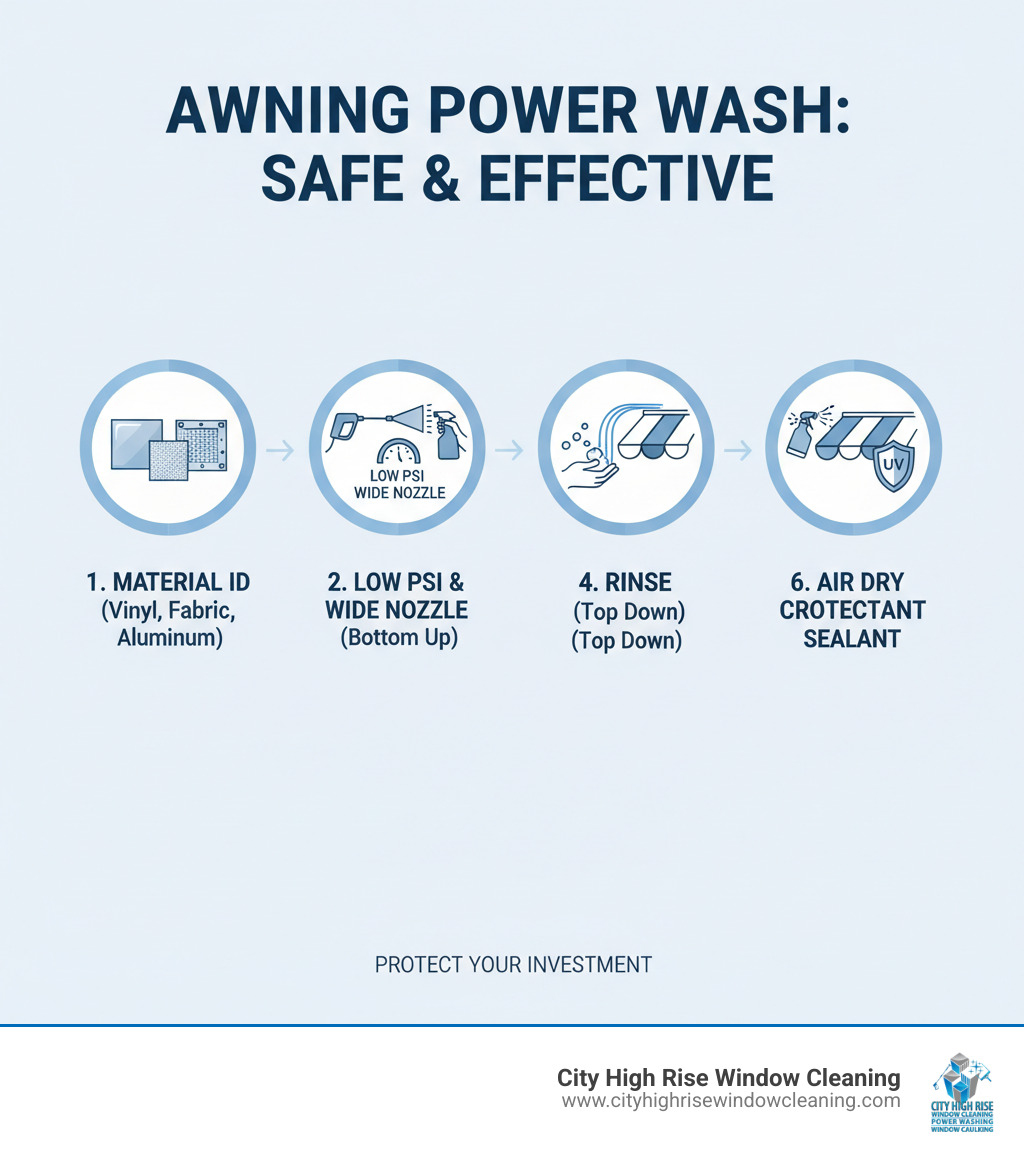
Power wash awnings safely by using low pressure (under 500 PSI), a wide-angle nozzle, mild detergent, and rinsing from bottom to top. Always test on a small area first, avoid harsh chemicals, and let the awning dry completely before retracting. For high-rise or delicate awnings, hire a professional to prevent damage.
Quick Safety Checklist:
- Use low PSI (300-500) and a 40-degree nozzle
- Apply mild, pH-neutral cleaners only
- Rinse thoroughly to remove all soap
- Never use high pressure on fabric
- Dry completely before storing
In New York City, Long Island, Westchester, and New Jersey, awnings face a relentless assault from pollution, bird droppings, and mold. Left unchecked, this grime doesn’t just look bad—it weakens fabric, strips protective coatings, and can lead to costly replacements averaging $2,500-$5,000 per awning.
But here’s the catch: power washing awnings the wrong way causes more damage than dirt ever could. High pressure tears fabric, strips paint, and voids warranties. Many property owners learn this the hard way—after spending $800+ on repairs.
The good news? With the right technique, you can restore your awnings safely for under $200 DIY or $400-600 professionally. This guide walks you through every step. I’m Brett Hochman, CEO of City High Rise Window Cleaning, and I’ve spent over 48 years maintaining building exteriors across the Tri-State area. Understanding how to properly power wash awnings protects your investment and saves you thousands.
A dirty awning isn’t just an eyesore; it’s a liability. Contaminants like dirt, mold, and algae damage awning fabric over time, shortening its lifespan by up to 50%. Routine cleaning also lessens health risks from mold and mildew growth and can improve your home’s energy efficiency by 15-20%.
Before You Start: Know Your Awning Material & Risks
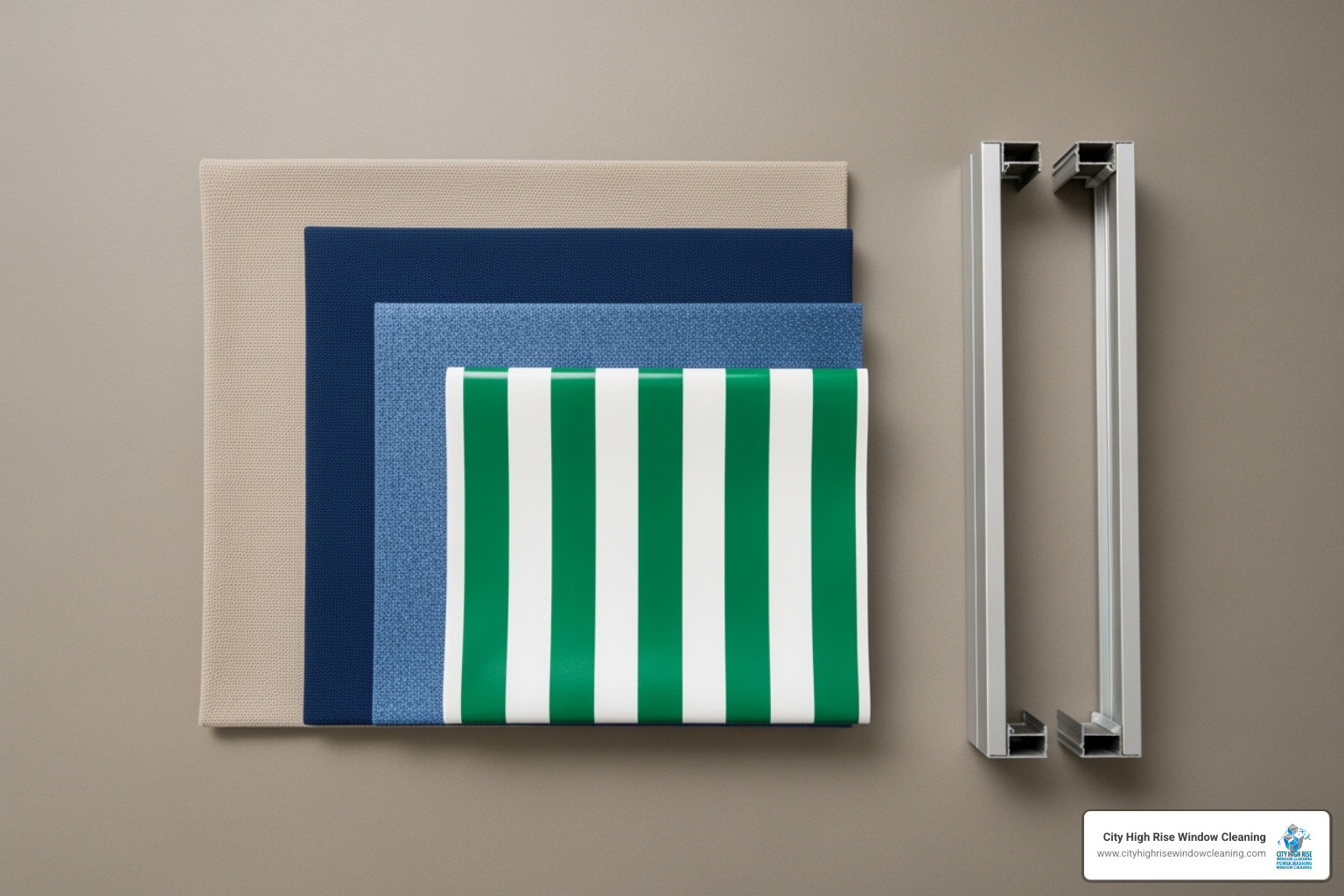
Before you start, identify what your awning is made of. The material dictates the pressure, cleaning solutions, and risks involved. Treating a delicate fabric awning like sturdy aluminum is a fast track to an expensive mistake.
How to Identify Your Awning Type
- Fabric (Canvas/Acrylic): The most common and most delicate. They tear, fray, and have protective coatings that can be stripped by high pressure or harsh chemicals. The stitching is also a weak point.
- Vinyl: Tougher than fabric but can still be torn or discolored by high pressure and certain chemicals.
- Aluminum: The most durable, but the paint finish can be chipped or stripped by excessive pressure. They can also develop rust.
Always check the manufacturer’s guidelines. If you can’t find them, err on the side of caution. Just as we assess frames before window restoration, understanding your material is key.
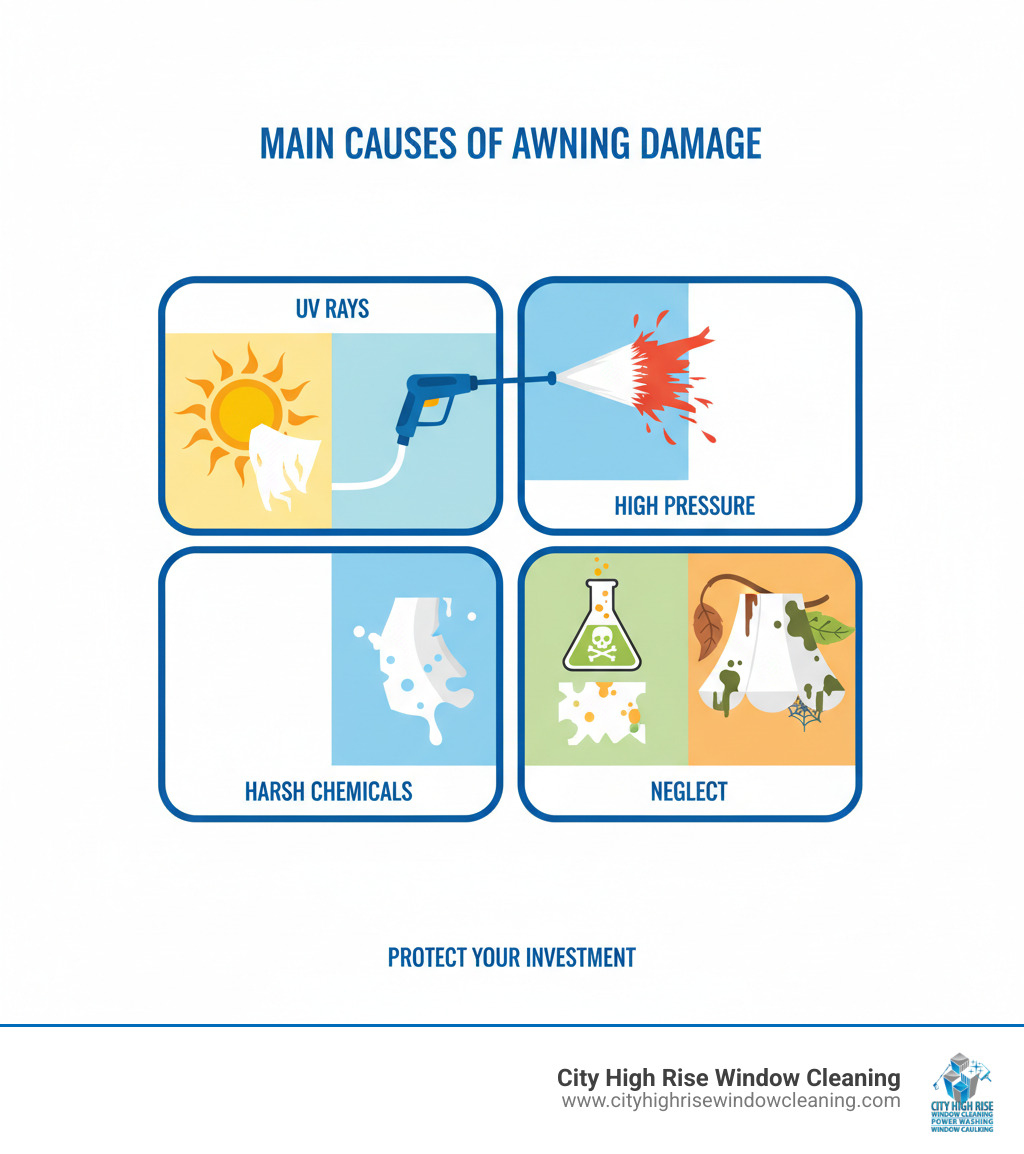
Key Risks of Improper Power Washing
Using a pressure washer incorrectly can cause permanent, expensive damage. Here’s what can go wrong:
- Fabric Tears & Fraying: High pressure rips through fabric, especially if it’s already weakened by UV exposure.
- Seam Damage: High-pressure water can cut through the stitching that holds panels together, causing the awning to fall apart.
- Stripping Protective Coatings: Aggressive washing removes factory-applied UV and water protection, leaving the awning vulnerable to fading and leaks.
- Color Fading: Undiluted bleach or harsh chemicals will leave fabric patchy and ruined.
- Mold & Mildew: Retracting a damp awning creates a perfect breeding ground for mold.
- Voiding Your Warranty: Most manufacturers explicitly state that improper cleaning methods will void their warranties.
Signs of damage include frayed edges, tears, discoloration, or a fuzzy texture on the fabric. Understanding these risks is the first step to a successful awning cleaning project.
The Right Tools & Cleaners for a Professional Finish
Getting a professional finish without damage comes down to the right equipment and cleaning solutions. It’s about working smart, not hard. Precision and gentleness are key when you power wash awnings.
| Awning Material | Recommended Max PSI | Nozzle Type | Cleaning Solution |
|---|---|---|---|
| Fabric | 300-500 PSI | 40-degree (white) or Soap Nozzle | Mild Detergent, Diluted Bleach (test first) |
| Vinyl | 500-700 PSI | 40-degree (white) or Soap Nozzle | Mild Detergent, Vinyl-safe cleaner |
| Aluminum | 700-1000 PSI | 25-degree (green) or 40-degree (white) | Mild Detergent, Aluminum-safe cleaner, Rust remover |
Choosing a Safe Awning Cleaner
Your cleaner should remove dirt and mold without stripping coatings or fading colors. Start with the gentlest option.
- General Dirt: A mild, pH-neutral soap like Dawn dish soap (a few tablespoons per gallon of water) works well.
- Tough Stains: Commercial awning cleaners are formulated to break down organic matter safely.
- Mold & Mildew: A diluted bleach solution (1 cup bleach per gallon of water) is effective. Always test on a hidden spot first to check for discoloration. Wear goggles when using bleach.
- Other Stains: For rust, use vinegar and water. For tree sap, try rubbing alcohol.
Thorough rinsing is essential when using any cleaner, especially those containing sodium hypochlorite (bleach), to prevent long-term fiber damage. For more specific awning cleaning tips, visit our service page.
Setting Up Your Power Washer Correctly
Many people go wrong by assuming more power is better. The goal is gentle persuasion, not brute force.
- Pressure: For fabric and vinyl, stay between 300-500 PSI. For aluminum, you can go up to 1000 PSI, but start low. The pressure washer should be used to apply chemicals and rinse, not to blast away dirt.
- Nozzle: Use a 40-degree white nozzle for a wide, gentle spray or a soap nozzle (black) for applying detergent. Never use a 0-degree red nozzle.
- Technique: An ideal setup has high GPM (gallons per minute) for rinsing and low PSI for safety. Always test your setup on a small, hidden spot before cleaning the entire awning.
This careful approach is the same one we use for high rise hot water power washing, where using equipment correctly is the difference between restoration and destruction.
How to Power Wash Awnings: Step-by-Step
With the right tools and knowledge, you can safely power wash awnings. This process is about patience and a light touch, not a military-grade assault.
Step 1: Prep and Dry Brushing
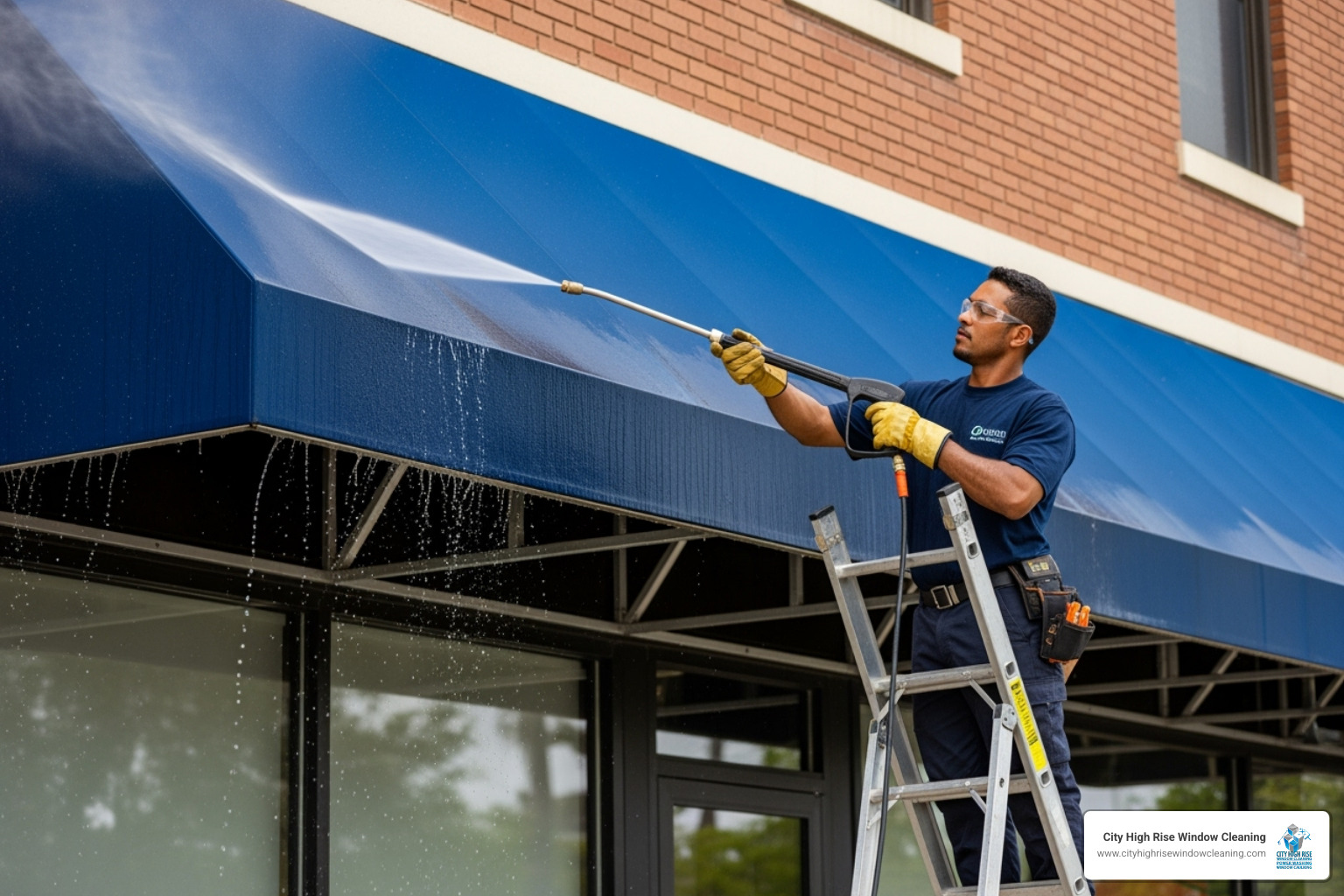
First, clear the area beneath your awning, moving furniture and plants. Cover nearby windows and landscaping with tarps. If using a ladder, ensure it’s on stable ground. Next, use a soft-bristled brush to gently sweep away loose dirt, dust, cobwebs, and other debris. This prevents scratching the fabric and helps the cleaning solution work more effectively.
Step 2: Apply Cleaning Solution
The cleaning solution does the heavy lifting. Lightly pre-soak the awning with a garden hose or your pressure washer’s soap nozzle. Mix your chosen cleaner and apply it from the bottom up to prevent streaking. Use a pump sprayer or soap nozzle to saturate the surface evenly. Let the solution dwell for 5-10 minutes, but do not let it dry. If it starts to dry, mist it with water to keep it active.
Step 3: Gentle Scrubbing and Rinsing
For stubborn stains, use a soft-bristled brush on an extension pole to gently agitate the area. Keep the surface wet with your cleaning solution as you work. Once the grime is loose, it’s time to rinse. Start rinsing from the bottom up to prevent streaking, then do a final rinse from the top down to wash everything away. Use a 40-degree nozzle, keeping it 2-3 feet from the surface and using smooth, sweeping motions. Rinse until the water runs clear.
Step 4: Air Dry Completely
This final step is critical. Let the awning air dry completely. If it’s retractable, extend it fully. Never retract or store a damp awning. This traps moisture and leads to mold and mildew, which is a common issue we see on jobs across New York City and New Jersey. Patience here protects all your hard work. This same attention to detail is crucial in all our high-rise window cleaning projects.
After Cleaning: Protect & Maintain Your Awning
Once your awning is clean and dry, a few final steps will protect your investment and extend its lifespan.
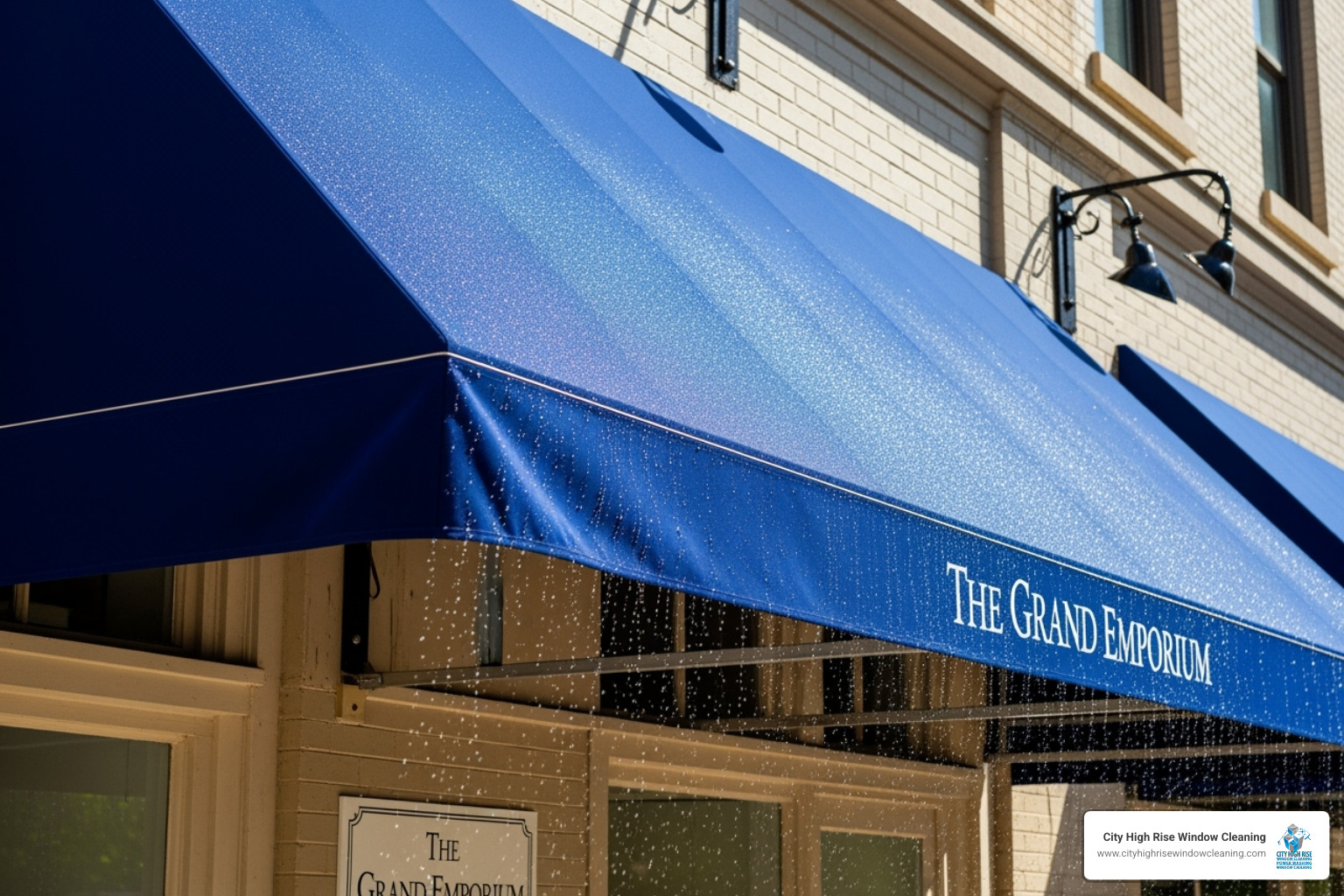
Applying a Protective Sealant
After you power wash awnings, applying a protective sealant is like adding sunscreen and a raincoat. Once the awning is completely dry, apply a quality fabric guard or vinyl protectant. Look for a product that offers both waterproofing and UV protection to prevent color fading and material degradation, which is especially important in the New York and New Jersey summer sun.
Most sealants come in spray bottles for easy application. Follow the manufacturer’s instructions, spraying in overlapping passes for even coverage. Allow it to dry fully before retracting the awning. This step makes future cleanings easier and is a standard part of our professional Awning Cleaning Services.
Setting a Maintenance Routine
Consistent maintenance is the key to longevity. A regular schedule prevents the kind of buildup that leads to damage and costly replacements.
- Frequency: Clean your awnings every three months in urban environments. At a minimum, perform a deep cleaning and sealant reapplication annually.
- Spot Cleaning: Address bird droppings and other debris quickly with a garden hose and soft brush to prevent staining.
- Regular Inspections: Routinely check for frayed seams, tears, or discoloration. Catching small problems early prevents them from becoming major repairs.
A consistent routine makes each cleaning easier and puts far less stress on the material, ensuring your awnings look better and last longer.
DIY vs. Hiring a Pro in NYC, Long Island, Westchester & NJ
While DIY power washing awnings can seem like a way to save money, a single mistake can cost far more than professional service. The question isn’t whether you can do it yourself; it’s whether you should.
Signs You Need a Pro to Power Wash Awnings
Consider hiring a professional if you encounter any of the following:
- Height and Access: Awnings on the second floor or higher present serious safety risks. Professionals have the training, insurance, and equipment for working at height, a skill we apply daily in our Commercial High Rise Window Cleaning services. Learning how to clean high rise windows safely highlights the complexities involved.
- Delicate or Old Awnings: If an awning is frayed, brittle, or showing its age, a professional can assess if it can be cleaned safely and choose the right method.
- Stubborn Stains: Deep-set mold, rust, or years of grime often require commercial-grade cleaners and expert application techniques.
- Lack of Equipment or Experience: If you don’t have a pressure washer with adjustable settings or are unfamiliar with low-pressure techniques, the learning curve can be costly.
- Time Constraints: Proper cleaning takes time. Hiring a pro saves you a weekend of work and guarantees a professional result.
In the Tri-State area, our local expertise matters. We understand how NYC pollution and coastal salt air affect different materials. We use soft washing—a combination of low pressure and specialized cleaners—to remove dirt and organic growth without the risks of high-pressure washing. Our High Rise Hot Water Power Washing services can tackle the toughest jobs while prioritizing the safety of your property.
Frequently Asked Questions about Power Washing Awnings
{
  "@context": "https://schema.org",
  "@type": "FAQPage",
  "mainEntity": [
    {
      "@type": "Question",
      "name": "What is the safest PSI to power wash awnings?",
      "acceptedAnswer": {
        "@type": "Answer",
        "text": "For most fabric and vinyl awnings, never exceed 500 PSI. Start on the lowest setting and use a wide-angle (40-degree) nozzle, keeping 2-3 feet away. Aluminum awnings can handle slightly more, but always use caution, staying below 1000 PSI."
      }
    },
    {
      "@type": "Question",
      "name": "Can I use bleach to clean a fabric awning?",
      "acceptedAnswer": {
        "@type": "Answer",
        "text": "Yes, but only a highly diluted solution (1 part bleach to 10 parts water) mixed with mild soap. Always test on a hidden spot first, as bleach can discolor or weaken some fabrics and nylon stitching. Never use undiluted bleach. For best results, consider specialized awning cleaners or professional services."
      }
    },
    {
      "@type": "Question",
      "name": "How often should awnings be cleaned in NYC?",
      "acceptedAnswer": {
        "@type": "Answer",
        "text": "Light cleaning or rinsing is recommended every 3-4 months. Deep cleaning and sealant application should be done at least once a year, especially in urban areas with high pollution like New York City, Long Island, Westchester, and New Jersey. Regularly inspect for dirt and organic growth."
      }
    },
    {
      "@type": "Question",
      "name": "What’s the difference between power washing and soft washing an awning?",
      "acceptedAnswer": {
        "@type": "Answer",
        "text": "Power washing typically uses high pressure (1,500+ PSI) and can damage delicate awning materials. Soft washing, on the other hand, uses very low pressure (under 500 PSI, often closer to a garden hose) combined with specialized, biodegradable cleaning solutions to safely remove dirt, mold, mildew, and algae without harming the awning fabric or structure. Soft washing is the recommended method for awnings."
      }
    },
    {
      "@type": "Question",
      "name": "Are there alternatives to power washing for cleaning awnings?",
      "acceptedAnswer": {
        "@type": "Answer",
        "text": "Yes, manual hand washing with a soft brush, mild detergent, and a garden hose is a very safe and effective alternative, especially for smaller or more delicate awnings. Many professionals also employ 'soft washing,' which uses low-pressure water combined with specialized cleaning solutions, making it a gentle yet powerful method for awning cleaning. The key is to avoid high pressure."
      }
    }
  ]
}
What is the safest PSI to power wash awnings?
For most fabric and vinyl awnings, never exceed 500 PSI. Start on the lowest setting and use a wide-angle (40-degree) nozzle, keeping 2-3 feet away. Aluminum awnings can handle slightly more, but always use caution, staying below 1000 PSI. The goal is to use enough pressure to rinse, not to blast away grime.
Can I use bleach to clean a fabric awning?
Yes, but only a highly diluted solution (1 part bleach to 10 parts water) mixed with mild soap. Always test on a hidden spot first, as bleach can discolor or weaken some fabrics and nylon stitching. Never use undiluted bleach. For best results, consider specialized awning cleaners or professional services.
How often should awnings be cleaned in NYC?
Light cleaning or rinsing is recommended every 3-4 months. Deep cleaning and sealant application should be done at least once a year, especially in urban areas with high pollution like New York City, Long Island, Westchester, and New Jersey. Regularly inspect for dirt and organic growth.
What’s the difference between power washing and soft washing an awning?
Power washing typically uses high pressure (1,500+ PSI) and can damage delicate awning materials. Soft washing, on the other hand, uses very low pressure (under 500 PSI, often closer to a garden hose) combined with specialized, biodegradable cleaning solutions to safely remove dirt, mold, mildew, and algae without harming the awning fabric or structure. Soft washing is the recommended method for awnings.
Are there alternatives to power washing for cleaning awnings?
Yes, manual hand washing with a soft brush, mild detergent, and a garden hose is a very safe and effective alternative, especially for smaller or more delicate awnings. Many professionals also employ “soft washing,” which uses low-pressure water combined with specialized cleaning solutions, making it a gentle yet powerful method for awning cleaning. The key is to avoid high pressure.
Restore Your Awnings Shine—Protect Your Investment Today
Learning how to power wash awnings correctly is a vital skill for any property owner. By using low pressure, safe cleaners, and adhering to a regular maintenance schedule, you can keep your awnings looking great and extend their lifespan. A clean awning isn’t just about aesthetics; it’s about protecting your investment. For high-rise or particularly delicate jobs, or if you simply prefer to leave it to the experts, trust City High Rise Window Cleaning. With over 30 years of experience serving New York City, Long Island, Westchester, and New Jersey, we guarantee safe, professional results every time.
Related Services:
- Commercial High Rise Window Cleaning
- Facade Restoration
- High Rise Hot Water Power Washing
- Awning Cleaning
- Window Restoration
Related Blog:
- How to Clean High Rise Windows Safely in NYC
Ready for a free quote? City High Rise Window Cleaning offers 24/7 live consultation. Call 917-749-8342 to speak to a live representative.


