

Sparkle Sustainably: DIY Eco-Friendly Window Cleaning Solutions
Sparkle Sustainably: DIY Eco-Friendly Window Cleaning Solutions
Clean Windows, Clear Conscience: Why Eco-Friendly Window Washing Matters
Eco-friendly window washing means cleaning glass surfaces using natural ingredients, purified water, and reusable tools — without harsh chemicals like ammonia, bleach, or synthetic fragrances.
Here’s a quick overview of what makes window cleaning truly eco-friendly:
- Natural cleaners – White vinegar, isopropyl alcohol, and distilled water replace toxic chemical formulas
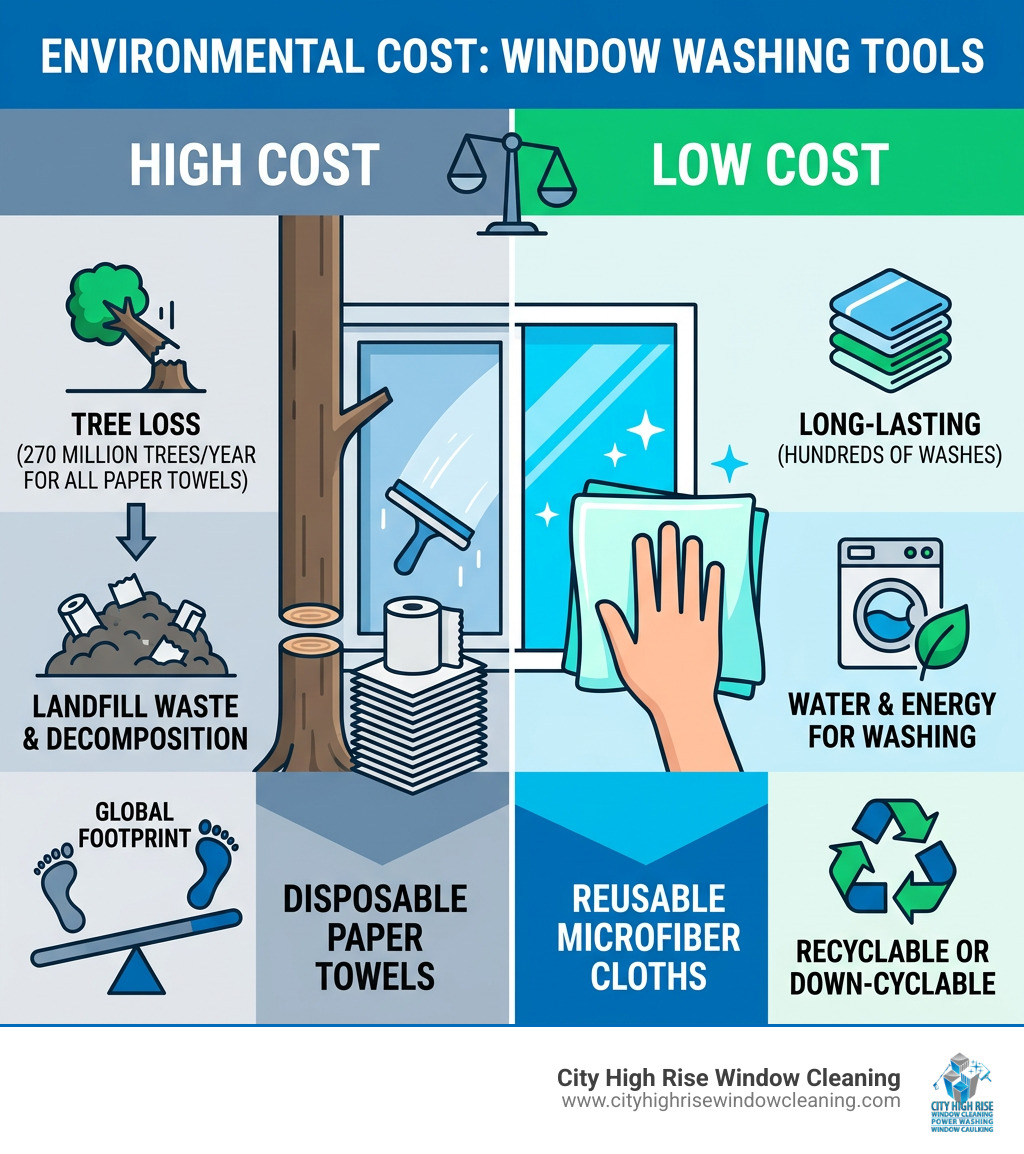
- Reusable tools – Squeegees and cotton cloths instead of disposable paper towels (270 million trees are cut down every year just for paper towels)
- Purified water systems – Reverse osmosis and deionized water reduce water usage by up to 75% compared to traditional methods
- No VOCs or synthetic fragrances – Protects indoor air quality and reduces chemical runoff into the environment
Most homeowners and property managers don’t realize the cleaning products they’ve used for years can cause respiratory irritation, headaches, and long-term health risks — according to the American Lung Association. And the environmental damage doesn’t stop inside your home.
The good news? Switching to green methods is simpler than you think, and the results are just as good — often better.
I’m Brett Hochman, CEO of City High Rise Window Cleaning, with over 48 years of experience in exterior building maintenance across New York City, Long Island, New Jersey, and Westchester. Throughout my career, eco-friendly window washing has become a cornerstone of how we approach every project — from residential units to commercial high-rises. Let’s walk through exactly how you can do the same.
Common Eco-friendly window washing vocab:
Why Traditional Window Cleaners Are Harming Your Home and Environment
For decades, the “blue stuff” in the spray bottle was the gold standard. But as I’ve seen in my 30+ years serving the New York and New Jersey areas, those traditional formulas come with a hidden price tag. Most conventional window cleaners rely heavily on ammonia and synthetic fragrances to achieve that “clean” smell and fast-drying finish.
Ammonia is a powerful irritant. If you’ve ever felt a sting in your eyes or a scratch in your throat while cleaning a bathroom mirror, you’ve experienced its effects firsthand. According to the American Lung Association, these Volatile Organic Compounds (VOCs) can trigger asthma and other respiratory issues. Furthermore, when these chemicals are used outdoors, they eventually wash into the soil and local waterways, contributing to water pollution that affects our local ecosystems in Long Island and Westchester.
Bleach is another common culprit. While it’s a disinfectant, it is overkill for glass and can damage surrounding window frames or sills. If your windows are already showing signs of neglect or chemical damage, you might need more than a simple wipe-down. In such cases, professional window restoration is often necessary to remove etched-in mineral deposits and return the glass to its original clarity.
Interestingly, scientific research on the antimicrobial effectiveness of natural alternatives suggests that we don’t actually need these harsh toxins. Studies have shown that simple white vinegar is almost as effective at microbial reduction as many commercial cleaners, proving that we can maintain a healthy home without compromising the planet.
The Best Natural Ingredients for DIY Eco-Friendly Window Washing
In my experience, you don’t need a lab-certified formula to get a streak-free shine. Most of the best ingredients for eco-friendly window washing are already sitting in your kitchen pantry or medicine cabinet.

Here are the heavy hitters I recommend for any DIY green cleaning kit:
- White Vinegar: The MVP of green cleaning. Its acidity allows it to cut through grease and dissolve the mineral deposits that cause “cloudy” windows.
- Isopropyl Alcohol (Rubbing Alcohol): This is the secret to a fast-drying, streak-free finish. Because alcohol has a low boiling point, it evaporates quickly, preventing water spots from forming. Scientific research on the safety and efficacy of alcohol-based disinfectants confirms its long history as an effective cleaning agent.
- Distilled Water: This is more important than most people realize. Tap water in many parts of New Jersey and New York contains minerals (hard water). Using distilled water ensures you aren’t adding more minerals to the glass while you’re trying to clean it.
- Cornstarch: It sounds strange, but a tablespoon of cornstarch acts as a very fine abrasive. It helps lift stubborn grime without scratching the glass.
- Essential Oils: If you miss the “fresh” scent of commercial cleaners, add a few drops of lemon, peppermint, or lavender oil. Citrus oils, in particular, have natural degreasing properties.
How to Mix Your Own Eco-Friendly Window Washing Solution
Mixing your own solution is not just better for the environment; it’s significantly cheaper. While a bottle of premium window cleaner might cost $5 or $6, you can whip up a DIY batch for pennies.
My Favorite “Professional Strength” DIY Recipe:
- 2 cups distilled water
- 1/4 cup white vinegar
- 1/4 cup isopropyl alcohol (70% concentration)
- 1 tablespoon cornstarch
Instructions:
- Use a funnel to pour the water, vinegar, and alcohol into a glass spray bottle.
- Add the cornstarch and any optional essential oils.
- Shake well before every use (the cornstarch will settle at the bottom).
- Label your bottle clearly so you don’t mistake it for another cleaner!
Advanced Eco-Friendly Window Washing with Purified Water Systems
While DIY sprays are great for the inside of your home, exterior windows—especially in high-rise environments—require a more robust approach. At City High Rise Window Cleaning, we utilize pure water technology to achieve results that a spray bottle simply can’t match.
This process involves Reverse Osmosis (RO) and Deionization (DI). These systems filter ordinary tap water until it is 99.99% pure. Why does this matter? Pure water is physically “hungry.” Because it has no minerals, it aggressively attracts dirt and minerals from the glass. When we use this water with water-fed poles, we can clean up to five or six stories from the safety of the ground.
The best part? This method is incredibly sustainable. Purified water systems can reduce water usage by approximately 75% compared to traditional hose-and-bucket methods. Because the water is pure, it dries naturally without leaving any spots or streaks, meaning we don’t have to use any soaps or detergents that could harm your landscaping. For larger buildings, this is the gold standard of commercial high rise window cleaning.
Professional Tools for a Streak-Free, Zero-Waste Finish
The solution is only half the battle; the tools you use determine the final result. If you’re still reaching for paper towels, it’s time for an upgrade. Not only do paper towels leave behind lint and “fuzz,” but they are an environmental disaster. Roughly 270 million trees are harvested annually to satisfy our paper towel habit, and most of that ends up in landfills where it produces methane gas.
Instead, I recommend the following:
- Squeegees: A high-quality squeegee is the single most important tool for a perfect finish. It removes the cleaning solution entirely, leaving nothing behind to streak.
- Microfiber Cloths: These are excellent for detailing edges and corners. They are designed to trap dirt rather than just moving it around. However, be mindful of microplastic pollution. To stay truly eco-friendly, wash your microfiber cloths in a mesh bag to catch fibers or opt for natural alternatives.
- Cotton Rags: Old t-shirts or cotton sheets make fantastic, lint-free cleaning cloths. They are 100% biodegradable and cost absolutely nothing.
| Feature | Paper Towels | Microfiber/Cotton Cloths |
|---|---|---|
| Environmental Impact | High (Deforestation/Landfill) | Low (Reusable/Washable) |
| Cleaning Efficiency | Low (Leaves lint/streaks) | High (Traps dirt/absorbs water) |
| Cost Over Time | Expensive (Constant repurchasing) | Very Low (One-time purchase) |
| Water Usage | High | 50% Less than paper |
If you’re cleaning more than just windows, such as your siding or walkways, you might be interested in our power washing blog for more tips on maintaining your home’s exterior sustainably.
5 Common Mistakes to Avoid When Switching to Green Methods
Even with the best intentions, I see homeowners make these five mistakes when they first try eco-friendly window washing:
- Cleaning in Direct Sunlight: I know it’s tempting to clean on a beautiful sunny day in NYC, but the sun dries the solution too quickly. This leads to “baked-on” streaks before you can even reach for your squeegee. Always clean on a cloudy day or when the windows are in the shade.
- Using Paper Towels: As mentioned, they leave lint and create unnecessary waste. Stick to squeegees and reusable cloths.
- Forgetting to Prep the Surface: If your windows have a “waxy” buildup from years of using traditional commercial cleaners, your new green solution might streak at first. Use a hydrogen peroxide prep (a 5% solution) to cut through that old chemical film before your first green cleaning.
- Ignoring Hard Water: If you live in an area with high mineral content in the tap water, don’t ignore it. If you see white spots that won’t come off, you may need a professional post-construction cleaning or restoration service to safely remove the buildup without scratching the glass.
- Using Too Much Soap: If you add dish soap to your DIY mix, use it sparingly. Too much soap creates a film that actually attracts dust, making your windows get dirty faster.
Frequently Asked Questions about Eco-Friendly Window Washing
Is vinegar as effective as commercial window cleaners?
Vinegar is highly effective at cutting through grease and mineral deposits. Research shows it is nearly as effective at microbial reduction as many commercial cleaners without the respiratory risks associated with synthetic fragrances. It is the gold standard for natural acidity in cleaning.
Can I use eco-friendly methods on high-rise buildings in NYC?
Yes. Professional services like mine use pure water technology (RO/DI systems) and water-fed poles to clean high-rise windows safely from the ground or via specialized equipment. This eliminates the need for harsh detergents and reduces water waste by up to 75%, making it the safest and most sustainable choice for urban environments.
How do I prevent streaks without using ammonia?
The key to a streak-free finish is using distilled water to avoid mineral spots and a high-quality squeegee or lint-free microfiber cloth. Adding a small amount of cornstarch or isopropyl alcohol to your DIY mix also helps the solution evaporate quickly and lift stubborn grime without leaving residue behind.
Conclusion
Switching to eco-friendly window washing isn’t just a trend; it’s a smarter, healthier way to maintain your property. Whether you are mixing a vinegar solution for your apartment in Manhattan or looking for a professional team to handle a large-scale project in Long Island, New Jersey, or Westchester, the benefits are clear. You get a better shine, save money, and protect the local environment we all share.
At City High Rise Window Cleaning, we’ve spent over three decades perfecting the balance between professional-grade results and environmental responsibility. We stand behind our work with a 100% satisfaction guarantee and the highest safety standards in the industry. Whether you need a simple residential high-rise window cleaning or a complex restoration, we are here to help.
Ready for a free quote? City High Rise Window Cleaning offers 24/7 live consultation. Call 917-749-8342 to speak to a live representative.


