

Power Washing Your Home Like a Pro
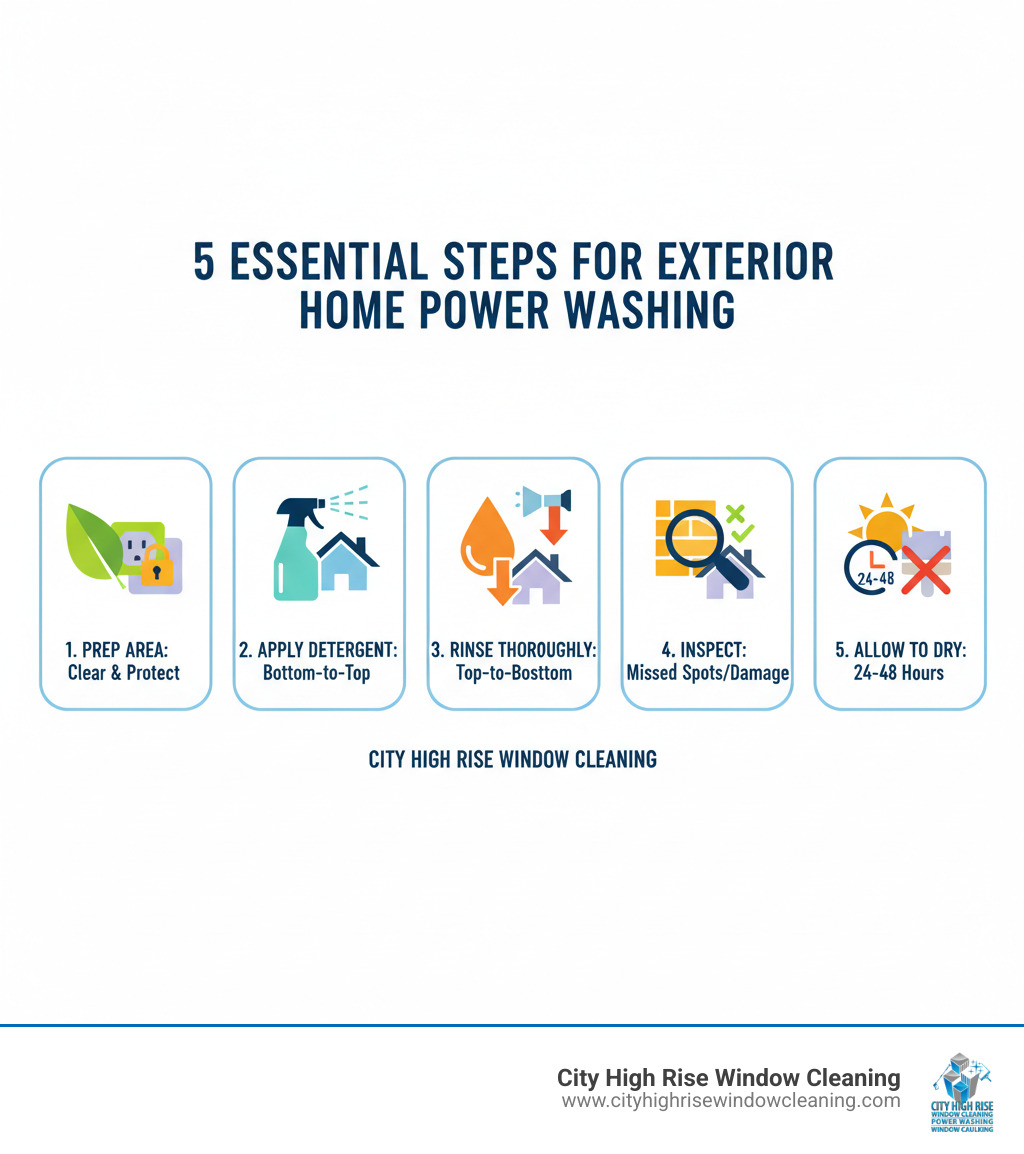
Exterior Home Power Washing: 5 Essential Steps
Exterior Home Power Washing NYC/NJ: Pro Results in 48 Hours at Fair Prices—Avoid $5,000 Repairs
Exterior home power washing is a deep-cleaning method that uses high-pressure water to remove dirt, grime, mold, and algae from your home’s exterior. Its one of the fastest ways to restore curb appeal and extend the life of your siding, deck, and walkways.
Quick Answer: How to Power Wash Your Home Like a Pro
- Prep the area Clear furniture, cover plants, protect electrical outlets, close windows.
- Choose the right method Use high-pressure for concrete/brick, soft washing for vinyl/painted surfaces.
- Apply detergent Work bottom-to-top, let it dwell for 515 minutes.
- Rinse thoroughly Work top-to-bottom with a wider-angle nozzle.
- Inspect and dry Check for missed spots and allow 2448 hours to dry.
In New York, Long Island, Westchester, and New Jersey, harsh winters, salt spray, and humidity accelerate grime buildup. Regular power washing prevents long-term damage from mold and mineral deposits.
However, doing it wrong can cost you thousands. Too much pressure can etch concrete, strip paint, or force water behind siding. My name is Brett Hochman, CEO of City High Rise Window Cleaning. With over 48 years of experience in exterior building maintenance across the Tri-State area, I’ve seen what worksand what doesn’t. This guide will walk you through the professional process for flawless, risk-free results.
Step 1: Prep Like a Pro—Safety, Inspection, and Gear
Professional-quality exterior home power washing begins with thorough preparation. Skipping this step is the fastest way to cause costly damage.
First, perform a detailed walk-around inspection. Look for cracks in siding, damaged mortar, or failing window seals where high-pressure water could cause problems. If your home was built before 1978, it may have lead paint. Never power wash lead paint yourself; the resulting toxic dust is a serious health hazard. Call a certified professional.
Next, clear the work area. Move furniture, grills, and decorations at least 15 feet away. Cover immovable plants and shrubs with plastic tarps. A pro tip: pre-rinse all landscaping with water before and after cleaning to protect it from detergents. Ensure all windows and doors are shut tight, and cover outdoor electrical outlets with plastic and tape. For added safety, turn off the breakers for all outdoor circuits.
Must-Know Safety Precautions
A pressure washer is a powerful tool that can cause serious injury. Always prioritize safety:
- Personal Protective Equipment (PPE): Always wear safety goggles, closed-toe boots, heavy-duty gloves, and ear protection.
- Electrical Safety: Plug your washer into a GFCI-protected outlet. Never spray water near electrical outlets, meter boxes, or power lines. The complexity of electrical systems in multi-story buildings is a key reason to hire professional high rise window cleaning and power washing services.
- Ladder Safety: The recoil from a pressure washer can easily throw you off balance on a ladder. If you need a ladder to reach it, you need a professional to clean it. For two-story homes, use a telescoping extension wand to work safely from the ground.
- Read the Manual: Your pressure washer’s manual contains critical information on operation, maintenance, and safety features.
Choosing the Right Equipment for Your Home
- PSI and GPM: PSI (pounds per square inch) is pressure, while GPM (gallons per minute) is flow. For most homes, a gas-powered unit with 2,500–3,000 PSI and 2.3–2.5 GPM is effective for concrete and brick. Electric models (1,200–1,500 PSI) are better for delicate surfaces.
- Nozzles: Nozzles are color-coded by spray angle. Use the red (0°) nozzle with extreme caution, as it can easily damage surfaces. The green (25°) and white (40°) nozzles are best for general cleaning and rinsing. The black or blue soap nozzle is for applying detergent at low pressure.
- Cleaning Solutions: Plain water won’t kill mold or mildew. Choose a biodegradable, plant-safe detergent formulated for your specific siding type. Look for products containing a mildewcide for lasting results. Iowa State University’s Extension program offers good advice on cleaner selection.
- Extension Wands: These are essential for safely cleaning second-story siding and gutters from the ground. For true high-rise buildings in New York and New Jersey, you need professionals with specialized equipment for high rise hot water power washing.
Step 2: Power Washing Methods—What’s Safe for Your Siding?
Understanding the difference between “power washing,” “pressure washing,” and “soft washing” is critical to avoiding damage. They are not the same.
| Method | Water Temperature | Pressure (PSI) | Best For | Damage Risk (if misused) |
|---|---|---|---|---|
| Power Washing | Heated | High | Concrete, heavily soiled brick, tough stains | High |
| Pressure Washing | Unheated | High | Driveways, patios, hard masonry | High |
| Soft Washing | Unheated | Low | Siding, painted surfaces, roofs, delicate wood | Low |
Power washing uses heated, high-pressure water to break down tough grease and oil, ideal for heavily soiled concrete. Pressure washing uses unheated, high-pressure water and is great for patios and walkways. Both methods carry a high risk of damage if used on the wrong surface.
Soft washing is the preferred method for most residential exteriors. It uses low pressure (under 500 PSI) combined with specialized chemical solutions. The detergents kill mold, mildew, and algae, and the gentle rinse washes them away without damaging surfaces or forcing water behind siding.
What’s Best for Your Siding?
Choosing the right method for your siding is non-negotiable. When in doubt, start with the gentlest method.
- Vinyl Siding: Always use soft washing. High pressure can force water behind panels, leading to mold growth inside your walls.
- Wood Siding and Decks: Stick to soft washing or very low pressure (under 1,500 PSI) to prevent etching, splintering, and paint stripping. For more tips, see these guidelines on cleaning house siding.
- Brick and Stone: These can handle higher pressure, but avoid blasting mortar joints. Soft washing is a safer starting point to kill organic growth without erosion.
- Stucco: This material is porous and delicate. Soft washing is the only safe option to prevent cracking and chipping.
- Painted Surfaces: Use soft washing exclusively. High pressure will strip paint in seconds.
- Hardie Board (Fiber Cement): While durable, soft washing or moderate pressure (under 1,500 PSI) is recommended to protect the factory finish.
- Composite Decking: Use soft washing or low pressure to avoid etching the surface or damaging the protective coating.
For multi-story homes or high-rises in New York, Long Island, Westchester, or New Jersey, the stakes are higher. Calling professionals who specialize in high rise hot water power washing is the safest choice to protect your investment.
Step 3: The Pro’s Guide to Exterior Home Power Washing
With your area prepped and method selected, it’s time to wash. Proper technique is key to achieving a professional finish without causing damage.
First, set up your machine on stable ground. Connect the garden hose to the inlet and the high-pressure hose to the outlet. Check fuel and oil levels on gas units. Before starting the engine, prime the pump by squeezing the spray gun trigger for 30 seconds to let water flow through and release trapped air. Then, start the machine.
Applying Detergent and Cleaning Solutions
This is where the deep cleaning happens, especially with soft washing.
- Pre-rinse Landscaping: Give all nearby plants a good soak with plain water to protect them.
- Use the Soap Nozzle: Attach the black or blue low-pressure soap nozzle, which allows the machine to draw detergent.
- Apply Bottom-to-Top: Always apply detergent starting from the bottom and working your way up in even, overlapping strokes. This prevents streaks from forming as the solution runs down.
- Let it Dwell: Allow the solution to sit on the surface for 5 to 15 minutes, as directed by the product label. This gives the chemicals time to break down grime. Never let the solution dry on the surface, as it can leave residue or stains. If it starts to dry, lightly mist it with water.
- Work in Sections: Tackle one manageable section of your home at a time to ensure even coverage and prevent the detergent from drying prematurely.
Rinsing and Finishing Touches
After the detergent has done its job, it’s time to rinse.
- Switch to a Rinse Nozzle: Change to a wider-angle nozzle, like the 25-degree (green) or 40-degree (white) tip.
- Rinse Top-to-Bottom: Unlike applying detergent, you must rinse from the top down. This pushes all the dirt and soap down and away from the clean surface.
- Maintain Proper Technique: Keep the nozzle 6 to 12 inches from the surface, using steady, sweeping motions. Crucially, never angle the spray upward under siding panels, as this forces water into your walls and can lead to mold.
- Be Thorough: Rinse until every trace of soap is gone. Leftover residue will attract dirt and cause streaks.
After rinsing, inspect your work for any missed spots. Allow the exterior to dry completely (24-48 hours) before painting or sealing. Finally, store your equipment properly by draining all water from the pump and hoses to prevent damage, especially during the freezing winters in New York and New Jersey. For large or complex jobs, consider the peace of mind that comes with City High Rise Window Cleaning’s professional power washing services.
Step 4: Costly DIY Mistakes—And Why NYC/NJ Homeowners Trust the Pros
A DIY exterior home power washing job can seem like a good way to save money, but one mistake can lead to thousands in repairs. This is especially true for homes in New York City, Long Island, Westchester, and New Jersey.
Here are the most common and expensive DIY mistakes:
- Using Too Much Pressure: This is the #1 error. It can etch concrete, splinter wood decks, and leave permanent “tiger stripes” on siding.
- Damaging Window Seals: High-pressure spray aimed at windows can break the seals, causing fogging between panes and requiring expensive window restoration or replacement.
- Forcing Water Behind Siding: Angling the spray upward injects water into wall cavities, creating a breeding ground for mold and rot that may not appear for months.
- Inconsistent Cleaning: It’s difficult to maintain even strokes, resulting in a patchy, streaky finish that can look worse than the original dirt.
- Lead Paint Hazards: Power washing homes built before 1978 can create toxic lead dust, posing a serious health risk and a potential legal liability.
- Multi-Story and Electrical Dangers: Attempting to clean a multi-story home on a ladder is incredibly dangerous. The combination of water and electricity also presents a real risk of shock near outlets and fixtures.
When to Call City High Rise Window Cleaning
Knowing when to call a professional is a smart decision to protect your property.

Call our team when you’re facing:
- Extensive Mold or Algae: Severe growth requires professional-grade solutions to ensure it’s fully eradicated.
- Peeling Paint or Damaged Siding: Power washing can make these problems worse. We can assess the surface and recommend the right approach.
- Two-Story, Multi-Story, and High-Rise Buildings: We have the specialized equipment, training, and insurance to clean multi-level exteriors safely and effectively. Our High-Rise Hot Water Power Washing Services and Residential High-Rise Window Cleaning are designed for these challenging properties.
- A Need for Guaranteed Results: If you lack the equipment or confidence, hiring a pro ensures a flawless finish without the risk of damage.
Frequently Asked Questions about Exterior Home Power Washing
Here are concise answers to the most common questions I get about exterior home power washing.
How often should I power wash my house in NYC or NJ?
Once a year for most homes; every 11 years in damp/shaded areas. See our seasonal guide: How Often Should You Power Wash in NYC/NJ.
Will power washing remove and kill mold, mildew, and algae?
Yeswhen paired with the right detergents (soft wash). It cleans and kills growth to slow regrowth.
Are the cleaning solutions safe for plants and pets?
Yes. We use biodegradable, plant-safe detergents and pre/post-rinse landscaping to protect it.
Is it safe to power wash a multi-story or high-rise home myself?
No. Height, water, and electricity are a dangerous mix. Hire insured pros for multi-story and high-rise work.
What’s the difference between power washing and soft washing?
Power washing = high pressure (great for concrete). Soft washing = low pressure + detergents (best for siding/paint).
FAQ Schema (JSON-LD suggested):
Protect Your InvestmentChoose NYC’s Trusted Power Washing Pros
This guide has equipped you with the essential knowledge for a successful exterior home power washing project. The core principles are simple: prepare carefully, match the cleaning method to the material, and always prioritize safety.
While a DIY approach can work for simple, single-story jobs, the risks multiply for homeowners in New York, Long Island, Westchester, and New Jerseyespecially those with multi-story or high-rise properties. Complex access, fall hazards, and the potential for costly damage make professional service a wise investment.
My team at City High Rise Window Cleaning specializes in the unique challenges of Tri-State area properties. We have the training, insurance, and specialized equipment to deliver a flawless, damage-free result that restores your home’s curb appeal. Our 100% customer satisfaction guarantee is our promise of quality and peace of mind.

Your home is too important to gamble with. When you’re ready for a guaranteed professional result, trust the experts who have been protecting and beautifying local properties for decades.
Ready for a free quote? City High Rise Window Cleaning offers 24/7 live consultation. Call 917-749-8342 to speak to a live representative.


