

Stop the Rot with This Wood Window Restoration Guide
Stop Paying $1,400 Per Window: Repair Old Wood Window Frame Rot Before It Spreads (DIY + Pro Tips)
Why How Do I Repair Old Wood Window Frame Matters for Your Property

How do i repair old wood window frame issues before they force you into a costly full replacement? Here’s the fast answer:
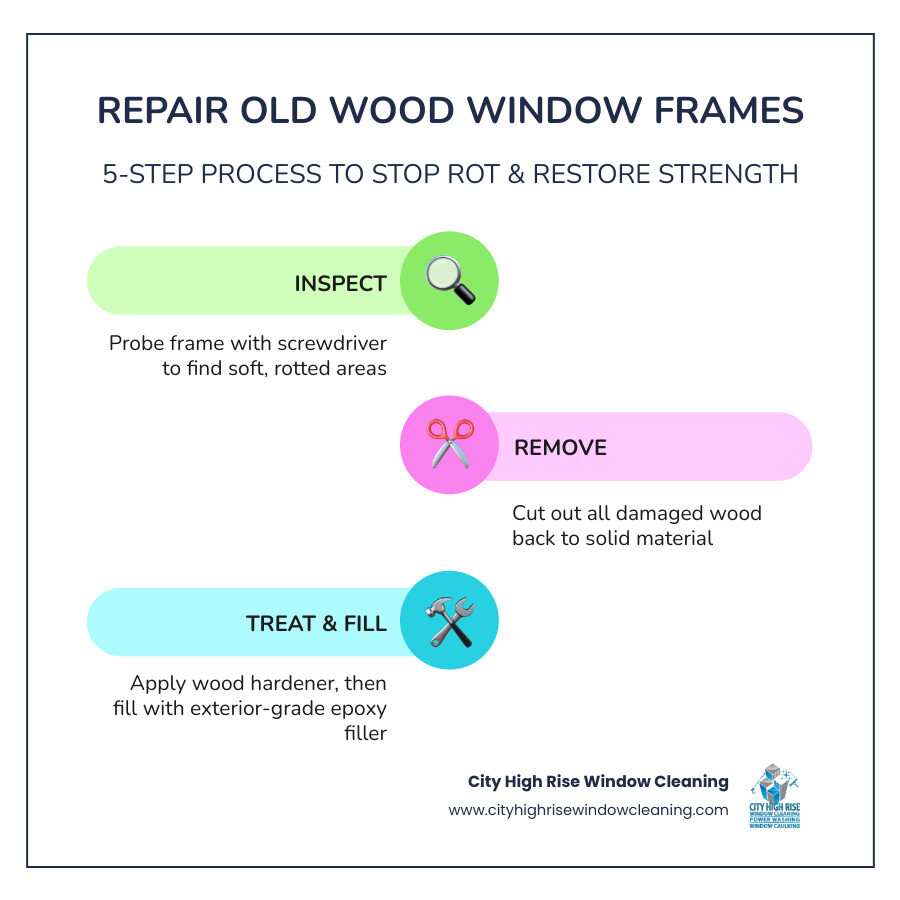
Quick Repair Steps:
- Inspect – Probe the frame with a screwdriver to find soft, rotted areas
- Remove – Cut out all damaged wood back to solid material
- Treat – Apply wood hardener to strengthen remaining wood
- Fill – Use exterior-grade epoxy filler to rebuild the frame
- Finish – Sand smooth, prime, and paint with two coats
When to Repair vs. Replace: Repair if less than 20% of the frame is rotted. Replace if structural damage exceeds this threshold or if the frame is warped beyond repair.
If you own an older building in New York City, Long Island, Westchester, or New Jersey, you’ve probably noticed peeling paint, soft spots, or moisture stains around your wood window frames. These are warning signs that shouldn’t be ignored.
Wood window frames in historic and commercial buildings were built with old-growth lumber that can outlast many modern replacements by decades if properly maintained. The National Park Service’s Preservation Brief 9 recommends repairing historic wood windows where feasible because it preserves original material and can be cost-effective over time.
But there’s a catch: timing matters. Once rot spreads beyond 20% of the frame, or if structural elements are compromised, replacement becomes the smarter investment.
The good news? Most rot damage is localized to sills and bottom corners where water collects. With the right tools, materials, and techniques, these problem areas can be restored to look and perform like new, preserving your building’s character and protecting your investment.
I’m Brett Hochman, and I’ve spent over 48 years maintaining and restoring building exteriors across the Tri-State area, including countless wood window frames on historic and commercial properties. Through decades of hands-on experience with how do i repair old wood window frame projects, I’ve seen which repair methods last and which fail within a few seasons.
In this guide, you’ll learn exactly how to assess damage, choose between DIY and professional repair, execute the restoration process step-by-step, and maintain your frames for maximum longevity, whether you’re managing a single brownstone or an entire commercial portfolio.
Summary (with the keyword): If you’re asking how do i repair old wood window frame rot, the winning approach is simple: remove all decayed wood, dry it completely, consolidate it with hardener, rebuild with exterior epoxy, then prime/paint and maintain it to stop moisture from coming back.
Important how do i repair old wood window frame terms:
- Commercial facade restoration
- Window Restoration
- Residential High Rise Window Cleaning
- Commercial High Rise Window Cleaning
- Window seal replacement
- Commercial glass restoration
Should You Repair or Replace Old Wood Windows?
When homeowners ask me, “is it really worth the effort?” my answer is almost always a resounding yes. Old windows were built differently. Most windows in historic New York City brownstones or Westchester estates were crafted from old-growth timber. This wood is denser, more stable, and naturally more rot-resistant than anything you can buy at a big-box store today. In fact, a properly maintained wood window will outlive ten modern vinyl replacements.
The 20% Rule
How do you know if you’ve crossed the point of no return? I use the 20% rule. If more than 20% of the wood frame is soft or missing, or if the structural “bones” of the window opening are compromised, replacement might be the smarter move. However, if the damage is localized to the sill or the bottom of the jambs, Window Restoration is highly effective.
Cost Comparison
Budget is always a factor in the Tri-State area. Restoration typically costs between $400 and $800 per window when done by a pro. Compare that to high-end wood replacements which can soar to $1,800 per unit, and the savings are obvious.
| Repair Type | DIY Estimated Cost | Professional Estimated Cost |
|---|---|---|
| Minor Rot Patching | $50 – $150 | $300 – $500 |
| Full Sash Restoration | $150 – $300 | $600 – $900 |
| Frame Component Splice | $100 – $250 | $500 – $800 |
How to Identify and Assess Wood Window Frame Damage
Before you pick up a chisel, you need to know what you’re dealing with. In our local climate—from the humid summers on Long Island to the damp, salty air in New Jersey—moisture is the primary enemy.
The Screwdriver Test
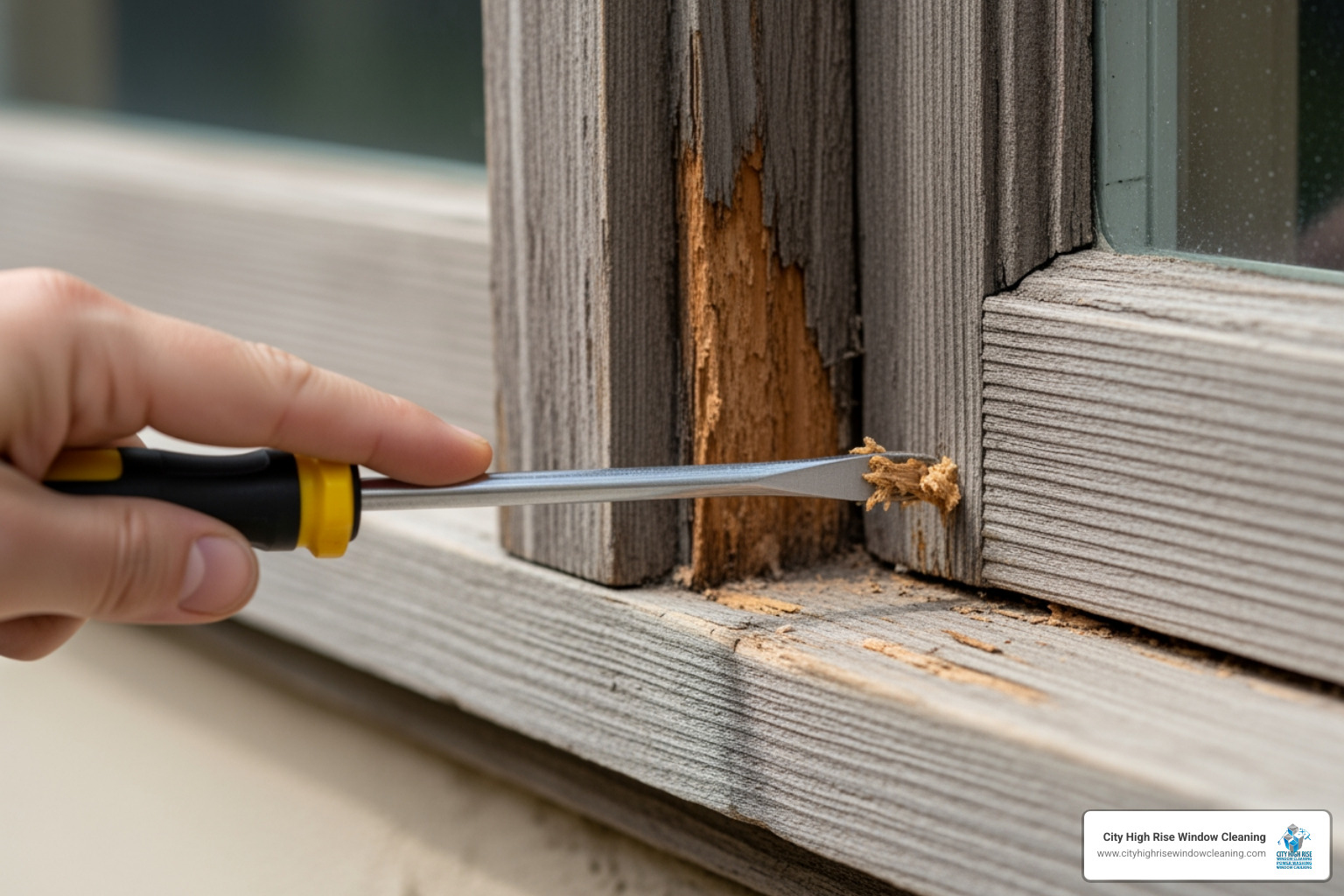
Take a flathead screwdriver and gently probe the wood, especially at the corners and the sill. If the wood feels spongy or the screwdriver sinks in with little resistance, you have rot. You should also look for:
- Peeling or Blistered Paint: This often indicates moisture is trapped behind the paint film.
- Musty Smells: A sign of active fungal growth (white or brown rot).
- Dark Discoloration: Wood that looks “burnt” or significantly darker than the surrounding area.
Safety First: The Lead Paint Factor
If your property was built before 1978, it almost certainly contains lead-based paint. Stripping this requires specific safety gear, including a HEPA-rated respirator and specialized containment. Never dry-sand old paint in these buildings; instead, use wet-scraping or chemical strippers to keep dust to a minimum. For professional standards on historic building components, see the GSA Guidance on Restoring Wood Window Sash and Frames.
Tools and Materials Needed for Wood Window Frame Repair
To do this right, you need more than just a bucket of wood filler. Professional-grade results require professional-grade materials.
- Essential Tools: Wood chisels, a shop vac (to remove every bit of dust), a heat gun (for paint removal), and various sandpaper grits (from 40-grit for heavy removal to 220-grit for finishing).
- Epoxy System: Don’t use “Bondo” or standard wood putty; they don’t flex with the wood. Use a two-part wood epoxy (like Abatron) which acts like synthetic wood.
- Wood Hardener: This liquid penetrates soft fibers and “petrifies” them, creating a solid base for the filler.
- Glazing Supplies: Glazier putty and glazier points (tacks) to hold the glass in place.
- Sealing: High-quality Window Caulking like OSI Quad to seal joints against the New York elements.
Step-by-Step: How to Repair Rotted Wood Window Frames
Once you’ve gathered your gear, follow this professional workflow to restore your frames.
1. Remove the Rot
Use your chisel to gouge out every bit of soft, crumbly wood. You must reach “bright” wood—wood that is solid and healthy. If you leave even a tiny bit of rot behind, it’s like a cavity in a tooth; it will keep spreading.
2. Clean and Dry
Vacuum the area thoroughly with a shop vac. If the wood is damp, let it dry out completely. You can use a hair dryer or heat gun on a low setting to speed this up, but don’t rush it. Epoxy will not bond to wet wood.
3. Consolidate the Wood
Apply a generous coat of wood hardener to the exposed area. This liquid soaks in and strengthens the remaining fibers. Let it cure until the wood feels rock-hard.
4. Apply the Epoxy Filler
Mix your two-part epoxy according to the instructions. I like to overfill the hole slightly because you can always sand it down later. Use a putty knife to shape it as best as you can while it’s still pliable. For deep holes (over 2 inches), you might need to apply the epoxy in layers or “splice” in a piece of new wood (a Dutchman patch).
5. Sand and Shape
Once the epoxy has cured (usually 12–24 hours), sand it smooth. Start with 40 or 60-grit sandpaper to level the surface, then move to 120 and finally 220-grit for a finish that matches the surrounding wood.
Finishing: Glazing, Priming, and Painting for Long-Lasting Results
The repair isn’t finished until it’s sealed. In New York and New Jersey, the “finish” is what actually protects your hard work from the next winter storm.
Glazing and Glass
If you removed the glass, reinstall it now. Apply a thin bead of bedding putty, press the glass in, and secure it with glazier points every 6 inches. Apply the exterior glazing putty at an angle to shed water. Pro Tip: You must wait for the putty to skin over (usually 7–14 days, sometimes longer depending on the brand) before painting.
Priming and Painting
Always use a high-quality primer. If you’ve used epoxy, a shellac-based primer or a high-bond oil primer works best. For the topcoat, use a professional-grade enamel paint. I recommend our Exterior High Rise Painting standards: two thin, even coats are always better than one thick, gloppy coat. Ensure your paint overlaps the glass by about 1/16th of an inch—this creates a “weather seal” that prevents water from getting behind the putty.
Preventing Future Rot: Pro Maintenance Tips
Maintenance is the difference between a 5-year repair and a 50-year restoration.
- Annual Inspections: Every spring, walk around your property. Look for cracked caulk or peeling paint.
- Gutter Maintenance: Overflowing gutters are the #1 cause of window rot in Long Island and Westchester. Keep them clear.
- Clear the Weep Holes: If your windows have drainage holes, make sure they aren’t clogged with dirt or paint.
- Professional Cleaning: Regular Commercial High Rise Window Cleaning doesn’t just make the glass shine; it allows pros to spot early signs of frame failure before they become “epic” tasks.
Frequently Asked Questions about Wood Window Frame Repair
How do I fix deep rot in a wood window frame?
For rot deeper than two inches, epoxy alone might not be enough. The best method is to “excavate” the rot, then cut a piece of matching wood (like cedar or old-growth pine) to fit the hole. Glue this “Dutchman” patch in using waterproof epoxy adhesive, then sand and finish as normal.
Can I repair window frame paint without stripping everything?
If the existing paint is stable and not lead-based, you can scuff-sand the surface and use a “peel-stop” or high-bonding primer to seal the edges of the old paint. However, for a restoration meant to last a decade, stripping back to bare wood is always the gold standard.
When should I hire a pro for window frame repair?
If the window is on a high floor (requiring scaffolding or specialized access), if you suspect lead paint, or if the rot involves the structural framing of the building, call a professional. At City High Rise Window Cleaning, we handle the complex restorations that DIYers shouldn’t risk.
How long does a restored wood window frame last?
With proper maintenance and high-quality paint, a restored frame in the NYC area can easily last 10–20 years. The key is addressing small paint cracks as soon as they appear.
What’s the fastest way to stop window frame rot from spreading?
Remove the moisture source immediately. Then, scrape away the soft wood and apply a wood preservative or hardener. This “stops the clock” on the fungus until you can perform a full epoxy repair.
Related Resources
- How to Choose the Best Window Restoration Service in NYC
- Post Construction Cleaning
Conclusion
Restoring old wood window frames saves money, preserves your property’s character, and protects against future damage. Whether you are tackling a single window or managing a historic landmark, the key is thoroughness. Don’t just cover up the damage – remove the rot, seal the wood, and use the best materials available.
If you’re maintaining multiple elevations or hard-to-access windows in New York City, Long Island, Westchester, or New Jersey, pairing repairs with routine services like Commercial High Rise Window Cleaning can help you spot failing paint and caulk early, before rot returns.
Ready for a free quote? City High Rise Window Cleaning offers 24/7 live consultation.


