

Finding the Best Window Restoration Services for Your Home
Finding the Best Window Restoration Services for Your Home
Window Restoration Services: Save 80% vs Replacement in NYC, Long Island & NJ
Window restoration services are the process of repairing, refinishing, and upgrading original windows — rather than tearing them out and replacing them — to restore both their beauty and performance.
If you’re looking for a quick answer on what these services typically include, here it is:
| Service | What It Does |
|---|---|
| Sash repair & cord replacement | Restores smooth operation and counterbalance |
| Reglazing & glazing putty | Seals glass panes, stops drafts |
| Weatherstripping | Reduces air leakage by up to 90% |
| Wood rot repair (epoxy/Dutchmen) | Saves deteriorated frames from replacement |
| Hardware repair or replacement | Restores locks, pulleys, and lifts |
| Storm window installation | Boosts energy efficiency to match new windows |
| Paint stripping & refinishing | Protects wood and restores original appearance |
Original wood windows — especially those built from old-growth timber — have already proven themselves, lasting 50 to 120 years in many homes across New York, Long Island, Westchester, and New Jersey. And with the right restoration work, they can last another century. Yet every day, thousands of these irreplaceable windows are pulled out and sent to landfills, replaced by modern vinyl units that carry only 20-year warranties.
That’s a trade most property owners later regret.
I’m Brett Hochman, CEO of City High Rise Window Cleaning, and with over 48 years of hands-on experience in exterior building maintenance across NYC and the Tri-State area, I’ve seen how professional window restoration services can save both historic character and significant cost for property owners. That expertise shapes everything we cover in this guide.
You’ll learn what window restoration services include, how they compare to replacement, what they cost, and why property owners across New York City, Long Island, Westchester, and Northern New Jersey often save more by restoring instead of replacing.

What is Window Restoration and Why Does it Beat Replacement?
When I walk through neighborhoods in Brooklyn or the historic districts of Westchester, I often see homeowners being told their pre-1960 windows are “shot.” Usually, that just means the salesperson wants to sell them a truckload of vinyl. Window restoration is a holistic approach that treats the window as a repairable asset rather than a disposable commodity.
Restoration differs from replacement in one major way: longevity. A replacement window is a sealed unit that usually cannot be repaired once the seal fails or the vinyl warps. In contrast, a restored wood window is “infinitely repairable.” If a cord breaks in 50 years, you replace the cord. If a pane cracks, you reglaze it. You aren’t forced to buy a whole new window every 20 years.
Choosing to restore also keeps high-quality materials out of our local landfills. In my 30+ years of running City High Rise Window Cleaning, I’ve seen how much waste construction projects generate. Restoration is the ultimate “green” building practice because it preserves the energy already “embodied” in the original wood. Learn more about our expert window restoration services to see how we can help you go green while saving green.
Common Problems Solved by Window Restoration Services
Most of the “unfixable” problems homeowners face are actually standard tasks for a restoration professional. Here are the issues I see most often in the NYC and New Jersey area:
- Rotting Sills and Frames: Years of neglected paint or poor drainage can lead to soft wood. We don’t tear the window out; we treat the rot and rebuild the profile.
- Broken Sash Cords: If your window won’t stay up or requires a prop, the cotton cords or chains connected to the internal weights have likely snapped.
- Foggy or Cracked Glass: Moisture between panes (in early insulated glass) or simple cracks in historic wavy glass can be addressed through targeted glass replacement.
- Painted-Shut Frames: Decades of “slop-on” paint jobs often glue the sashes to the tracks. We carefully break those seals and plane the wood for smooth operation.
- Drafts and Rattling: Loose-fitting sashes let in the cold New York winter air. Restoration tightens these tolerances significantly.
The Superiority of Old-Growth Wood
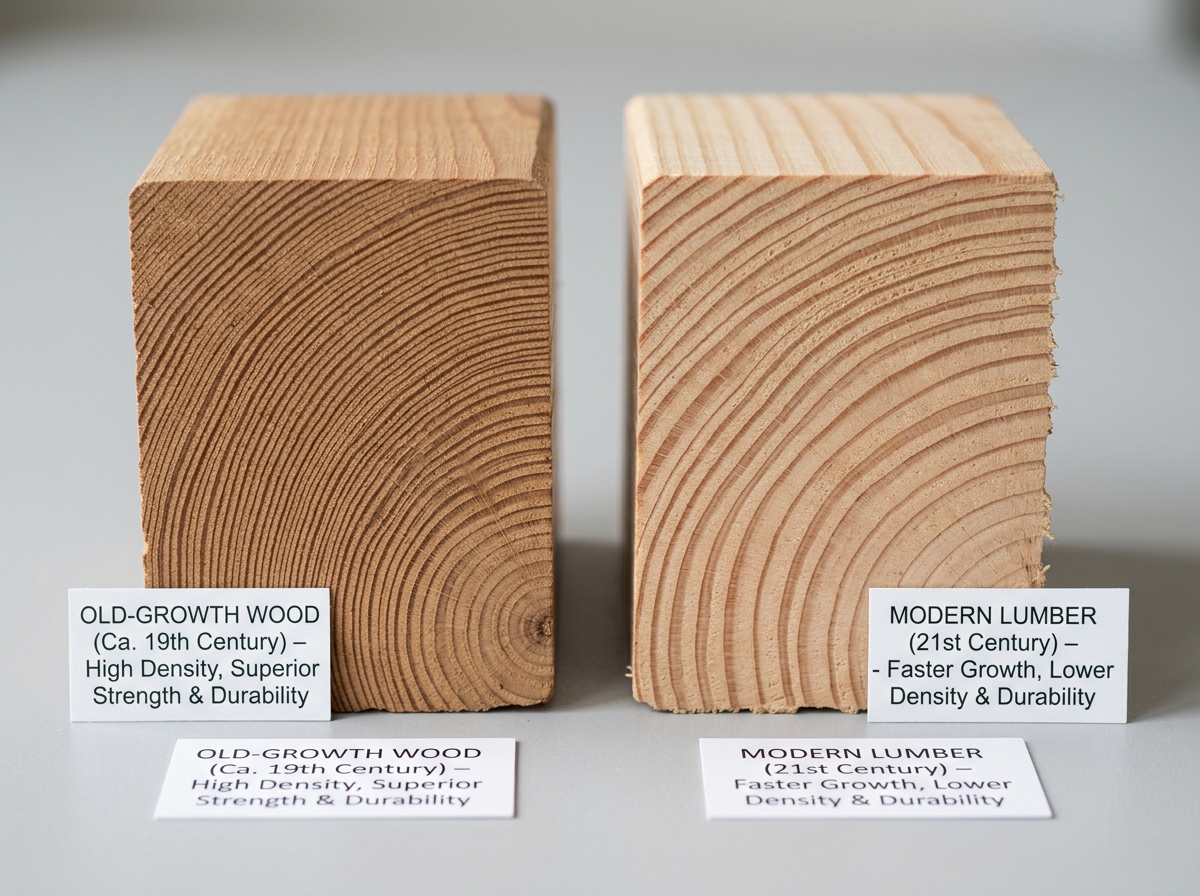
Why do I fight so hard to save these old windows? It’s all about the wood. Windows built before the mid-20th century were made from old-growth timber. Because these trees grew slowly in dense forests, their grain is incredibly tight—often 20 to 50 rings per inch.
This density makes the wood naturally resistant to rot and incredibly stable. Modern replacement windows use “plantation-grown” wood, which grows fast and has wide, soft rings that soak up moisture like a sponge. When you throw away an original sash, you are throwing away a material that literally doesn’t exist on the market anymore.
The Step-by-Step Process of Professional Window Restoration Services
Restoration isn’t a “quick fix”; it’s a disciplined craft. While every project in Long Island or Manhattan is unique, the professional workflow generally follows a specific path to ensure the windows look and function like new.
The typical process involves:
- Assessment and Cataloging: Every sash is marked and documented so it returns to its exact original opening.
- Sash Removal: We carefully remove the stop beads and parting beads to pull the sashes out of the frame.
- Paint Stripping: Old, lead-based paint is safely removed (following strict safety protocols) to reveal the healthy wood beneath.
- Wood Repair: We use specialized wood-saving epoxies to fill small holes or “Dutchmen repairs”—where we graft in new pieces of matching wood—for larger decayed areas.
- Glazing: We bed the glass in fresh Sarco Type M glazing putty, which provides the necessary elasticity to handle the seasonal expansion and contraction we experience in the Tri-State area.
- Priming and Painting: We use high-quality alkyd primers and topcoats to seal the wood against the elements.
Precision Mechanical Repairs
A window that doesn’t move is just a wall. Part of our window restoration services involves diving into the “pockets” of the window frame. We inspect the cast iron weights, lubricate the pulleys, and install new, high-tensile sash ropes or chains. We also replace the parting beads—the thin strips of wood that keep the upper and lower sashes from bumping into each other—ensuring the “tune-up” results in a window you can open with a single finger.
Surface Refinishing and Protection
The finish is what the world sees. I always recommend a museum-quality approach: using oil-based putties and protective coatings that are designed to breathe with the wood. In NYC’s harsh climate—where it’s 100 degrees in July and 10 degrees in January—this flexibility is what prevents the paint from cracking and the wood from rotting again.
Achieving Modern Energy Efficiency in Historic Homes
The biggest myth in the industry is that old windows are energy hogs. In reality, it’s not the glass that’s the problem; it’s the air leaking around the sashes. When we restore a window, we turn it into a high-performance envelope component.
| Window Type | Air Infiltration Reduction | Longevity |
|---|---|---|
| Unrestored Original | 0% (Drafty) | 100+ Years |
| New Vinyl Replacement | High (Initially) | 15-20 Years |
| Restored Wood + Weatherstripping | 90% Reduction | 100+ Years |
| Restored Wood + Storm Window | Highest Efficiency | 100+ Years |
By adding professional weatherstripping—like spring bronze or silicone bulb seals—we can reduce drafts by nearly 90%. If you want to go even further, enhance your home’s efficiency with our Expert Window Caulking Services, which seals the gaps between the window frame and your home’s masonry or siding.
The Role of High-Performance Storm Windows
If you live in a particularly cold part of New Jersey or a windy high-rise in Manhattan, storm windows are your best friend. Modern storm windows are a far cry from the clunky aluminum ones of the 1970s. Today, we can install low-profile, high-performance storms that are virtually invisible.
These storms add an extra layer of insulation and soundproofing—perfect for blocking out NYC street noise. When you pair a restored original window with a quality storm window, the thermal performance often meets or exceeds that of a brand-new double-pane window. These advanced solutions complement our window restoration services for maximum efficiency.
Eliminating Air Leakage
We focus heavily on the “meeting rail”—the place where the two sashes touch in the middle. By installing sash locks that pull the rails together tightly and perimeter sealing, we eliminate “thermal bridging.” This ensures that the heat you pay for stays inside your home.
Why NYC and Tri-State Property Owners Choose Restoration
In our neck of the woods, restoration isn’t just a choice; sometimes it’s the law. If you own a brownstone in a Brooklyn Landmark District or a historic estate on Long Island, the Landmarks Preservation Commission (LPC) often requires you to maintain the original architectural character.
For commercial properties that need to maintain their facade while staying clean, explore our Commercial High-Rise Window Cleaning in NYC. Homeowners and residential building managers can also benefit from our residential high-rise window cleaning services to keep restored windows looking their best. For more insights into maintaining historic properties, read our blog post on Preserving NYC’s Architectural Gems.
Compliance with Historic Preservation Requirements
When working within NYC Landmark districts, you can’t just pop in a vinyl window. You need a “Certificate of Appropriateness.” Restoration is the easiest path to approval because you are preserving the “true divided lites”—the individual panes of glass—rather than using the “fake” snap-in grids found on cheap replacements. If a window is truly beyond saving, we can provide authentic reproductions that match the original profile exactly.
Identifying Qualified Window Restoration Services in Your Area
Don’t just hire a general handyman. Window restoration is a specialty trade. When looking for a provider in New York, Long Island, Westchester, or New Jersey, look for:
- A 30-year track record: Experience matters when dealing with century-old pulleys and lead paint.
- Safety Certifications: Especially for high-rise work or lead-safe practices.
- Portfolio Review: Ask to see photos of their work on similar historic buildings.
- Licensing and Insurance: Never let someone work on your windows without being fully bonded and insured.
- Related exterior services: Companies that also offer high rise window caulking and facade care can often spot building-envelope issues before they become expensive repairs.
Cost Analysis: Restoration Investment vs. Replacement Expense
People often ask me, “Brett, isn’t restoration more expensive?” In the short term, the labor can be comparable to high-end replacement. However, when you look at the ROI, restoration wins every time.
A new vinyl window costs thousands and will likely need to be replaced again in 20 years. A restored window costs a fraction of that over its lifetime. In fact, many property owners see cost savings of 80% or more when they factor in that they won’t have to buy windows again for the rest of their lives. Discover the long-term value of professional window restoration services with City High Rise Window Cleaning.
Long-Term Monetary Benefits
Beyond the sticker price, restoration adds significant property value. Buyers in Westchester and Long Island pay a premium for “original details.” Furthermore, the energy bill reduction and potential tax credits for historic preservation can make the project pay for itself in just a few years.
Frequently Asked Questions about Window Restoration (FAQs)
Q: Are window restoration services cheaper than full replacement?
A: Usually, yes over the long term. While restoration can have similar upfront labor costs to premium replacements, you avoid buying new windows again in 15 to 20 years.
Q: How long do restored wood windows last?
A: Properly restored original wood windows can last 50 years or more, and many last far longer with routine maintenance.
Q: Can restored windows really stop drafts?
A: Yes. Weatherstripping, reglazing, sash adjustment, and window restoration services can dramatically reduce air leakage. Adding Expert Window Caulking Services helps seal the perimeter too.
Q: Do I need restoration if my windows are painted shut or have some rot?
A: In many cases, yes. Painted-shut sashes, broken cords, loose glazing, and localized rot are common restoration issues and usually do not require full replacement.
Q: Do you serve New York City, Long Island, Westchester, and New Jersey?
A: Yes. City High Rise Window Cleaning serves property owners across NYC, Long Island, Westchester County, and Northern New Jersey.
Conclusion: Preserve Your Home’s Legacy with City High Rise Window Cleaning
Your windows are the “eyes” of your home. They define its character, protect you from the New York elements, and connect you to the history of your neighborhood. Replacing them with modern, short-lived materials is often a permanent mistake that diminishes your property’s soul and value.
City High Rise Window Cleaning brings over 30 years of experience to New York City, Long Island, Westchester, and New Jersey, offering unparalleled window restoration services. We stand by our 100% satisfaction guarantee and safety-first approach, ensuring your historic windows are not just repaired, but revitalized for generations to come. Don’t let drafts and decay diminish your home’s value – choose the sustainable, cost-effective solution.
Ready for a free quote? City High Rise Window Cleaning offers 24/7 live consultation. Call 917-749-8342 to speak to a live representative.


