

Don’t Let Your Awning Get Ugly: A Step-by-Step Cleaning Guide
Don’t Let Your Awning Get Ugly: A Step-by-Step Cleaning Guide
Why Knowing How to Clean an Awning Can Save You Thousands
Knowing how to clean an awning the right way is one of the simplest things you can do to protect your property’s exterior — and one of the most overlooked.
Here’s a quick answer if you need it fast:
How to clean an awning in 6 steps:
- Sweep off loose debris with a soft-bristled brush
- Rinse the fabric with a garden hose
- Mix mild soap with lukewarm water
- Scrub gently with a soft brush, top and underside
- Rinse thoroughly until no soap remains
- Let it air dry completely before retracting or rolling up
That’s the core process. Material type, stain severity, and whether you have a motorized unit will all affect the details — and we cover all of it below.
Awnings take a beating. In New York, New Jersey, and the surrounding metro area, they’re up against urban pollution, salt air, pollen, bird droppings, and humid summers that accelerate mold growth. Neglect adds up fast. Dirt embeds into fabric fibers, mildew takes hold, and what started as a cosmetic issue becomes structural damage — or an expensive replacement.
The good news: regular cleaning prevents most of it. Cleaning every 2–3 months keeps awnings performing well and looking sharp year after year. A quick monthly rinse between deep cleans does even more to slow the buildup.
The cost of ignoring it? Fabric replacement runs $350–$1,400. Motor replacements can add another $200–$600. A bucket of soapy water costs a few dollars.
I’m Brett Hochman, CEO of City High Rise Window Cleaning, with over 48 years of hands-on exterior building maintenance experience across NYC, Long Island, New Jersey, and Westchester — including extensive work on professional awning cleaning for commercial and high-rise properties. I’ve seen what improper awning care does to a building’s exterior, and this guide covers exactly how to clean an awning safely, effectively, and without causing damage. Let’s start with the most important variable: what your awning is actually made of.
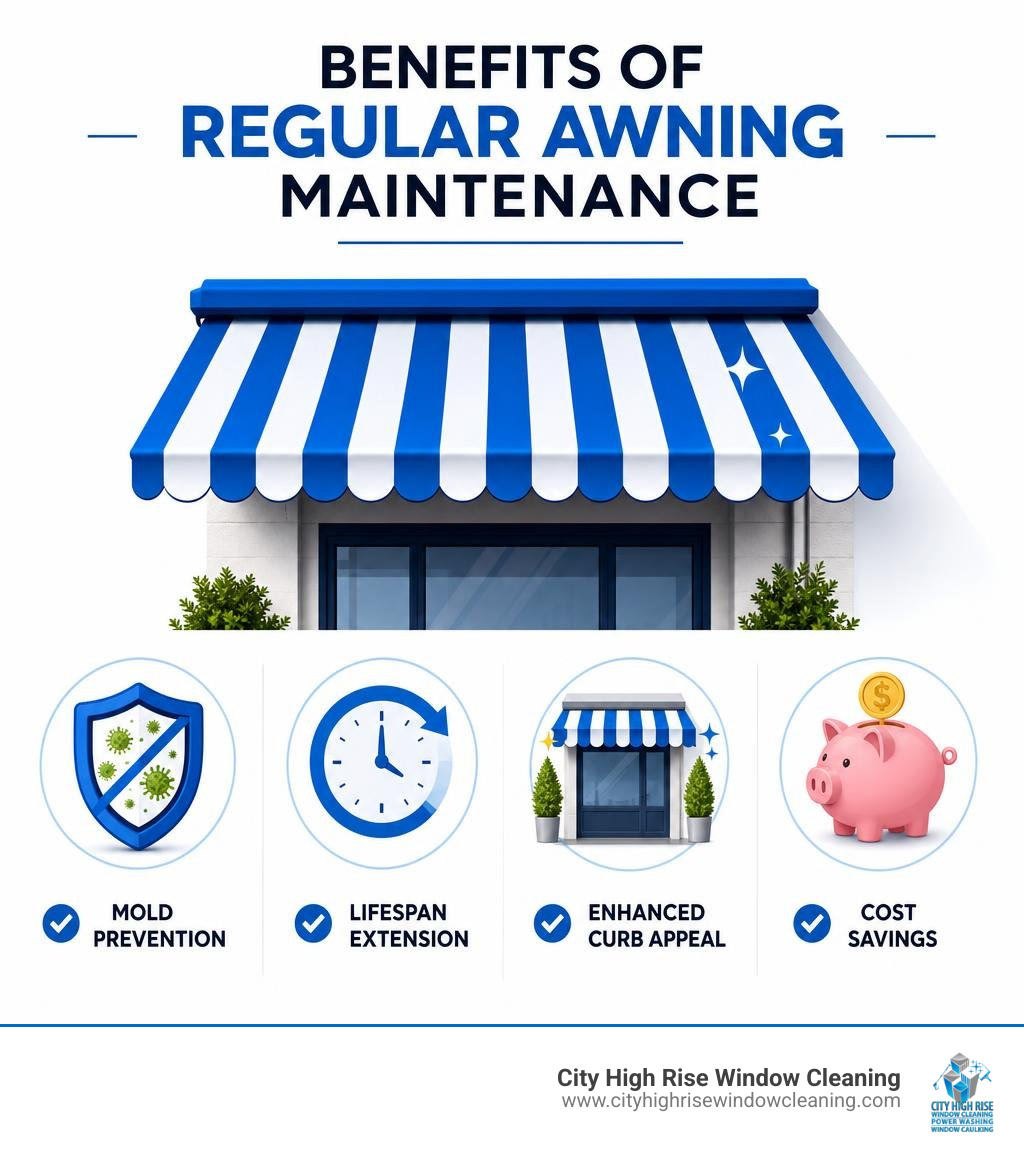
How to clean an awning terms to know:
Understanding Your Awning Material Before You Wash
Before you pick up a brush, you must identify your awning material. Using the wrong cleaning solution or scrubbing too hard can strip protective coatings, void warranties, or even tear the fabric. In my decades of servicing properties from Manhattan storefronts to Long Island estates, I’ve seen many well-intentioned DIY projects end in ruined material.
Below is a breakdown of the most common materials we clean in the tri-state area:
| Awning Material | Key Characteristics | Lifespan with Care | Best Cleaning Agent | What to Avoid |
|---|---|---|---|---|
| Canvas (Natural/Cotton) | Traditional look, highly breathable but prone to mildew and water absorption. | 5–10 Years | Mild dish soap or specialized canvas cleaner | Abrasive scrubbers, high pressure, heavy bleach |
| Acrylic (Solution-Dyed) | Highly fade-resistant, water-repellent, woven texture (e.g., Sunbrella). | 10–15 Years | Mild soap + warm water (bleach-safe for tough stains) | Hard-bristled brushes, silicone-based lubricants |
| Vinyl (PVC-Coated) | Completely waterproof, smooth surface, heavy but susceptible to mildew in humid climates. | 15–25 Years | Mild soap or specialized vinyl cleaners | Stiff brushes, solvents, rolling up while wet |
| Aluminum | Rigid, highly durable, rust-resistant but collects atmospheric soot and grime. | 20+ Years | Non-abrasive metal solvent or mild detergent | Acidic cleaners, metal scrapers, abrasive pads |
| Polyester | Strong, lightweight, often polyurethane (PU) coated for water resistance. | 5–8 Years | Mild dish soap in lukewarm water | Harsh chemicals, heavy scrubbing that strips PU coating |
Canvas Awnings
Traditional canvas is made from woven cotton or cotton blends. While it offers a classic aesthetic, natural canvas is highly susceptible to mold, mildew, and water damage if left damp. If you are dealing with this fabric, you should read our comprehensive guide on how to clean cloth awnings to ensure you don’t strip away its natural texture or destroy the fibers.
Acrylic Awnings
Most modern fabric awnings are made of solution-dyed acrylic, such as Sunbrella or Masacril. These fabrics are engineered with “color to the core” technology, meaning the pigments are locked into the fibers during manufacturing. They are highly UV-resistant and water-repellent. While the fabric itself does not support mildew growth, mildew can grow on the accumulated dirt and organic debris left on the surface.
Vinyl Awnings
Vinyl awnings are completely waterproof and highly durable, making them popular for commercial storefronts in busy urban areas. However, because vinyl is non-porous, moisture can easily get trapped in the seams and folds, creating a perfect breeding ground for mold. They require frequent surface washing to prevent a dingy film from forming.
Aluminum Awnings
Metal awnings are highly resilient against the harsh New York winters. However, they are prone to collecting acidic soot from city traffic and salt residue if you are located along the Long Island coast. They require non-abrasive metal cleaners to maintain their factory finish and prevent oxidation.
Essential Tools and Safety Gear for Awning Maintenance
You don’t need a truckload of expensive commercial equipment to clean your awning, but you do need the right tools to do the job safely and effectively. Working on ladders or reaching overhead can lead to injury if you aren’t prepared.
Here is the essential checklist for a safe DIY cleaning:
- Soft-Bristled Brush: Look for a brush with flagged nylon bristles (similar to a vehicle washing brush). Stiff bristles will abrade fabric weaves and strip protective coatings.
- Extension Pole: A telescoping pole allows you to reach the top sections of your awning while keeping your feet safely on the ground.
- Garden Hose with Spray Nozzle: A standard hose with an adjustable nozzle is all you need. Do not use a pressure washer unless you are highly experienced and have it dialed down to a safe, low-pressure setting.
- Bucket (5-Gallon): For mixing your soapy solution.
- Microfiber Cloths: Excellent for wiping down frames, joints, and valances.
- Safety Glasses: Essential to protect your eyes from falling soapy water, bird droppings, and loose debris when brushing overhead.
- Waterproof Gloves: Protects your hands from cleaning agents and organic grime.
- A-Frame Ladder: If you must use a ladder, ensure it is placed on flat, stable ground. Never lean an extension ladder directly against the awning fabric or frame, as they are not designed to support human weight.
If you need to stock up on these items, you can shop cleaning supplies at Home Depot to find professional-grade soft brushes and telescoping poles.
Step-by-Step Guide: How to Clean an Awning Safely
Now that you have gathered your tools and identified your material, it is time to wash. I always tell my team: clean smarter, not harder. A systematic approach prevents you from working against yourself.
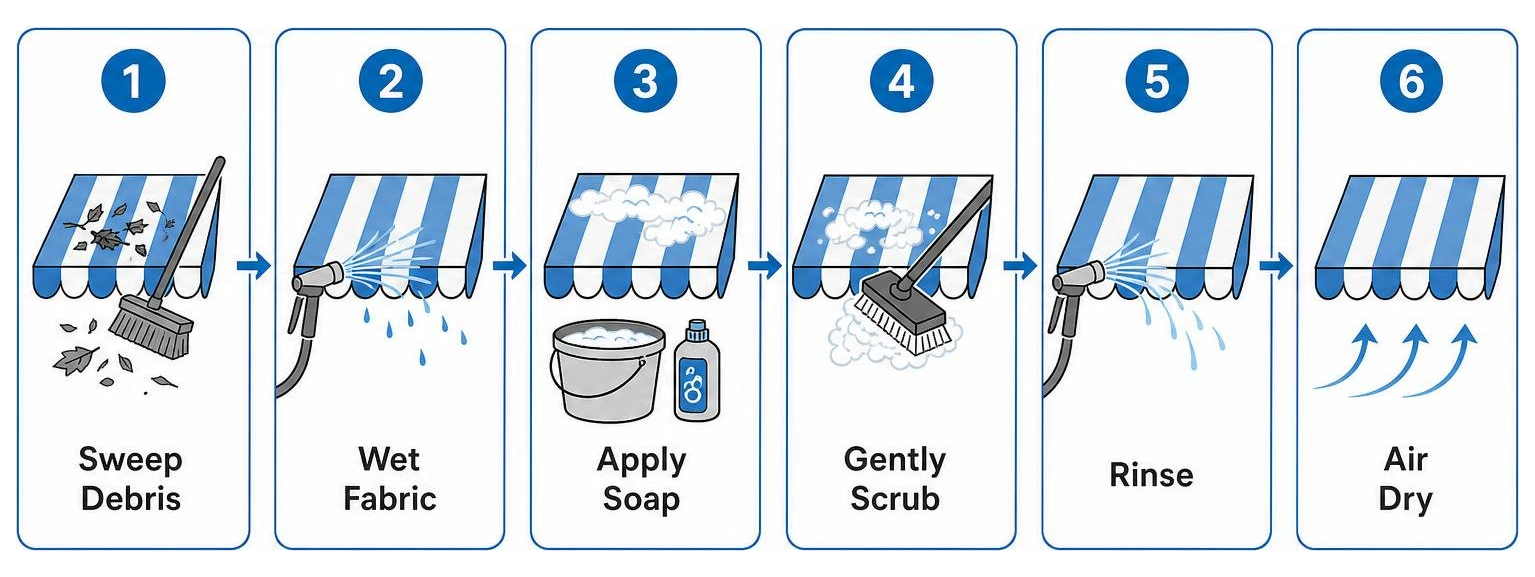
Step 1: Remove Loose Debris
Never apply water to a dry awning that is covered in leaves, twigs, cobwebs, or dust. Doing so turns dry dirt into a muddy paste that gets pushed deep into the fabric pores.
- Use a dry, soft-bristled broom or a leaf blower to sweep away all loose debris from both the top surface and the underside. Pay special attention to the seams and the valance, where dirt loves to hide.
Step 2: Pre-Rinse with Plain Water
Once the dry debris is gone, give the entire awning a thorough rinse with clean water from your garden hose. This washes away loose grit that could act like sandpaper against the fabric when you start scrubbing.
Step 3: Apply the Cleaning Solution
- Mix your cleaning solution (see recipes below) in your bucket.
- Apply the soapy mixture liberally to the awning fabric using your soft brush or a sponge mop. Start from the bottom and work your way up to prevent dirty water from running down dry sections and leaving permanent streak marks.
- Let the solution sit on the fabric for 15 to 20 minutes to break down the grime, but do not let it dry out. If you are cleaning on a sunny day, work in small sections or keep the fabric misted with water.
Step 4: Scrub Gently
- Using your soft brush, gently scrub the fabric in circular motions.
- Do not grind the brush into the material. Let the soap do the heavy lifting.
- Don’t forget to scrub the underside of the awning. The underside often collects exhaust smoke, cooking grease, and spiderwebs, making it prime real estate for mold.
Step 5: Rinse Thoroughly
This is where many DIYers fail. Any soap residue left on the fabric will act as a dirt magnet, attracting dust and pollution the moment the awning dries.
- Rinse the awning from top to bottom with your garden hose.
- Keep rinsing until the water running off the edges is completely clear and free of soap bubbles. Take extra time to flush out the seams, hems, and pockets where soap can settle.
Step 6: Let It Air Dry Completely
- Leave the awning fully extended to air dry.
- Depending on the humidity in New York or New Jersey, this can take anywhere from 4 to 8 hours.
- Never retract or roll up a wet awning. Trapping moisture inside the tight folds of a rolled awning is a guaranteed way to grow mold and mildew within 24 to 48 hours.
For a deeper dive into seasonal care schedules, you can read the Awning Cleaning Guide to keep your shade system pristine year-round.
Preparing the Best Solution for How to Clean an Awning
The perfect cleaning solution depends on the material you are washing. Here are three field-tested recipes that we use for various awning types:
1. The Standard Gentle Wash (Best for Acrylic, Polyester, and Vinyl)
- Ingredients: 1/4 cup of mild dish soap (like Dawn) or mild laundry detergent per 5 gallons of lukewarm water.
- Why it works: It breaks down daily grime, pollen, and light bird droppings without stripping water-repellent coatings.
2. The Deep-Clean Mold & Mildew Buster (For Acrylic and Vinyl Only – NOT Cotton Canvas)
- Ingredients: 1 cup of household bleach, 1/4 cup of mild soap, and 1 gallon of water.
- Why it works: Bleach kills mold spores on contact.
- Important: Only use bleach if the manufacturer explicitly allows it (e.g., Sunbrella). Always test a small, hidden spot first to check for colorfastness, and keep bleach solutions off the thread seams as much as possible, as bleach can degrade stitching over time.
3. The Natural Vinegar Solution (Safe Alternative for Canvas)
- Ingredients: 1 part white vinegar to 4 parts warm water.
- Why it works: Vinegar is a natural disinfectant that cuts through light mold and mineral deposits without harsh chemicals.
If you are maintaining an RV or mobile camper shade, you can see Lippert’s RV awning cleaning tips for specialized instructions on managing vinyl roll-out mechanisms.
Rinsing and Drying: Crucial Steps in How to Clean an Awning
I cannot emphasize this enough: proper rinsing and drying are the most critical parts of the entire process.
When you rush the rinse phase, the soap dries on the fibers. This creates a sticky microscopic film that grabs onto airborne dirt, car exhaust, and tree pollen. Within a few weeks, your awning will look dirtier than it did before you washed it.
Additionally, drying is your main defense against mold. If you are forced to retract your awning while it is wet due to an unexpected storm, make a mental note to extend it again the absolute moment the rain stops so that it can dry completely in the air.
For high-quality European engineered systems, you should check markilux cleaning instructions to see how they advise handling premium woven fabrics and integrated cassette designs.
How to Treat Stubborn Stains Without Damaging the Fabric
Sometimes a basic wash isn’t enough. Awnings are targets for a variety of tough, localized stains. Here is how to treat them safely:
- Bird Droppings: These are highly acidic and can etch into vinyl or stain acrylic if left too long. Scrape off dry crusts gently with a plastic putty knife. Apply a concentrated drop of mild dish soap directly to the stain, let it sit for 5 minutes, and scrub with a soft-bristled brush before rinsing.
- Tree Sap: Do not try to scrub wet sap, as you will only spread it. Let it dry completely. Once dry, gently scrape away the excess. Dampen a microfiber cloth with isopropyl alcohol (rubbing alcohol) and dab the spot gently. The alcohol will dissolve the sap without harming solution-dyed acrylic or vinyl.
- Rust Stains: Rust usually drips onto the fabric from corroded metal frames or hardware. Treat rust stains with a mild citric acid or oxalic acid solution (such as Bar Keepers Friend). Apply, scrub gently, and rinse immediately. Do not use bleach on rust stains, as bleach can permanently set the rust into the fabric.
- Grease and Oil: Common near outdoor kitchens or restaurants. Apply a heavy-duty degreaser or liquid dish soap directly to the spot. Work it in with a soft sponge, let it sit, and flush thoroughly with warm water.
For heavily stained commercial canopies that require specialized hot water treatment, you can read the complete guide to power washing awnings to learn when to bring in professional equipment.
Caring for Awning Frames, Motors, and Hardware
An awning is more than just fabric; it is an integrated mechanical system. Neglecting the frame, arms, and motor housing will lead to squeaking, jamming, and mechanical failure.
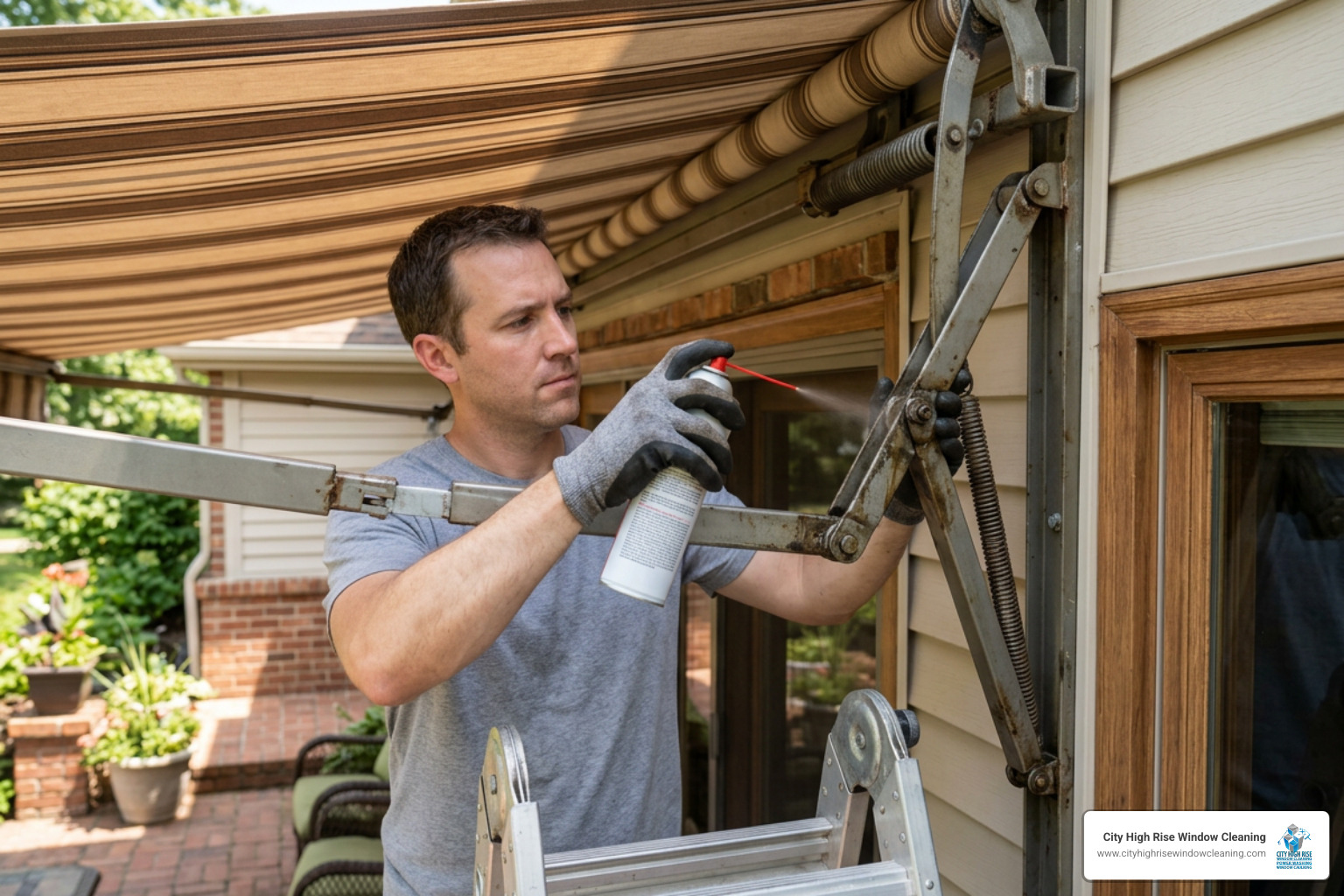
Frame Cleaning and Protection
Whether your frame is made of powder-coated steel or aluminum, it needs regular cleaning. Wipe down the metal arms and joints with your soapy water solution. Once dry, you can apply a thin coat of high-quality automotive paste wax to the metal frame. This protects the finish from UV rays and helps shed rain and salt air.
Motorized Awning Care
Motorized awnings require extra caution to protect their electrical components.
- Disconnect Power: Always cut the power to the awning at the breaker before cleaning near the motor housing.
- Protect the Motor: Do not spray water directly into the motor housing or control box. Cover these areas with a plastic sheet before washing the fabric.
- Lubrication: Retractable joints and pivot pins should be lubricated once or twice a year. Use a dry silicone or Teflon spray lubricant. Avoid heavy oils or WD-40, which attract dust and create an abrasive grinding paste inside the joints.
To keep your automated system running smoothly through hot summers and freezing winters, you can learn about motorized awning care from industry experts.
Frequently Asked Questions About Awning Care
Can I use a pressure washer on my awning?
As a rule of thumb, no. High-pressure water can easily tear through fabric, blow out stitched seams, and strip away the protective water-repellent or UV coatings. While some professional awning cleaners use highly specialized, wide-angle low-pressure nozzles, a standard household pressure washer is too risky for DIY use. Stick to a standard garden hose with a spray nozzle.
How often should I clean my outdoor awning?
You should perform a light cleaning (brushing off debris and hosing down with water) once a month during the spring and summer. A deep wash with soap should be done at least twice a year — once in the spring before the sunny season starts, and once in the fall before winter storage. If you live in an urban environment like NYC or close to the ocean on Long Island, you may need to deep-clean every 2 to 3 months to combat soot and salt buildup.
When should I repair or replace my awning instead of continuing to clean it?
No amount of cleaning can fix structural damage. It is time to consider a repair or replacement if you notice:
- Large tears along the seams or body of the fabric.
- Dry rot, where the fabric becomes brittle and tears easily under light pressure.
- Bent or cracked metal support arms.
- A motor that hums but fails to retract the awning even after lubrication.
Conclusion
Cleaning your awning is one of those classic maintenance tasks where a small investment of time yields massive returns. By following this guide, you can keep your property looking sharp, protect your investment, and avoid the high costs of premature replacement.
However, we also know that cleaning large, high, or motorized awnings can be a massive chore — especially if you are dealing with multi-story buildings, busy commercial storefronts, or hard-to-reach residential setups.
That is where we come in. At City High Rise Window Cleaning, we bring over 30 years of specialized exterior building restoration experience to New York City, Long Island, New Jersey, and Westchester. We combine commercial-grade, low-pressure hot water systems with a 100% customer satisfaction guarantee and an uncompromising commitment to safety.
If you would rather leave the heavy lifting to the pros, you can get professional awning cleaning services from our highly trained team today.
Ready for a free quote? City High Rise Window Cleaning offers 24/7 live consultation. Call 917-749-8342 to speak to a live representative.


