

Expert Strategies for a Spotless Commercial Building Exterior
Commercial building washing: 5 Expert Spotless Tips
Stop Losing Tenants: Commercial Building Washing in NYC & NJ That Protects Your Property and Cuts Repair Costs
Commercial building washing is the professional process of cleaning the exterior surfaces of commercial properties using specialized equipment and techniques like pressure washing, power washing, or soft washing. For property managers and building owners in NYC, Long Island, Westchester, and New Jersey, it’s not just about aesthetics—it’s about protecting your investment, maintaining tenant satisfaction, and ensuring your building passes inspection.
Quick Answer: What You Need to Know About Commercial Building Washing
| Method | Best For | Typical Cost | Frequency |
|---|---|---|---|
| Pressure Washing | Concrete, brick, stone | $0.15-$0.75/sq ft | Annual to bi-annual |
| Power Washing | Heavy grease, oil stains | $0.25-$0.40/sq ft | As needed |
| Soft Washing | Stucco, EIFS, delicate facades | $0.20-$0.60/sq ft | Annual |
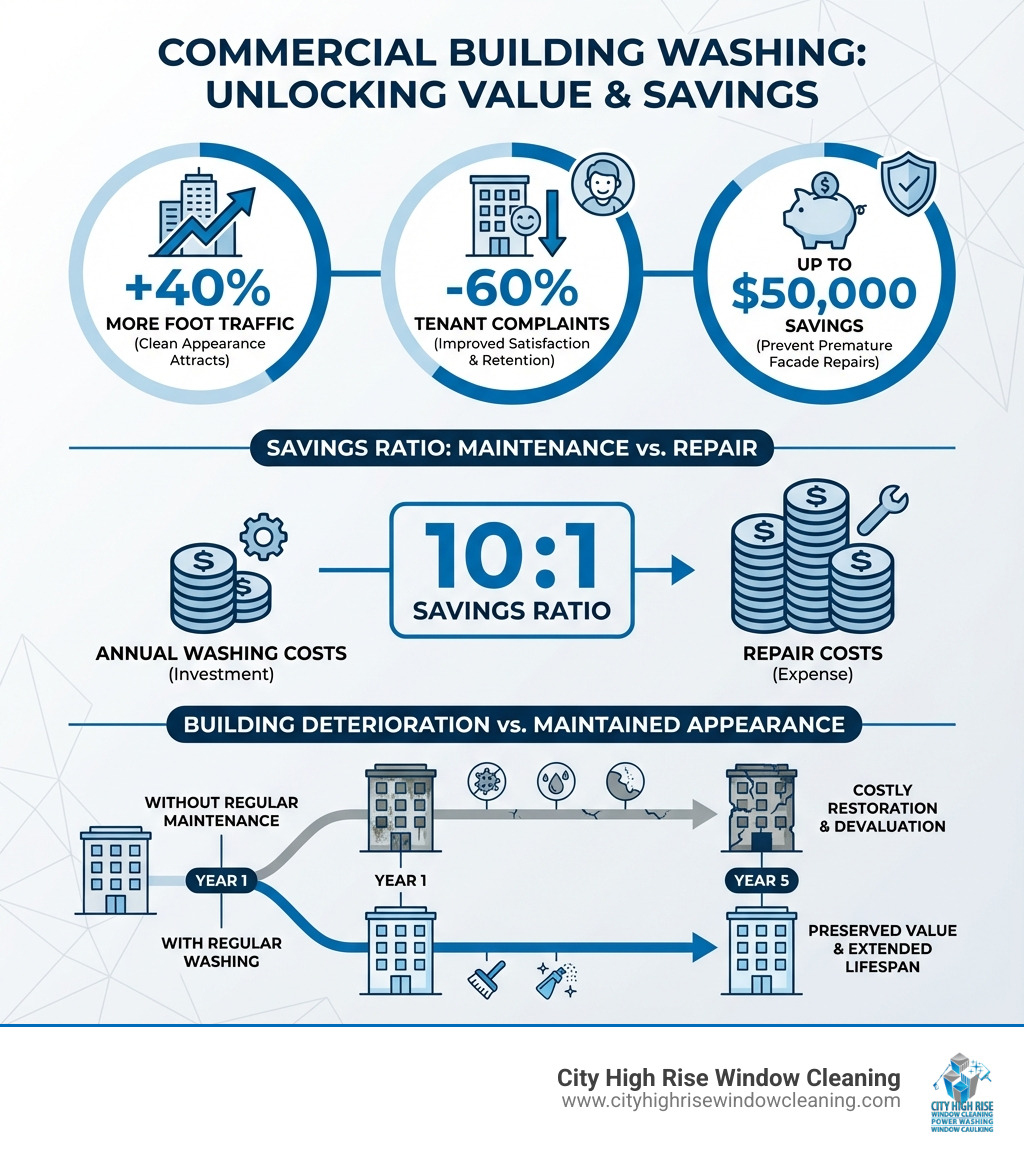
Your building’s exterior faces a daily assault from NYC’s urban environment. Exhaust fumes, acid rain, salt from winter de-icing, mold, mildew, and algae don’t just make your property look shabby—they actively degrade building materials and create health hazards for occupants. As one office complex in Houston’s Galleria area finded, an algae-covered exterior cost them three potential tenants in a single month. The message was clear: a dirty building signals a business that doesn’t care about details.
The stakes are even higher in competitive markets like Manhattan, Long Island, Westchester, and Jersey City, where every building is competing for tenants and customers. A clean, well-maintained facade signals professionalism and quality. Property managers consistently report that regular cleaning schedules reduce major repair costs, extend material lifespan, and help attract quality tenants faster. The cost of maintenance, as the industry saying goes, is always less than the cost of replacement.
I’m Brett Hochman, CEO of City High Rise Window Cleaning, and I’ve been leading exterior building maintenance projects across New York and New Jersey since 1977. With nearly five decades of hands-on experience in Commercial building washing, facade restoration, and high-rise maintenance, I’ve seen how strategic exterior cleaning protects property value and prevents costly structural damage.
Basic Commercial building washing glossary:
- industrial window cleaner
- professional window cleaners near me
- Commercial High Rise Window Cleaning
- High Rise Hot Water Power Washing
Why a Clean Exterior is a Smart Investment, Not an Expense
When you think about your commercial property in busy New York City, Long Island, New Jersey, or Westchester, what’s the first thing that comes to mind? For many, it’s the bottom line. And that’s exactly where a clean exterior pays dividends. My experience over decades has shown me that a clean building isn’t just a pretty face; it’s a strategic asset that directly impacts your property’s value, tenant retention, and even daily operations.
A clean, well-maintained exterior doesn’t just happen. It’s the result of a proactive approach to property management, and it signals professionalism and attention to detail. Property managers I’ve worked with consistently report that implementing regular cleaning schedules helps them reduce major repair costs, extend the lifespan of their building materials, and maintain competitive rental rates. This proactive maintenance also attracts quality tenants faster, ensuring higher lease renewal rates and fewer complaints. As the adage goes, “the cost of maintenance is always less than the cost of replacement.”

Improves Curb Appeal and Customer Perception
“You never get a second chance to make a first impression.” This isn’t just a catchy phrase; it’s a fundamental truth in the commercial real estate world, especially in a competitive market like NYC. Curb appeal is a powerful thing for commercial buildings, just as it is for residential homes. A clean storefront has a direct impact on customer perception and foot traffic. My clients have seen how a sparkling facade can draw in more potential customers and clients.
Think about it: a dirty, shabby, rundown building facade doesn’t instill confidence. It tells a story about your business, and if that story is one of neglect, you could be losing customers before they even step inside. Conversely, a clean exterior broadcasts professionalism, attention to detail, and quality business operations. This translates to higher customer trust, better online reviews, and valuable word-of-mouth referrals. A well-maintained building looks cared for, which makes staff and visitors feel great about the business.
Contributes to Property Longevity and Maintenance
Beyond aesthetics, Commercial building washing is a crucial part of preventive maintenance. Over time, pollutants, pollen, and everyday dirt accumulate on building surfaces. If left unattended, these can wreak havoc on your building, giving it a worn-down appearance and, more seriously, leading to long-term structural damage. Contaminants like mold, mildew, and bird droppings are not just unsightly; they’re acidic and can erode a building’s surfaces over time.
Regular power washing helps to identify and address these issues before they escalate into costly repairs. It removes the grime that can trap moisture and accelerate material deterioration. For instance, regular building washing can double the life of paintwork, a significant saving in the long run. By investing in routine exterior cleaning, you’re not just cleaning; you’re protecting your building’s structural integrity and extending the life of its surface coatings. To learn more about our comprehensive approach to exterior maintenance, you can explore More on our professional power washing services.
Promotes Health and Safety
Working environments have a significant impact on people’s health, and this extends to the exterior of your building. How a building’s condition impacts occupant health. Mold, salts, algae, moss, mildew, and other contaminants accumulating on your property create unhygienic conditions. If not removed, these substances can interfere with indoor air quality, resulting in allergies and ailments for occupants.
Regular cleaning removes slip hazards caused by algae and mildew on walkways, a common concern in busy areas of NYC and New Jersey. It also eliminates pest attractants like food residue and organic matter, contributing to a healthier environment. Power washing effectively removes mold spores, pollen, and other allergens, creating a safer space for everyone who enters your building. Furthermore, by cleaning built-up dirt and debris from exterior walls and HVAC vents, professional power washing can even improve the efficiency of your heating and cooling systems, potentially lowering your energy bills.
Decoding the Methods: Power Washing vs. Pressure Washing vs. Soft Washing
When I talk to building owners and property managers in New York, Long Island, Westchester, and New Jersey, one of the most common questions I get is about the different types of washing techniques. It’s not just about blasting water at a building; choosing the right method is crucial for effectiveness and, more importantly, for protecting your property.
Here’s a breakdown of the key differences:
| Method | Key Differences | Best Uses |
|---|---|---|
| Pressure Washing | Cold water; High pressure; Ideal for tough, hard surfaces. | Concrete, brick, stone, parking garages, loading docks in NYC, Long Island, Westchester, and New Jersey. |
| Power Washing | Heated water; High pressure; Best for tough, stubborn stains like grease, oil, and mold. | Restaurant exteriors, dumpster pads, greasy sidewalks, and high-traffic areas that need sanitation. |
| Soft Washing | Low pressure; Chemical solutions; Ideal for delicate surfaces and those prone to organic growth. | Stucco, EIFS, historic facades, painted surfaces, asphalt shingles, and other delicate materials. |
The Key Difference: Is It Heat, Pressure, or Technique?
The primary distinction among these washing methods lies in the presence of heat and the level of water pressure applied. As I’ve always emphasized to my teams, selecting the right approach is paramount to both effectiveness and preventing costly damage.
-
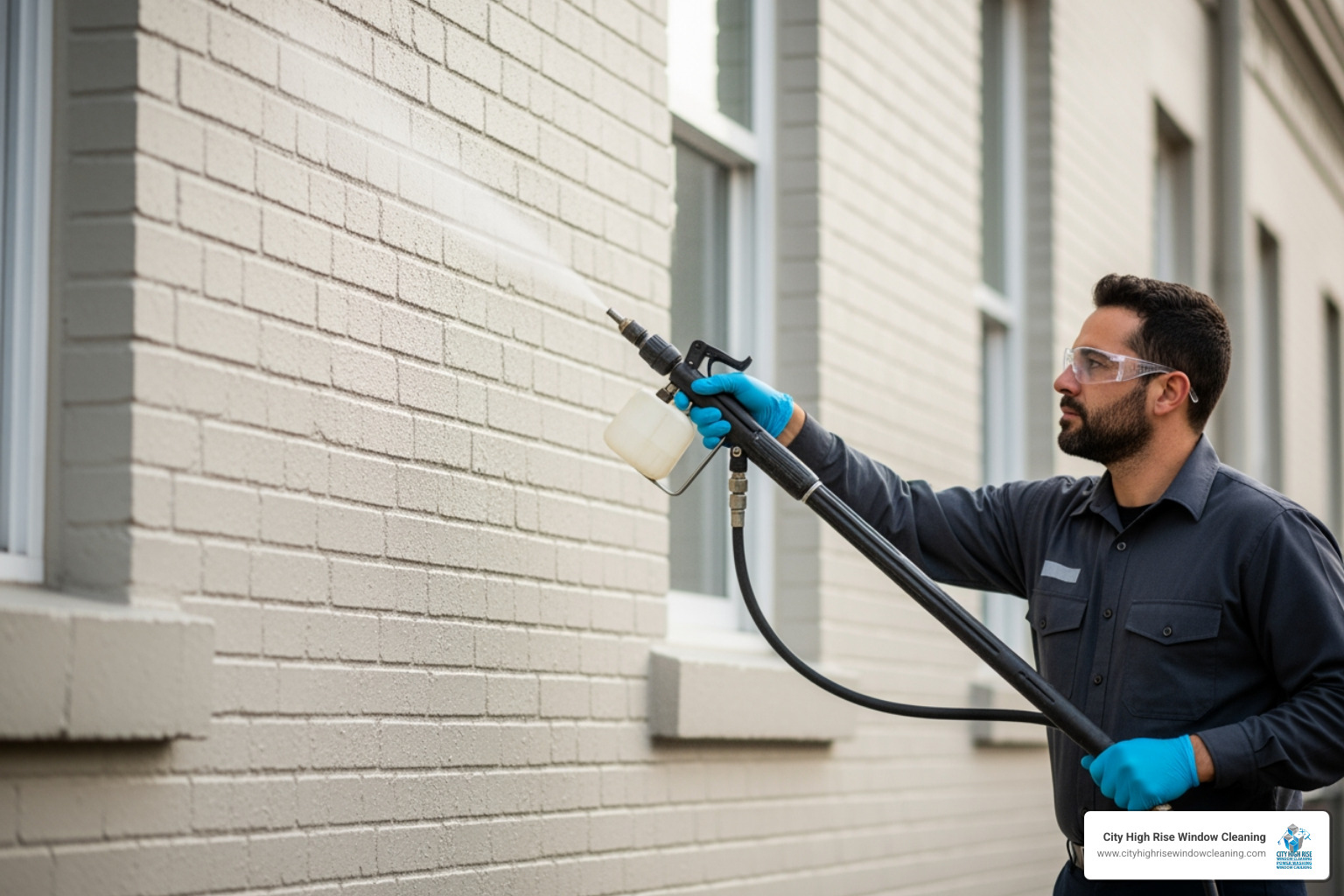
Pressure Washing (Cold Water): This method involves using high-pressurized water jets to blast away dirt, dust, grime, mud, stains, mold, salt, and even chewing gum. It typically uses regular-temperature water. While effective for robust surfaces, it may not perform as well against stubborn organic growth like deep-seated mold or moss. My crews often deploy this for general cleaning of concrete walkways, parking garages, and durable brick facades where cold water and sheer force are sufficient to remove surface contaminants.
-
Power Washing (Heated Water): This is where the “power” comes in. Power washing is essentially pressure washing but with the added benefit of heated water and steam. This heat makes it significantly more effective at breaking down and removing tough, stuck-on substances like grease, oil stains, and deep-seated organic matter that cold water alone might struggle with. For commercial kitchens, restaurant exteriors in New York City, or areas with heavy vehicle traffic, the high-pressure, high-temperature water provides improved sanitization and superior cleaning. Learn about our specialized High Rise Hot Water Power Washing.
-
Soft Washing (Low-Pressure, Chemical Solutions): This technique is a game-changer for delicate surfaces. Instead of relying on high pressure, soft washing uses low-pressure water (typically under 100 PSI) combined with specialized chemical solutions to lift and dissolve stains, mold, mildew, and algae. The chemicals do the heavy lifting, allowing for a gentle rinse that won’t damage fragile materials like stucco, EIFS (Exterior Insulation and Finish Systems), historic facades, painted wood, or vinyl siding. It’s also a favorite choice for cleaning roofs, where high pressure can strip granules and reduce lifespan. My teams use this method extensively across New York, Long Island, Westchester, and New Jersey to protect our clients’ diverse architectural investments.
What Surfaces Can Be Washed (And What to Avoid)
Knowing what to wash and how to wash it is critical. Misapplication of pressure or heat can lead to irreversible damage, which is why professional assessment is non-negotiable.
Suitable Surfaces for *Commercial Building Washing (with appropriate method):*
- Concrete: Driveways, sidewalks, parking garages, loading docks. Pressure or power washing is highly effective here for removing tire marks, oil stains, grime, and chewing gum.
- Brick: Durable brick can typically handle pressure washing, but care must be taken with older or softer bricks and mortar. For these, soft washing is often preferred.
- Metal Panels: Modern metal cladding on commercial buildings can be pressure washed, but always with consideration for coatings and seals.
- Stone: Natural stone facades are often suitable for pressure washing, but delicate or porous stones may require soft washing to prevent erosion.
- Vinyl Siding: Soft washing is the go-to here. High pressure can warp or dislodge vinyl panels and force water behind them.
- Stucco and EIFS: These delicate materials demand soft washing to prevent etching, chipping, or moisture intrusion.
- Painted Surfaces: Soft washing with appropriate cleaners protects the paint while removing contaminants.
- Asphalt Shingles and Roofs: Always soft wash. High pressure can remove protective granules, significantly shortening the roof’s life.
Surfaces to Avoid Power or Pressure Washing (or treat with extreme caution):
- Old or Crumbling Mortar/Brick: High pressure can easily dislodge mortar and damage historical brickwork, leading to costly repairs.
- Windows and Screens: The intense force can break glass, tear screens, or compromise seals, leading to moisture issues inside the building. My crews always clean windows separately and with specialized, gentler methods.
- Roofs and Gutters: As mentioned, high pressure on roofs is a no-go. Gutters should primarily be cleaned manually to remove debris, with low pressure used only for rinsing the underside.
- Outdoor Furniture and Landscaping: High pressure can strip paint, damage wood, or destroy delicate plants.
- HVAC Units: These are sensitive and can be damaged by direct high-pressure spray, affecting their efficiency and lifespan.
- Electrical Panels and Outlets: Water and electricity are a dangerous combination. These areas must always be covered and avoided.
My teams are trained to assess each surface carefully. We understand that a high-rise in Manhattan with a mix of glass and metal panels requires a different approach than a historic brick building in Westchester or a stucco facade in New Jersey.
Planning Your Commercial Building Washing Project
Planning is the backbone of any successful exterior maintenance project, especially in the complex urban environments of NYC and its surrounding areas. From scheduling to budgeting, every detail contributes to a seamless process and a significant return on your investment.
How Often Should You Schedule a Commercial Building Washing?
The frequency of Commercial building washing depends on several factors, including your building’s location, the materials it’s made of, and the level of environmental exposure. In my experience, a proactive approach is always best.
- Annual Cleaning: For most commercial buildings in New York, Long Island, and New Jersey, an annual full building wash is an excellent baseline. This helps protect against mold and lichen growth, which begins immediately upon accumulation of dust and organic matter. Annual cleaning can also help meet warranty conditions for newer building materials.
- Bi-Annual Cleaning: In areas with moderate exposure to pollutants or coastal humidity, or for buildings with more delicate surfaces like stucco, bi-annual cleaning might be more appropriate to prevent significant buildup.
- Quarterly Cleaning: High-traffic retail centers, restaurants, or buildings in heavily polluted urban environments like parts of Manhattan often benefit from quarterly cleaning schedules. These areas accumulate dirt, grease, and grime much faster, impacting curb appeal and customer perception more immediately. Restaurants, for instance, might need monthly cleaning for high-traffic areas and quarterly for the full exterior.
- NYC Climate Factors: Our region’s humid climate creates ideal conditions for mold, mildew, and algae growth. Salt used for de-icing roads in winter can also be corrosive to building paint and surfaces, necessitating more frequent washing. Proactive cleaning prevents these issues from taking hold and causing more extensive damage.
A custom maintenance schedule, developed after an initial assessment, is the most effective way to ensure your building remains spotless and well-preserved.
What Factors Influence the Cost?
Understanding the cost of Commercial building washing is crucial for budgeting and demonstrating ROI to stakeholders. There’s no one-size-fits-all price, as several variables come into play:
- Building Size (Square Footage): Naturally, larger buildings require more time, labor, and resources, directly impacting the overall cost.
- Building Height and Accessibility: High-rise buildings in NYC, for example, require specialized equipment like suspended scaffolding, hydraulic lifts, or industrial rope access. These methods involve highly trained and certified technicians and specific safety protocols, all of which contribute to the cost. Low-rise buildings are generally less complex to access.
- Level of Dirt and Grime: A building with years of accumulated mold, mildew, graffiti, or heavy grease stains will require more aggressive treatments, specialized chemicals, and longer cleaning times than one with light surface dust.
- Type of Surface: Delicate materials like stucco or historic facades necessitate soft washing, which might involve different chemicals and techniques than pressure washing durable concrete. Each method has its own associated costs.
- Equipment Required: Beyond access equipment, the type of washing machine (hot water power washer vs. cold water pressure washer), specialized nozzles, and surface cleaners all factor into the project’s complexity and cost.
- Water Access: Availability and proximity of water sources can influence logistical planning and costs.
- Local Permits: In certain municipalities within New York or New Jersey, permits may be required for exterior cleaning, especially if it involves specific equipment or wastewater management. My company handles all necessary permits to ensure compliance.
While a basic low-rise building wash might range from $0.15-$0.75+ per square foot, high-rise projects or those requiring hot water power washing for tough stains will be priced differently. It’s always best to get a detailed, written quote custom to your specific property.
How to Choose the Right Commercial Building Washing Service in NYC & NJ
Choosing a Commercial building washing service isn’t just about finding the cheapest quote. It’s about entrusting your valuable property to professionals who can deliver quality results safely and efficiently. In a market as dynamic as New York and New Jersey, vetting your contractors carefully is essential.
Your Vetting Checklist: 5 Things to Verify
Before I’d ever allow a crew on a job site, I’d ensure every item on this checklist is thoroughly covered. You should demand the same from any service you consider:
- Licensing and Permits: Ensure the company is properly licensed to operate in your specific municipality within New York, Long Island, New Jersey, or Westchester. Also, inquire about any local permits required for the job, especially for large-scale or high-rise projects. A reputable company will handle these details.
- Proof of Insurance (General Liability & Workers’ Compensation): This is non-negotiable. Always ask for a Certificate of Insurance. General liability coverage (at least $1 million is standard) protects your property from damage, while workers’ compensation protects you from liability if a worker is injured on your premises. My company provides comprehensive insurance for all projects.
- Experience with Similar Buildings: Does the contractor have experience with buildings of your size, height, and material type? Ask for a portfolio of commercial projects, especially those in urban or high-rise settings. Look for examples that showcase their expertise with facades similar to yours.
- Safety Training and Certifications (OSHA): Especially for high-rise work, safety is paramount. Technicians should be extensively trained and certified in safety equipment use, risk assessments, and adherence to OSHA regulations. This includes training for working at heights, confined spaces, and safe handling of chemicals. My teams are experts in Department of Labor Facade Access Compliance.
- References and Portfolio: Request references from other commercial property managers or building owners. A reputable company will be proud to share their successes. Review before-and-after photos to gauge the quality of their work.
Reading Between the Lines: Reviews and Red Flags
Online reviews offer invaluable insights, but it’s important to know how to interpret them.
- Checking Third-Party Review Sites: While a company’s website will naturally highlight positive testimonials, I always advise clients to Look for reviews on sites like Yelp. These platforms, along with Verifying a company’s standing with the Better Business Bureau, provide a more balanced perspective on a company’s track record, integrity, and customer service. Don’t be deterred by a few negative reviews (everyone has an off day), but a pattern of complaints is a clear warning sign.
- Red Flags: Be wary of certain tactics that signal an unprofessional or unreliable service:
- Unusually Low Prices: While everyone loves a bargain, prices significantly below market rates often mean corners are being cut on insurance, safety, equipment, or quality of labor.
- High-Pressure Sales Tactics: A trustworthy company provides clear information and allows you time to make an informed decision, without pressuring you for an immediate commitment.
- No Written Contract or Estimate: Always insist on a detailed, written estimate and contract that outlines the scope of work, timeline, cost, and payment terms. This protects both parties.
- Lack of Insurance Documentation: If a company hesitates or cannot provide current Certificates of Insurance, walk away immediately.
Frequently Asked Questions about Commercial Building Washing
What is the difference between pressure washing and power washing?
The main difference is heat. Power washing uses heated water and steam, which is highly effective at breaking down tough grime like grease, oil, and chewing gum. This makes it ideal for restaurant exteriors or areas with heavy industrial residue. Pressure washing, on the other hand, uses unheated, high-pressure water, which is great for general cleaning of dirt, dust, and light organic growth from durable surfaces like concrete and brick.
How much does it cost to wash a commercial building in NYC?
Costs for Commercial building washing in NYC, Long Island, Westchester, New Jersey, and surrounding markets vary widely based on several factors. Building size (square footage), height, and accessibility are major determinants. For instance, a low-rise building might cost $0.15 – $0.75+ per square foot. However, high-rise buildings in Manhattan require specialized equipment like suspended platforms or rope access, extensive safety protocols, and certified technicians, which significantly increases the price. The type and extent of grime, as well as the building material, also play a role. Always get a detailed, written quote that outlines the scope of work for your specific property.
Is power washing safe for all building materials?
No, absolutely not. High-pressure washing can cause significant damage to delicate surfaces such as stucco, old or crumbling brick, painted wood, and vinyl siding, leading to etching, chipping, or moisture intrusion. A professional service will assess your building’s specific materials and use the appropriate method. For sensitive facades, soft washing (which uses low pressure combined with specialized cleaning solutions) is the preferred and safest technique, ensuring a thorough clean without risking damage to your valuable property.
How often should a commercial building be washed in New York or New Jersey?
Most commercial properties in New York, Long Island, Westchester, and New Jersey benefit from at least an annual wash. High-traffic retail, restaurant, or transit-adjacent buildings may need quarterly service to stay clean, protect finishes, and avoid complaints from tenants or customers.
Can commercial building washing help me pass local inspections?
Yes. Regular commercial building washing removes stains, algae, and contaminants that can trigger violations or failed facade inspections, especially in NYC. Clean, well-maintained exteriors also make it easier for engineers and inspectors to spot and document any genuine structural issues before they become emergencies.
Do I need a specialist for high-rise building washing?
For mid- and high-rise properties in NYC, Long Island, Westchester, and New Jersey, you should always use a specialist with proper equipment, insurance, and training. Services like Commercial High Rise Window Cleaning and Facade Restoration require advanced access methods and compliance with local safety and facade-access laws.
A Clean Building is Your Best Business Card
As I’ve shared from my nearly five decades in the business, regular Commercial building washing is not just a cosmetic fix; it’s a crucial investment in your property’s value, safety, and public image. By understanding the different washing methods and knowing how to select a qualified, insured professional, you can ensure your building makes a stellar first impression, attracts quality tenants, and stands the test of time. For over 30 years, City High Rise Window Cleaning has provided premier exterior cleaning services, guaranteeing 100% satisfaction for property owners across New York, New Jersey, Long Island, and Westchester. Our team also specializes in Window Restoration and Post Construction Cleaning, giving you a complete exterior maintenance solution.
To dive deeper into how professional exterior cleaning fits into your overall maintenance strategy, you can also explore our related blog on industrial window cleaner.
Ready for a free quote? City High Rise Window Cleaning offers 24/7 live consultation. Call 917-749-8342 to speak to a live representative.


