

High Rise Building Cleaning for the Brave and Bold
High Rise Building Cleaning for the Brave and Bold
What Every NYC Property Manager Must Know About High Rise Building Cleaning
High rise building cleaning is one of the most safety-critical maintenance tasks a property owner or manager will ever commission — and getting it wrong can mean shattered glass, OSHA violations, or worse.
Here’s a quick answer to what high-rise building cleaning actually involves:
| Factor | What You Need to Know |
|---|---|
| What it is | Cleaning exterior facades and windows of buildings 5+ stories using engineered access methods |
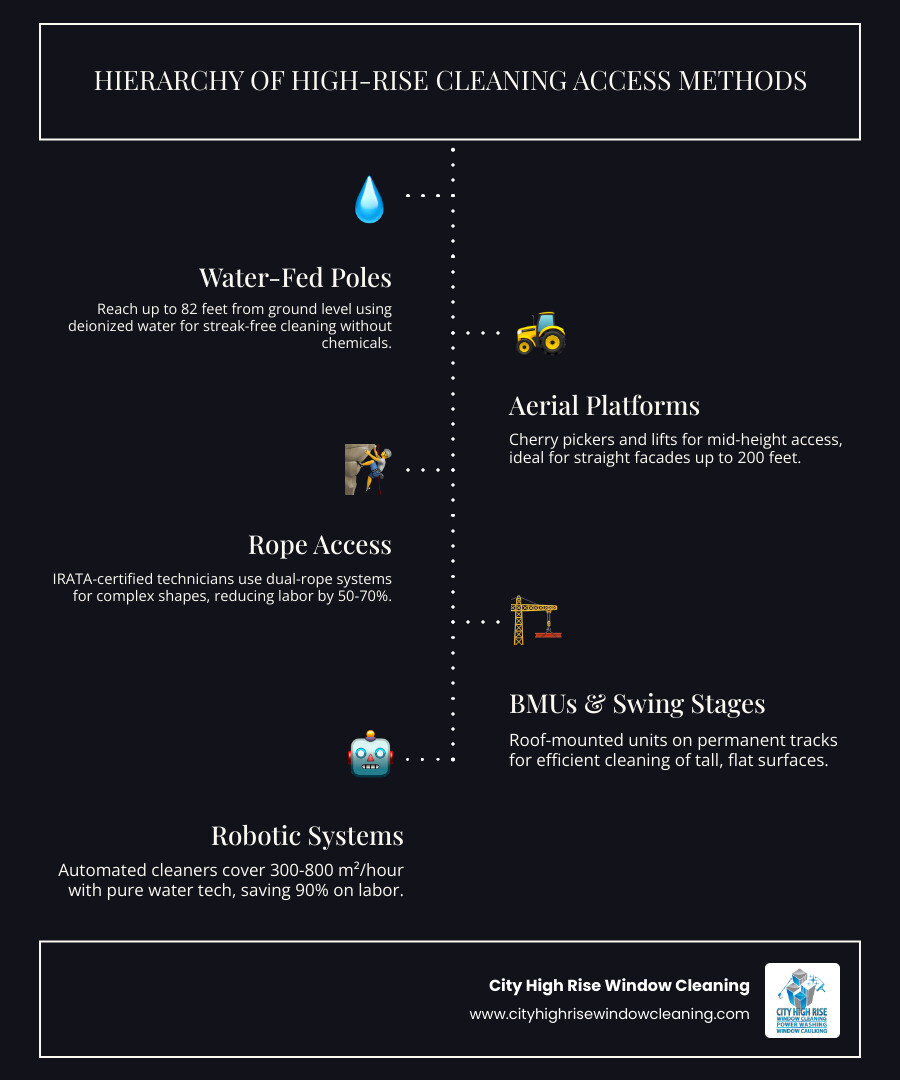
| Main methods | Rope access, BMUs, aerial platforms, water-fed poles, robotic systems |
| Cleaning frequency | 2-4 times per year for most urban commercial buildings; more for coastal or high-traffic locations |
| Key certifications | IRATA, SPRAT, IPAF, OSHA — required for safe, compliant work |
| Biggest risks | Falls, equipment failure, high winds above 25 mph, uncertified crews |
| Why it matters | Prevents facade damage, preserves property value, meets NYC Local Law 11 compliance |
Global demand for exterior facade maintenance has grown roughly 6% over the past five years — and in dense metro areas like New York City and New Jersey, that pressure is felt even harder. Glass-heavy towers are everywhere, they get dirty fast, and the stakes for cleaning them incorrectly are very high.
This guide walks you through every method, safety standard, and cost factor you need to make a smart decision for your building.
I’m Brett Hochman, CEO of City High Rise Window Cleaning, and I’ve been leading commercial high rise window cleaning operations across NYC, Long Island, New Jersey, and Westchester since 1977 — nearly five decades of hands-on experience in high rise building cleaning. I’ve seen every method, every regulation change, and every mistake a building owner can make, and this guide reflects all of it.
Simple High rise building cleaning word guide:
The 5 Core Methods of High Rise Building Cleaning
In my 30+ years of experience, I’ve learned that no two buildings in Manhattan or Jersey City are the same. A method that works for a boxy mid-rise in Westchester might be a disaster for a glass needle in Brooklyn. How Skyscrapers Stay Spotless depends entirely on selecting the right access strategy. Choosing the correct method can improve operational efficiency by up to 30% while significantly mitigating safety risks.
Rope Access: The Gold Standard for Complex Architecture
Rope access, often called “industrial mountaineering,” is my personal favorite for the complex skylines of New York. It involves highly trained technicians using a two-rope system (a working line and a safety backup) connected to certified roof anchors.
Why do I recommend it? It offers a 50-70% labor reduction compared to traditional scaffolding because there is almost zero setup time. It’s perfect for buildings with narrow streets or irregular architecture where heavy machinery can’t go. Plus, it leaves a minimal ground footprint—no blocking the sidewalk on a busy Tuesday morning in Midtown.
Building Maintenance Units (BMUs) and Suspended Scaffolds
For the massive commercial towers that define our horizon, Building Maintenance Units (BMUs) are the workhorses. These are permanent, roof-mounted cranes that run on tracks. When a building is designed with a BMU, it can increase cleaning efficiency by 30% to 40% on large, flat glass areas.
If a permanent BMU isn’t available, we often use suspended scaffold systems, like swing stages or davit arms. These are particularly common on older buildings or for one-off post construction cleaning projects. Just remember: BMUs require strict maintenance, including load testing every 13 months and daily safety checks.
Aerial Work Platforms (EWPs)
When we can reach the glass from the ground, we use Elevated Work Platforms (EWPs) like boom lifts and scissor lifts. These can reduce job time by around 25% for mid-rise buildings. Boom lifts are incredibly flexible, reaching out and up to 180 feet to bypass obstacles like trees or parking lots. However, they require stable ground and often need city permits to sit on the street.
Water-Fed Pole Systems
For “shorter” sections—usually up to 70 or 80 feet—water-fed poles are a fantastic, eco-friendly option. These systems use pure water technology to strip away dirt without chemicals, leaving a streak-free finish. Since the operator stays on the ground, the safety risk is virtually zero.
Robotic and Automated Systems
The future is arriving fast. Robotic cleaning systems can lower direct worker exposure at height by almost half. These units can clean between 14,160 and 33,600 square feet per hour. While they don’t replace the detail-oriented eye of a human for corners and deep stains yet, they offer massive 90% labor savings for routine maintenance on flat facades.
Safety Standards and Regulatory Compliance
In our line of work, there is no room for “oops.” The skyscraper count doubling since 2017 means more glass at higher altitudes than ever before. In New York City, we operate under some of the strictest safety standards in the world, governed by OSHA and the NYC Department of Labor (DOL).
We also have to navigate Local Law 11 (FISP), which requires regular facade inspections for buildings over six stories. If your windows are dirty, inspectors can’t see the masonry or shelf angles properly, which can lead to a “SWARMP” or “Unsafe” filing. Keeping a clean facade isn’t just about looks; it’s about legal compliance.
Essential Safety Gear for High Rise Building Cleaning
I tell my crew every morning: your gear is your life. For every High rise building cleaning job, we require:
- Full-body harnesses: Inspected daily for any signs of wear.
- 15kN Anchors: Every anchor point must be tested to hold over 3,300 lbs of force.
- Helmets and PPE: High-visibility gear and head protection are non-negotiable.
- Communication devices: Technicians must be in constant contact with ground supervisors.
- Rescue Planning: We never start a drop without a site-specific rescue plan and a method statement (RAMS) in place.
Training and Certification Requirements
Don’t just hire anyone with a squeegee. You need technicians certified by IRATA (Industrial Rope Access Trade Association) or SPRAT. An IRATA Level 3 supervisor has logged over 1,000 supervised hours at height. For aerial lifts, we look for IPAF certification. This level of training drastically reduces liability for the building owner and ensures the job is done right the first time.
Choosing the Right Method: Height, Shape, and Budget
Choosing a method is a balancing act between the building’s height, its shape, and your budget. For example, a 60-story tower with deep recesses might require rope access because a BMU cradle can’t reach the “pockets.” Conversely, a flat-faced skyscraper is best served by a BMU for speed.
If you have a mid-rise building with significant grime or mineral deposits, you might need high rise hot water power washing to restore the surface before a standard window clean.
Cost Factors in High Rise Building Cleaning
I often get asked, “Why does it cost this much?” Here is what drives the price in the NYC and NJ markets:
- Level of Soiling: Post-construction debris or heavy salt spray near the Jersey shore requires more man-hours.
- Accessibility: Does the roof have certified anchors, or do we need to bring in portable weights?
- Frequency: Regular maintenance contracts actually lower your per-clean cost by preventing corrosive buildup that requires expensive restoration later.
- NYC Pollution: Buildings near the Lincoln Tunnel or BQE get dirty much faster than those in quiet Westchester suburbs.
Environmental and Weather Challenges
Weather is our boss. We have a strict 25 mph wind limit. If gusts exceed that, we pull the crews immediately. High winds can cause “pendulum effect” on ropes or swing a BMU cradle into the glass. We also watch for lightning and extreme temperatures. In the winter, ice buildup on ropes is a major hazard we manage daily.
The Future of the Skyline: Robotics and Pure Water Technology
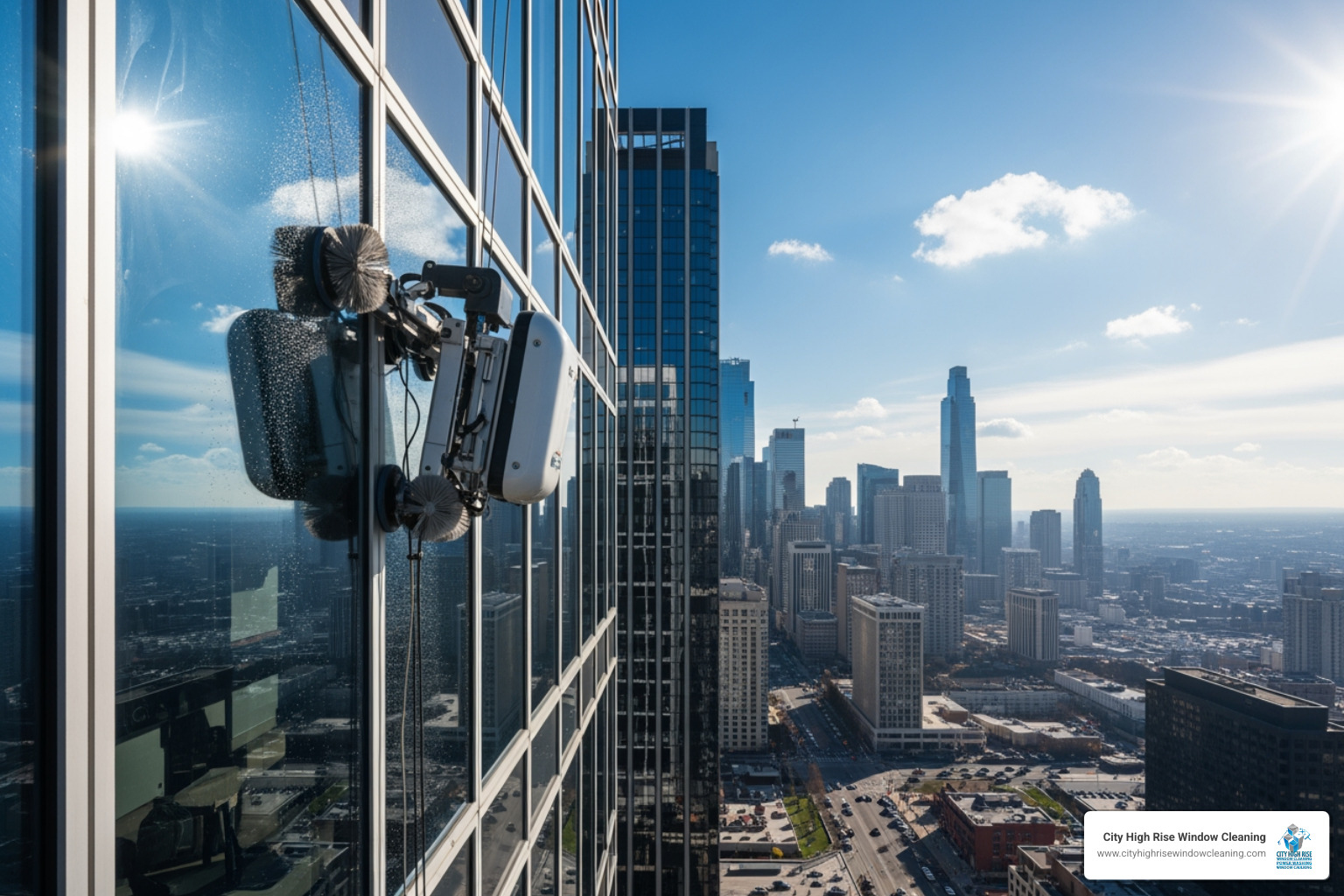
The industry is moving toward “smarter” cleaning. Window cleaning robots can now clean 300-800 m² per hour, offering up to 80% savings in long-term maintenance costs. They are particularly effective for the “super-tall” landmarks where human exposure should be minimized.
Pure Water Technology and Sustainability
We are also seeing a massive shift toward pure water systems. By using reverse osmosis and deionization, we produce water so hungry for minerals that it “grabs” the dirt off the glass and rinses away completely clear.
- Zero Chemicals: 100% eco-friendly and safe for the landscaping below.
- Streak-Free: Since there’s no soap residue, the windows actually stay clean longer because there’s nothing for dust to stick to.
- Reach: We can now reach up to 82 feet from the safety of the ground.
Frequently Asked Questions about High-Rise Cleaning
How often should high-rise windows be cleaned?
For most commercial buildings in New York City and Northern New Jersey, the ideal schedule is 2 to 4 times per year. Buildings in high-traffic urban areas or coastal zones like Long Island may need monthly or quarterly service to prevent salt and pollution from etching the glass permanently.
What wind speed stops high-rise cleaning operations?
Safety protocols mandate that all work at height—whether rope access or BMU—must stop if wind gusts exceed 25 mph. High winds can cause equipment to sway uncontrollably, risking both the technician’s safety and the integrity of the building’s glass.
Is rope access safer than using a suspended scaffold?
Statistically, yes. When performed by IRATA-certified professionals, rope access has an incredibly low incident rate. This is due to the redundant two-rope system; even if one line were to fail (which is extremely rare), the safety line and fall arrest system engage instantly.
How long does it take to clean a skyscraper?
It depends on the size and crew. A standard 40-story office building can take anywhere from two weeks to a full month of man-hours to complete a full exterior clean, depending on the complexity of the facade.
Does high-rise cleaning disturb the tenants?
Generally, no. Rope access is very quiet and has a tiny footprint. For most residential high rise window cleaning projects, we schedule work during standard business hours and provide plenty of notice so residents can close their blinds for privacy.
Conclusion
High rise building cleaning is a blend of extreme athleticism, engineering, and chemistry. Whether you are managing a historic landmark in Manhattan or a modern glass tower in Jersey City, the goal is the same: a sparkling exterior and a 100% safety record.
At City High Rise Window Cleaning, we bring over 30 years of local experience to every drop. We understand the unique challenges of the Tri-State area, from the salt air of Long Island to the wind tunnels of Wall Street. We don’t just clean windows; we protect your investment and ensure your building stands out for all the right reasons.
Ready for a free quote? City High Rise Window Cleaning offers 24/7 live consultation. Call 917-749-8342 to speak to a live representative.


