

Top Industrial Window Cleaners: What You Need to Know for Professional Use
Industrial Window Cleaner [NYC • Long Island • NJ]: Skip 3–4 Week Wait—72‑Hour Turnaround, Fair Pricing, OSHA‑Safe, Streak‑Free Results
If you manage a high-rise in New York City, Long Island, or New Jersey, you know clean windows are about protecting your investment, not just aesthetics. Industrial window cleaning is a different league from residential work, dealing with massive glass surfaces on buildings 5, 10, or 50+ stories high, covered in construction residue, pollution, and hard water deposits that standard tools can’t handle.
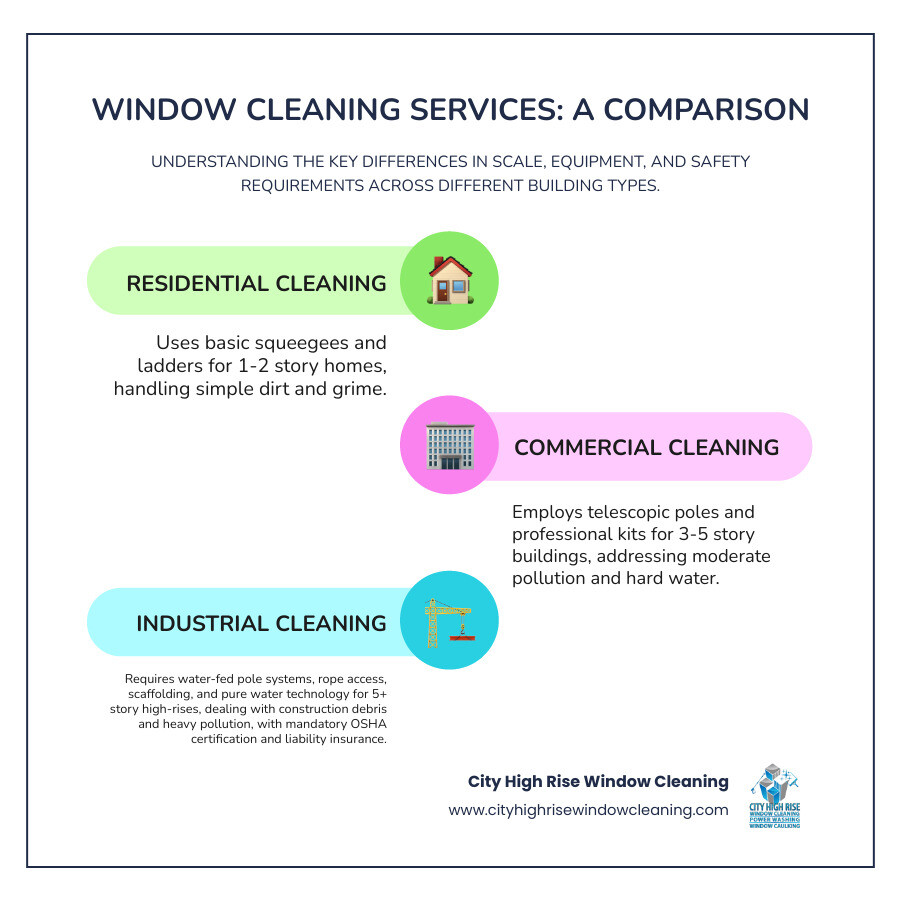
Professional industrial window cleaner services use specialized gear for these large-scale jobs:
- Equipment: Water-fed pole systems ($1,400-$5,000+), professional-grade squeegees, and robotic cleaners.
- Solutions: Pure water systems (reverse osmosis + deionization) and acid-based cleaners for tough stains.
- Safety: OSHA-certified fall protection, rope access systems, and comprehensive liability insurance.
- Scale: Designed for multi-story buildings, large glass facades, and post-construction cleaning.
Hard water stains are a persistent problem in NYC, causing long-term damage if left untreated. More importantly, safety is non-negotiable. Working at height requires specialized training, OSHA compliance, and fall protection. One mistake can lead to serious injury or property damage, which is why professionals carry comprehensive insurance.
I’m Brett Hochman, CEO of City High Rise Window Cleaning. With 48 years of hands-on experience since 1977, I’ve seen every challenge an industrial window cleaner faces—from historic Brooklyn brownstones to Manhattan’s glass towers. I’m here to help you understand what it takes to get the job done right.
A Pro’s Toolkit: Types of Industrial Window Cleaning Equipment and Solutions
Cleaning a 20-story Manhattan building requires more than Windex. An industrial window cleaner needs specialized equipment to handle massive scale, extreme heights, and stubborn grime. After nearly five decades in this business, I know the right tools are key to efficiency and safety.
Traditional Tools for Precision Work
Even with high-tech gear, classic tools are irreplaceable for a flawless finish. Professional-grade squeegees from leaders like Ettore and Unger feature high-quality rubber blades that remove water and grime in one smooth pass. We pair them with washers and scrubbers—microfiber sleeves on ergonomic T-bars—to apply solution and agitate dirt without scratching the glass.
Telescopic poles extend our reach up to four stories from the ground, reducing ladder risks. For stubborn spots like paint overspray or adhesive, scrapers and blades are essential, requiring a skilled hand to avoid damage. You can learn more about how we combine these tools with new technology on our commercial high-rise window cleaning page.
Advanced Systems for Efficiency and Scale
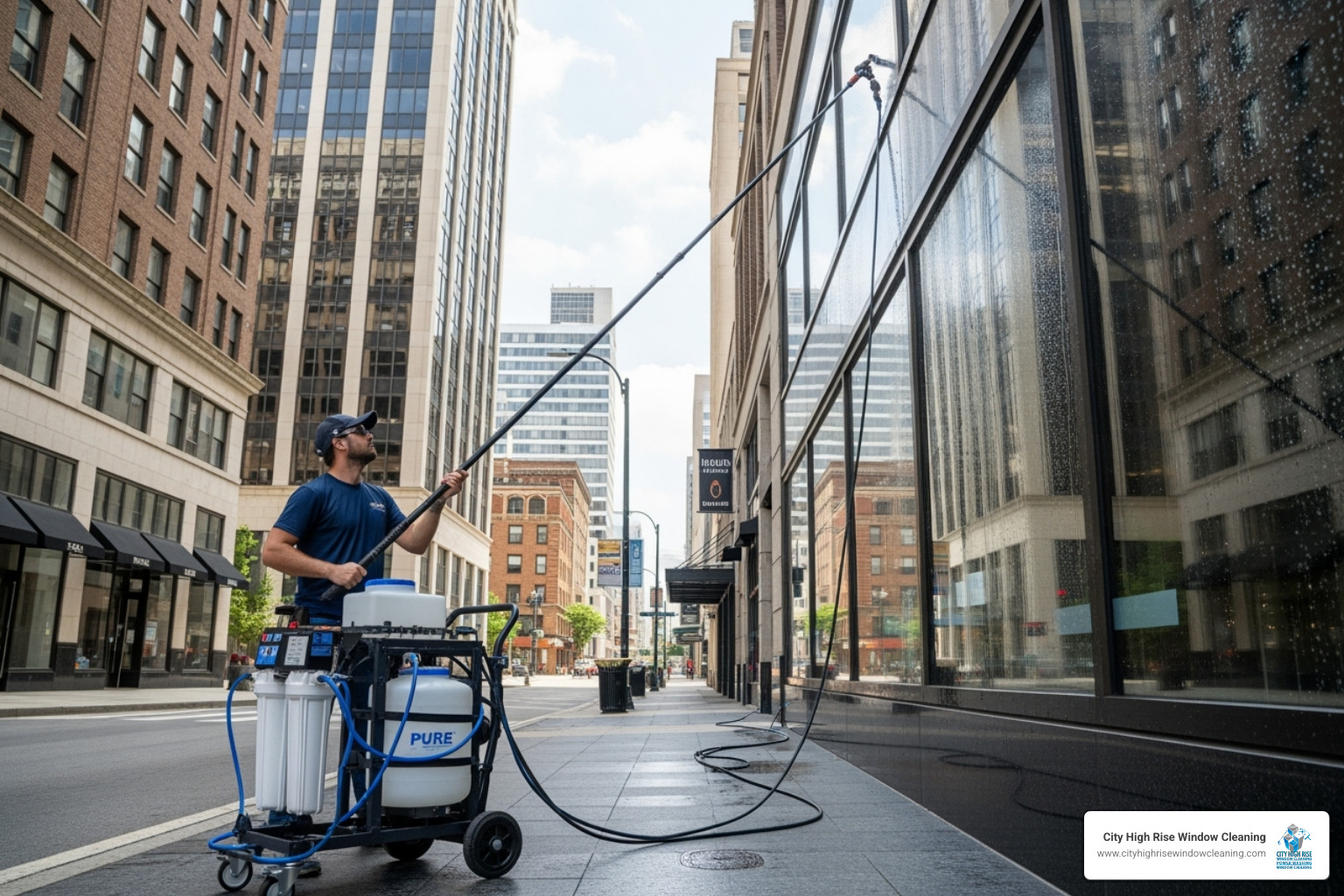
For a 50-story glass tower, advanced systems are a must. Water-fed pole systems let us clean up to five stories high from the ground. These systems, like the HydroCart series, use lightweight carbon fiber poles to deliver pure water to a brush head, dislodging dirt and eliminating ladder-related accidents. For larger facades, robotic cleaners and facade cleaning machines offer incredible precision and can scale massive buildings, while aerial work platforms like boom lifts provide safe access to extreme heights.
The Right Solution for Every Job
Choosing the right cleaning solution is critical. We use different formulas for different challenges:
- General Cleaning: Ammonia-free concentrates and streak-free formulas for everyday grime.
- Industrial Grime: Specialized degreasers to break down heavy grease, oil, and pollution film.
- Hard Water Stains: A major issue in NYC, these mineral deposits require carefully formulated acid-based cleaners. This treatment is often part of our window restoration service.
- Eco-Friendly Options: Pure water cleaning systems are our preferred method, as they require no chemicals.
We regularly encounter construction dust, pollution film, hard water deposits, paint overspray, and bird droppings. Matching the right solution to the grime ensures a perfect clean and protects your building’s glass for the long term.
The Science of a Spotless Shine: How Pure Water Systems Revolutionize Cleaning
When I first saw pure water technology, I was skeptical. How could plain water outperform chemical solutions? The science convinced me. This method has transformed how we, as industrial window cleaner professionals, approach large-scale projects.
How Pure Water Cleaning Works
Ordinary tap water contains minerals and salts, measured as Total Dissolved Solids (TDS). NYC tap water can have a TDS of 200-400 ppm, which leaves spots when it dries. We use a two-stage process to create 100% pure water (0 TDS).
- Reverse Osmosis (RO): High pressure pushes water through a fine membrane, filtering out most dissolved solids, minerals, and bacteria.
- Deionization (DI): The water then passes through a DI resin with charged beads that act like magnets, grabbing any remaining mineral ions. This final step brings the TDS down to zero.
This ultra-pure water is unstable and acts like a magnet for dirt. When we scrub a window with a water-fed pole brush, the pure water absorbs grime, dust, and pollution. Because there are no minerals left in the water, it air-dries without any streaks or spots. No squeegeeing is needed, which is a massive time-saver.
Key Benefits of Pure Water Systems
Using pure water systems across NYC, Long Island, and New Jersey has proven its advantages:
- Improved Safety: Cleaning up to five stories from the ground eliminates the need for ladders or lifts in many situations, drastically reducing risks for my team.
- Increased Efficiency: We scrub, rinse, and move on. The time saved on large buildings is substantial, translating into cost savings for our clients.
- Environmentally Friendly: We avoid harsh chemicals, preventing harmful runoff and protecting landscaping and the local ecosystem.
- Superior, Long-Lasting Results: Unlike traditional soaps that can leave a film attracting dust, pure water leaves nothing behind. Clients report their windows stay cleaner for longer.
Pure water technology is the future of professional window cleaning. It’s safer, faster, eco-responsible, and delivers results that traditional methods can’t match. For any property manager seeking the best care for their building, it’s essential.
Safety and Technique: The Core of a Professional Industrial Window Cleaner
Beyond tools and technology, safety defines a true professional industrial window cleaner. When my team works on high-rises across New York City, Long Island, and New Jersey, we know one mistake can be devastating. Safety is woven into every decision we make.
Navigating the Challenges of Large-Scale Industrial Windows
Industrial window cleaning presents unique challenges that require careful planning:
- Working at Height: For extreme heights, we use rope access and scaffolding. These techniques require extensive training and certification but are essential for tackling NYC’s tallest buildings.
- Unpredictable Weather: Strong winds, rain, or freezing temperatures can make work unsafe. We constantly monitor forecasts and will reschedule a job rather than risk safety.
- Delicate Glass: Modern low-E coatings and tinted films can be damaged by the wrong agents. We always identify the glass type before starting.
- Post-Construction Debris: Removing paint, caulk, and concrete dust requires specialized tools and patience. Our post-construction cleaning service is designed for these tough jobs.
Non-Negotiable Safety Protocols for the Industrial Window Cleaner

These protocols are why my team goes home safely every day:
- Fall Protection: Full-body harnesses, lanyards, and secure anchor points are non-negotiable. All gear is inspected before every shift.
- OSHA Compliance: We strictly adhere to all Occupational Safety and Health Administration (OSHA) regulations covering fall protection, PPE, and chemical handling. Regular training keeps our team current.
- Ladder and Lift Safety: All equipment is set up on stable ground and operated by certified personnel. We conduct thorough inspections before each use.
- Chemical Handling: We consult Safety Data Sheets (SDS) before using any powerful solutions, wear appropriate PPE, and ensure proper ventilation.
Equipment Maintenance for Longevity and Performance
Neglecting maintenance compromises safety and results. We perform regular checks on all equipment:
- Squeegee Blades: Inspected daily and replaced at the first sign of wear to prevent streaks.
- Water-Fed Poles: Checked for cracks and proper function before every job.
- Water Filters: Replaced on a strict schedule based on TDS readings to ensure pure water quality.
- Pumps and Hoses: Inspected for leaks, cracks, or blockages to prevent breakdowns.
Proper maintenance separates professionals from amateurs and ensures every job is completed safely and successfully.
Investing in Quality: Kits, Costs, and the Future of Window Cleaning
As a professional industrial window cleaner, I know that investing in quality equipment is the foundation for success. The right tools lead to safer operations, faster work, and results that build client loyalty.
The Value of Professional Window Cleaning Kits
Professional kits are more cost-effective than buying tools piecemeal and offer the versatility to handle any job, from a 20-story office building to a smaller commercial property. They include durable, ergonomic tools from industry leaders, built to last through thousands of windows. For any serious professional, a quality kit is a secret weapon for delivering consistent, streak-free results.
Understanding the Costs of Professional Equipment
Equipment costs vary by the scale of work. Here’s a general breakdown:
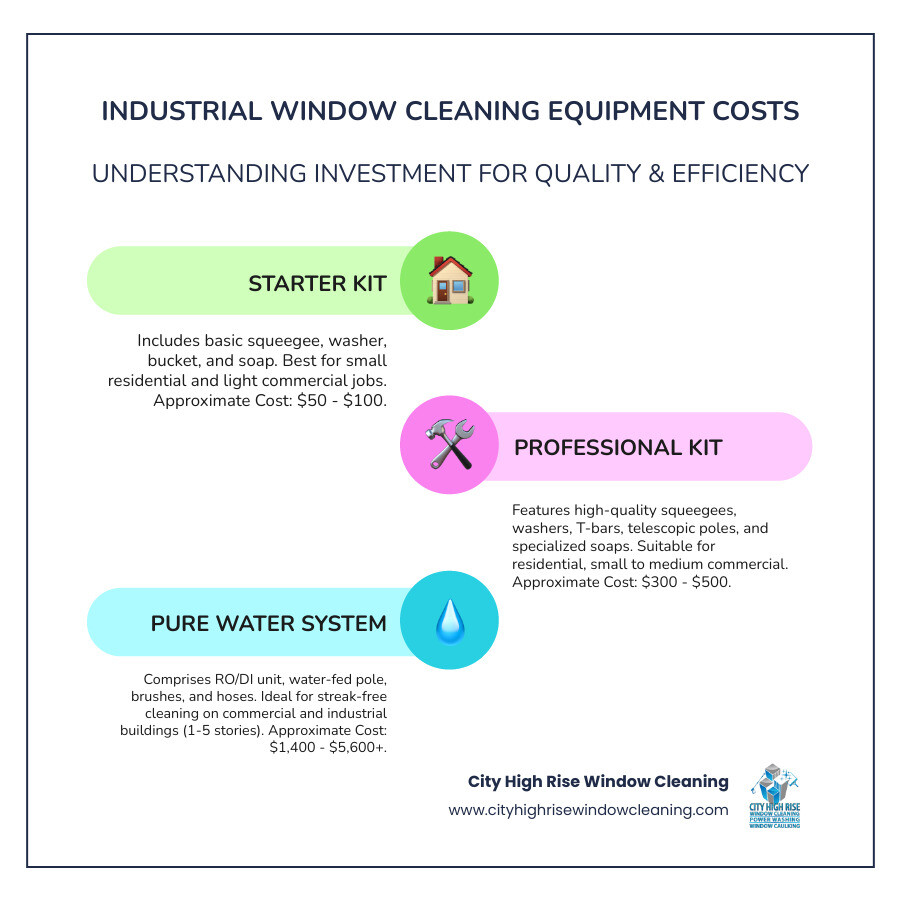
| Equipment Type | Typical Components | Ideal Use Cases | Approximate Cost Range |
|---|---|---|---|
| Starter Kit | Basic squeegee, washer, bucket, soap | Small residential, light commercial | $50 – $100 |
| Professional Kit | High-quality squeegees, washers, T-bars, telescopic poles, specialized soaps | Residential, small to medium commercial | $300 – $500 |
| Pure Water System | RO/DI unit, water-fed pole, brushes, hoses | Commercial, industrial (1-5 stories), streak-free | $1,400 – $5,600+ |
While starter kits are fine for basic work, a professional industrial window cleaner needs to invest in a professional-grade kit ($300-$500). The real game-changer is a pure water system ($1,400-$5,600+). Though a larger upfront investment, these systems pay for themselves through increased efficiency and the ability to take on projects competitors can’t. The safety benefits and superior results create a clear return on investment.
To see how advanced equipment transforms building maintenance, learn about our High Rise Hot Water Power Washing services.
The Future is Now: How Technology is Improving the Industrial Window Cleaner Role
The profession is evolving with technology that improves safety and efficiency.
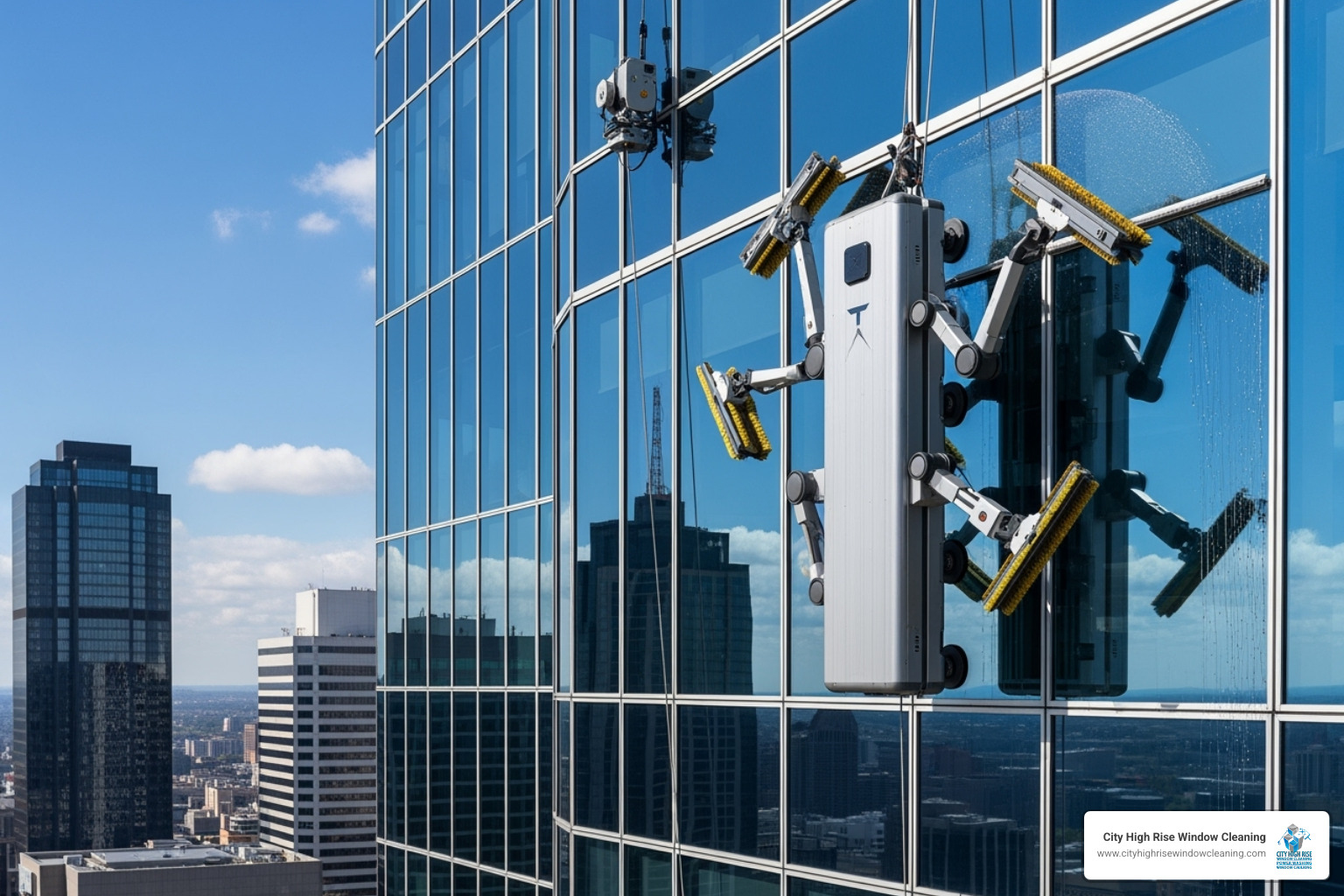
- Robotic Cleaners: These machines scale massive facades, handling repetitive tasks with precision and reducing human exposure to dangerous heights.
- Advanced Pure Water Systems: Newer models feature real-time water quality monitoring, ensuring optimal performance and consistent results.
- Drone Technology: Currently used for facade inspections to spot issues like damaged caulking or cracked glass, drones will likely play a more direct role in cleaning in the future.
The future isn’t about replacing skilled professionals—it’s about giving us better tools to work safer and faster.
Frequently Asked Questions about Industrial Window Cleaning
What do professionals use to clean industrial windows?
Pros use pro-grade squeegees and microfiber scrubbers for detail work, plus pure-water, water-fed pole systems for speed and safety up to five stories. For taller high-rises in NYC, Long Island, Westchester, and New Jersey, we use rope access, suspended scaffolding, or certified lifts.
How do you remove stubborn hard water stains from industrial glass?
With carefully controlled, mild acid-based cleaners applied by trained techs, then neutralized and polished. For severe cases, we include this in our window restoration service.
Are industrial window cleaning kits suitable for smaller commercial jobs?
Yes. Pro kits deliver durability and streak-free results on 3–5 story properties and reduce rework. Telescopic poles and quality rubber make a visible difference.
How much does industrial window cleaning cost in NYC/NJ?
Pricing depends on height, access (rope, lift, or ground), glass count, and stains/post-construction debris. We turn around quotes fast and schedule quickly. Start here: Commercial High-Rise Window Cleaning.
How often should high-rise windows be cleaned in NYC/Long Island?
Typically 2–4 times per year; heavy traffic, coastal salt, or construction zones may need monthly or quarterly service. See our guide: How Often Should You Clean High-Rise Windows?
Suggested FAQ Schema (JSON-LD)
{
  "@context": "https://schema.org",
  "@type": "FAQPage",
  "mainEntity": [
    {
      "@type": "Question",
      "name": "What do professionals use to clean industrial windows?",
      "acceptedAnswer": {
        "@type": "Answer",
        "text": "Pro-grade squeegees and microfiber scrubbers for detail, plus pure-water, water-fed poles for speed and safety; rope access and scaffolding for tall high-rises."
      }
    },
    {
      "@type": "Question",
      "name": "How do you remove stubborn hard water stains from industrial glass?",
      "acceptedAnswer": {
        "@type": "Answer",
        "text": "We use controlled, mild acid-based cleaners applied by trained techs, often as part of window restoration."
      }
    },
    {
      "@type": "Question",
      "name": "Are industrial window cleaning kits suitable for smaller commercial jobs?",
      "acceptedAnswer": {
        "@type": "Answer",
        "text": "Yes. Pro kits are durable, efficient, and deliver streak-free results on 3–5 story buildings."
      }
    },
    {
      "@type": "Question",
      "name": "How much does industrial window cleaning cost in NYC/NJ?",
      "acceptedAnswer": {
        "@type": "Answer",
        "text": "Costs vary by height, access, glass count, and stain severity. Request a fast quote for accurate pricing and scheduling."
      }
    },
    {
      "@type": "Question",
      "name": "How often should high-rise windows be cleaned in NYC/Long Island?",
      "acceptedAnswer": {
        "@type": "Answer",
        "text": "Typically 2–4 times per year; more often near traffic, salt, or construction."
      }
    }
  ]
}
Conclusion
After nearly five decades of cleaning windows on everything from historic Brooklyn brownstones to gleaming Manhattan towers, I’ve learned that maintaining a building’s exterior is about protecting your investment. Industrial window cleaning demands specialized equipment like pure water systems, advanced techniques for tackling post-construction debris and hard water stains, and an unwavering commitment to safety. OSHA compliance and fall protection aren’t optional—they’re the foundation of professional service.
Professional expertise makes all the difference. Knowing how to safely access a 20-story building or select the right solution for coated glass is where experience counts. Safety first isn’t just a slogan at City High Rise Window Cleaning; it’s how we’ve operated for over 30 years.
For complex high-rise projects in the NYC, New Jersey, Long Island, or Westchester areas, you need a team with expertise and accountability. We back every job with our 100% customer satisfaction guarantee. Whether you need routine maintenance or specialized services, we have the tools and track record to get it done right. Learn more about our Commercial High-Rise Window Cleaning services.
Ready for a free quote? City High Rise Window Cleaning offers 24/7 live consultation. Call 917-749-8342 to speak to a live representative.


