

Transform Your Business: Expert Commercial Building Painting Solutions
Commercial building painting: Expert 2025 Guide
Make a Lasting First Impression: Why Commercial Building Painting Matters
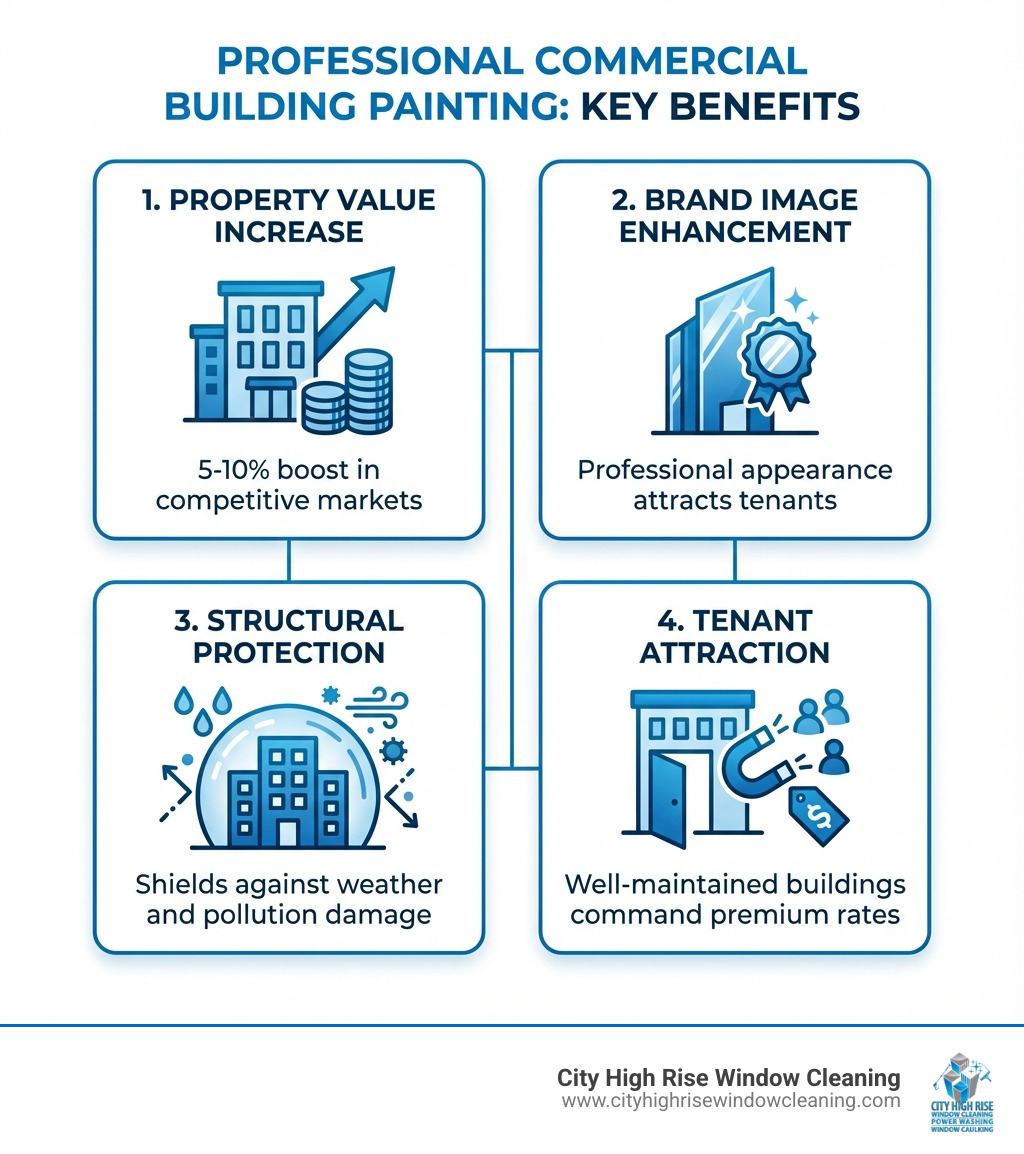
Commercial building painting transforms your property’s exterior and protects your investment. Here’s what professional painting delivers:
- Improves curb appeal to attract tenants and customers
- Reinforces brand image to create cohesive, professional color schemes
- Increases property value by 5-10% in competitive NYC, Long Island, and New Jersey markets
- Protects building surfaces from weather, pollution, and wear
- Extends surface lifespan through proper prep and high-quality coatings
Your building’s exterior is the first thing people see. A fresh, well-maintained paint job sends a clear message: this property is cared for, professional, and worth their time.
In the competitive New York metro area, appearance matters. Buildings with peeling paint, faded colors, or visible wear struggle to attract quality tenants. They lose value. They create negative impressions that drive customers away.
Professional commercial building painting fixes all of that. It protects your building envelope from rain, UV rays, and pollution. It prevents costly damage like rust, cracking, and moisture intrusion. And it boosts your property’s market appeal—making it easier to lease space and command premium rates.
But not all painting services deliver lasting results. Success depends on three things: thorough surface preparation, high-performance coatings designed for your building’s materials, and experienced contractors who understand high-rise work in urban environments.
I’m Brett Hochman, and I’ve led City High Rise Window Cleaning for over 48 years, specializing in exterior high rise painting services and facade restoration across New York, Long Island, Westchester, and New Jersey. Our OSHA-certified crews deliver commercial building painting that protects your investment and improves your property’s value for years to come.
Commercial building painting basics:
- abseiling painters
- exterior building painting cost
- high-rise painting
Why Investing in Professional Commercial Building Painting Pays Off
For property owners and managers in New York City, Long Island, Westchester, and New Jersey, investing in professional commercial building painting isn’t just about aesthetics—it’s a strategic business decision. My years of experience have shown me time and again that a high-quality paint job offers significant returns, far beyond a simple facelift.
Firstly, professional painting directly translates to higher property value and ROI. A well-maintained exterior signals quality and care, which is crucial in our competitive real estate markets. Commercial painting can increase property value, making your building more attractive to potential buyers or tenants. Compared to many other renovations, a fresh coat of paint is an affordable and impactful option to improve your building’s look and overall market appeal. This isn’t just my opinion; industry insights consistently show that painting can boost property value by 5-10% in competitive markets, especially when done by experts.
Secondly, a pristine exterior attracts and retains tenants and customers. Think about it: would you rather lease space in a building with peeling paint and a dingy facade, or one that looks sharp, modern, and well-cared for? The answer is obvious. A fresh coat of paint creates a positive first impression, drawing in new clients and tenants. For existing tenants, it shows you’re committed to maintaining a high-quality environment, which can significantly improve retention and even allow for premium rental rates. A new paint job ensures your property stands out in online listings and contributes to positive reviews about your building’s upkeep.
Beyond the visible benefits, professional commercial building painting is a vital protective measure. Our buildings in NYC, Long Island, Westchester, and New Jersey face relentless challenges from the environment: harsh winters, humid summers, constant pollution, and corrosive salt air. Quality paint acts as a crucial barrier, protecting your building from NYC weather, pollution, and general wear. It shields against UV rays, rain, wind, mold, and other pollutants, preventing costly damage like rust, cracking, and moisture intrusion. This protection is especially critical for specialized facades; for example, you can learn more about Alucobond Restoration for modern facades to understand how comprehensive care extends to all materials.
Finally, while it might seem like an upfront cost, professional painting offers long-term savings versus frequent patch-ups. Short-term solutions, like quick fixes or painting over damaged surfaces, rarely last. They can actually cause more harm and lead to greater expenses down the road. An investment in proper surface preparation, high-quality durable paints, and expert application ensures a long-lasting finish that requires less frequent maintenance and prevents more extensive, costly repairs in the future. It’s about doing it right the first time to save money and headaches in the long run.
What Does Commercial Building Painting Cost in 2026?
Understanding the financial investment required for commercial building painting is crucial for any property owner or manager in New York, Long Island, Westchester, or New Jersey. I know you want clear answers, so let’s break down the costs.
While industry averages across North America, like those seen in Canada (ranging from $1.50 to $4.00 per square foot for exterior commercial painting), provide a general idea, the specific costs in our local markets can vary significantly. This range is a useful starting point, but the final price depends on numerous factors unique to your building.
Typically, the cost breakdown for a commercial painting project looks something like this:
- Labour: 60% to 70%
- Paint and Materials: 20% to 30%
- Equipment (like lifts, scaffolding): 10%
These percentages highlight why professional services, especially for high-rise buildings, factor in expertise, safety, and specialized equipment.
Several key factors influence the cost of painting your commercial building:
- Building Size and Shape: Larger buildings naturally require more paint and labor. Buildings with intricate architectural details, many corners, or unique shapes will take longer and cost more than a simple, flat facade.
- Height of the Building: This is a major factor for us at City High Rise Window Cleaning. Taller buildings necessitate specialized equipment like boom lifts, swing stages, or scaffolding, which significantly increase equipment and labor costs due to the complexity and safety requirements of working at height.
- Type of Surface: Different materials, such as concrete, stucco, metal, brick, or wood, require specific preparation techniques and types of paint, impacting both material and labor costs. Stucco, for instance, may absorb more paint than smoother surfaces.
- Paint Type and Quality: High-quality, durable, and specialized paints designed to withstand the harsh Northeast climate and pollution will cost more per gallon (typically $50-$75 for good quality paint) but offer superior longevity and protection, saving you money in the long run.
- Prep Work Needed: This is often the most underestimated cost. Extensive cleaning, scraping, repairing cracks and holes, and priming can be labor-intensive but are absolutely essential for a lasting finish. If your building is in poor condition, expect higher prep costs.
- Local Labour Rates: In areas like New York City, Long Island, Westchester, and New Jersey, labor costs are generally higher than in other regions, reflecting the cost of living and specialized skills required.
To illustrate the stark difference between short-term fixes and professional long-term solutions, here’s a comparison:
| Feature | Short-Term Patch-Up Jobs | Long-Term Professional Painting (City High Rise) |
|---|---|---|
| Cost | Low upfront, high recurring | Higher upfront, low recurring |
| Durability | Poor, peels quickly | Excellent, lasts 3-7+ years |
| ROI | Negative (wasted money, depreciates property) | Positive (increases value, attracts tenants) |
| Protection | Minimal, leaves building vulnerable | Maximum (weather, pollution, moisture barrier) |
| Appearance | Uneven, quickly deteriorates | Flawless, professional, maintains curb appeal |
| Disruption | Frequent, unpredictable | Minimized through careful planning and off-hours work |
| Warranty/Guarantee | None | Often includes a warranty |
Budgeting for Essential Add-Ons
Beyond the basic painting, several additional services are often critical for a successful, long-lasting project and can add to your budget:
- Power Washing: Essential for removing grime, mold, mildew, and loose paint. Costs can range from $200–$600, depending on the building’s size and condition.
- Caulking and Sealing Cracks: Crucial for preventing moisture intrusion and improving energy efficiency. Expect to pay $0.50–$1.00 per linear foot.
- Minor Repairs: Addressing issues like wood rot, stucco cracks, or damaged masonry before painting is non-negotiable for a durable finish.
- Priming: Applying a quality primer ensures better paint adhesion and a more uniform finish, especially when changing colors or painting porous surfaces.
- Specialized Coatings: For specific needs like anti-graffiti, rust-inhibiting, or waterproof coatings, expect additional costs.
How to Maximize Your Painting Budget
I understand that managing a budget is key. Here are my expert tips to help you get the most value from your commercial building painting investment:
- Get Multiple Quotes: Always obtain at least three detailed quotes from licensed and insured contractors. This allows you to compare pricing, services, and ensure you’re getting a fair market rate for your specific project in the NY/NJ area.
- Schedule in the Off-Season: If possible, consider scheduling your exterior painting project during the off-season, such as fall or early spring. Demand might be lower, potentially leading to more competitive pricing from contractors.
- Choose Long-Lasting Paint: While it might be tempting to opt for cheaper paint, I always recommend choosing a good mid-range to high-quality paint with UV and water protection. These paints offer superior durability, better coverage, and a longer lifespan, meaning you’ll paint less frequently and save money in the long run.
- Do Basic Site Prep: If feasible and safe, performing some basic site preparation yourself, like moving outdoor furniture, signage, or trimming shrubs away from the building, can reduce the labor time for the painting crew and potentially lower your overall cost. However, always consult with your contractor first to understand what they prefer to handle.
The Professional Painting Process: From Prep to Perfection
When you entrust City High Rise Window Cleaning with your commercial building painting project, you’re investing in a carefully planned and executed process designed for perfection and minimal disruption. My team and I follow a systematic approach to ensure every project, from a small facade refresh to a multi-story high-rise change, meets our rigorous standards.
Our process always begins with an initial inspection and planning phase. I or one of my experienced project managers will conduct a thorough assessment of your building’s exterior. This involves identifying the specific types of surfaces, assessing their condition, noting any repairs needed, and understanding the unique challenges of your structure – especially for high-rise buildings in the dense urban environments of New York City, Long Island, Westchester, and New Jersey. We’ll discuss your goals, color preferences, and timeline, then develop a comprehensive project plan that covers everything from safety protocols to paint selection.
A critical aspect of our planning is minimizing business disruption. We know that your business can’t afford significant downtime. That’s why we work closely with you to schedule painting during periods of minimal impact – often during off-peak hours, weekends, or even holidays. My crews are adept at working efficiently and systematically, using clear signage and safety perimeters to ensure the safety of your tenants, customers, and employees while allowing your operations to continue as smoothly as possible.
For high-rise and commercial buildings, specialized application techniques are paramount. Our OSHA-certified crews are trained in the safe and effective use of advanced equipment like boom lifts, swing stages, and scaffolding. We select application methods—whether spraying, rolling, or brushing—that are best suited for your specific surfaces and paint types to ensure uniform coverage and a durable finish. Learn more about high-rise painting techniques on our blog. Our expertise in working on multi-story buildings ensures that even the most challenging areas are painted with precision and care. You can explore more about our Exterior High Rise Painting Services to see how we tackle these complex projects.
Finally, upon completion of the painting, we conduct a thorough final inspection and cleanup. We walk through the entire painted area with you to ensure every detail meets your satisfaction and our high-quality standards. My team then carefully cleans the site, removing all equipment, paint drips, and debris, leaving your property looking immaculate and ready to impress.
Surface Preparation: The Key to Lasting Results
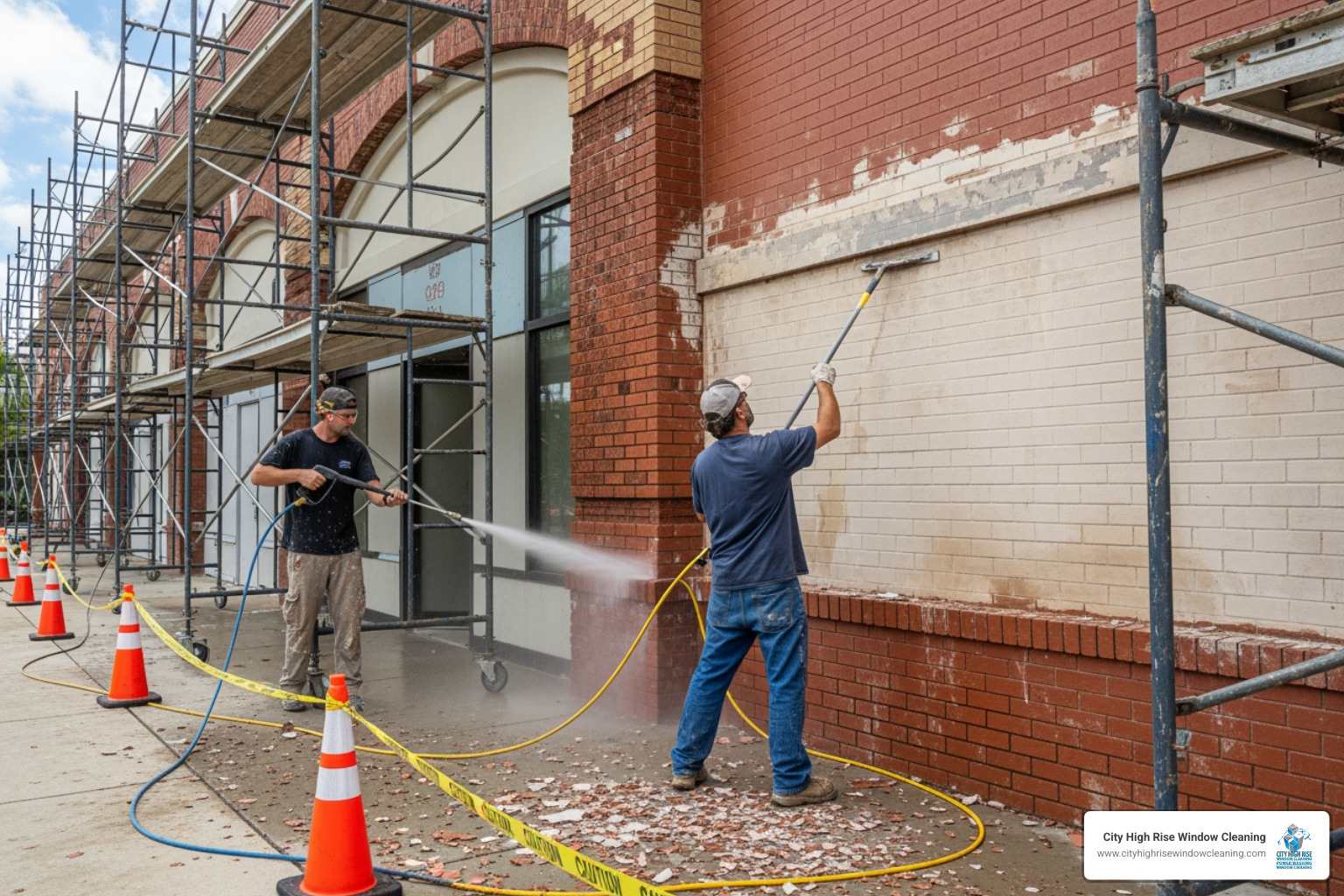
I cannot stress this enough: surface preparation is the absolute key to achieving lasting results in any commercial building painting project. Without proper prep work, even the highest quality paint will fail prematurely. As we often say, “If you see a commercial building with a stunning paint job, you can be sure there was plenty of preparation work that went in before a paint brush ever touched the surface.”
Our preparation process typically involves:
- Cleaning, Scraping, and Removing Old Paint: We start by thoroughly cleaning all surfaces. This might involve power washing to remove dirt, grime, mold, and mildew, or specialized air blasting for more stubborn contaminants. Any loose, bubbling, or peeling paint is carefully scraped or blasted away. Paint will simply not adhere properly to a dirty or unstable surface, leading to cracking, peeling, or bubbling down the line.
- Repairing Cracks and Damage: We carefully inspect for and repair any imperfections. This includes filling cracks, holes, and damaged areas with appropriate fillers or caulk. Painting over holes and cracks is an unacceptable practice for professional painters who insist on quality outcomes. This step is crucial for both aesthetics and preventing moisture intrusion.
- Applying the Right Primer for Each Surface: Priming is a foundational step that improves paint adhesion, provides a uniform base, and can offer additional benefits like rust inhibition or stain blocking. We carefully select the correct type of primer based on the substrate and the topcoat paint to ensure optimal performance and longevity. All surfaces must be completely dry before any paint or primer is applied.
How Pros Prep Different Surfaces
Different materials require different approaches, and my team is expertly trained to handle the diverse facades found across New York, Long Island, Westchester, and New Jersey.
- Concrete: Concrete surfaces are common on commercial buildings, from walls to floors. They expand and contract with temperature and moisture, making proper preparation vital. We begin with thorough cleaning, often using power washing. For concrete floors, any old flooring materials must be completely removed for new coatings to adhere properly. Cracks are filled with specialized concrete fillers and allowed to cure completely before painting.
- Metal: Metal surfaces, such as structural beams, railings, or siding, are prone to rust, especially in our coastal climate. Our process involves carefully clearing dirt and grime, removing all traces of peeling paint and rust buildup. We repair any burrs, dents, or holes. A rust-inhibiting primer is almost always applied to metal surfaces to prevent future corrosion and ensure excellent paint adhesion.
- Wood: Wood surfaces, like siding, trim, or doors, require careful handling. We ensure the wood is clean, completely dry, and free of sap. Any imperfections are removed, and the surface is sanded smooth. Wood can release moisture and sap, and knots can cause issues, so proper sealing and priming are essential to prevent bleed-through and ensure a smooth, long-lasting finish. Sanding the primer, and even the first coat of paint, can significantly improve the final look and feel.
For more in-depth guidance on property maintenance, you can always check out our blog for Painting Tips for Commercial Buildings.
Choosing the Right Contractor, Colors, and Compliance
Making informed decisions about your commercial building painting project involves more than just picking a color. It requires strategic thinking about who you hire, what message your building conveys, and adhering to local regulations.
How to Select a Commercial Painting Contractor
Choosing the right contractor is perhaps the most critical decision you’ll make. A professional painter isn’t just someone with a brush; they’re a partner who ensures the longevity and impact of your investment. Here’s what I advise clients to look for:
- Check Experience and Local Reputation: Look for a company with a proven track record, especially with commercial and high-rise projects in New York, Long Island, Westchester, or New Jersey. Ask for references and check online reviews. My team at City High Rise Window Cleaning has over 48 years of experience, and our reputation is built on 100% customer satisfaction.
- Verify Licenses and Insurance for High-Rise Work: This is non-negotiable. Ensure the contractor is fully licensed, insured, and bonded. For high-rise work, specialized insurance and certifications are absolutely essential to protect your property and mitigate risks.
- Review Portfolios and Get Detailed Estimates: Ask to see their portfolio of completed commercial projects. A reputable contractor will provide a comprehensive, itemized estimate that clearly outlines the scope of work, materials, labor, and equipment costs.
- Prioritize Safety (OSHA Certified Crews): Safety is paramount, especially on high-rise projects. Ensure the painting crews are OSHA-certified and adhere to stringent safety protocols. This protects not only the workers but also your property and anyone around the job site. At City High Rise Window Cleaning, safety is our top priority.
While you’re ensuring your building’s exterior is pristine, other maintenance aspects are also critical for overall appeal and functionality. You can explore our Commercial High Rise Window Cleaning Services to maintain crystal-clear views for your tenants.
Best Exterior Paint Colors for Commercial Buildings
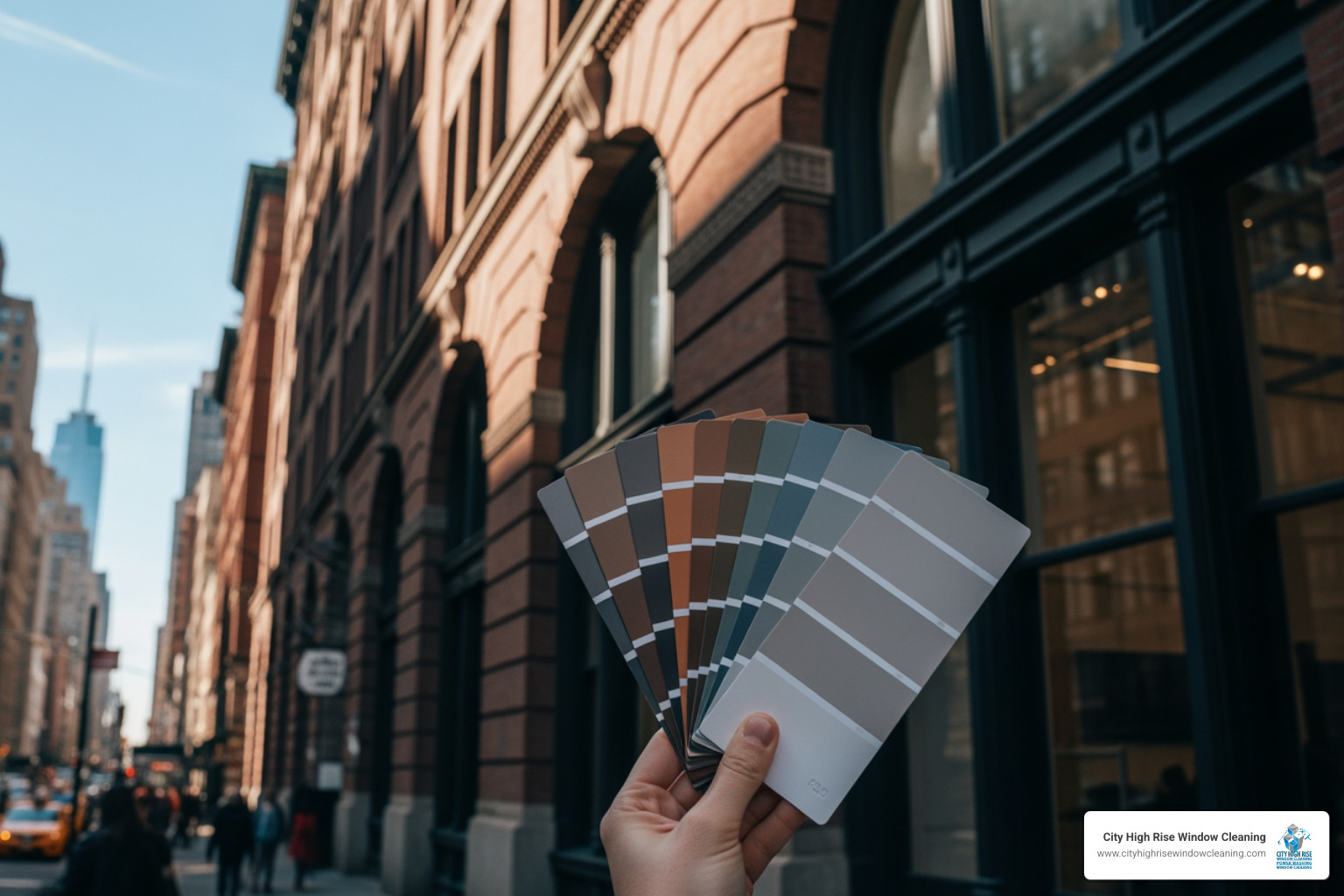
The colors you choose for your commercial building communicate volumes about your business or property. In the diverse urban and suburban landscapes of NYC, Long Island, Westchester, and New Jersey, color choice is strategic.
- Align with Your Brand Identity: Your building’s colors should reflect your brand. A professional corporate office might opt for sophisticated neutrals, while a vibrant retail space could use bolder, more energetic hues. The goal is to create a cohesive visual identity that reinforces your business’s values and personality.
- Consider NYC, Long Island, and Westchester Surroundings: Take cues from the surrounding architecture, landscaping, and local environment. You want your building to stand out, but also to complement its surroundings. For instance, a historic building in a preserved district might have regulations on color choices, or you might want to choose colors that look good with your existing commercial landscaping. Neutral colors can be a great canvas, allowing your signage and other architectural features to pop.
- Use Color Psychology for Tenant Appeal: Colors evoke emotions. Blues often convey trustworthiness and professionalism, greens suggest growth and nature, while warm grays and off-whites offer a sense of calm and sophistication. Think about the mood you want to create for your tenants and customers.
- Choose Colors for Longevity and Fade Resistance: Our Northeast climate can be tough on paint. Buildings directly exposed to intense sunlight will experience more fading. While vivid colors can be striking, they tend to fade faster than more neutral tones. I advise selecting high-quality paints with excellent UV resistance and considering colors that will maintain their integrity and appeal for years, minimizing the need for frequent repainting.
Here are some popular neutral and accent color combinations for commercial exteriors that my clients often choose:
- Classic Neutrals with a Pop:
- Main: Light Gray, Taupe, or Off-White
- Accent: Deep Charcoal, Navy Blue, or Forest Green (for trim, doors, or architectural features)
- Modern & Sleek:
- Main: Mid-tone Gray or Greige (a blend of gray and beige)
- Accent: Black, White, or a vibrant primary color (for a contemporary touch)
- Warm & Inviting:
- Main: Cream, Warm Beige, or Light Terracotta
- Accent: Rich Brown, Burnt Orange, or Sage Green
- Sophisticated & Timeless:
- Main: Stone Gray or Muted Blue
- Accent: Dark Green, Burgundy, or Bronze
FAQs: Commercial Building Painting in NYC & Beyond
Here are some common questions I hear about commercial building painting from property owners and managers in our service areas:
How often should a commercial building be painted?
[Most commercial buildings in the Northeast need repainting every 3–7 years], depending on factors like the quality of the original paint, the type of surface, and exposure to harsh weather, direct sunlight, and pollution. Vivid colors tend to fade faster than neutrals, so they might require more frequent touch-ups.
How long does a commercial painting project take?
[Project timelines can range from a few days for smaller facades to several weeks for large, multi-story buildings]. The duration depends heavily on the building’s size and complexity, the extent of surface preparation required, the number of coats, prevailing weather conditions (especially for exterior work), and the size of the painting crew. Careful planning with your contractor helps set realistic expectations.
What’s the difference between commercial and residential painting?
While the basics of surface prep, painting, and cleanup are similar, [commercial painting covers larger buildings, often requires specialized equipment like high-rise lifts and scaffolding], industrial-grade coatings for durability, and meticulous planning to minimize disruption to business operations, tenants, and customers. It also involves a higher level of professional expectation and safety compliance.
How do I prepare my building for painting?
To help ensure a smooth process, I recommend you [clear the area around the building of any obstacles, communicate the painting schedule with your tenants and staff], and address any necessary repairs (like major structural damage) before our crew arrives. We will handle the detailed surface preparation, but a clear site helps us work efficiently.
Can painting be done without disrupting my business?
Absolutely! [Yes—professional crews, like mine, are experts at working off-hours (evenings, weekends, holidays) and employ techniques to minimize impact on your daily operations], tenants, and customers. We prioritize safety with clear perimeters and signage, ensuring your business can continue functioning with minimal interruption.
Transform Your Property with NYC’s Trusted High-Rise Painting Experts
A professional commercial building painting project is a powerful investment. It protects your asset from the harsh realities of the New York, Long Island, Westchester, and New Jersey climates, boosts your brand image, and significantly increases your property’s value and appeal to tenants. Success hinges on expert surface preparation, the use of quality, durable materials, and, crucially, hiring an experienced, insured contractor with a proven track record in high-rise and commercial environments. At City High Rise Window Cleaning, we deliver flawless, safe, and long-lasting results every time, ensuring your building makes the right impression for years to come.
Ready for a free quote? City High Rise Window Cleaning offers 24/7 live consultation. Call 917-749-8342 to speak to a live representative.


