

Shattered Glass? How to Fix a Broken Window on a Budget
How to Fix a Window Fast: Save $250 and Stop Drafts Today
How to fix a window in six steps:
- Put on safety gear — cut-resistant gloves, safety goggles, and closed-toe shoes.
- Tape the glass — apply painter’s or duct tape in an X across the cracked pane to contain shards.
- Remove the broken glass — carefully wiggle pieces out; use a heat gun to soften old glazing compound.
- Measure the opening — subtract 1/8 inch from both dimensions to allow for thermal expansion.
- Install the new pane — bed it in glazing compound, secure with glazier’s points every 6 inches, and apply a final angled bead of compound.
- Let it cure — oil-based glazing compound needs 7–14 days before painting.
A cracked window has a way of spreading faster than you’d expect — especially during the temperature swings that hit New York, Long Island, and New Jersey hard every season. One hairline crack in the corner can spider across an entire pane within a week.
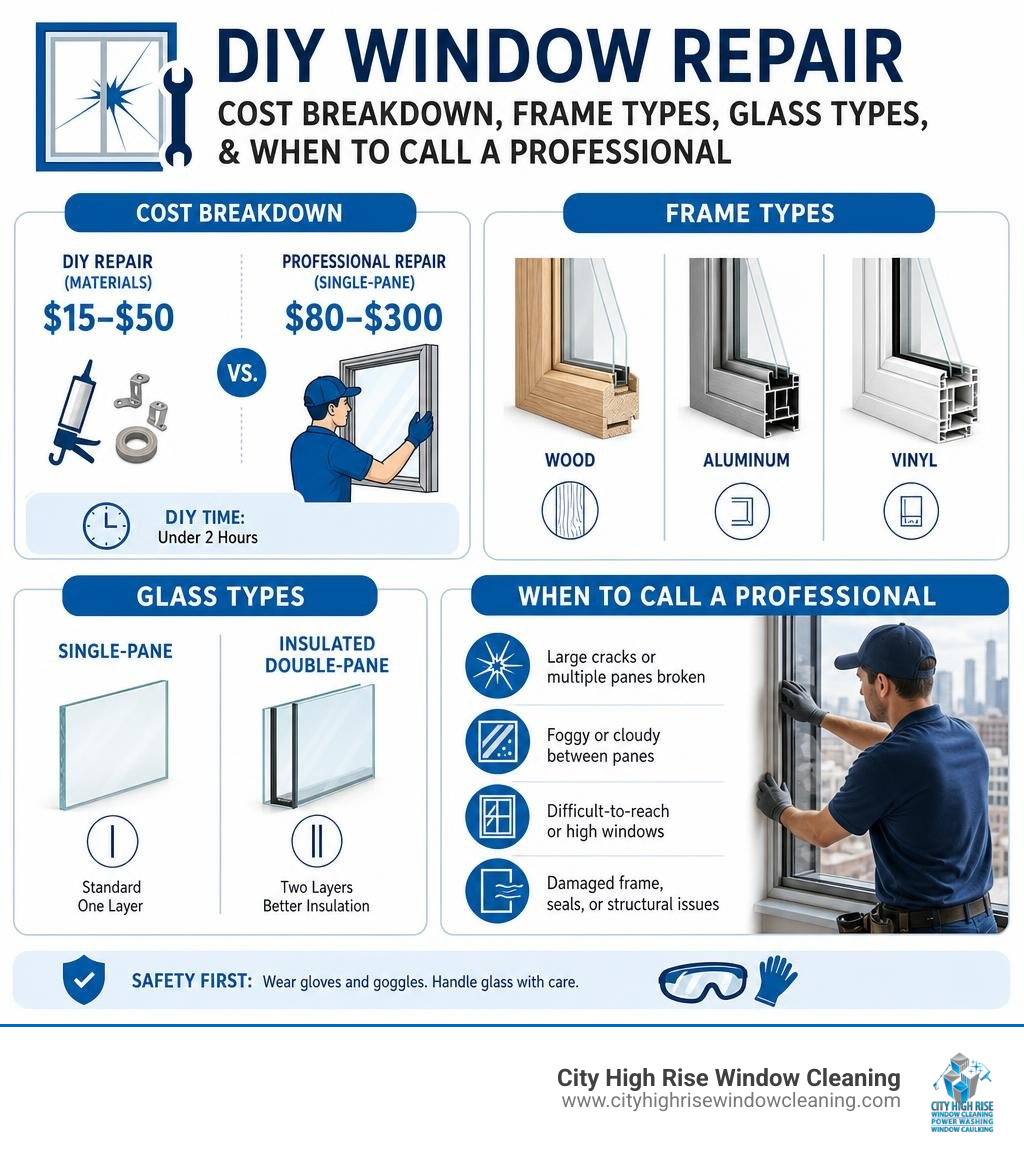
The good news? For a standard single-pane window, a DIY repair typically costs just $15–$50 in materials — compared to $80–$300 for a professional single-pane repair. That’s a fix most homeowners can handle in under two hours.
But not every window repair is that simple. The right approach depends on your frame type (wood, aluminum, or vinyl), your glass type (single-pane or insulated double-pane), and whether the damage is a crack or a full break.
This guide walks you through all of it — safely and clearly.
I’m Brett Hochman, CEO of City High Rise Window Cleaning, with over 48 years of hands-on experience in exterior building maintenance across NYC, Westchester, Long Island, and New Jersey — including everything from residential window repairs to large-scale commercial facade restoration. Whether you’re dealing with a cracked basement pane or wondering how to fix a window on a high-rise property, I’ll help you understand exactly what’s involved and when to call in a pro.
Related content about how to fix a window:
Identifying Your Window Frame and Damage Type
Before you run to the hardware store, you need to know exactly what you are working with. The material of your window frame dictates the tools, adhesives, and steps you will use.
- Wood Frames: These are common in historic homes throughout Brooklyn, Westchester, and older parts of New Jersey. They require traditional oil-based glazing compound and glazier’s points to hold the glass in place.
- Aluminum Frames: Highly popular in mid-century homes and commercial properties. These frames don’t use putty; instead, they rely on rubber or vinyl gaskets, or silicone caulk to seal the glass.
- Vinyl Frames: The modern standard for residential homes. Like aluminum, vinyl frames use snap-in vinyl glazing beads and double-sided mounting tape to hold the glass secure.
Next, look at the glass itself. Is it a single-pane of glass, or is it a double-pane Insulated Glass Unit (IGU)? You can identify an IGU by looking for a metal spacer strip separating two layers of glass. Finally, check if it is tempered safety glass. You can tell how the glass broke: annealed glass breaks into large, dangerous, jagged shards, while tempered glass crumbles into tiny, relatively harmless pebbles. Tempered glass is legally required in hazardous areas, such as bathrooms, stairwells, or within 18 inches of a door.
| Feature / Repair Step | Single-Pane Window | Double-Pane Window (IGU) |
|---|---|---|
| Average DIY Material Cost | $15 – $50 | $150 – $400 (for the replacement unit) |
| Average Pro Repair Cost | $80 – $300 | $200 – $500+ |
| Repair Method | Replace the individual glass pane | Replace the entire sealed IGU unit |
| Primary Sealant Used | Glazing compound or silicone | Specialized factory-sealed spacer gas |
| DIY Difficulty | Moderate (Highly achievable) | High (Requires custom ordering and precision) |
Step-by-Step: How to Fix a Window with Broken Glass
Replacing a broken window pane is an intermediate project that takes about two hours. If your home was built before 1978, be extremely careful of lead paint. I always advise wetting the sash with a damp rag to keep dust down and using a HEPA vacuum to clean up the area.
The Step-by-Step Process
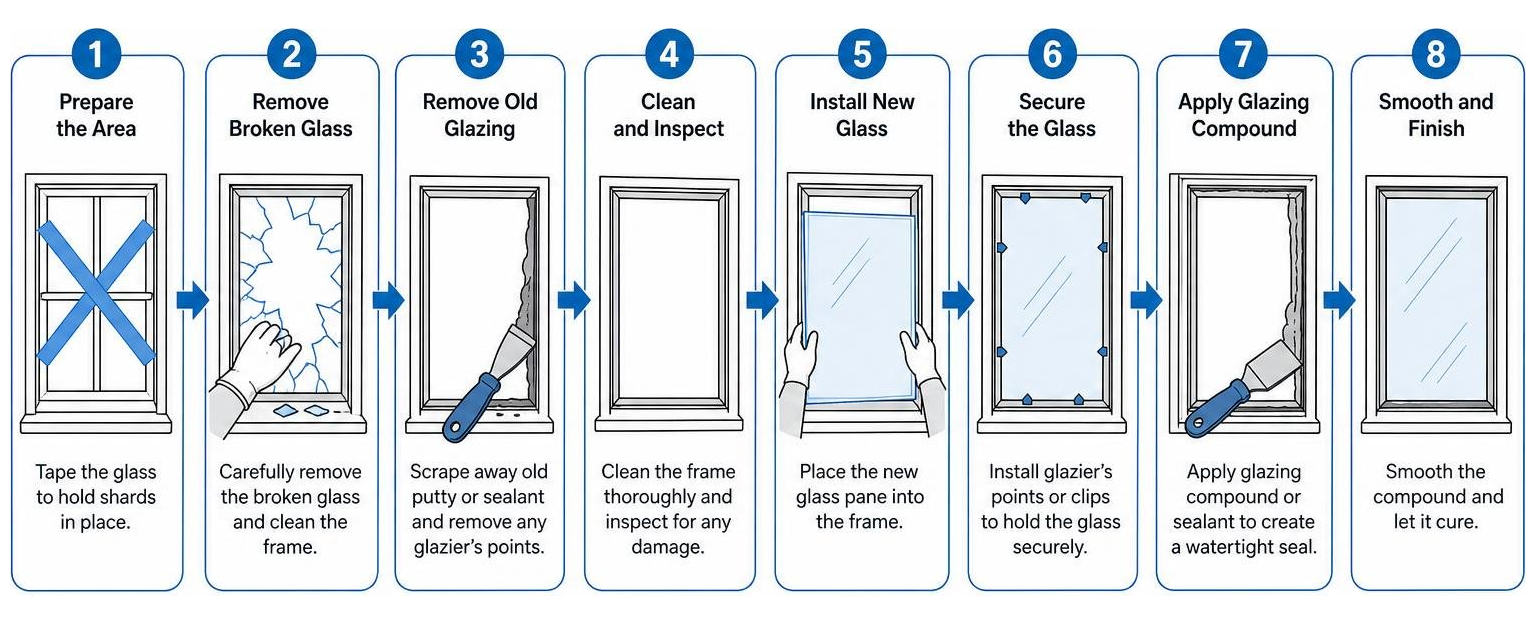
Here is the general workflow for replacing a single pane of glass:
To start, you will need to gather your tools:
- Safety glasses and cut-resistant leather gloves
- Duct tape or painter’s tape
- A stiff putty knife or paint scraper
- A heat gun (or utility knife)
- Glazing compound and glazier’s points
- A small paintbrush and linseed oil (for wood frames)
First, remove the window sash from the frame if possible, and lay it flat on a work surface covered with a canvas drop cloth. If you can’t remove the sash, you will have to work carefully on the vertical window. Apply duct tape in an “X” across the cracked glass to keep it from shattering into tiny pieces during removal.
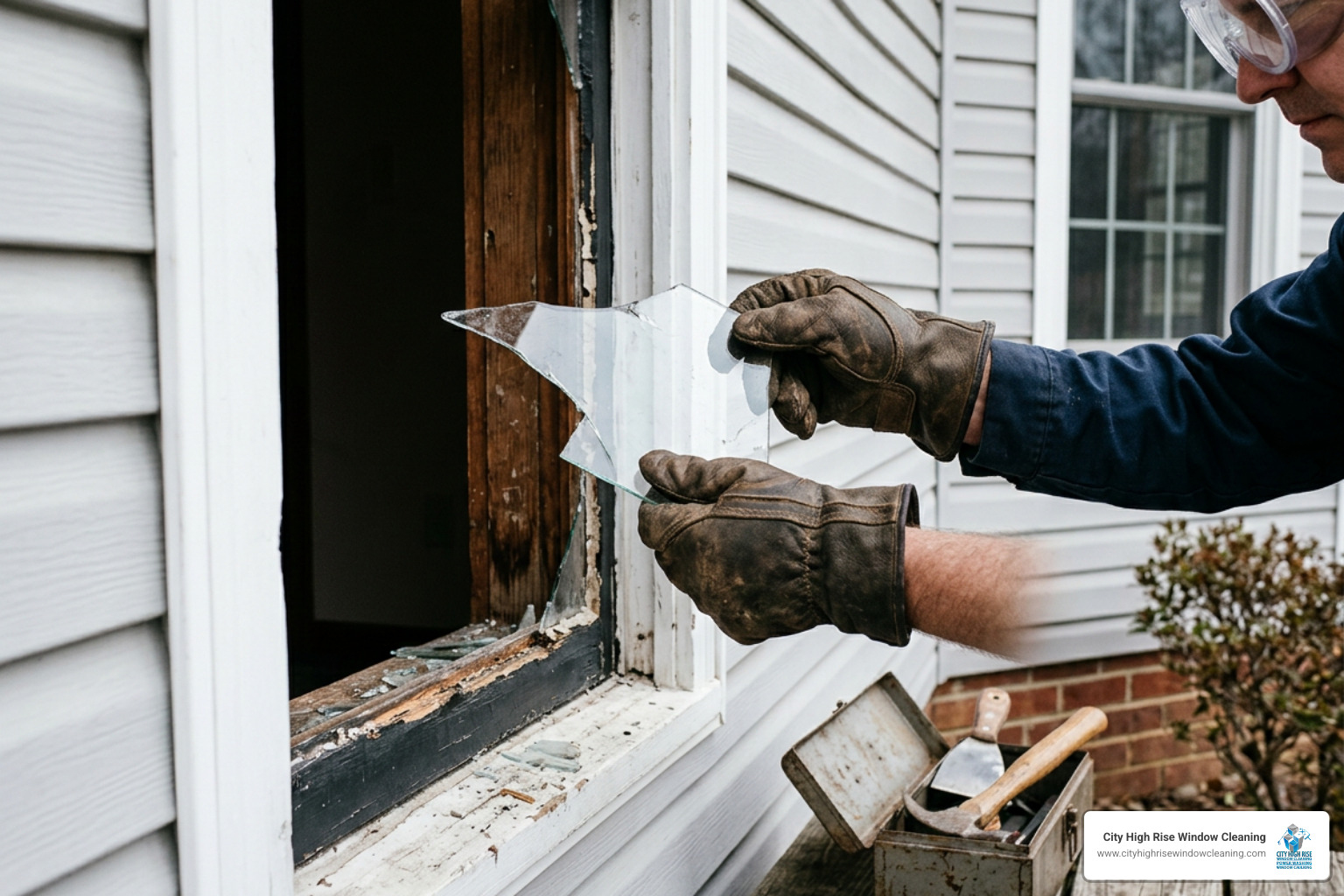
With your heavy leather gloves on, gently tap and wiggle the broken glass shards out of the frame. Work from the top of the window frame downward so that loose shards fall away from your hands. Once the glass is out, wrap it in thick newspaper and place it in a sturdy cardboard box labeled “BROKEN GLASS” to protect waste disposal workers.
For more details on this process, you can read How to Replace a Broken Window Pane: Glass Removal and Installation (2026).
How to Fix a Window Frame Made of Wood
Older wood windows are beautiful, but they require a specific touch. Once the broken glass is removed, you will be left with rock-hard old glazing compound and metal glazier’s points embedded in the wood channels (called the rabbet).
- Soften and Scrape: Use a heat gun on a low setting to warm and soften the old, stubborn putty. Be careful not to scorch the wood. Use a stiff putty knife to scrape the old compound away. Pull out the old glazier’s points with pliers.
- Prep the Wood: Sand the rabbet channel clean. If the wood is dry, apply a thin coat of boiled linseed oil with a small brush. This is a critical professional secret: if you apply glazing compound directly to dry, bare wood, the wood will suck the oils right out of the compound, causing it to dry out, shrink, and crack prematurely.
- Bed the Glass: Roll a thin rope of glazing compound (about 1/4 inch thick) and press it into the rabbet channels to create a soft, cushioned bed for the new glass.
- Secure and Glaze: Press the new glass pane firmly into the bed. Insert new glazier’s points flat against the glass, driving them into the wood frame every 6 inches around the perimeter. Roll another rope of compound, press it at a 45-degree angle against the glass, and smooth it into a clean, neat bevel using a putty knife.
For a complete look at restoring and maintaining wooden frames, check out our stop the rot with this wood window restoration guide.
How to Fix a Window Frame Made of Aluminum or Vinyl
Aluminum and vinyl frames do not use traditional putty. Instead, they rely on rubber gaskets or snap-in vinyl glazing strips to hold the glass.
- For Vinyl Frames: Use a thin putty knife or flathead screwdriver to gently pry up and pop out the vinyl glazing strips. Be careful not to bend or snap them, as you will need to reuse them. Remove the broken glass and scrape away any old double-sided mounting tape. Apply new double-sided glazing tape to the frame, set the new glass pane in place, and snap the vinyl strips back into their grooves.
- For Aluminum Frames: Aluminum frames often feature a rubber gasket wrapped around the glass. You can unscrew the corners of the aluminum sash, slide the frame pieces off the glass, replace the broken pane inside the gasket, and screw the frame back together. If your frame uses silicone instead of a gasket, run a utility knife along the edge to break the old seal, clean the channel, apply a continuous bead of high-quality silicone caulk, set the glass, and replace the vinyl stop.
To learn more about choosing sealants for metal frames, take a look at dont get drafted 6 top caulk choices for aluminum windows.
Measuring and Ordering Your Replacement Glass
Measuring is the most critical phase of the DIY process. If you measure incorrectly, your new glass won’t fit, and trying to force an oversized pane into a frame will cause it to crack immediately.
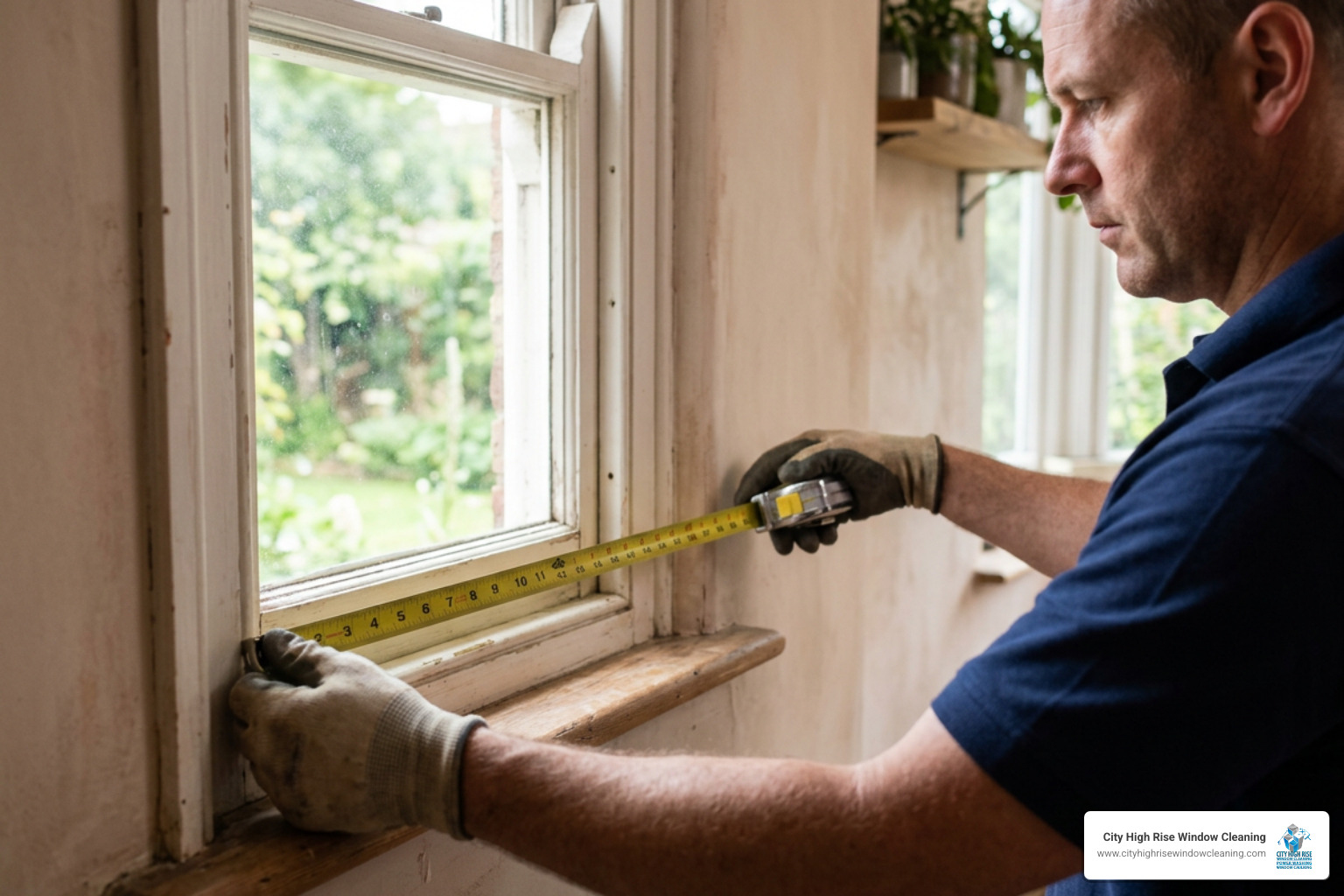
Always measure the “daylight opening” (the inside of the frame channel where the glass sits) in multiple places. Measure the width at the top, middle, and bottom, and the height at the left, center, and right. Use the smallest measurements.
The 1/8-Inch Rule: Subtract 1/8 inch from both your final width and height measurements. This provides a 1/16-inch expansion gap on all sides. This gap is crucial because glass, wood, and metal expand and contract at different rates during seasonal temperature changes in the Northeast.
When ordering, you also need to specify the glass thickness. Standard residential glass is “single-strength” (3/32 inch thick) for small panes up to 15 square feet, or “double-strength” (1/8 inch thick) for larger windows.
Temporary Fixes for Cracked Windows
If you cannot make a permanent repair immediately, you must secure the window to keep out drafts, moisture, and pests.
- The Tape Grid: For minor cracks, apply clear packing tape or heavy-duty duct tape in a tight grid over the crack on both the interior and exterior sides of the glass.
- Drilling a Stop Hole: If you have a single long crack, you can stop it from spreading by using a 1/16-inch glass-drill bit to drill a small hole through the glass exactly at the very tip of the crack. This blunts the stress point and prevents thermal expansion from pushing the crack further.
- UV-Curing Resin: For cracks under 4 inches that do not reach the edge of the frame, you can use a windshield repair resin kit. Clean the crack with rubbing alcohol, apply the resin, let it cure in direct sunlight for 2 to 5 minutes, and scrape the excess flat with a razor blade. This restores about 80% of the glass’s structural integrity.
- Plywood Security Cover: For large, completely shattered window openings, screw a sheet of 1/2-inch plywood directly into the window frame from the outside to secure your home until a professional arrives.
For more detailed temporary solutions, check out How to Fix a Cracked Window: Temporary Seals, DIY Glass Replacement, and Glazing.
When to Call a Professional for Window Repair
While replacing a single pane of glass in a basement window is a fun weekend DIY project, there are times when attempting a repair yourself is simply too dangerous or complex.
You should always call a professional if:
- It is a Double-Pane Window (IGU): If the seal of a double-pane window fails, moisture gets trapped inside, causing the glass to fog up. You cannot fix this seal yourself; the entire sealed insulated glass unit must be custom-manufactured and replaced.
- It is Tempered or Laminated Glass: These safety glasses cannot be cut or repaired once manufactured.
- It is Located on an Upper Floor or High-Rise: Handling heavy glass panes on a ladder or from the upper floors of an apartment building in NYC or Westchester is an extreme safety hazard. Falling glass poses a severe liability and public safety threat to pedestrians on the sidewalks below.
- The Frame is Structurally Damaged: If the wood is completely rotted or the vinyl is warped, simply replacing the glass won’t fix the draft. You need professional frame restoration.
At City High Rise Window Cleaning, we specialize in handling complex window repairs, high-elevation glass safety, and structural window seal replacement across Long Island, New York City, Westchester, and New Jersey.
Frequently Asked Questions About Window Repair
How much does it cost to fix a broken window pane?
A DIY single-pane glass replacement typically costs between $15 and $50 in materials. If you hire a professional, a single-pane glass repair generally costs between $80 and $300, depending on the size and accessibility of the window.
Can I replace just one pane of a double-pane window?
Technically, no. Double-pane windows are sealed units (IGUs) filled with insulating gas between the panes. If one pane breaks, the seal is broken, so you must replace the entire sealed IGU to restore energy efficiency.
How do you temporarily fix a cracked window?
Tape both sides of the crack with clear packing tape or duct tape to reduce drafts and hold the glass together. For large breaks, cover the opening with plywood until the glass can be replaced.
Is it worth repairing old wood windows?
Yes, if the frame is structurally sound. Older wood windows can often be restored with new glass, glazing compound, paint, and weather sealing, especially in historic homes across New York, Long Island, Westchester, and New Jersey.
How long does window glazing compound take to cure?
Traditional oil-based glazing compound takes 7 to 14 days to skin over before painting. Paint should overlap the glass by about 1/16 inch to create a watertight seal.
Conclusion
How to fix a window comes down to knowing your limits, preparing your materials carefully, and always prioritizing safety. For older single-pane wood windows, a little linseed oil, fresh glazing putty, and some patience can save you hundreds of dollars. But for complex high-rise windows, double-pane seal failures, or structural frame issues, the safest and most cost-effective path is professional restoration.
With over 30 years of experience serving New York City, Long Island, New Jersey, and Westchester, my team at City High Rise Window Cleaning is here to help keep your building safe, draft-free, and looking beautiful. Whether you need high-rise facade cleaning, power washing, or professional window restoration, we back our work with a 100% customer satisfaction guarantee. For damaged frames, leaking seals, and aging exterior glass systems, our window restoration service helps extend window life and reduce replacement costs.
Ready for a free quote? City High Rise Window Cleaning offers 24/7 live consultation. Contact us today to speak to a live representative.


