

Amazon and Reddit Agree: These are the Best Power Washers
Amazon and Reddit Agree: These are the Best Power Washers
Stop Wasting Weekends: The Best Power Wash Equipment Ranked by Real Users
Finding the best power wash equipment can save you hours of scrubbing — and protect surfaces from costly damage if you pick the wrong one.
Here’s a quick answer for anyone who just wants the top picks:
| Rank | Model | Type | Best For | PSI |
|---|---|---|---|---|
| 1 | Simpson AL3425 | Gas | Heavy-duty driveways, large areas | 3,600 |
| 2 | Greenworks Pro 3000 | Corded Electric | Decks, siding, driveways | 3,000 |
| 3 | Ryobi RY142500 Brushless | Corded Electric | Cars, patios, medium-duty | 2,500 |
| 4 | EGO HPW3200 | Battery | Cordless flexibility, decks, cars | 3,200 |
| 5 | Craftsman CMEPW2100 | Corded Electric | Car washing, light-duty | 1,800 |
A pressure washer nozzle shoots water at 30 to 80 times the pressure of a garden hose — powerful enough to erase years of stains in minutes, but also powerful enough to send someone to the emergency room if used carelessly. Choosing the right machine for the right job isn’t just about speed. It’s about safety and protecting your surfaces.
I’m Brett Hochman, CEO of City High Rise Window Cleaning, with over 48 years in exterior building maintenance across New York, New Jersey, and the Tri-State area — and selecting the best power wash equipment has been central to every facade cleaning and restoration project I’ve overseen. In this guide, I’ll break down exactly what separates a smart purchase from an expensive mistake.
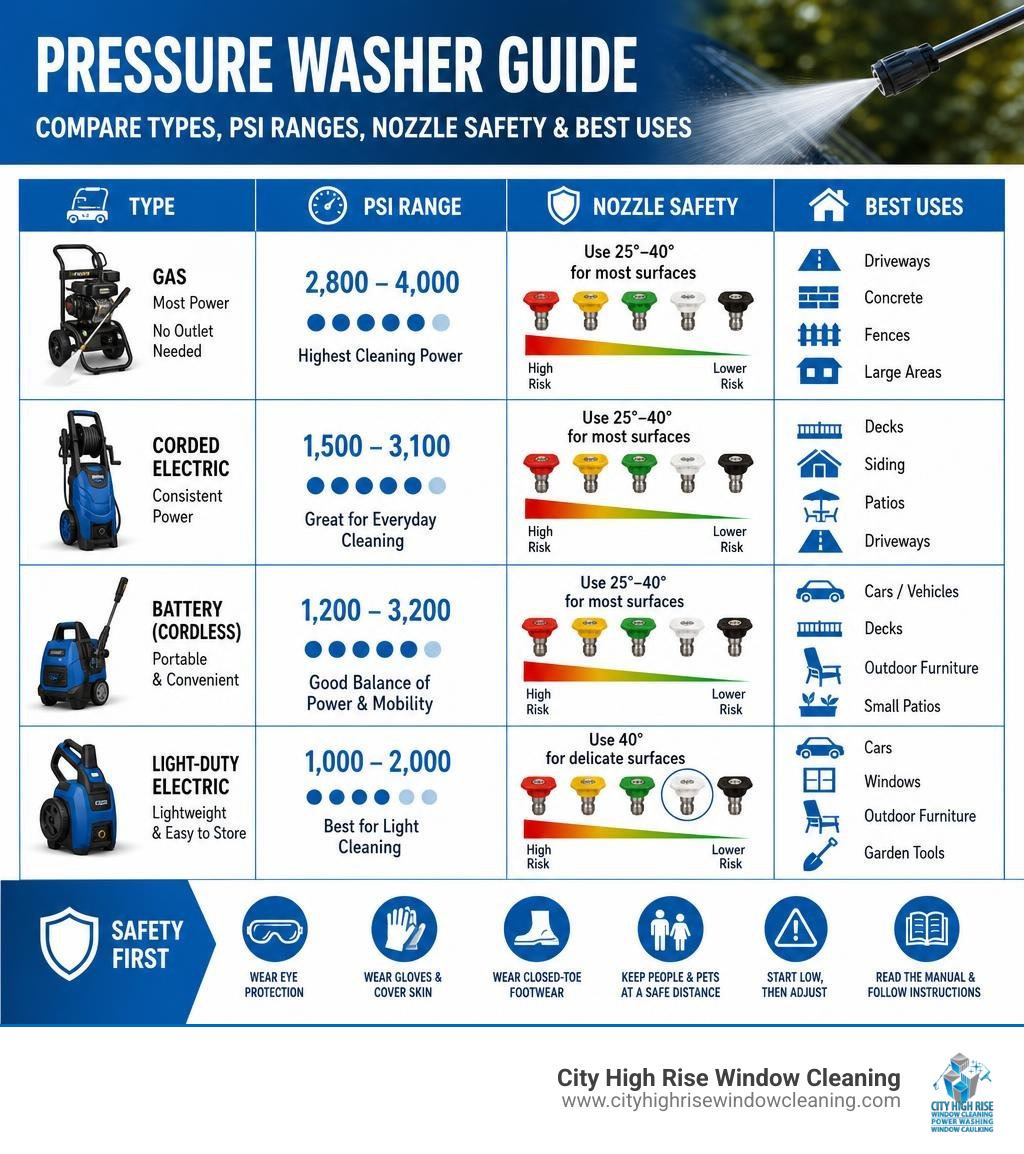
Essential best power wash terms:
Gas vs. Electric vs. Battery: Finding the Best Power Wash for Your Needs
When choosing the best power wash setup, the source of power dictates everything from cleaning speed to maintenance. On online forums like Reddit’s r/pressurewashing and Amazon product reviews, the debate between gas, corded electric, and battery-powered units is fierce.
Here is how they stack up across the key performance metrics:
| Feature | Gas-Powered | Corded Electric | Battery-Powered |
|---|---|---|---|
| Average PSI Range | 2,800 – 4,200+ | 1,500 – 3,000 | 1,500 – 3,200 |
| Average GPM Range | 2.3 – 4.0 | 1.1 – 1.3 | 1.0 – 1.2 |
| Cleaning Speed | Extremely Fast (Baseline) | ~50% Slower than Gas | Moderate to Fast |
| Noise Level | Very High (90–95+ dBA) | Low to Moderate (80–85 dBA) | Low (75–82 dBA) |
| Portability | High (No cords, heavy) | Limited by cord & hose (35 ft cord) | Maximum (No cords, lighter) |
| Price Range | $250 – $500 (Residential) | $90 – $350 | $125 – $800 |
| Maintenance | High (Oil, gas, winterizing) | Almost Zero | Minimal (Battery care) |
Gas-Powered Pressure Washers: The Unmatched Heavyweights
If you ask the seasoned pros on Reddit, they will tell you that “water flow (GPM) is king, and gas is the undisputed ruler.” Gas pressure washers clean about 50% faster than the average electric model because they push out far more water volume. Models like the Simpson AL3425 utilize commercial-grade Honda GX engines and triplex pumps to blast through oil stains, deep-set mildew, and massive concrete driveways.
However, they are loud, heavy, produce fumes, and require consistent small-engine maintenance. If you do not want to mix fuel, change spark plugs, or deal with carburetor issues after winter storage, gas might not be your best bet.
Corded Electric Pressure Washers: The Residential Sweet Spot
For the average homeowner in Long Island or Westchester, corded electric models offer the ultimate convenience. They start instantly with the press of a button, run quietly, and require virtually zero maintenance.
Brands like Kärcher have pioneered this space for decades. If you look at Electric Pressure Washers – Kärcher, you will find advanced features like water-cooled induction motors (found in their K4 and K5 lines) that route water around the motor to keep it cool, extending its life significantly. Electric models also feature an auto-stop function: the motor only runs when you pull the trigger, preventing pump overheating.
Battery-Powered Pressure Washers: The Cordless Revolution
In recent years, battery technology has closed the gap. The best battery-powered pressure washers, such as the EGO HPW3200, now reach 3,000 to 3,200 PSI, putting them on par with many gas-powered washers.
These units are incredibly portable and perfect for properties with sprawling lawns or docks where power outlets are out of reach. The trade-off is runtime. Squeezing maximum power out of a battery-operated pump drains power quickly, often requiring multiple high-capacity batteries to complete a large job.
If you are dealing with large commercial spaces or delicate historic structures, sometimes the DIY route is more trouble than it’s worth. You can Learn more about professional power washing services to see how commercial-grade truck-mounted systems compare to consumer equipment.
Understanding PSI and GPM: How Much Power Do You Actually Need?
To achieve the best power wash results without destroying your property, you must understand the relationship between PSI (Pounds per Square Inch) and GPM (Gallons per Minute).
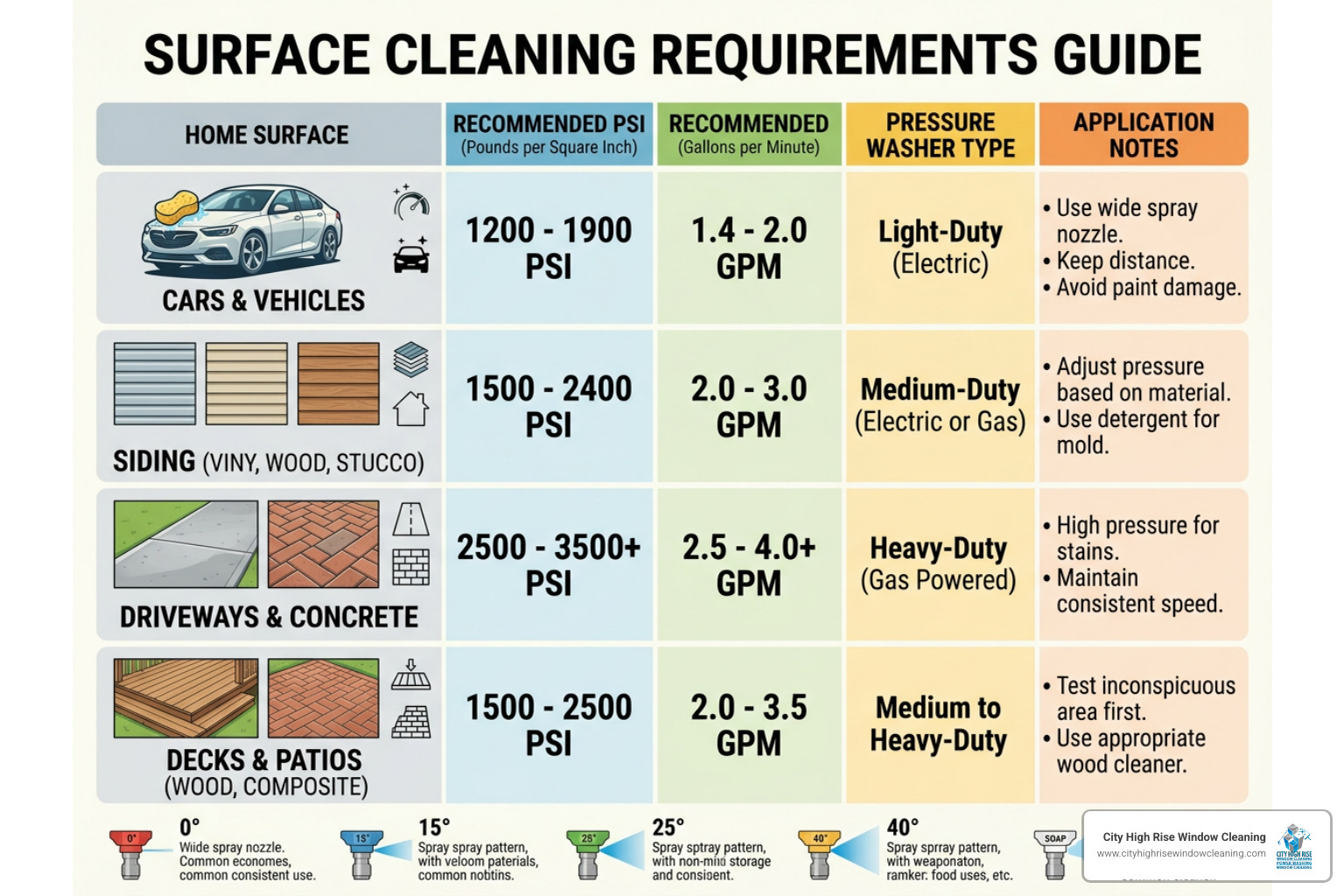
Many manufacturers advertise “PSI Max,” which is a misleading marketing term. This represents the peak pressure generated the millisecond the pump starts, not the actual working pressure under load. To get a true sense of a machine’s capability, calculate its Cleaning Units (CU):
$$\text{Cleaning Units} = \text{PSI} \times \text{GPM}$$
A machine with 3,000 PSI and 1.1 GPM yields 3,300 Cleaning Units. Meanwhile, a commercial unit with 2,500 PSI and 3.0 GPM yields 7,500 Cleaning Units. The second machine will clean more than twice as fast because it has the water volume to sweep away the debris that the pressure loosens.
Before buying, you should ask yourself if purchasing a machine is worth the storage space and upkeep. Buying a pressure washer pays for itself in a few years if used three or more times per year. Otherwise, renting a commercial gas unit for a weekend or hiring a professional is often the smarter financial move.
To help budget your home maintenance, you can Discover the real cost of clean to compare DIY expenses against professional rates.
Safe PSI Ranges for the Best Power Wash on Cars and Delicate Surfaces
Washing a vehicle requires a delicate touch. Using too much pressure or holding the nozzle too close can easily strip clear coat, peel paint, and destroy rubber seals.
- The Gold Standard for Cars: Keep the pressure between 1,000 and 1,800 PSI. Electric pressure washers are highly recommended to stay under 1,800 PSI for safe car washing.
- Distance Matters: Always maintain a distance of 12 to 24 inches from the vehicle’s surface.
- The Foam Cannon Advantage: Skip the built-in soap tanks, which run detergent through the pump. Instead, attach a dedicated foam cannon to the end of your wand. This mixes air, water, and car soap to create a thick shaving-cream-like lather that clings to the paint, loosening dirt before you even touch the surface.
For a reliable, medium-duty electric unit that excels at these delicate tasks, the Greenworks 2300 PSI Brushless Pressure Washer is a stellar option. Its brushless motor automatically adjusts pressure based on the nozzle tip you use, and it is CETA-certified to guarantee its performance ratings.
Heavy-Duty PSI Ranges for the Best Power Wash on Concrete and Brick
Concrete, brick, and pavers are highly porous. Dirt, motor oil, algae, and mold sink deep into these surfaces, requiring heavy-duty power to extract.
- The Target Range: For concrete driveways and brick patios, you need 2,500 to 4,000 PSI combined with a high flow rate (at least 1.2 to 2.5 GPM).
- The Magic of Surface Cleaners: If you try to clean a large driveway with a standard spray nozzle, you will end up with “zebra stripes” (uneven clean lines) and it will take you all weekend. A rotating surface cleaner attachment hovers just above the concrete, spinning two nozzles at high speed to deliver an even, streak-free clean in a fraction of the time.
A fantastic package for this is the Greenworks 3000 PSI Combo Kit, which bundles a powerful 3,000 PSI electric washer with a 15-inch surface cleaner. It features smart brushless motor technology and “JettFlow” tech, which increases water flow by up to 50% for fast rinsing.
Essential Nozzle Guide and Safety Protocols to Avoid Costly Damage
Choosing the wrong nozzle can ruin a wood deck or etch permanent lines into concrete in a fraction of a second. Most pressure washers come with color-coded, quick-connect nozzles that spray water at specific angles:
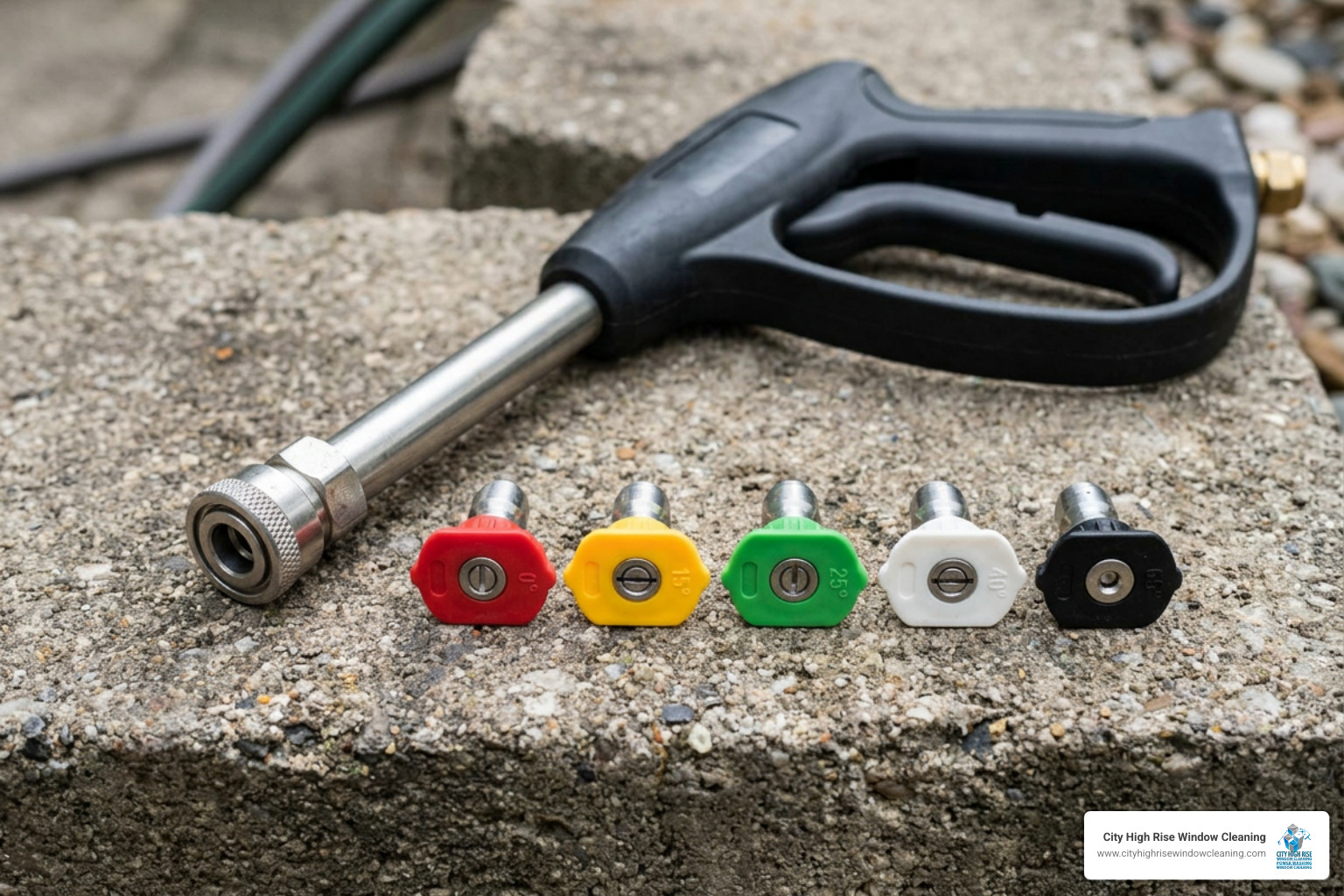
- Red (0-Degree): This shoots a laser-like stream of water. Consumer Reports does not recommend using a 0-degree nozzle due to severe injury risk. It can easily slice through skin, boots, and wood. Remove it from your kit and throw it away.
- Yellow (15-Degree): Great for heavy-duty stripping, removing rust, and prepping concrete or metal for paint. Use with caution.
- Green (25-Degree): The best all-purpose nozzle. Ideal for sweeping away dirt, washing vinyl siding, and cleaning brick patios.
- White (40-Degree): The safest option for delicate surfaces. Perfect for washing cars, windows, and soft wood decks.
- Black (65-Degree / Soap): A low-pressure nozzle designed specifically to draw soap from your chemical tank and apply it to the surface.
- Turbo Nozzle: A rotating zero-degree beam that spins in a circle, giving you the deep cleaning power of a red nozzle with the wide coverage of a green nozzle. Excellent for concrete.
Crucial Safety Protocols
Because these machines spray water with intense force, safety is paramount:
- Wear Proper PPE: Never wear sandals or sneakers. Wear steel-toed boots, safety glasses, and hearing protection (especially with gas models).
- Beware of Masonry Damage: In older areas of New York and Long Island, historic brick and mortar are fragile. Using high pressure can blow out mortar joints.
- Winterization & Pump Saver: Before storing your unit in freezing temperatures (a must for NY/NJ winters), flush the system. Water left inside the pump will expand when frozen, cracking the internal brass or aluminum manifolds. Always inject a “pump saver” lubricant into the water inlet before storing it for the season.
If you are hesitant about handling high-pressure equipment around your home, you can read about How to safely power wash your home exterior to learn how professional crews use specialized soft-washing techniques.
Frequently Asked Questions About Pressure Washing
What is the difference between a pressure washer and a power washer?
While people use the terms interchangeably, they are technically different. A pressure washer uses cold water forced through a pump to clean surfaces. A power washer features a built-in heating element that heats the water to near-boiling temperatures.
Hot water is highly effective at breaking down grease, oil, and fuel spills on commercial driveways, gas stations, and industrial parking lots. However, power washers are much larger, more expensive, and require specialized training to operate safely.
Can I use bleach in my pressure washer?
No, you should never run household bleach through your pressure washer’s pump. Bleach is highly corrosive and will quickly eat away at the rubber seals, O-rings, and brass valves inside the pump, destroying the machine.
If you need to kill mold or algae, use a soap nozzle to apply a pressure-washer-approved detergent or a specialized deck cleaner. Alternatively, you can apply a diluted bleach solution manually with a garden pump sprayer, let it dwell, and then rinse it off with the pressure washer.
How often should I pressure wash my building in New York or New Jersey?
Most residential and commercial properties in our region benefit from a professional wash once or twice a year. The best times are:
- Spring (April – May): To wash away the winter salt, grime, and soot before summer humidity sets in.
- Early Fall (September – October): To clear away pollen, dust, and organic buildup from the summer.
Our local climate is highly humid in the summer and freezing in the winter, which accelerates mold growth and masonry weathering. If you manage a commercial property, keeping up with this schedule is vital. Learn more about Commercial power washing in NJ to see how regular maintenance protects your property value.
Conclusion
Finding the best power wash machine comes down to matching the tool to the task. For heavy-duty concrete cleaning, a gas unit like the Simpson AL3425 reigns supreme. For quiet, maintenance-free home care, advanced electric models from Greenworks, Ryobi, or Kärcher offer incredible value and performance.
However, high-pressure cleaning is a double-edged sword. A single mistake can strip paint, ruin historic brickwork, or cause serious bodily injury.
At City High Rise Window Cleaning, we have spent over 30 years mastering the art of exterior building maintenance. Operating across New York City, Long Island, Westchester, and New Jersey, we bring professional-grade, hot-water systems and a 100% customer satisfaction guarantee to every project. Whether you need a low-pressure soft wash for a historic brownstone or heavy-duty restoration for a commercial plaza, we have the expertise to get it done safely and efficiently.
If you want to skip the DIY hassle and ensure your property gets the deepest clean possible, explore our professional high-rise hot water power washing services.


