

A Guide to Professional Commercial Glass Cleaning
A Guide to Professional Commercial Glass Cleaning
What Is Contract Window Cleaning — and Why It Matters for Your Building
Contract window cleaning is a formal, ongoing service agreement between a property owner or manager and a professional cleaning company that defines exactly what gets cleaned, how often, at what price, and who is responsible if something goes wrong.
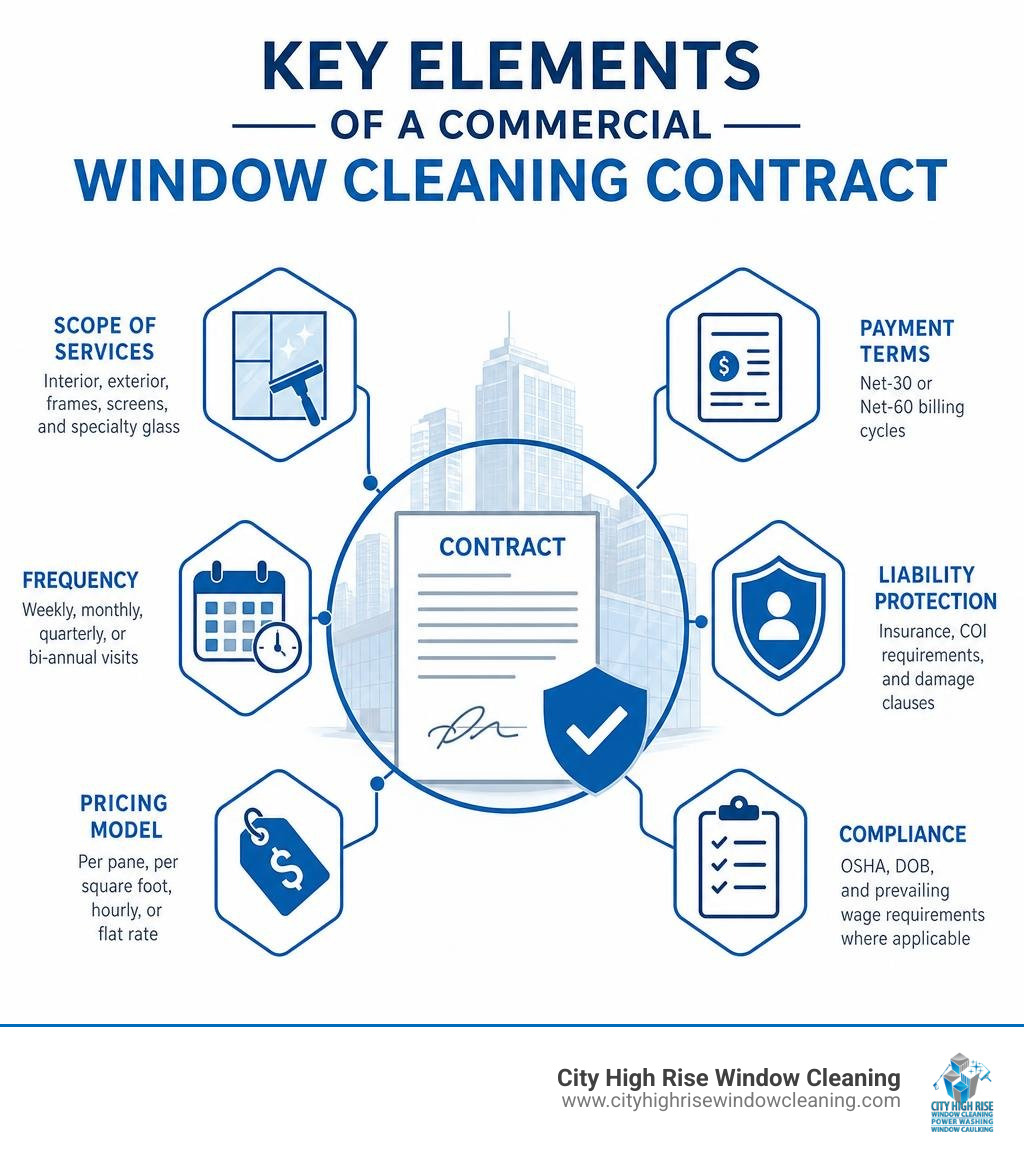
Here’s what a commercial window cleaning contract typically covers:
| Element | What It Means for You |
|---|---|
| Scope of services | Interior, exterior, frames, screens, and specialty glass |
| Frequency | Weekly, monthly, quarterly, or bi-annual visits |
| Pricing model | Per pane, per square foot, hourly, or flat rate |
| Payment terms | Net-30 or net-60 billing cycles |
| Liability protection | Insurance, COI requirements, and damage clauses |
| Compliance | OSHA, DOB, and prevailing wage requirements where applicable |
For high-rise and commercial properties in New York, New Jersey, and the surrounding metro area, a contract isn’t just paperwork — it’s the difference between a building that looks professional and one that quietly loses value to grime, pollution, and neglected glass.
Without a clear agreement in place, property managers face unpredictable costs, inconsistent service quality, and real liability exposure when workers access the building facade.
I’m Brett Hochman, CEO of City High Rise Window Cleaning, and with nearly five decades of hands-on experience managing contract window cleaning programs for skyscrapers, hospitals, and commercial properties across the Tri-State area, I’ve seen what a well-structured contract protects — and what a poorly written one costs. Let’s break down everything you need to know.
Explore more about contract window cleaning:
Why Commercial Properties Rely on Contract Window Cleaning
In a bustling metropolis like New York City, or across the commercial corridors of Long Island, Westchester, and New Jersey, your building’s exterior is your handshake. It is the very first impression you make on clients, tenants, and visitors.
Unfortunately, our local environment is incredibly tough on glass. Between the relentless vehicle emissions in Manhattan, the salt spray along the Long Island coast, and the industrial dust drifting through New Jersey, building envelopes face a constant barrage of airborne pollutants.
If left uncleaned, these contaminants do more than just look ugly. Mineral deposits, acid rain, and environmental soot physically etch into the glass over time, causing permanent damage that can only be fixed with costly window restoration or total glass replacement.
By establishing a structured contract window cleaning agreement, property managers solve several critical problems at once:
- Uncompromising Service Consistency: Instead of scrambling to find a contractor every time the windows look filthy, your property is placed on a reliable, automated schedule.
- Aesthetic and Property Value Protection: Regular cleanings remove corrosive particulates before they can permanently stain or degrade your architectural glass.
- Predictable Budgeting: Operating a commercial property is all about managing cash flow. A contract replaces erratic, one-off service quotes with fixed, predictable operating expenses.
- Robust Liability Protection: A professional contract clearly outlines insurance requirements, safety standards, and operational boundaries, shifting the risk away from the property management firm.
If you want your facility to stand out, relying on ad-hoc cleaning is a gamble. Implementing comprehensive NYC window cleaning services on a recurring contract guarantees that your building always reflects the high standards of your business.
Key Differences Between Residential, Commercial, and Construction Agreements
Not all window cleaning contracts are created equal. A contract designed for a suburban home in Westchester is fundamentally different from a master agreement for a multi-story office building or a post-construction clean-up site.
Understanding these differences is crucial to ensuring you have the right legal and operational protections in place:
- Residential Agreements: These are typically straightforward, low-risk agreements. They focus on aesthetics, screen cleaning, and track detailing. They are usually scheduled twice a year (spring and fall) and carry minimal regulatory compliance requirements.
- Commercial Agreements: These contracts demand strict adherence to safety standards, commercial general liability insurance, and detailed scopes of work. They cover everything from ground-level retail storefronts to sprawling corporate campuses. These agreements often involve specialized equipment (like boom lifts or water-fed poles) and require clear scheduling parameters to minimize disruption to tenants.
- Post-Construction Agreements: This is a highly specialized, one-time contract. Our specialized post construction cleaning services require removing heavy debris like concrete splatter, silicone, plaster, paint, and stickers. Because workers must use specialized glass scrapers and chemical solvents, the risk of scratching tempered glass is incredibly high. These agreements require robust liability waivers regarding pre-existing glass scratches and highly detailed quality control checklists.
For public-sector and large-scale commercial facilities, procurement teams often utilize highly standardized templates—such as the Washington State Master Contract Template—to ensure all safety, geographic, and pricing compliance protocols are legally airtight before work begins.
Understanding Pricing Models and Average Costs
When entering into a contract window cleaning agreement, you will encounter several different pricing structures. Choosing the right model depends on your building’s architecture, height, and overall cleaning frequency.
| Pricing Model | Average Rate Range | Best Used For |
|---|---|---|
| Per Pane | $4.00 – $8.00 per pane | Residential and low-rise commercial properties with standard window layouts. |
| Per Window | $8.00 – $16.00 per window | Standard double-hung or fixed commercial windows. |
| Per Square Foot | $0.50 – $2.50 per sq. ft. | Large commercial complexes, glass atriums, and continuous curtain walls. |
| Hourly Rate | $50.00 – $100.00+ per hour | Highly complex, custom architectural glass or difficult-to-access structures. |
| Flat Rate (Per Visit) | Custom Quote | Standardized recurring contracts (monthly, quarterly, or bi-annually). |
Understanding these baseline figures is key to realistic budget planning. For a deeper dive into how these numbers are calculated for larger facilities, check out our comprehensive guide on commercial window cleaning costs.
Several variables will ultimately shape your final contract pricing. First-time cleanings are almost always priced higher because of heavy dirt buildup, mineral spots, and oxidation that require extra labor to scrub away.
However, signing a recurring contract is highly cost-effective; most professional providers offer discounts of 10% to 25% on recurring visits because the glass is much easier to maintain once a baseline of cleanliness is established.
Additionally, you should watch out for minimum service charges (typically $150 to $250) designed to cover mobilization and travel costs for smaller commercial properties.
How to Negotiate Your Contract Window Cleaning Rates
Negotiating a commercial contract isn’t just about demanding the lowest price—it’s about maximizing the value of your agreement while ensuring the contractor can still perform the work safely and professionally.
Here are the most effective strategies to lower your per-visit costs:
- Leverage Multi-Year Agreements: Contractors value long-term stability. By committing to a multi-year contract (such as a 3-year term or a base-year plus multi-option-year structure), you can lock in lower rates and shield your property from inflation.
- Bundle Your Services: If your building needs window cleaning, it likely also needs pressure washing, metal polishing, or facade restoration. Bundling these services into a single contract is significantly cheaper than hiring separate contractors for each task.
- Optimize Your Cleaning Frequency: You don’t always need every window cleaned on every visit. A smart contract might specify monthly cleanings for high-visibility ground-floor glass, quarterly cleanings for mid-level windows, and bi-annual cleanings for the upper high-rise glass.
- Review Large-Scale Benchmarks: Look at how major institutions structure their long-term procurement. For instance, federal and state agencies, like those bidding on the VA San Diego Window Washing Contract, routinely structure multi-year agreements with clear option years to secure highly competitive, volume-based pricing.
Key Terms, Conditions, and Legal Protections

A handshake works until it doesn’t. When dealing with commercial properties, a legally binding contract is absolutely essential to protect both the building owner and the service provider.
If a contract is vague, it can lead to disputes over missed windows, billing delays, or, worst-case scenario, property damage claims.
When reviewing a master service agreement, pay close attention to these critical legal clauses:
- Scope of Services: This section must be incredibly specific. It should outline exactly which windows are included (interior, exterior, or both), whether frames and sills are wiped down, and if specialized glass features (like skylights or glass canopies) are covered.
- Payment and Billing Terms: Commercial contracts typically operate on Net-30 or Net-60 payment terms. Ensure the contract clearly states when invoices will be issued, how disputes over specific line items are handled, and what late fees apply.
- Property Access and Prep Work: The contract must define who is responsible for preparing the site. For example, do tenants need to clear their desks and windowsills before the interior crew arrives? Who provides access to the roof, water hookups, and electrical outlets?
- Force Majeure and Weather Delays: High-rise window cleaning is highly weather-dependent. High winds, heavy rain, freezing temperatures, and snow make working on suspension rigs or rope access systems incredibly dangerous. The contract must state that weather-related delays are not considered a breach of contract and outline how makeup dates will be scheduled.
To see how rigorous public sector contracts handle these exact issues, you can review the California Judicial Council Master Contract, which details strict protocols for service work orders, property access, and weather exceptions.
Key Elements of a Professional Contract Window Cleaning Agreement
If you are drafting or reviewing an agreement, utilizing a verified starting point like this free window cleaning contract template can help ensure you don’t miss any foundational clauses.
However, you must customize the template to address the unique physical and operational realities of your specific building.
Every professional agreement should explicitly include:
- A Clear Scratch Damage Waiver: Tempered glass is highly susceptible to scratching from microscopic fabricating debris. The contract should feature a clause stating that the contractor is not liable for pre-existing scratches or scratches resulting from cleaning construction debris, provided they used industry-standard tools and techniques.
- Frequency and Scheduling Windows: Rather than naming exact dates (which weather can easily disrupt), define scheduling “windows” (e.g., “the first two weeks of May and October”).
- Strict Quality Control Standards: Define what constitutes an acceptable clean. For instance, specify that windows must be free of streaks, spots, and film when viewed from a distance of six feet under normal daylight conditions.
Safety, Insurance, and Compliance Requirements
Commercial window cleaning—especially at high elevations—is a high-risk profession. There is absolutely no room for shortcuts when it comes to safety and regulatory compliance.
If a contractor fails to follow proper safety procedures, the property owner or management company can face massive legal liabilities, fines, and devastating reputational damage.
Before allowing any window cleaning crew onto your property, you must verify that they meet the following compliance standards:
- OSHA Compliance: The Occupational Safety and Health Administration (OSHA) enforces strict guidelines regarding fall protection, anchor point testing, and safety training. Any contractor working at heights must have a written safety plan and conduct a job hazard analysis (JHA) before starting work.
- Local Regulations (NYC DOB): In New York City, the Department of Buildings (DOB) strictly regulates suspended scaffolding, rigging, and rope access. Contractors must hold valid active licenses and permits for suspended scaffold operations.
- Professional Certifications: Look for crews certified by the Society of Professional Rope Access Technicians (SPRAT) or the International Window Cleaning Association (IWCA). These certifications prove that the technicians have undergone rigorous, hands-on safety training.
- Comprehensive Insurance Coverage: Never accept a simple verbal assurance of insurance. You must demand a Certificate of Insurance (COI) sent directly from the contractor’s broker, naming your property management company and building owner as “additional insureds.” The policy should include:
- Commercial General Liability: Minimum of $5,000,000 to $10,000,000 for high-rise work.
- Workers’ Compensation: Must cover all employees working on-site.
- Umbrella/Excess Liability: To provide extra protection for high-value properties.
- Background Checks and Security: For secure facilities like schools, banks, and government offices in Westchester and Long Island, the contract should guarantee that all crew members have passed comprehensive background checks and carry visible company identification at all times.
- Prevailing Wage Laws: Publicly owned buildings in New York and New Jersey are often subject to prevailing wage regulations. Ensure your contractor is fully compliant to avoid severe legal penalties.
Frequently Asked Questions About Commercial Window Cleaning Contracts
How often should commercial windows be cleaned under a contract?
The ideal frequency depends on your building’s location, usage, and local environment. High-traffic retail storefronts and restaurants in NYC typically require weekly or bi-weekly cleanings to remove fingerprints and street grime. Standard commercial office buildings and multi-unit residential properties in Westchester and Long Island usually schedule exterior cleanings twice a year (spring and fall), with interior cleanings completed annually. Buildings located near busy highways or coastal areas may need quarterly exterior cleanings to prevent salt and exhaust buildup.
What is the average cost of a commercial window cleaning contract?
Commercial pricing varies widely based on building height, accessibility, and total glass square footage. Ground-level and low-rise storefronts are highly affordable, often costing between $150 and $500 per visit. For mid-rise and high-rise commercial structures requiring specialized rope access or suspended scaffolding, pricing is typically calculated by square footage (ranging from $0.50 to $2.50 per square foot) or via a customized flat-rate project bid. Factors like complex architectural angles, restricted roof access, or the need for sidewalk closure permits will also influence the overall cost.
How do recurring contracts protect businesses from liability?
A recurring contract protects your business by establishing a clear, legally binding framework of responsibility before any work begins. It guarantees that the contractor maintains active, high-limit general liability and workers’ compensation insurance, verified by an updated Certificate of Insurance (COI) on file. Furthermore, professional contracts outline safety protocols, require compliance with OSHA and local Department of Buildings (DOB) regulations, and feature clear indemnification clauses that legally shield the property owner from liability in the event of an accident or property damage.
Conclusion
Managing a commercial property is a massive responsibility. Between tenant demands, utility maintenance, and administrative duties, the last thing you should have to worry about is whether your building’s glass is clean, safe, and protected.
By partnering with an experienced provider for your contract window cleaning, you can cross this major task off your to-do list for good.
At City High Rise Window Cleaning, we bring over 30 years of specialized experience to commercial properties across New York City, Long Island, New Jersey, and Westchester.
We don’t just clean glass—we build long-term partnerships based on our 100% customer satisfaction guarantee, uncompromising safety standards, and deep knowledge of local regulatory compliance.
Whether your building requires highly technical commercial high-rise window cleaning, rope access, or specialized facade restoration, my team and I are ready to deliver pristine, worry-free results.
Ready for a free quote? City High Rise Window Cleaning offers 24/7 live consultation. Contact our team online to speak to a live representative.


