

How to Make Your Commercial Awning Last a Lifetime
How to Make Your Commercial Awning Last a Lifetime
Your Commercial Awning Is Costing You Money Right Now — Here’s How to Stop It
The best practices for maintaining commercial awnings post-installation are simpler than most property owners expect — but ignoring them is expensive.
Here is a quick summary of what actually works:
- Rinse monthly to prevent dirt and debris from bonding to the fabric.
- Deep clean every 2 to 3 years using mild soap and water — never harsh chemicals.
- Identify your material first (fabric, vinyl, or metal) before choosing any cleaning method.
- Use soft washing, not pressure washing, on fabric and canvas awnings.
- Lubricate moving parts at least once a year on retractable systems using a dry silicone or PTFE spray.
- Retract or secure your awning when wind gusts exceed 20 mph or major storms approach.
- Schedule a professional inspection every 2 to 3 years — or immediately after any severe weather event.
- Trim nearby foliage and clear gutters to stop organic debris and dirty runoff from staining the fabric.
- Store retractable awnings dry, in a cotton-fitted bag, away from humid environments.
- Recover the fabric instead of replacing the whole unit if the frame is still structurally sound — it can save thousands.
Your awning is one of the first things a customer sees. It carries your name, your logo, and your brand. In high-traffic markets like New York City, Long Island, New Jersey, and Westchester, a faded, stained, or sagging awning does not just look bad — it signals neglect. And neglect compounds fast. Fabric covers that could last 10 or more years with routine care often fail in half that time when they are ignored. Full replacement costs can run anywhere from $6,000 to $25,000 per unit. Routine maintenance costs a fraction of that.
The good news is that most of the damage that shortens an awning’s life is entirely preventable.
I’m Brett Hochman, CEO of City High Rise Window Cleaning, and with over 48 years of hands-on experience in exterior building maintenance across New York City, Long Island, New Jersey, and Westchester, I’ve seen how the best practices for maintaining commercial awnings post-installation separate properties that look sharp for decades from those that face premature and costly replacements. This guide gives you everything you need to protect that investment from day one.
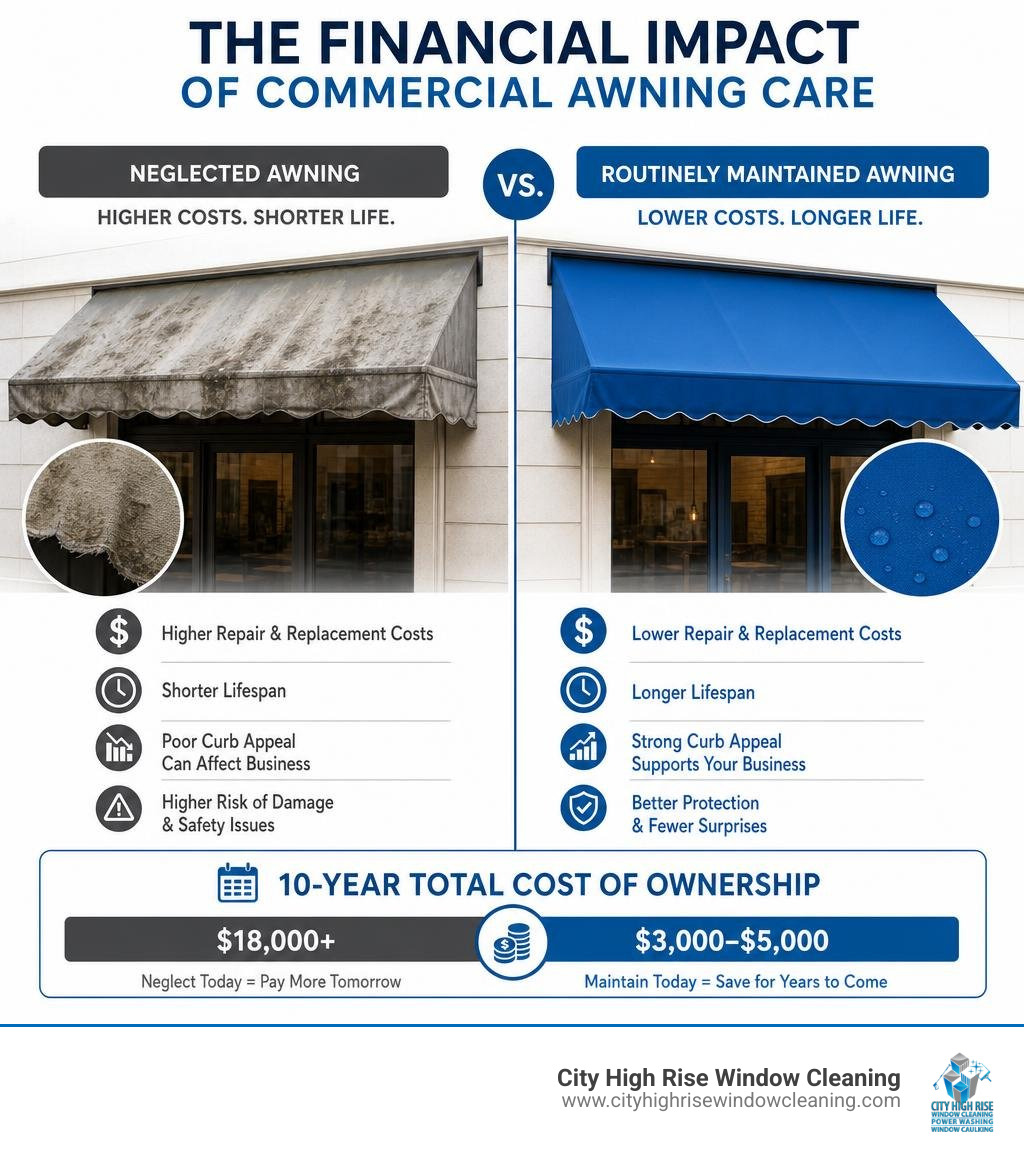
Best practices for maintaining commercial awnings post-installation basics:
Why Post-Installation Care Saves Your Business Thousands
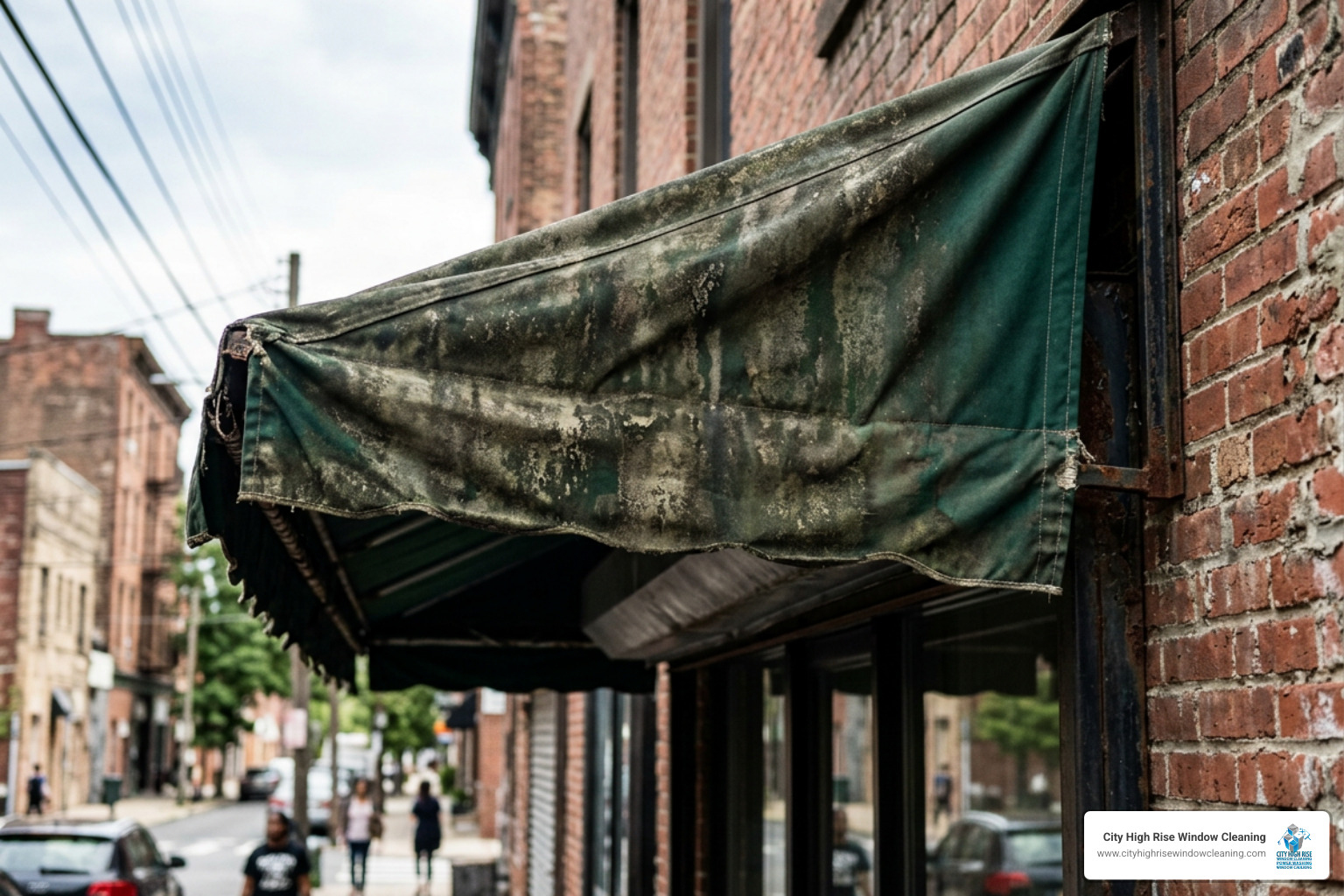
When you invest in a commercial awning, you are not just buying shade; you are securing a highly visible branding asset. But post-installation is where the real work begins. Without a proactive maintenance strategy, environmental stressors will rapidly degrade your system.
Let’s look at the baseline lifespans for these assets under normal conditions:
- Fabric covers typically last 6 to 12 years depending on the material and environmental exposure.
- Powder-coated aluminum frames commonly last 15 to 25 years when the finish is properly maintained.
- Standing seam metal awnings can easily last 30 to 50 years with routine inspections and basic cleaning.
In our local service areas—New York City, Long Island, New Jersey, and Westchester—awnings face a punishing cocktail of environmental hazards. Urban areas deal with relentless soot, vehicle exhaust, and acid rain that chemically eat away at fabric threads and metal finishes. Coastal regions of Long Island and New Jersey experience heavy salt air that accelerates corrosion on metal frames and hardware. Meanwhile, Westchester and upstate suburbs grapple with organic debris, bird droppings, and heavy winter snow loads that can physically warp or collapse unprotected structures.
If you ignore these elements, a standard fabric canopy that should have lasted a decade can rot, tear, or stain beyond repair in under four years.
To prevent this, you must coordinate your awning care with your overall exterior building maintenance. For example, scheduling a professional High-Rise Hot Water Power Washing service for your building facade ensures that dirt and grime from the upper stories do not wash down and permanently stain your pristine storefront canopy during the next rainstorm.
Best Practices for Maintaining Commercial Awnings Post-Installation by Material Type
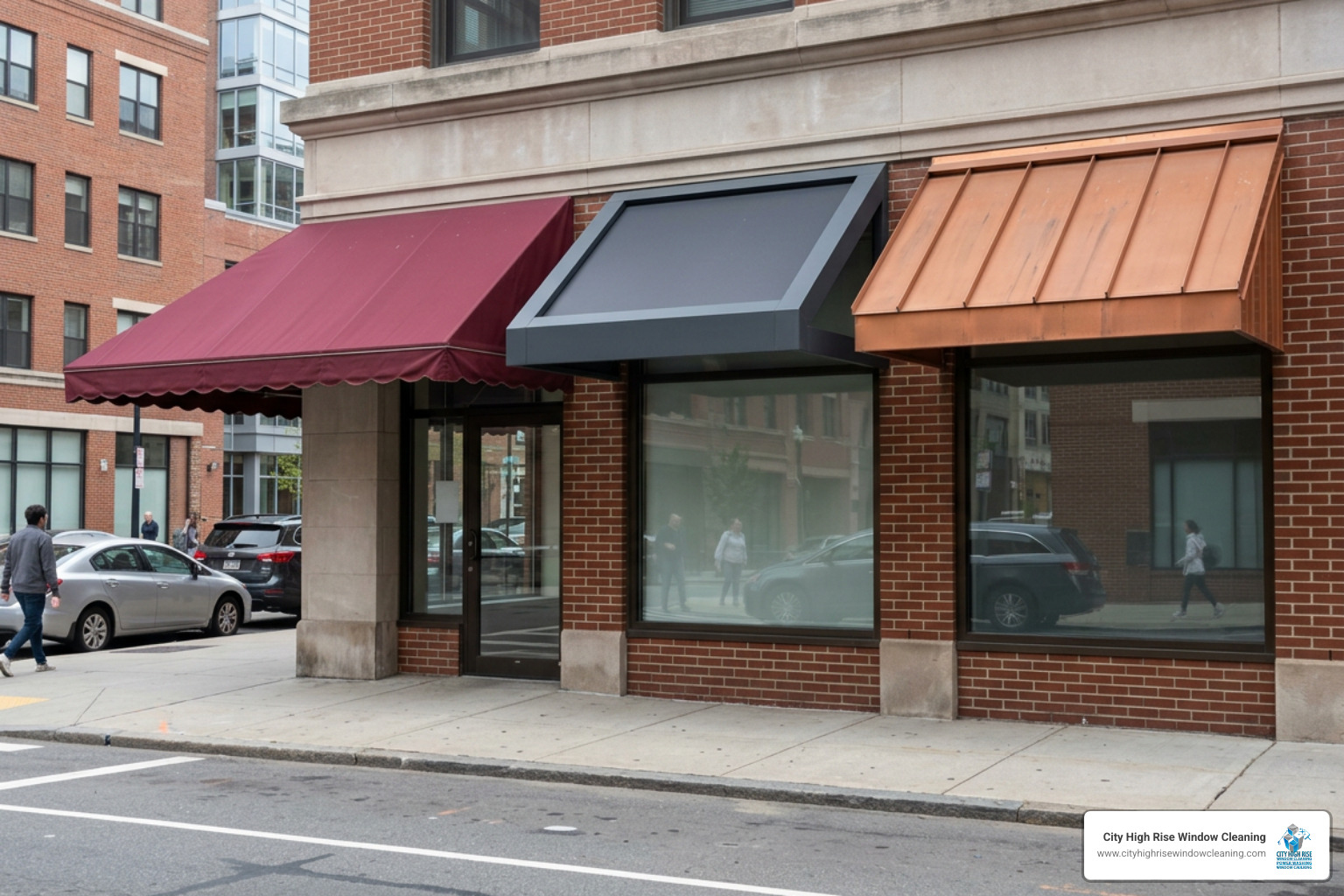
You cannot clean a delicate woven acrylic canvas the same way you clean a heavy-duty standing seam metal canopy. Choosing the wrong cleaning agent or physical method can instantly strip away protective coatings, dissolve seam adhesives, or scratch finishes.
The table below outlines the core differences in how we handle these materials:
| Awning Material | Expected Lifespan | Primary Vulnerabilities | Recommended Maintenance Frequency |
|---|---|---|---|
| Woven Acrylic / Canvas | 8 to 12 Years | Mold, mildew, tearing, thread rot, bird droppings | Monthly rinse, bi-annual gentle wash |
| Vinyl-Laminated Fabric | 6 to 10 Years | UV fading, plasticizer migration, atmospheric soot | Monthly rinse, quarterly deep wash |
| Powder-Coated Aluminum | 15 to 25 Years | Chipping, oxidation, salt-air corrosion, joint friction | Annual deep clean, bi-annual lubrication |
| Standing Seam Metal | 30 to 50 Years | Rust (if steel), seal failure, loose fasteners, snow loads | Annual structural check, annual wash |
Identifying Fabric, Vinyl, and Metal Systems
Before you apply any water or soap, you must verify exactly what your awning is made of:
- Acrylic Woven Fabrics: These are highly breathable, woven textiles (like Sunbrella) that feel like heavy canvas. They are dyed before weaving, meaning they resist fading but can trap moisture and dirt within the weave itself.
- Vinyl-Laminated Fabrics: These feel smoother, plastic-like, and are completely waterproof. They are highly resistant to water penetration but can suffer from plasticizer migration (which makes them sticky) and are highly susceptible to harsh chemical yellowing.
- Powder-Coated Aluminum: Lightweight, rust-resistant metal frames coated in a baked-on paint finish.
- Standing Seam Metal: Solid steel or aluminum panels with raised interlocking seams, designed for maximum durability.
Note for local business owners: If you operate in New York City, keep in mind that any commercial awning projecting more than 18 inches from your building’s facade or containing electrical illumination must comply with local DOB permits and Landmark Preservation Commission guidelines. You can read more about these structural and aesthetic rules in the NYC LPC Permit Guide.
Material-Specific Cleaning Protocols
Once you have identified your material, use these tailored chemistry rules to protect the structure:
- For Acrylic Woven Fabrics: Use a 2% solution of mild, dye-free dish soap mixed with cool or lukewarm water. For stubborn mold or mildew, you can briefly apply a diluted solution of non-chlorine oxygen bleach, but avoid standard chlorine bleach as it can rot the structural stitching.
- For Vinyl-Laminated Fabrics: Use a mild detergent and warm water. Vinyl can tolerate a brief, diluted household bleach solution (up to 10%) to kill deep-set mildew, but it must be rinsed off thoroughly within minutes to prevent surface degradation.
- For Powder-Coated and Anodized Aluminum: Use a pH-neutral car-wash soap and a soft microfiber mitt. Never use acidic formulas, citrus strippers, or abrasive powders, which will dull the finish and expose the raw metal to oxidation.
For a deeper dive into safe residential and commercial washing techniques, check out our comprehensive Awning Cleaning Guide 2025.
The Ultimate Commercial Awning Cleaning and Maintenance Schedule
A successful maintenance program is built on consistency. Waiting until your awning looks completely black with soot before cleaning it is a recipe for permanent etching and fabric rot.
Monthly Rinsing vs. Deep Cleaning Cycles
You do not need to perform a full scrub down every week, but a simple, structured schedule will prevent dirt from bonding to the surface.
- The Monthly Rinse: At a bare minimum, use a standard garden hose to rinse your awnings at least once a month. This simple step washes away loose dust, pollen, and salt residue before they can settle into the fabric pores or metal joints.
- The 2-to-3-Year Deep Clean: Every two to three years, your awning requires a complete, deep cleansing. This involves pre-treating stains, gently scrubbing the entire surface with material-appropriate soap, checking the structural fasteners, and re-applying protective sealers.
- The Acidic Hazard Alert: Bird droppings are highly acidic and will chemically eat through fabric coatings and stain vinyl within days. Wash these off immediately upon discovery rather than waiting for your monthly rinse.
To learn more about transforming a weathered canopy back to its original luster, read our step-by-step guide, From Grime to Shine: The Ultimate Outdoor Canopy Cleaning Handbook.
Implementing Best Practices for Maintaining Commercial Awnings Post-Installation
To keep your awning clean between cycles, look beyond the structure itself and manage the surrounding environment:
- Foliage Maintenance: Keep nearby trees and bushes trimmed back. Overhanging branches drop leaves, sap, and twigs onto your awning, which trap moisture and breed mold.
- Gutter and Roof Runoff Management: Clogged gutters on your building will overflow, splashing dirty, oil-laden roof runoff directly onto your fabric canopy. This creates dark, impossible-to-remove streak stains along the top edge of the fabric. Clear your gutters monthly.
- Coordinated Building Care: When dirt and grime blow off dirty windows, they land directly on your awning. Coordinate your awning washes with regular Commercial High Rise Window Cleaning to keep your entire storefront pristine.
Mechanical Care: Lubricating and Protecting Retractable Systems
Retractable awnings are brilliant for businesses that need flexible shade, but they contain complex mechanical joints, arms, and rollers that require regular physical care. If these parts seize up, the motor can burn out, or the structural arms can bend and snap.
Safe Lubrication Techniques to Prevent Fabric Stains
Industry professionals recommend lubricating the movable components of commercial awnings at least once per year (ideally twice—once in the spring and once before winter storage).
- The Right Lubricant: Always use a dry silicone or PTFE-based spray. Never use heavy petroleum greases or WD-40, as they remain wet and act like magnets for urban dust, grit, and soot, which quickly grinds down the gears.
- The Cardboard Shield Trick: When spraying pivot points, slide a large piece of cardboard behind the joint to shield the fabric from overspray. Silicone overspray on fabric creates dark, greasy-looking spots that are incredibly difficult to remove.
- The Roller Tube Method: Apply lubricant sparingly to the inner moving parts of the roller tube to ensure smooth rotation without dripping oil onto the rolled fabric.
Wind Sensors and Weatherproofing Best Practices
- The 20 MPH Rule: Wind gusts exceeding 20 miles per hour are the single greatest threat to retractable commercial awnings. High winds exert massive leverage on mounting brackets and can pull siding right off your building. Always retract your awning when winds pick up.
- Automated Wind Sensors: Consider installing an automated wind sensor that triggers self-retraction when wind thresholds are crossed, protecting your asset even when your staff is busy inside.
- Off-Season Storage: If you close your outdoor dining space for the winter, retract the awning completely. If storing removable fabric components, make sure they are 100% dry, and pack them in a breathable, cotton-fitted bag. Never store fabric in damp, humid basements where mold and fabric rot run rampant.
Soft Washing vs. Pressure Washing: Protecting Your Investment
When it comes to cleaning fabric awnings, more power is not better.
Using a high-pressure washing wand on a canvas or vinyl awning is one of the quickest ways to ruin it. High-pressure water streams drive water directly into the stitched seams, degrading the structural threads and causing them to unravel. It also strips away the factory-applied UV inhibitors and water-resistant coatings, leaving your fabric vulnerable to rapid sun damage and leaking.
Instead, professionals utilize soft washing. This technique relies on specialized, low-pressure delivery systems (similar to a strong garden hose) combined with gentle, highly effective cleaning solutions. The soap does the heavy lifting of breaking down soot and mold, while the low-pressure rinse safely washes the grime away without stressing the fabric or frame.
If you are cleaning a durable metal awning, a light pressure wash can be used, but you should always test a small, hidden area first on the lowest setting to ensure you do not chip the powder-coated finish. For a detailed breakdown of these washing dynamics, refer to our Power Wash Awnings Complete Guide.
When to Clean, Restore, or Consult a Professional
As a business owner, you need to know when a simple cleaning will suffice and when it is time to call in the experts for structural repairs or a fabric recover.
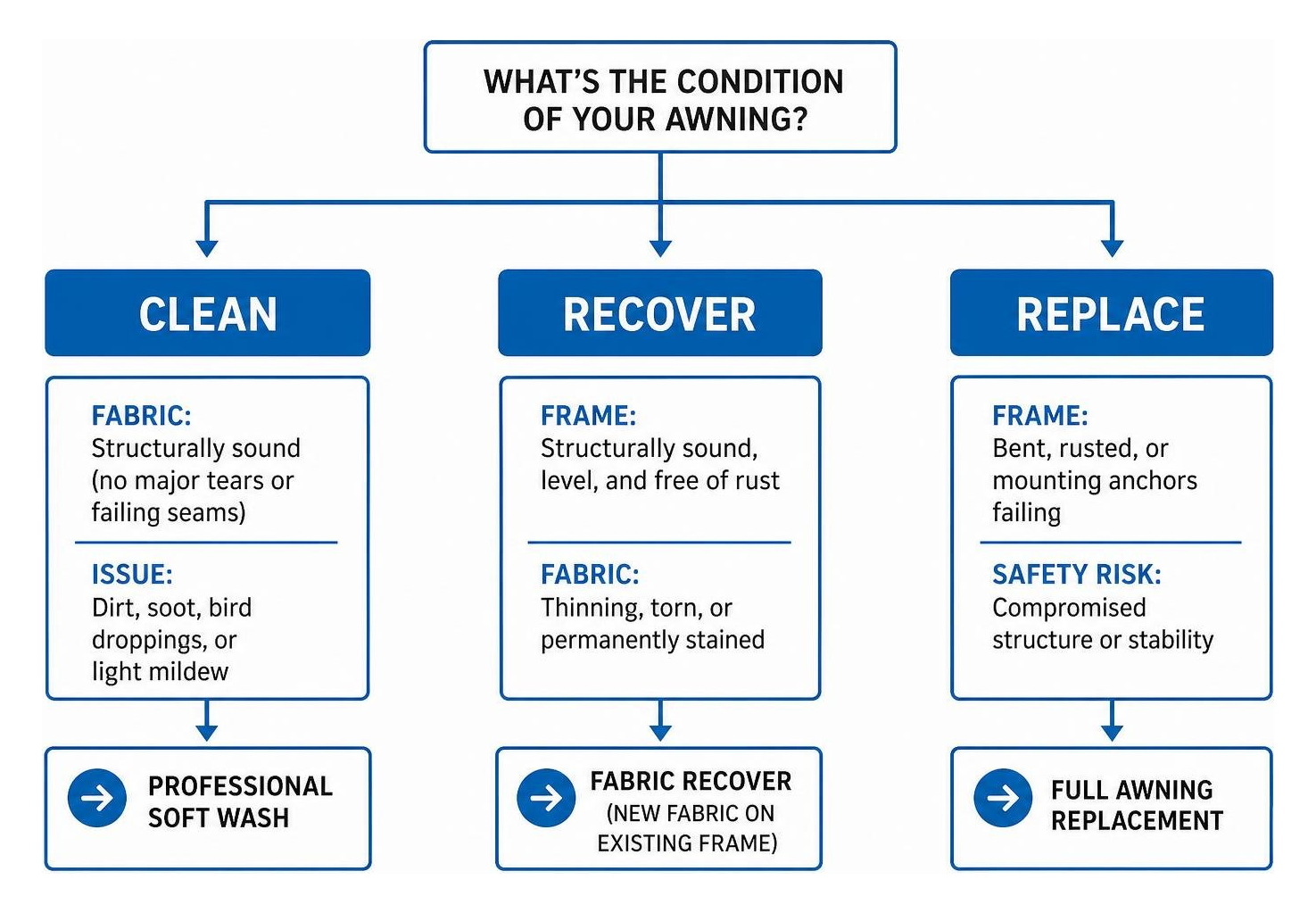
- When to Clean: If the fabric is structurally sound (no major tears or failing seams) but is covered in atmospheric soot, bird droppings, or light mildew, a professional soft wash will restore its original brilliance.
- When to Recover (Fabric Replacement): If your awning frame is structurally sound, level, and free of rust, but the fabric is thinning, torn, or permanently stained, you do not need a full replacement. You can perform a “fabric recover.” This involves keeping your existing metal frame and simply installing a new, custom-fitted fabric cover with updated graphics. A typical fabric recover ranges from $1,800 to $6,500 per unit, saving you thousands compared to a full replacement.
- When to Replace: If the structural frame is bent, the mounting anchors are pulling away from the building, or there is widespread rust and corrosion on a steel frame, a full replacement is required for safety. Full replacements typically range from $6,000 to $25,000 per unit depending on size.
- Professional Inspections: Schedule a professional structural assessment every 2 to 3 years to check the integrity of your mounting brackets, anchors, and wind-load resistance.
Frequently Asked Questions About Commercial Awning Maintenance
How often should you clean a commercial awning?
You should rinse your commercial awning with low-pressure water at least once a month to prevent loose dirt and urban soot from bonding to the surface. A thorough, deep professional cleaning should be performed every two to three years. However, if your business is located in a high-pollution, high-traffic area of New York City or near salt-heavy coastal zones in Long Island and New Jersey, you may require professional deep cleanings once or twice a year to maintain a fresh appearance.
Can you use a pressure washer on a fabric awning?
No, you should never use a high-pressure washer on a fabric or canvas awning. High-pressure water can easily tear through delicate seams, degrade structural stitching, and strip away the protective UV and water-repellent coatings. Always use low-pressure soft washing methods, mild soap, and a soft-bristled brush to clean fabric awnings safely.
How do you prevent mold and mildew on commercial awnings?
To prevent mold and mildew, ensure nearby tree branches are trimmed back to allow sunlight to dry the awning. Keep your building’s gutters clear to prevent dirty water from overflowing onto the fabric, and rinse the awning monthly. Most importantly, never retract or roll up a wet fabric awning; always allow it to air dry completely for 4 to 6 hours before closing it to prevent trapping moisture.
Conclusion
Your commercial awning is a major investment that shapes the very first impression customers have of your business. By implementing the best practices for maintaining commercial awnings post-installation—from monthly rinses and material-specific cleaning to safe lubrication and wind safety—you can easily double the lifespan of your system, keeping your storefront looking sharp while saving thousands of dollars in premature replacement costs.
At City High Rise Window Cleaning, we bring over 30 years of elite exterior maintenance experience to businesses across New York City, Long Island, New Jersey, and Westchester. Backed by our 100% customer satisfaction guarantee and an uncompromising commitment to safety, our team is fully equipped to handle your most challenging high-rise and storefront maintenance needs.
Whether you need a routine seasonal wash, a deep restoration, or a complete exterior building refresh, let us do the heavy lifting to protect your architectural assets. Discover how we can help you maintain a flawless property exterior by visiting our Awning Cleaning Services page today.


