

The Awning Whisperer: Secrets to Keeping Your Outdoor Shades Pristine
The Awning Whisperer: Secrets to Keeping Your Outdoor Shades Pristine
Why Dirty Awnings Cost You More Than You Think
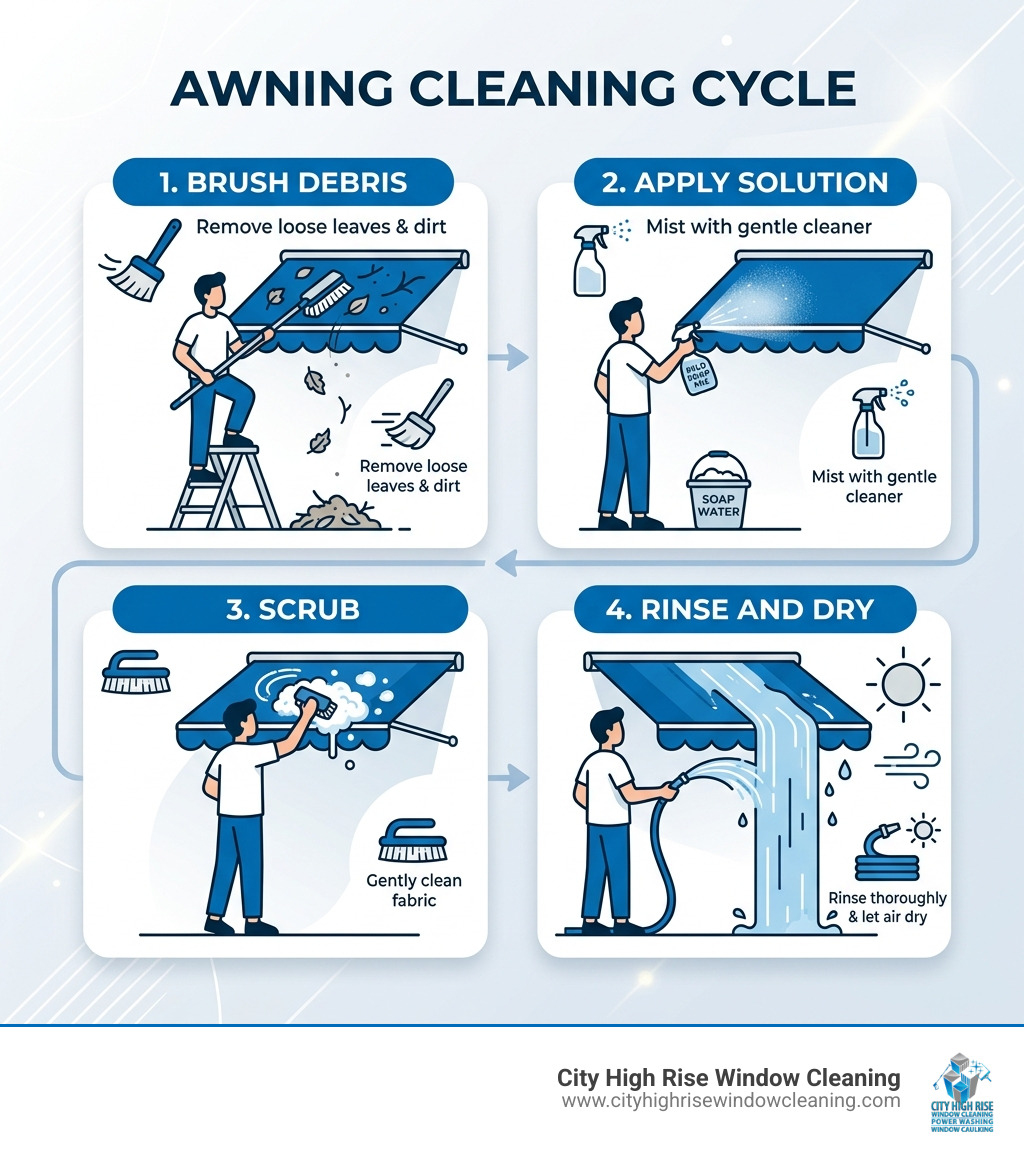
How to clean awnings the right way takes less than two hours — and it can save you thousands in early replacements. Here’s the quick answer:
- Brush off loose debris with a soft broom (both sides)
- Mix your cleaning solution — mild dish soap and lukewarm water for most fabrics
- Scrub gently with a soft-bristle brush in circular motions
- Rinse thoroughly with a garden hose from top to bottom
- Dry completely before retracting to prevent mildew
That’s the core process. The details — right solution for your material, stubborn stain removal, protecting retractable mechanisms — are what separate a clean awning from a damaged one.
Awnings take a beating. Sun, rain, pollen, bird droppings, and city grime pile up fast — especially on high-rise and mid-rise buildings in New York, New Jersey, and the surrounding metro area. Left uncleaned, that buildup doesn’t just look bad. It weakens fabric, breeds mold, and forces premature replacement.
The good news: consistent, simple maintenance prevents almost all of it.
I’m Brett Hochman, CEO of City High Rise Window Cleaning, with over 48 years of exterior building maintenance experience across NYC, Long Island, Westchester, and New Jersey — including hands-on work with how to clean awnings on commercial and residential high-rise properties. In this guide, I’ll walk you through exactly what works, what damages fabric, and when it’s time to call in professionals.
Must-know how to clean awnings terms:
Essential Tools and Supplies for Awning Maintenance
Before you climb a ladder or turn on the hose, you need the right kit. Using the wrong brush or a harsh chemical can strip the protective UV coating right off your fabric, leaving it vulnerable to the harsh sun we get in Long Island and New Jersey summers.

To master how to clean awnings, gather these essentials:
- A Soft-Bristle Brush: Never use stiff or wire brushes. They snag the fibers of canvas and acrylic. A telescoping soft brush is ideal for reaching the top sections safely.
- Mild Detergent: I recommend simple dish soap (like Dawn) or a dedicated fabric cleaner. Avoid anything with “ultra-brighteners” or harsh degreasers unless specified for your material.
- White Vinegar: This is my secret weapon for mildew. A 1:4 mix of vinegar and water kills mold spores without bleaching the color out of your fabric.
- Two Buckets: One for your soapy solution and one for clean water to rinse your brush.
- Garden Hose: I did not say pressure washer. A standard hose with a spray nozzle is all the pressure you need.
- Microfiber Cloths: Perfect for wiping down metal frames and detail work around the valance.
- Ladder Safety Gear: If you’re working on a residential unit in Westchester, ensure your ladder is on level ground and have a spotter if possible.
According to How to Clean Awnings and Restore Their Appeal, preparation is half the battle. Checking for rips or loose threads before you start prevents a small tear from becoming a gaping hole once it gets wet and heavy.
How to Clean Awnings: A Step-by-Step Professional Process
When I train my team at City High Rise Window Cleaning, I emphasize that gravity is your friend. Always work from the top down. If you start at the bottom, dirty suds from the top will just ruin your hard work.
Step 1: Dry Brushing
Before any water touches the fabric, use a broom or brush to sweep away loose dust, cobwebs, and dried bird droppings. If you wet the awning first, you’re just turning that dust into mud, which pushes deeper into the fabric weave.
Step 2: The Pre-Rinse
Lightly mist the awning with your hose. This cools the fabric (important on hot NYC afternoons) and helps the cleaning solution spread evenly.
Step 3: Soap Application and Scrubbing
Dip your soft brush into the lukewarm soapy water. Apply the solution in circular motions. Focus on the edges and seams where dirt loves to hide. For high-quality fabrics, follow the Tips for Cleaning your Sunbrella Fabric Awning by letting the soap soak for about 15 minutes. This “dwell time” allows the soap to break down the grime so you don’t have to scrub as hard.
Step 4: The Final Rinse
Rinse thoroughly. And then rinse again. Soap residue is a magnet for new dirt. If you leave any behind, your awning will look dingy again in half the time. Rinse until the water running off the bottom is crystal clear.
Step 5: Air Drying
This is the most critical step in how to clean awnings. Never retract a wet awning. Trapping moisture in the folds is an open invitation for mold and mildew. Leave it fully extended until it is bone-dry to the touch.
If the job feels too big—especially for commercial storefronts or high-rise balconies—you can find more info about awning cleaning services on our dedicated service page.
Material-Specific Solutions for Every Outdoor Shade
Not all awnings are created equal. What works for a metal porch cover in New Jersey will ruin a delicate acrylic shade in Manhattan.
| Material | Recommended Solution | Pro Tip |
|---|---|---|
| Canvas | Mild soap + Lukewarm water | May require re-waterproofing after a deep clean. |
| Vinyl | Commercial vinyl cleaner or soap | Avoid heat; vinyl can “bake” and crack in direct sun. |
| Acrylic | Dish soap + 1 cup Bleach (if mildewed) | Sunbrella is solution-dyed, so it can handle diluted bleach. |
| Metal/Aluminum | Metal solvent or vinegar/water | Use auto wax on the frame to keep it shiny. |
Acrylic and Polyester
These are synthetic and highly durable. They are usually treated with a fluorocarbon finish to repel water. If you notice water is no longer “beading” on the surface after cleaning, it’s time to apply a fabric guard like 303 High Tech Fabric Guard.
Vinyl-Coated Fabrics
Vinyl is non-porous, making it great for rain protection, but it can get sticky. Use a sponge rather than a brush to avoid scratching the surface.
Metal Frames
Don’t ignore the “skeleton” of your awning. Aluminum frames can oxidize, especially in coastal areas of Long Island. Wiping them down with a damp cloth and checking for rust spots is essential. For heavy grime on the underside of commercial structures, you might consider more info about high rise hot water power washing to safely clear away years of city soot.
Expert Tactics for Removing Stubborn Stains and Preventing Damage
Sometimes a standard wash isn’t enough. In our 30 years of experience across the tri-state area, we’ve seen it all—from industrial grease in Brooklyn to tree sap in Westchester.
- Mildew Eradication: If you see black or green spots, mix 1 cup of bleach and 1/4 cup of mild soap per gallon of water. Spray it on, let it sit for 15 minutes, and rinse. Warning: Only do this on bleach-compatible fabrics like Sunbrella.
- Bird Droppings: These are acidic and will eat through fabric if left too long. If they’re dried, scrape them off gently with a plastic putty knife before washing.
- Tree Sap: Use a mix of turpentine and dish soap. Dab it on the spot, let it break down the resin, and wash away.
- Rust: If a metal staple or frame part has bled onto the fabric, use a bit of lemon juice and salt. Let it sit in the sun, then rinse.
The Golden Rule: Never use a pressure washer on fabric. I’ve seen countless homeowners in New Jersey ruin beautiful $5,000 retractable systems because they thought a “quick blast” would save time. It tears the fibers and destroys the internal tension of the arms. Stick to the hose!
Maintaining Retractable Mechanisms and Specialized Equipment
How to clean awnings with retractable arms
Retractable awnings have moving parts that require a different kind of love. While the fabric is drying, take a moment to inspect the “elbows” and joints of the arms.
- Wipe the Frame: Use a microfiber cloth to remove salt and grit from the metal tracks.
- Lubricate: Use a dry silicone spray. Avoid oil-based lubricants like WD-40 on the joints, as they attract dust and will eventually gum up the works.
- Check the Motor: If your awning is motorized, ensure no water has seeped into the housing. Most are weather-sealed, but a direct blast from a hose can cause issues.
Special considerations for how to clean awnings on campers
For my RV enthusiasts traveling through the Northeast, your awning faces unique challenges like road salt and sap.
- The “Rolled-Up” Method: A popular trick is to soap the awning, roll it up for 15 minutes to let the soap “marinate,” then unroll and rinse.
- Storage: Never store your camper for the winter with a damp awning. That’s how you end up with a “science project” of mold come spring.
Frequently Asked Questions about Awning Care
How often should I clean my awning?
For the best results in the NYC metro area, you should sweep off loose debris once a month. A deeper wash with soap and water should happen every 2-3 months. At the very least, perform a thorough cleaning once in the spring and once in the fall before the winter snow hits.
Can I use a pressure washer on my awning?
Absolutely not. High-pressure water is the number one cause of awning damage. It can strip the waterproofing, cause the fabric to sag, and even knock the retractable arms out of alignment. A garden hose with a standard nozzle provides plenty of pressure for DIY cleaning.
How do I remove mildew from awning fabric?
For most fabrics, a solution of one part white vinegar to four parts water works wonders. If the mildew is deep-seated and your fabric is bleach-safe (like solution-dyed acrylic), use a mix of 1 cup bleach, 1/4 cup soap, and 1 gallon of water. Let it soak for 15 minutes, scrub gently, and rinse until the bleach smell is gone.
Conclusion
Learning how to clean awnings is one of the best ways to protect your property’s value and curb appeal. Whether you’re managing a storefront in Manhattan or a patio in Westchester, a little soap, water, and “elbow grease” go a long way. Remember to stay off the pressure washer, use the right soap for your material, and always, always let the fabric dry completely before retracting it.
If your awnings are out of reach, heavily stained, or part of a large commercial complex, don’t risk a fall or damaged fabric. At City High Rise Window Cleaning, we bring three decades of expertise to every job across NYC, Long Island, New Jersey, and Westchester. We don’t just clean; we restore.
Explore our Professional Awning Cleaning Services and see the difference a pro touch makes.
Ready for a free quote? City High Rise Window Cleaning offers 24/7 live consultation. Call 917-749-8342 to speak to a live representative.


