

Stop Scrubbing and Call These House Power Washing Companies
House Power Washing Companies: Get a Fair $250–$400 Wash Fast—or Risk $1,000s in Damage
House power washing companies can transform a grimy, mold-covered exterior into a surface that looks almost new — often in just a few hours.
If you’re ready to book, here’s what to look for right now:
| What to Check | Why It Matters |
|---|---|
| Licensed and insured | Protects you if damage occurs |
| Soft washing available | Safe for siding, roofs, and plants |
| Transparent pricing | No surprise fees after the job |
| Satisfaction guarantee | Ensures you get what you paid for |
| Reviews with photos | Proves real results, not just promises |
Dirt, algae, mold, and black streaks don’t just look bad — they slowly eat away at your siding, roof, and paint. Left untreated, that buildup leads to expensive repairs. Professional power washing is one of the fastest, most cost-effective ways to stop that damage before it compounds.
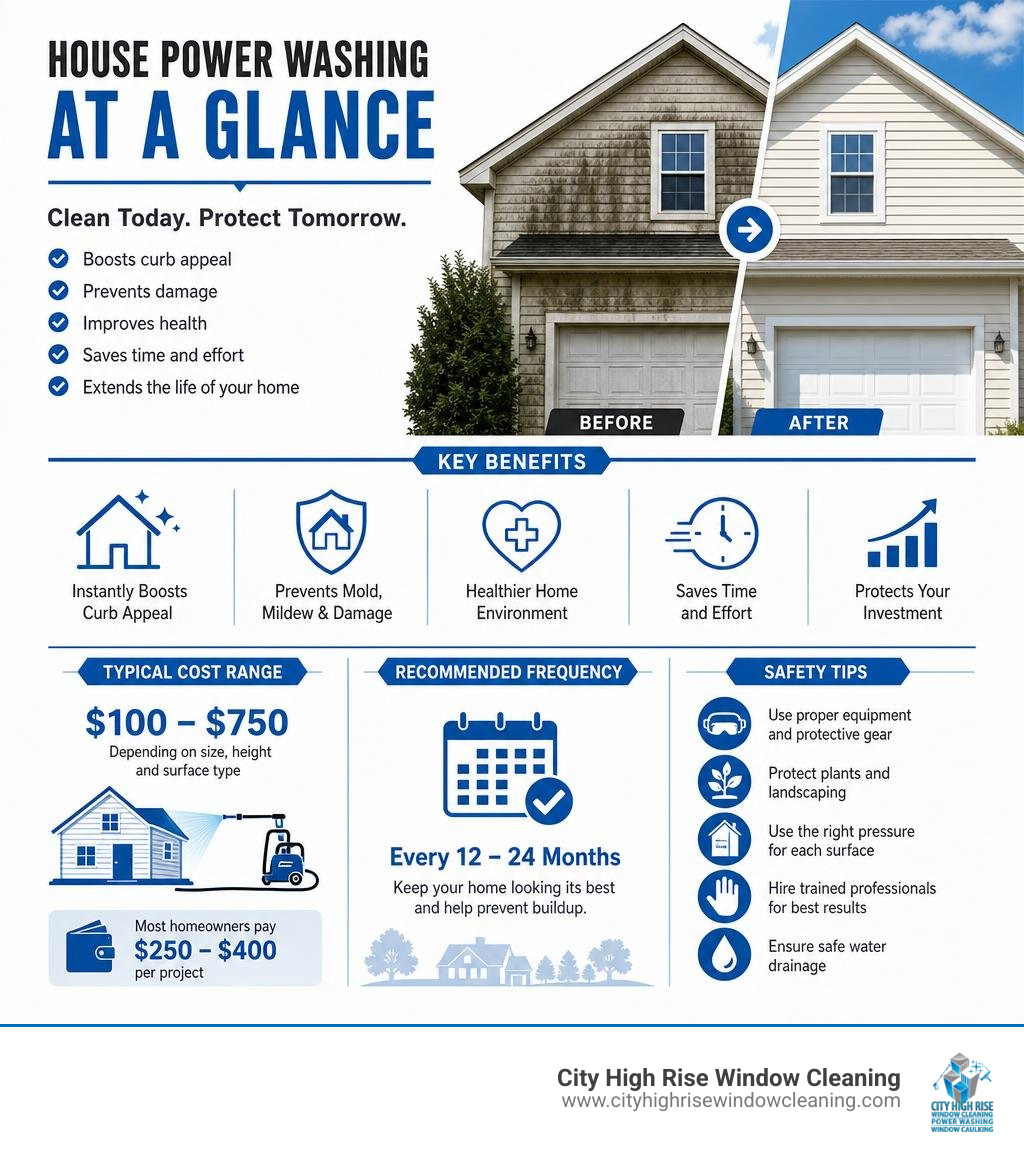
The average cost to wash a house runs from $100 to $750, depending on size, height, and surface type. Most homeowners pay around $250 to $400 per project. And most jobs wrap up in just a few hours.
I’m Brett Hochman, CEO of City High Rise Window Cleaning, with nearly 50 years of hands-on exterior building maintenance experience across New York, New Jersey, and Long Island — including decades working with house power washing companies and their methods at every scale. That experience shapes everything in this guide, so you can hire with confidence.
Quick look at house power washing companies:
- commercial power washing prices
- cost to pressure wash commercial building
- pressure washing and painting
Power Washing vs. Pressure Washing vs. Soft Washing: What’s the Difference?
When you start looking for house power washing companies, you will see three terms thrown around constantly: power washing, pressure washing, and soft washing. Many people use them interchangeably, but using the wrong method on your home can result in shredded siding, shattered window seals, or a ruined roof.
The differences come down to three things: water temperature, water pressure (measured in PSI, or Pounds per Square Inch), and water volume (measured in GPM, or Gallons per Minute).
| Cleaning Method | Water Temperature | Pressure Range (PSI) | Best Used For |
|---|---|---|---|
| Power Washing | Hot / Heated | High (2,500 – 3,200+) | Concrete, grease stains, brick, chewing gum |
| Pressure Washing | Cold / Tap-cold | High (2,500 – 3,200+) | Unpainted decks, stone patios, driveways |
| Soft Washing | Cold / Tap-cold | Low (under 500) | Vinyl siding, stucco, wood, asphalt shingles |
Power washing relies on heated water to cut through grease, oil, and deeply embedded grime. Think of it like washing greasy dishes in your sink—hot water melts the oils away. Pressure washing uses the exact same high-pressure force but uses cold water, making it great for blasting dirt off hard concrete surfaces.
Soft washing, on the other hand, is a low-pressure technique. It swaps out brute force for specialized, biodegradable cleaning solutions that kill organic growth like mold, mildew, and moss at the source.
Why Soft Washing is the Gold Standard for Siding
If a company shows up to clean your vinyl siding, stucco, or delicate wood shingles with a high-pressure wand blasting at 3,000 PSI, send them packing. High pressure can crack vinyl, strip paint, score wood, and worse—force water behind your siding panels. When water gets trapped behind your siding, it creates a hidden, dark, damp breeding ground for black mold and wood rot inside your walls.
This is why reputable house power washing companies use soft washing. By utilizing a pressure level similar to a strong garden hose (under 500 PSI) combined with safe, targeted detergents, soft washing gently melts away dirt, green algae, and black mold spores without risking structural damage.
For high-end homes and delicate materials, specialized care is non-negotiable. You can learn more about how we handle these sensitive projects by visiting our Residential High Rise Window Cleaning & Exterior Care page.
When to Use High-Pressure Power Washing Services
High pressure isn’t the enemy—it just has to be used on the right surfaces. Driveways, concrete sidewalks, brick pavers, and stone patios are incredibly durable and highly porous. Over time, they absorb oil, dirt, rust, and leaf stains deep into their pores. Soft washing alone won’t pull those stubborn, embedded stains out of concrete.
For these hardscapes, professional high-pressure power washing is the absolute best solution. It restores the bright, clean look of concrete and removes slippery mold and mildew buildup that can make your walkways dangerous when wet. To understand the full scope of what high-pressure washing can clean around your property, check out this guide on power washing services.
The Real Cost of Hiring House Power Washing Companies
How much should you actually expect to pay when hiring house power washing companies in June 2026?
On average, a professional house wash costs around $250 to $400, with most residential projects falling into a wider range of $100 to $750. The overall price is determined by several key factors:
- Total Square Footage: Many companies charge by the square foot, usually ranging from $0.10 to $0.17 per square foot.
- Home Height and Complexity: A multi-story home requires specialized extension wands, ladders, or even rigging equipment. This increases labor time and safety requirements, which raises the price.
- Surface Material: Delicate materials like stucco or cedar shake siding require slower, more careful soft-wash applications compared to vinyl siding.
- Location: Coastal areas or dense urban environments often have slightly higher base rates due to travel, parking, and water access logistics.
For a detailed look at how these prices are structured across different regions and property types, take a look at our breakdown of The Real Cost of Clean: Average Pressure Washing Rates Explained.
Cost Breakdown by Home Size and Surface
To help you budget for your next exterior cleaning project, here is a general breakdown of average pricing based on the square footage of your home:
- Under 1,000 sq. ft.: $150 – $200
- 1,000 – 2,000 sq. ft.: $200 – $275
- 2,000 – 3,000 sq. ft.: $300 – $375
- 3,000 – 4,000 sq. ft.: $375 – $450
- 4,000 – 5,000 sq. ft.: $500 – $650+
That these are estimates for standard house siding washes. If you want to bundle additional services—such as roof washing, concrete driveway cleaning, or gutter clearing—the total project cost will increase, but most companies will offer a discounted package rate.
Why DIY Power Washing Costs More in the Long Run
It is tempting to head to the local home improvement store, rent a pressure washer for $80 a day, and spend your weekend tackling the grime yourself. However, DIY power washing is often a classic case of “saving” money that ends up costing you thousands in repairs.
First, rental machines are frequently poorly maintained and lack the pressure adjustments needed to switch safely between hard concrete and delicate siding. Second, without professional training, it is incredibly easy to make costly mistakes, such as:
- Stripping the finish off wood decks or siding.
- Scoring concrete with permanent wand marks.
- Forcing high-pressure water under siding or through window seals, leading to indoor water damage and mold.
- Injuring yourself—high-pressure water streams can easily slice through skin and shoes.
Furthermore, when you calculate the cost of your rental, purchasing proper detergents, transporting the heavy machine, and spending your entire Saturday covered in wet grime, hiring a professional quickly becomes the more economical choice. You can read more about equipment costs and why professional setups are vastly superior in our article, Equip Your Business: A Handyman’s Guide to Pressure Washers and Their Costs.
How to Choose the Best Exterior Cleaners Near You
Not all house power washing companies are created equal. The industry has low barriers to entry, meaning anyone with a pickup truck and a cheap pressure washer from a big-box store can call themselves a professional. To protect your home, you must do your homework.
When vetting local exterior cleaners, look for these key indicators of a reputable business:
- Full Licensing and Commercial Liability Insurance: Never hire an uninsured contractor. If they damage your siding, break a window, or injure themselves on your property, you could be held financially responsible.
- Specialized Experience: Ask if they have experience with your specific siding type (such as vinyl, stucco, historical brick, or cedar).
- Solid Local Reviews: Look for companies with high ratings on platforms like Google, Yelp, or Thumbtack. Pay close attention to reviews that include before-and-after photos.
- Professional Equipment: True professionals use commercial-grade truck-mounted or trailer-mounted systems that allow them to precisely control water temperature, pressure, and chemical ratios.
For a stress-free guide on navigating this hiring process, check out our resource on Finding the Best House Power Washing Companies Near Me Without the Stress.
Essential Questions to Ask House Power Washing Companies Before Hiring
Before you sign a contract or authorize a team to start spraying your home, ask them these direct questions:
- “Do you use soft washing for siding and roofs?” (If they say they use high pressure on everything, hang up.)
- “Are your technicians fully insured, and do you carry workers’ compensation?”
- “Do you bring your own water, or will you need to connect to my outdoor spigot?” (Most residential companies will connect to your home’s water supply, which is standard practice.)
- “What steps do you take to protect my landscaping, plants, and pets?”
- “Do you offer a satisfaction guarantee?”
Asking these questions helps filter out amateur operations and ensures you are working with a team that respects your property. If your building has complex architectural elements or historical materials, you may also want to ask about their experience with Facade Restoration and Exterior Building Maintenance.
Red Flags to Avoid When Vetting House Power Washing Companies
Be on the lookout for these warning signs when talking to potential contractors:
- Extremely Low Estimates: If a quote is significantly lower than all other companies, they are likely cutting corners—either by working without insurance, using low-quality chemicals, or employing untrained labor.
- Vague Pricing: Avoid companies that refuse to give a clear, written estimate or try to add hidden fees after the job is complete.
- Pressure to Sign Immediately: Reputable companies will give you a fair quote and let you make your decision without high-pressure sales tactics.

Safety First: Protecting Your Pets, Plants, and Property
The chemicals used by house power washing companies are highly effective at killing mold and algae, but they can be harmful to your landscaping and pets if handled incorrectly.
True professionals take extensive precautions to keep your property safe. This includes:
- Pre-Wetting and Post-Rinsing: Before applying any cleaning solutions, technicians should thoroughly saturate your grass, shrubs, and flower beds with fresh water. This creates a protective barrier so the plants cannot absorb the cleaning agents. They should rinse everything down again once the job is finished.
- Using Biodegradable, Pet-Safe Detergents: The cleaning solutions should be properly diluted and designed to break down safely without leaving toxic residues.
- Taping and Covering Sensitive Areas: Outlets, outdoor light fixtures, security cameras, and delicate plants should be covered or taped off before washing begins.
Preventing Costly Damage to Siding and Roofs
Water damage is one of the most expensive issues a homeowner can face. When untrained operators wash a house, they often spray water upward at steep angles. This forces water straight under the laps of vinyl or wood siding, soaking the wooden sheathing and insulation underneath.
On roofs, high pressure will blast away the protective ceramic granules on asphalt shingles, immediately voiding your roof’s warranty and accelerating the need for a costly replacement. Professional soft washing protects your roof’s integrity while completely killing the black algae streaks that feed on your shingles. For more tips on protecting your home’s structural health during a wash, read our Exterior Home Power Washing Guide.
Regional Guide: House Power Washing in NY, NJ, and Long Island
In our tri-state service area, our homes face unique environmental challenges. The coastal humidity of Long Island, combined with damp, shaded yards, creates the perfect breeding ground for thick green algae and black mold. On the other hand, homes in New Jersey and Westchester often deal with heavy seasonal pollen, leaf staining, and harsh winter road salt residue.
Because of this, local home maintenance schedules must adapt. While the general rule of thumb is to wash your house once a year, homes situated near the water or surrounded by dense tree cover on Long Island often require a touch-up every 8 to 10 months to prevent organic growth from taking over. You can find more targeted local advice in our guide to House Power Washing Long Island.
Tackling Urban Grime in NYC and Westchester
For properties in New York City and the surrounding suburbs of Westchester, the main enemy isn’t always mold—it’s urban pollution.
Soot, exhaust fumes, diesel smoke, and industrial dust settle onto brick, limestone, and brownstone facades, leaving a dark, greasy layer of grime that ruins curb appeal. Cleaning these surfaces requires specialized hot-water power washing systems and restoration-grade detergents that can gently lift carbon deposits without etching or damaging historical masonry.
Frequently Asked Questions about House Power Washing
How much do house power washing companies charge?
Most professional house washes cost $250 to $400, with a wider range of $100 to $750 depending on home size, height, surface material, and buildup.
How often should a house be power washed?
Most homes should be washed once a year. In humid or coastal areas like Long Island, or polluted urban areas like New York City, some homes need cleaning every 8 to 10 months.
Do power washing companies use my home’s water?
Yes, most residential power washing companies connect to your outdoor water spigot. If you have low water pressure, a well system, or no active outdoor spigot, tell the company before the appointment.
Is soft washing better than pressure washing for siding?
Yes. Soft washing is safer for vinyl siding, stucco, painted surfaces, wood, and shingles because it uses low pressure and cleaning solutions instead of force.
Will power washing damage my windows or paint?
Not if it is done correctly. Professional soft washing should not damage windows, paint, or seals, but high-pressure washing can crack siding, strip paint, and break window seals.
Conclusion
Your home is likely your most valuable investment. Keeping its exterior clean does not just boost your curb appeal — it actively protects your siding, paint, and roof from premature deterioration.
When you are ready to stop scrubbing and hand the job over to the professionals, make sure you choose a company with the experience, specialized equipment, and insurance to do the job safely.
At City High Rise Window Cleaning, we have spent over 30 years perfecting our exterior cleaning, power washing, and window restoration techniques across New York City, Long Island, New Jersey, and Westchester. We back every single job with our 100% customer satisfaction guarantee and an uncompromising commitment to safety.
Ready for a free quote? City High Rise Window Cleaning offers 24/7 live consultation.


