

From Grime to Shine: The Ultimate Outdoor Canopy Cleaning Handbook
From Grime to Shine: The Ultimate Outdoor Canopy Cleaning Handbook
Outdoor Canopy Cleaning [5-Step Guide]: Stop Grime From Costing You Thousands in Damage
Outdoor canopy cleaning is the process of removing dirt, grime, mold, bird droppings, and environmental pollutants from the fabric and frame of exterior shade structures to maintain their appearance, extend their lifespan, and prevent permanent damage.
Quick Answer: How to Clean an Outdoor Canopy
- Remove loose debris – Brush off leaves, twigs, and dirt
- Mix cleaning solution – Use mild dish soap in lukewarm water
- Gently scrub – Apply with a soft-bristle brush in circular motions
- Rinse thoroughly – Use low-pressure water from top to bottom
- Air dry completely – Never store while damp to prevent mold
Recommended frequency: Every 6-12 months minimum; every 2-3 months for high-traffic areas
A dirty canopy doesn’t just look bad—it’s an investment actively deteriorating. Every day you leave grime, mold, and bird droppings untreated, you’re shortening your canopy’s lifespan and risking permanent stains that no amount of scrubbing will remove. For property owners and managers across New York City, Long Island, Westchester, and New Jersey, a stained or sagging canopy creates a terrible first impression, whether it’s shading your residential patio or covering a high-rise commercial entrance.
The good news? Most canopy damage is completely preventable with the right cleaning approach.
This guide walks you through everything you need to know: the exact tools and solutions for different materials, a proven 5-step cleaning method, what to absolutely avoid, and when to call in professional help. You’ll learn how to tackle fabric, metal, and polycarbonate canopies safely and effectively, plus seasonal maintenance tips that keep your structure looking sharp year-round.
I’m Brett Hochman, CEO of City High Rise Window Cleaning, and I’ve spent over 48 years maintaining exterior building surfaces across the Tri-State area, including specialized outdoor canopy cleaning for commercial and residential high-rises. Whether it’s a small residential awning or a multi-story commercial canopy, proper maintenance protects both appearance and structural integrity.
Find more about outdoor canopy cleaning:
Why Regular Cleaning is a Must for Your Canopy’s Lifespan and Look
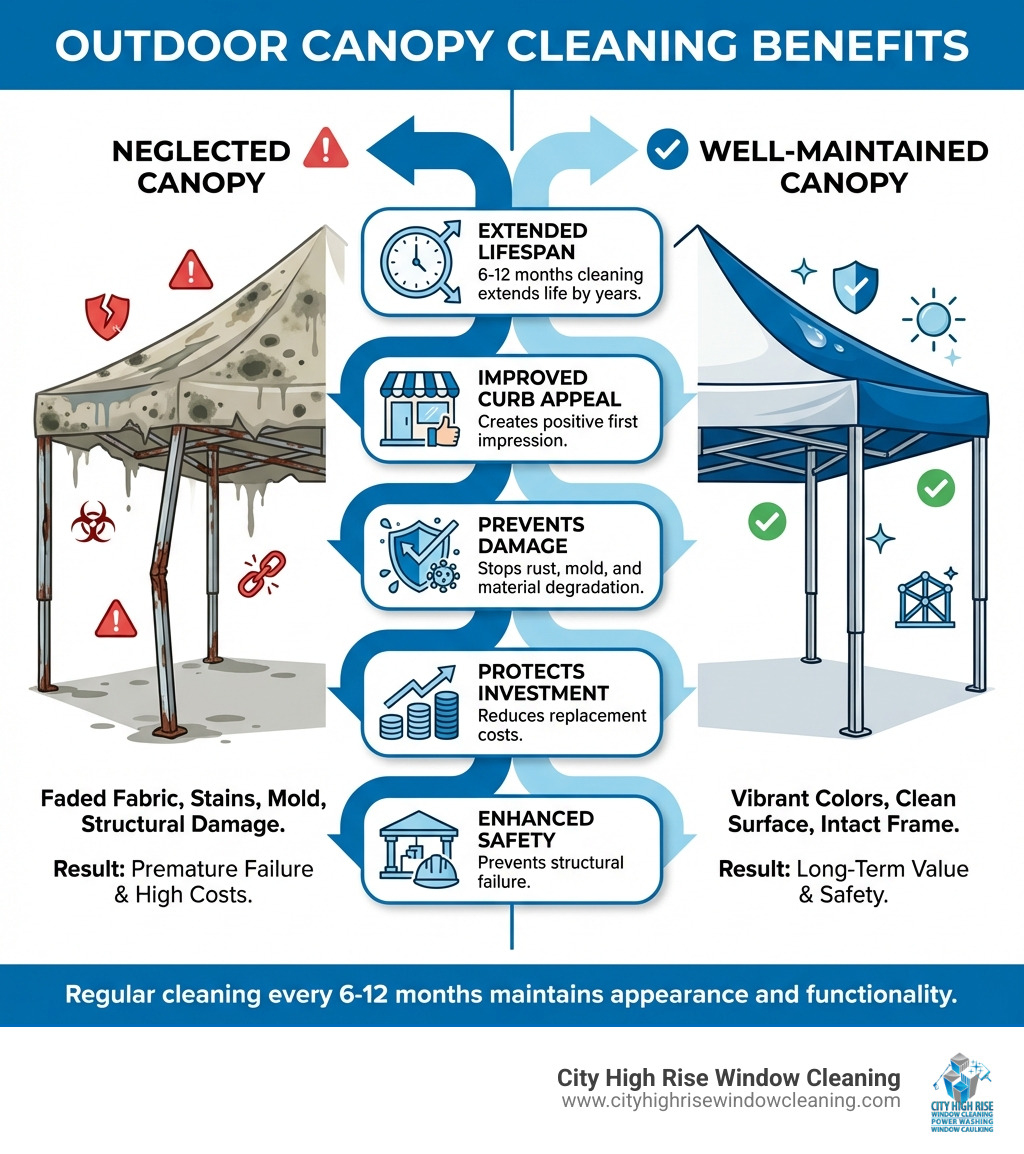
I’ve seen countless outdoor canopies across New York City, Long Island, Westchester, and New Jersey, and one thing is consistently true: those that are regularly cleaned not only look better but also last significantly longer. It’s not just about aesthetics; it’s about protecting a valuable asset. Regular cleaning, ideally every 6–12 months, helps maintain the appearance and functionality of your canopy. Think of it as preventative medicine for your outdoor structures.
Boost Your Property’s Value
First impressions are everything, especially in busy areas like Manhattan or a charming New Jersey town. A clean, vibrant canopy instantly signals care and professionalism. For businesses, a dirty canopy can actually deter customers, making them question the business’s reputation. As one source put it, “Would you purchase food from a dirty stand? Most likely, no.” Maintaining your company’s integrity starts with caring for branded gear, ensuring your custom-printed logos and graphics are clearly visible and inviting. For residential properties, a spotless canopy improves curb appeal, making your home more attractive and potentially increasing its market value. It creates an inviting outdoor space, whether it’s a patio cover in Long Island or an entrance canopy in Westchester.
Prevent Costly Damage and Repairs
The longer you go without outdoor canopy cleaning, the worse the situation becomes. Accumulated dirt, dust, pollutants, bird droppings, and even rainwater can lead to a host of problems. Fabric canopies are susceptible to material degradation, leading to fading, brittleness, and eventually, tears. Mold and mildew thrive in damp, dirty environments, not only looking unsightly but also causing fabric rot and emitting unpleasant odors. For metal frames, persistent moisture and grime accelerate rust and corrosion, compromising the structural integrity of the entire canopy.
Regular maintenance and cleaning are crucial for longevity and safety. By removing these corrosive elements, you extend the material life of your canopy, preventing premature wear and tear. This proactive approach saves you money on expensive repairs or even full replacements down the line. It’s a simple truth: upkeep pays off. I always recommend referring to manufacturer guidelines, like those for specific fabric structures, as they often provide detailed maintenance instructions to keep your structure in top shape. You can read more about the importance of regular checks and cleaning to extend the lifetime of tensile structures in this guide on Fabric Structure Maintenance and Cleaning.
The Right Tools & Solutions for Any Canopy Material
Before I dive into the cleaning process, let’s talk about what you’ll need. Safety first, always! I recommend wearing gloves and eye protection (goggles) to shield yourself from cleaning solutions and debris. The right tools and solutions depend heavily on your canopy’s material. Most outdoor canopies are made from fabric (like canvas, polyester, or vinyl) or have metal frames, with some featuring polycarbonate panels. Identifying your material is the first crucial step.
For Fabric Canopies (Canvas, Polyester, Vinyl)
Fabric canopies are the most common type I encounter, from residential patio covers to commercial awnings. They require a gentle touch to avoid damage.
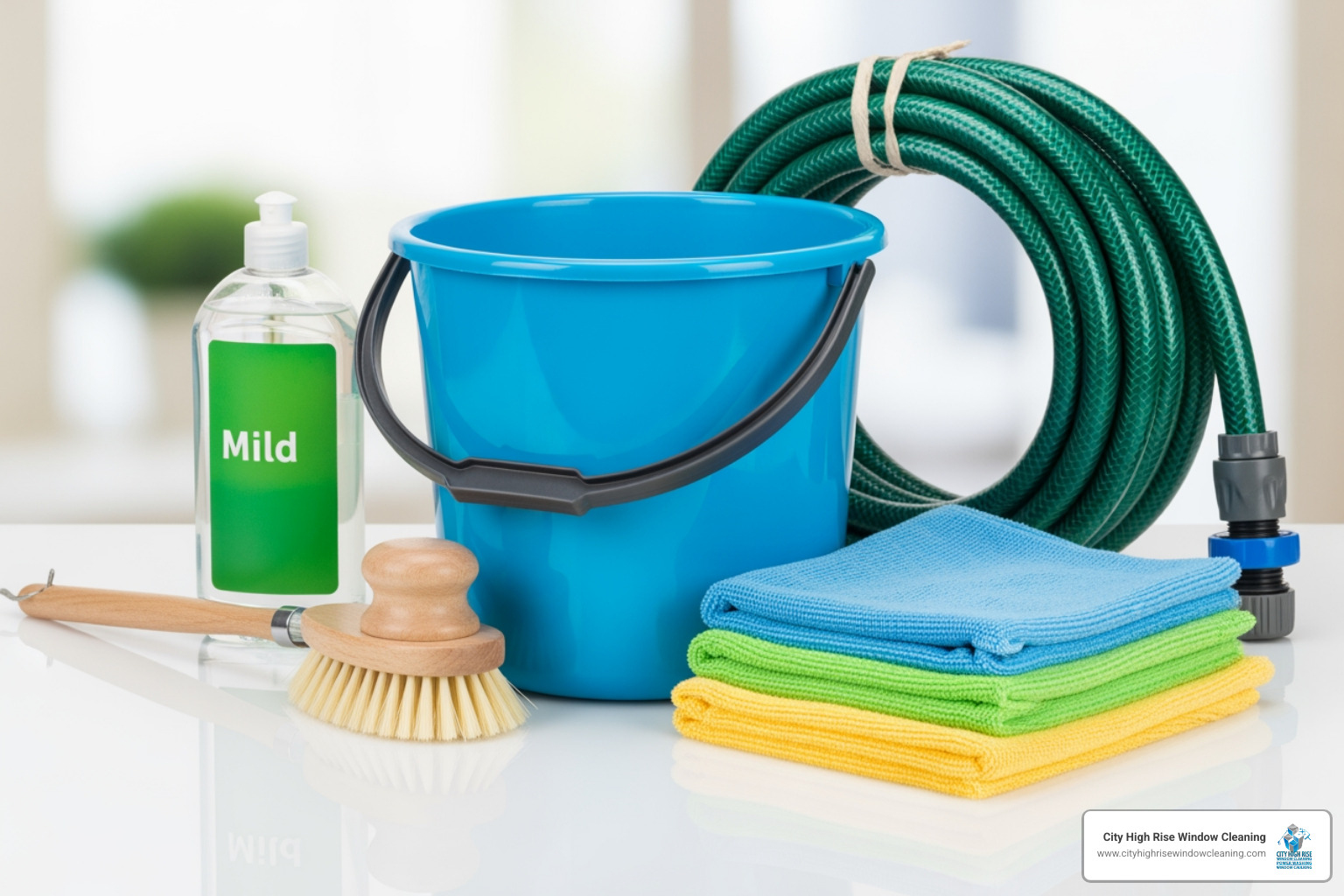
Here’s what I recommend for your toolkit:
- Soft-bristle brush: A medium-bristle brush or a soft hair broom is perfect for scrubbing without damaging the fabric. For larger canopies, a brush with a telescopic handle can be a lifesaver.
- Bucket: For mixing your cleaning solution.
- Garden hose with a spray nozzle: For rinsing. Make sure it has an adjustable setting so you can use low pressure.
- Microfiber cloths: For wiping and drying.
- Mild dish soap: My go-to for general cleaning. A few drops in warm water are usually all you need. Look for a non-detergent soap if you have a delicate fabric.
- White vinegar: An excellent natural solution for mold and mildew.
- Specialized fabric cleaner: For stubborn stains or specific fabric types, always check the manufacturer’s recommendations.
When it comes to cleaning solutions, less is often more. Avoid harsh chemicals like bleach, ammonia, or strong detergents. These can strip protective coatings, fade colors, and weaken fabric fibers, especially on custom-printed canopies. For spot treatment of tough stains like bird droppings or tree sap, tackle them quickly. A small amount of mild soap directly on the spot, allowed to sit for a few minutes, can often do the trick before gentle scrubbing. Always test any new solution on an inconspicuous area first.
For Metal & Polycarbonate Canopies
Metal frames, commonly aluminum or steel, and polycarbonate panels are durable but still need care.
- Tools: Sponges and non-abrasive cloths are best. Avoid anything that could scratch the surface.
- Cleaning solutions: Mild soap and water are generally sufficient for these materials.
- Rust and corrosion checks: While cleaning metal frames, I always look for signs of rust or corrosion. Addressing these early can prevent extensive damage. If you spot rust, gently scrub it with a wire brush (for steel) and then apply a rust-inhibiting primer and paint.
For stubborn, built-up grime or extensive cleaning on durable structures, especially on high-rise buildings in New York City or New Jersey, sometimes a DIY approach isn’t enough. That’s when professional help, utilizing specialized equipment, becomes invaluable. For serious cleaning challenges on metal or polycarbonate, consider professional High-Rise Hot Water Power Washing. This method can effectively remove years of grime without damaging the structure, a service my team regularly provides.
The 5-Step Method for Flawless Outdoor Canopy Cleaning
Now that you have your tools ready, let’s walk through my proven 5-step method for effective outdoor canopy cleaning. This process is designed to be thorough yet gentle, ensuring your canopy looks its best without incurring damage.
Step 1: Preparation and Debris Removal
Before introducing any water or cleaning solutions, it’s crucial to prepare the area and the canopy itself.
- Clear the area underneath: Move any furniture, plants, or other items that might get wet or damaged during the cleaning process.
- Brush off all loose dirt, leaves, and twigs: Use your soft-bristle brush or even a leaf blower if the canopy is large. This prevents loose debris from turning into muddy streaks once wet. Don’t forget the underside of the canopy, where cobwebs and insects like to hide.
- Inspect for any pre-existing damage: Look for rips, tears, bent frames, or loose hardware. It’s better to note these now so you don’t inadvertently worsen them during cleaning. If you have a custom-printed event canopy, check for any fading or peeling of graphics.
Step 2: Apply the Cleaning Solution
With the loose debris gone, it’s time to get wet.
- Mix your mild soap solution: In your bucket, combine a few drops of mild dish soap with lukewarm water. I recommend using warm water as it helps to activate the soap and lift grime more effectively.
- Apply generously with a soft brush or sponge: Start at one end of the canopy. Dip your brush or sponge into the solution and apply it evenly across the surface.
- Work in manageable sections: This is key, especially on a sunny day. Applying the solution to the entire canopy at once can lead to it drying prematurely, leaving behind streaks or residue. I typically work in 3×3 foot sections, ensuring the solution remains active.
Step 3: Gentle Scrubbing
This is where the magic happens, but remember the “gentle” part.
- Use gentle, circular motions to lift dirt: Let the soap do most of the work. Scrubbing too aggressively, especially on fabric, can damage the material or remove protective coatings.
- Apply slightly more pressure on stained areas: For stubborn spots, you can concentrate your scrubbing, but still avoid harsh force. If a stain isn’t budging with gentle effort, it might require a specialized spot cleaner or professional attention.
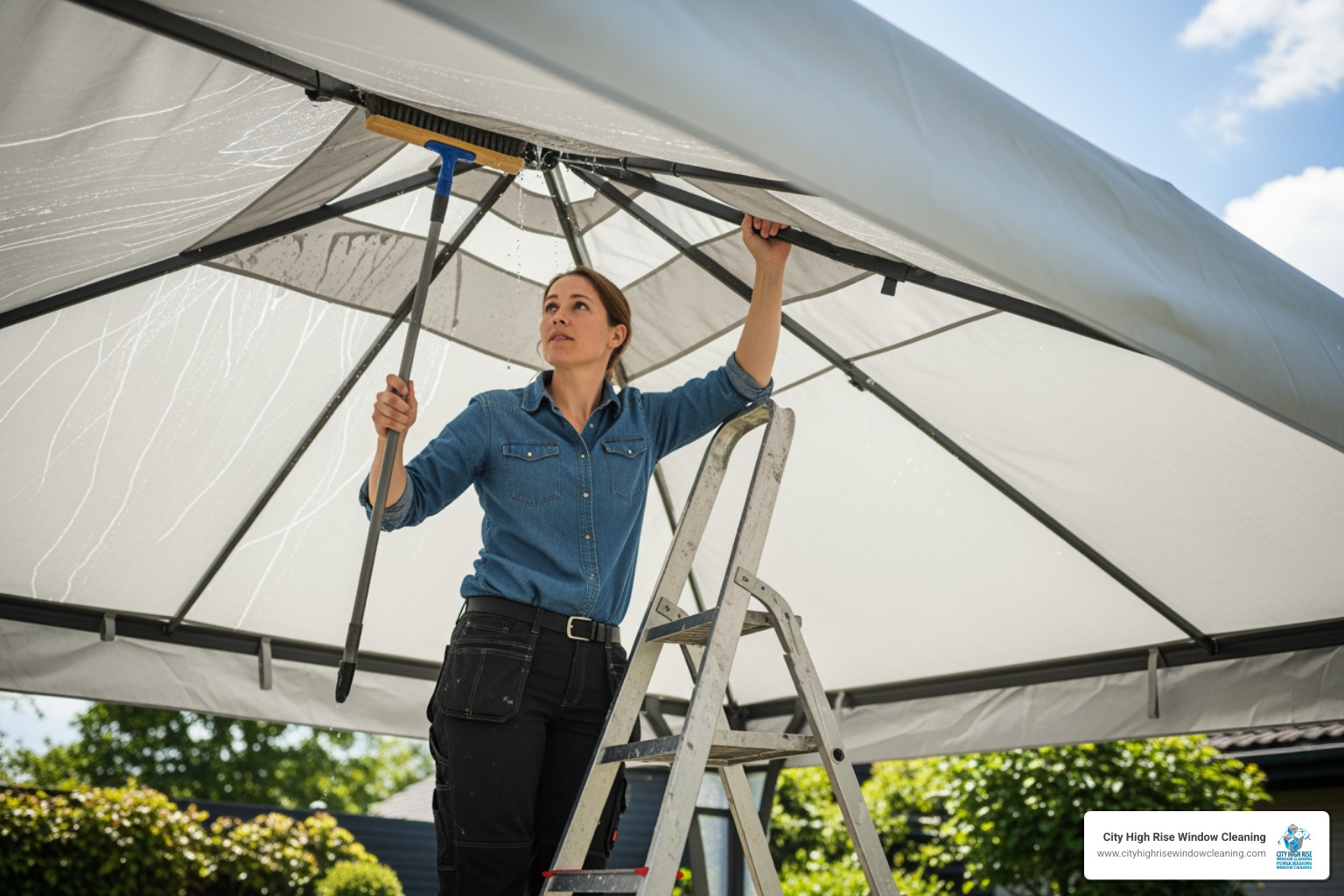
- Use a telescopic pole with a brush attachment for effective outdoor canopy cleaning in hard-to-reach areas: This is incredibly useful for larger canopies or those installed at height, common in commercial settings across New York City. It allows you to reach every nook and cranny safely from the ground or a stable ladder.
Step 4: Thorough Rinsing
Rinsing is just as important as scrubbing.
- Use a garden hose on a low-pressure setting: High-pressure water can damage fabric, strip coatings, and force water into seams, leading to mold or leaks. A gentle, steady stream is all you need.
- Rinse from the top down: This allows gravity to help carry away loosened dirt and soap residue, preventing it from running over already clean sections.
- Ensure all soap residue is washed away: Any leftover soap can attract new dirt faster, leave unsightly streaks, or even cause mildew if not completely removed. Keep rinsing until the water runs clear and there’s no sudsing.
Step 5: Complete Drying
The final step, and one that’s often overlooked, is proper drying.
- Allow the canopy to air dry completely before retracting or storing it: This is critical! A damp canopy is a breeding ground for mold, mildew, and unpleasant odors. On a sunny day, this might take a few hours. If possible, leave it extended until it’s bone dry.
- Wipe down the metal or plastic frame with a dry cloth: This helps prevent water spots and rust.
- Never store a damp canopy: As I mentioned, this is the primary cause of mold and mildew, which can permanently damage your fabric and create a health hazard. If you must take it down before it’s fully dry, spread it out in a garage or well-ventilated area until it’s completely arid before folding.
Cleaning Don’ts: How to Avoid Damaging Your Canopy
While the right cleaning methods are crucial, knowing what not to do is equally important. Improper outdoor canopy cleaning can lead to irreversible damage, shortening its lifespan and costing you money. I’ve seen too many well-intentioned DIY attempts go wrong, often due to using the wrong tools or chemicals. Your canopy is an investment; treat it with care. You can find more tips on careful cleaning from sources like Tips for Cleaning Your Canopy in Every Season | A&S Landscape .
Harsh Methods and Chemicals to Avoid
- No pressure washers on fabric: This is a big one. While tempting for quick results, the intense force of a pressure washer can tear fabric, damage seams, and strip away vital protective coatings that make your canopy water-resistant and UV-protected. For fabric canopies, stick to a low-pressure garden hose.
- Avoiding bleach, ammonia, and harsh detergents: These powerful chemicals are too aggressive for most canopy materials. They can cause fading, discoloration, and weaken the fabric fibers. If you have a custom-printed canopy, these can also strip away your branding. Opt for mild, pH-neutral soaps instead.
- No abrasive scouring pads or steel wool: These will scratch and damage the surface of both fabric and metal canopies. Even polycarbonate canopies, though durable, can be marred by abrasive materials. Always use soft brushes, sponges, or microfiber cloths.
- Why machine washing custom-printed or large canopy fabrics is a bad idea: Most canopy fabrics, especially those that are custom-printed or large in size, are not designed for machine washing. It can lead to creasing, fading, damage to graphics, and can stress seams and coatings. It’s best to clean these manually, following the steps I outlined.
Seasonal Considerations for Your Outdoor Canopy Cleaning
The season and weather conditions play a significant role in how and when you should clean your canopy.
- Spring cleaning to remove winter grime: After the harsh New York winters, your canopy will likely have accumulated a fair amount of dirt, salt residue, and possibly mildew. Spring is the perfect time for a thorough deep clean to get it ready for warmer months.
- Summer maintenance to combat sun and pollen: During summer, light, frequent cleaning is helpful. Pollen, dust, and occasional bird droppings are common. A quick rinse with the hose and a brush-off every few weeks can keep it looking fresh.
- Autumn cleaning to remove fallen leaves and prevent stains: As fall approaches, falling leaves can decompose on your canopy, leaving stains. I recommend cleaning your canopy before the peak of leaf fall and again after most leaves have dropped to prevent these organic stains from setting in.
- Winter care to gently remove snow and prevent ice buildup: For canopies that remain up during winter, especially in areas like Westchester and Long Island where snow is common, gentle snow removal is crucial. Use a soft broom or brush to push off snow accumulation. Never let heavy snow or ice sit on your canopy, as this can cause it to sag or even collapse, leading to structural damage. If snow build-up is concerning, seeking professional help is advisable.
When to Call the Professionals for Awning & Canopy Cleaning
While many outdoor canopy cleaning tasks can be handled with a DIY approach, there are definitely times when calling in the experts is the smartest and safest option. As someone who’s been in the exterior cleaning business for decades, I can tell you that recognizing when a DIY job isn’t enough is a sign of smart property management, especially for larger commercial properties or high-rise buildings in the Tri-State area.
Signs You Need an Expert
- Stubborn mold or mildew stains that won’t lift: If you’ve tried your best with mild solutions and the mold or mildew persists, it might be deeply embedded. Professionals have access to stronger, yet safe, commercial-grade solutions that can tackle these problems without damaging your canopy.
- Rust or corrosion on the frame: While you can spot-treat minor rust, extensive corrosion on a metal frame can compromise its structural integrity. An expert can assess the damage and recommend appropriate restoration or repair.
- Large, multi-story, or hard-to-reach canopies: Trying to clean a massive commercial awning on a storefront in New York City or a high-rise canopy in New Jersey can be dangerous without the right equipment, training, and safety protocols. This is where my team, which handles everything from awnings to full-scale commercial high rise window cleaning, excels.
- Commercial properties in New York City or New Jersey that require a flawless appearance: For businesses, your canopy is an extension of your brand. A professional cleaning ensures a pristine, uniform look that DIY efforts often can’t match, especially when dealing with multiple canopies or complex designs.
- Visible damage like tears or a compromised frame: If you notice tears in the fabric or significant bending in the frame, cleaning alone won’t solve the problem. A professional service can often assess and even repair minor damage, preventing it from worsening.
The Benefits of a Professional Service
Hiring a professional for your outdoor canopy cleaning comes with several significant advantages:
- Access to specialized equipment and eco-friendly cleaning agents: We use industrial-grade, yet environmentally safe, cleaning solutions and equipment specifically designed for various canopy materials and heights. This ensures a deeper, more effective clean without harming the environment or your property.
- Strict safety protocols for working at height: My team is trained and equipped to safely work on high-rise canopies, using proper rigging and safety gear. This minimizes risk to both personnel and property, something homeowners or business owners might not be able to replicate.
- Guaranteed, streak-free results that save you time and effort: We aim for 100% customer satisfaction. Our experience means we know how to achieve a perfectly clean, streak-free finish, restoring your canopy to its original glory. This saves you precious time and the effort of tackling a challenging job yourself.
For expert care, City High Rise Window Cleaning provides specialized Awning Cleaning services custom to the unique needs of properties across New York City, Long Island, Westchester, and New Jersey. We understand the specific challenges of urban and coastal environments and are equipped to handle them.
Frequently Asked Questions about Outdoor Canopy Cleaning
How often should I clean my outdoor canopy?
A light cleaning every 2-3 months is ideal to remove surface debris like pollen, dust, and light dirt. A deep clean should be performed at least once or twice a year, typically in the spring and fall, to address buildup, heavier stains, and prepare it for the coming season. This regular maintenance ensures longevity and high quality for a number of years.
Can I use a pressure washer to clean my canopy?
It is strongly advised against for fabric canopies, as the intense pressure can tear the material, damage seams, and strip protective coatings. This can lead to costly repairs or even replacement. For durable metal frames, a low-pressure setting may be used with caution, but professional High-Rise Hot Water Power Washing is a safer and more effective option, especially for stubborn grime or hard-to-reach areas.
What’s the best way to remove mold and mildew?
For light mildew, a solution of one part white vinegar to four parts water can be effective. Apply it, let it sit for about 15 minutes, then gently scrub with a soft brush and rinse thoroughly. For more stubborn stains, use a commercial cleaner specifically formulated for outdoor fabrics and mold removal. Always test any solution on a small, hidden area first to ensure it doesn’t cause discoloration or damage.
How do I prevent my canopy from getting dirty so quickly?
Regular maintenance is key. Gently brush off leaves and debris weekly to prevent them from breaking down and staining the fabric. Trim overhanging tree branches that can drop sap and debris onto your canopy. After a deep clean, consider applying a fabric-guard spray, which helps repel water and prevent dirt from setting in. This creates a protective barrier, making future cleanings easier.
Conclusion: Protect Your Investment with Proper Care
Regular and proper outdoor canopy cleaning is not just about aesthetics; it’s essential maintenance that protects your investment, ensures safety, and extends the life of your outdoor structure. From boosting curb appeal in New York City to preventing costly repairs in New Jersey, the benefits are clear. You now have the expert knowledge to tackle the job with confidence, understanding the right tools, solutions, and techniques for every material and season.
However, for large-scale, commercial, or dangerously high canopies in the NYC metro area, sometimes the best DIY solution is to call a pro. My team at City High Rise Window Cleaning has the experience, equipment, and safety protocols to handle even the most challenging outdoor canopy cleaning jobs, ensuring your property always makes the best impression.
Explore our professional Awning Cleaning services for a guaranteed pristine finish.
Ready for a free quote? City High Rise Window Cleaning offers 24/7 live consultation. Call 917-749-8342 to speak to a live representative.


