

The A to Z of Facade Repair: Essential Maintenance for Your Building
Building facade repair: 7 Essential Signs & Fixes
NYC Building Facade Repair [Guide]: Avoid $1,000/Month Fines & Costly Damage
Building facade repair is the process of identifying, addressing, and fixing deterioration in your building’s exterior walls, windows, masonry, and structural elements to maintain safety, prevent water damage, and protect property value. Here’s what you need to know:
- Most Common Issues: Cracks in masonry, spalling brick or concrete, deteriorating mortar joints, water stains, failed sealants, and corroded metal elements
- Why It Matters: Prevents water infiltration, maintains structural integrity, ensures tenant safety, and avoids costly emergency repairs
- NYC Requirements: Buildings over six stories must undergo facade inspections every five years under FISP (Facade Inspection Safety Program)
- When to Act: Address small cracks and minor damage immediately—they only get worse and more expensive over time
- Who Can Help: Major repairs require licensed contractors and engineers; minor maintenance may be handled in-house
Your building’s facade is its first line of defense against weather, water, and time. In New York City’s harsh climate—with freeze-thaw cycles, driving rain, and extreme temperature swings—even small facade issues can quickly spiral into major structural problems. A crack in mortar today becomes water infiltration tomorrow, leading to spalling brick, corroded steel lintels, and eventually, dangerous falling debris.
For over 48 years, property owners across NYC, Long Island, and New Jersey have trusted City High Rise Window Cleaning for expert building facade repair services that protect their investments. As CEO Brett Hochman, I’ve personally overseen thousands of facade restoration projects, from routine masonry repointing to complete exterior overhauls on Manhattan’s most iconic buildings. Our team averages 15+ years of experience and holds every necessary OSHA certification to ensure your facade work is done safely, correctly, and in full compliance with Local Law 11.
Beyond safety and compliance, a well-maintained facade directly impacts your bottom line. Buildings with deteriorating exteriors struggle to attract premium tenants, face higher vacancy rates, and watch their property values decline. Meanwhile, those that invest in proactive facade care enjoy lower energy costs (thanks to better insulation and waterproofing), fewer emergency repairs, and the curb appeal that commands top-dollar rents.
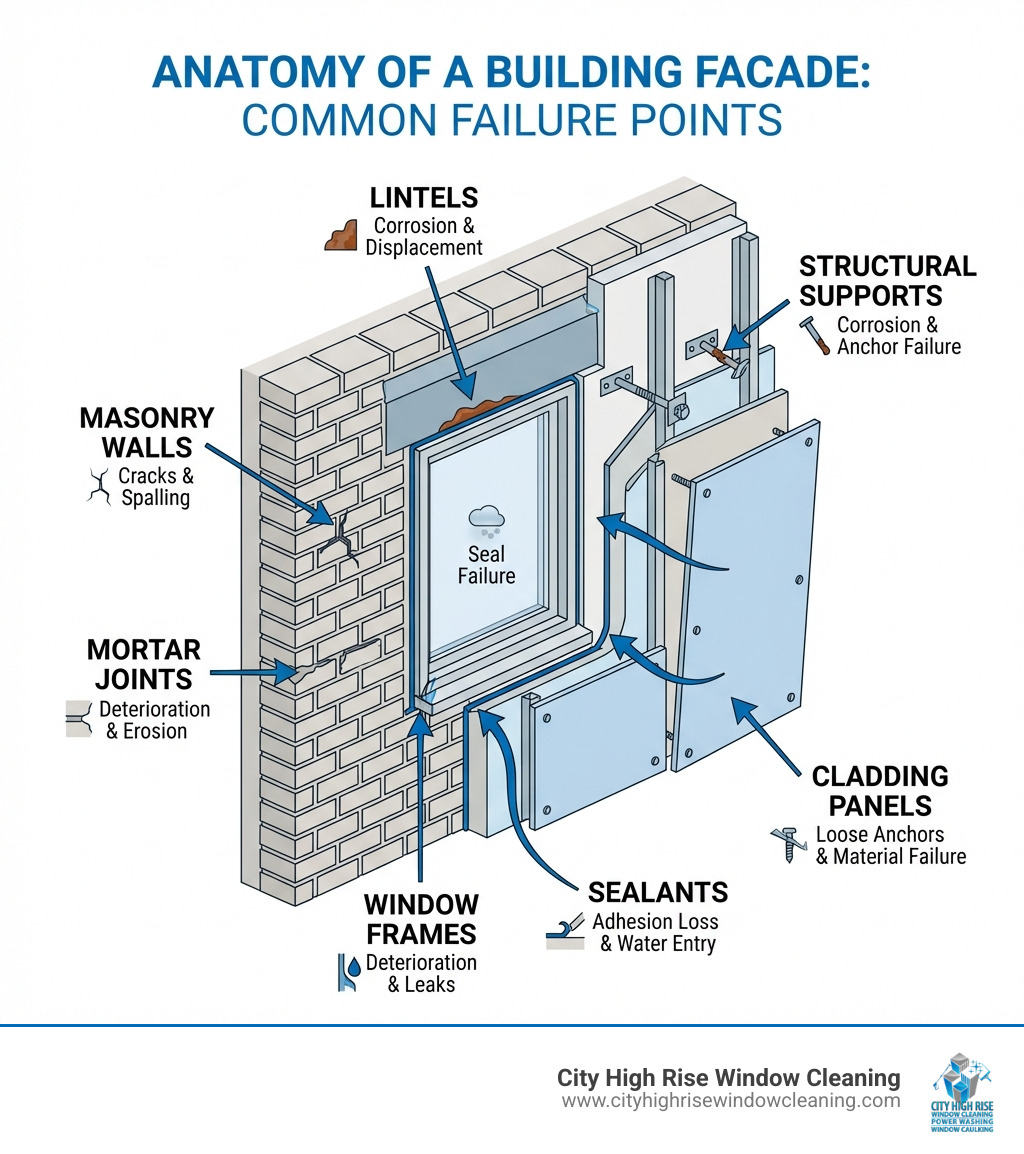
Building facade repair terms to know:
Why is Proactive Facade Maintenance a Smart Investment?
My philosophy has always been that an ounce of prevention is worth a pound of cure, and nowhere is this truer than with building facade repair. Investing in proactive facade maintenance isn’t just about aesthetics; it’s a strategic move that pays dividends in tenant retention, increased property value, and long-term cost savings. Facades are critical for protecting buildings from the elements and maintaining aesthetic appeal. Neglecting them can risk structural integrity and lead to major water infiltration problems.
How Facade Upkeep Boosts Your Bottom Line
A well-maintained facade is a powerful asset. It directly impacts your property’s profitability by:
- Attracting Premium Tenants: A visually appealing and well-kept exterior draws higher-quality tenants who are willing to pay more for comfort, safety, and curb appeal. As one expert noted, facade restoration directly impacts tenant retention by improving energy efficiency, comfort, safety, and curb appeal.
- Increasing Property Value: Buildings with well-maintained facades appeal to buyers and investors, signaling low vacancy rates and higher profitability. This proactive approach helps extend the value of your investment.
- Lowering Operating Costs: Improved energy efficiency from sealed cracks and proper insulation reduces HVAC energy consumption, potentially helping buildings reach net-zero targets. This translates directly into lower utility bills for you and your tenants.
- Avoiding Costly Repairs and Fines: Preventing minor issues from escalating into major problems saves significant money down the line. In NYC, neglecting facade maintenance can lead to hefty penalties under Local Law 11, which we’ll discuss later.
The Link Between Facade Health and Building Longevity
Think of your facade as the skin of your building. Just as healthy skin protects your body, a healthy facade protects the building’s core. Improperly maintained facades not only look unsightly but also place the structural integrity of your building at risk. Water infiltration is a major problem for buildings and can quickly compromise structural components. By protecting against water penetration and addressing issues like capillary humidity or wall degradation, facade maintenance extends the lifespan of your materials and helps maintain a safe, healthy environment for occupants. Renovating a building is also generally more sustainable than constructing a new one due to lower overall material extraction, processing, and transportation pollution.
7 Telltale Signs Your Building Facade Needs Repair
Visual inspections are your first line of defense in identifying issues before they become emergencies. As an educational tool, I often refer to illustrated glossaries to help pinpoint visual symptoms and their probable causes. Keep an eye out for these telltale signs that your building facade repair needs attention:

1. Cracks in Masonry and Concrete
Cracks are perhaps the most common and concerning signs of facade distress. They can range from hairline cracks (less than 0.04 inches or 1mm) to slight cracks (between 0.04 and 3/16 inches) to large cracks (larger than 3/16 inches).
- Hairline vs. Structural Cracks: While hairline cracks might seem minor, they can still allow water infiltration. Larger, structural cracks—especially diagonal or stepped cracks in brickwork, or vertical cracks—often indicate more serious issues like settling, thermal stress, or even corrosion of steel supports (known as ‘rust jacking’). Rust jacking occurs when steel components corrode, and the corrosion byproducts expand, exerting pressure on surrounding materials, causing them to crack.
- Causes: Look for cracks around windows, corners, or areas with heavy loads. These can be caused by building movement, inadequate expansion joints, or freeze-thaw cycles.
2. Spalling, Chipping, or Flaking Surfaces
When masonry, concrete, or terra-cotta surfaces begin to flake or chip away, it’s a clear sign of material breakdown, often due to moisture.
- Brick Spalling: This is common in older brick buildings where moisture penetrates the brick, freezes, expands, and causes the face to pop off.
- Concrete Delamination: In concrete facades, spalling often occurs when water reaches the reinforcing steel, causing it to rust and expand, forcing layers of concrete to detach. This can lead to exposed rebar, a serious structural concern.
- Terra-cotta Glaze Failure: Historic terra-cotta can lose its protective glaze, making it susceptible to water absorption and subsequent spalling or cracking.
3. Deteriorating Mortar Joints
Mortar is the glue that holds your masonry facade together. When it starts to fail, the entire system is compromised.
- Eroded or Missing Mortar: Over time, mortar can erode due to weather exposure, leaving gaps between bricks or stones.
- Crumbly Texture: If you can easily scrape out mortar with a key or screwdriver, it’s time for repointing.
- Improper Past Repairs: Sometimes, previous repointing jobs may have used incompatible mortar (too hard or too impermeable), which can accelerate the deterioration of the surrounding brick.
Here are some common signs of mortar deterioration:
- Mortar joints reduced to sand
- Loose or detached bricks
- Improperly repaired joints (e.g., mortar layered on top of old mortar)
- Visible lime runs, indicating water infiltration
4. Water Damage and Staining
Water is the archenemy of building facades. Its presence is often indicated by visible stains.
- Dark Patches and Stains: These can be caused by consistent moisture exposure, leading to algae, mold, or mildew growth.
- Lime Runs and Efflorescence: White, powdery deposits (efflorescence) or streaks (lime runs) on masonry indicate that water is penetrating the wall, dissolving salts within the material, and depositing them on the surface as it evaporates.
- Interior Leaks: If you’re seeing water stains or leaks inside your building, it’s a definite sign of facade failure. This usually points to failed waterproofing or cracks in the exterior envelope.
5. Sealant and Caulking Failure
Sealants and caulking are flexible materials that bridge gaps and joints, preventing water and air infiltration. When they fail, your building’s thermal performance and weather protection suffer.
- Cracked or Peeling Sealant: Look for gaps around windows, doors, and expansion joints where the sealant has dried out, cracked, or pulled away from the substrate.
- Air and Water Leaks: Failed sealants are a direct pathway for drafts and water, leading to higher energy bills and potential water damage.
I’ve seen how crucial effective Window Caulking is for maintaining energy efficiency and preventing costly infiltration.
6. Bowing, Bulging, or Leaning Walls
These are serious structural red flags that should never be ignored.
- Displacement of Brick or Stone: If individual bricks or sections of masonry appear to be pushed out or are no longer in alignment, it indicates significant pressure or failure within the wall.
- Misaligned Masonry Units: This can be a sign of corroded wall ties or anchors, which are meant to secure the facade to the building’s structural frame.
- Serious Structural Issues: Bowing or bulging walls can be caused by foundation settlement, overloaded structural components, or severe rust jacking. If you see this, call a professional immediately.
7. Rotted or Corroded Elements
Many facades incorporate metal or wood elements that are also susceptible to deterioration.
- Rusted Steel Lintels: Steel lintels above windows and doors can rust, expand (rust jacking), and cause cracks in the surrounding masonry.
- Decayed Wood Window Frames: In older buildings, wood window frames can rot due to moisture exposure, compromising the window’s integrity and the building’s envelope.
- Corroded Metal Panels or Railings: Metal facade panels, balcony railings, or fire escapes can corrode, posing safety hazards and detracting from the building’s appearance. My team excels at Window Restoration to address decayed frames and ensure the longevity of your windows.
What Are the Common Building Facade Repair Methods?
Once you’ve identified issues, the next step is determining the best course of action. This often involves choosing between repair and restoration, and understanding the specific techniques involved. Generally, repair addresses specific problems, while restoration aims to return the facade to its original glory. When feasible, repair is preferred over replacement to preserve historic integrity.
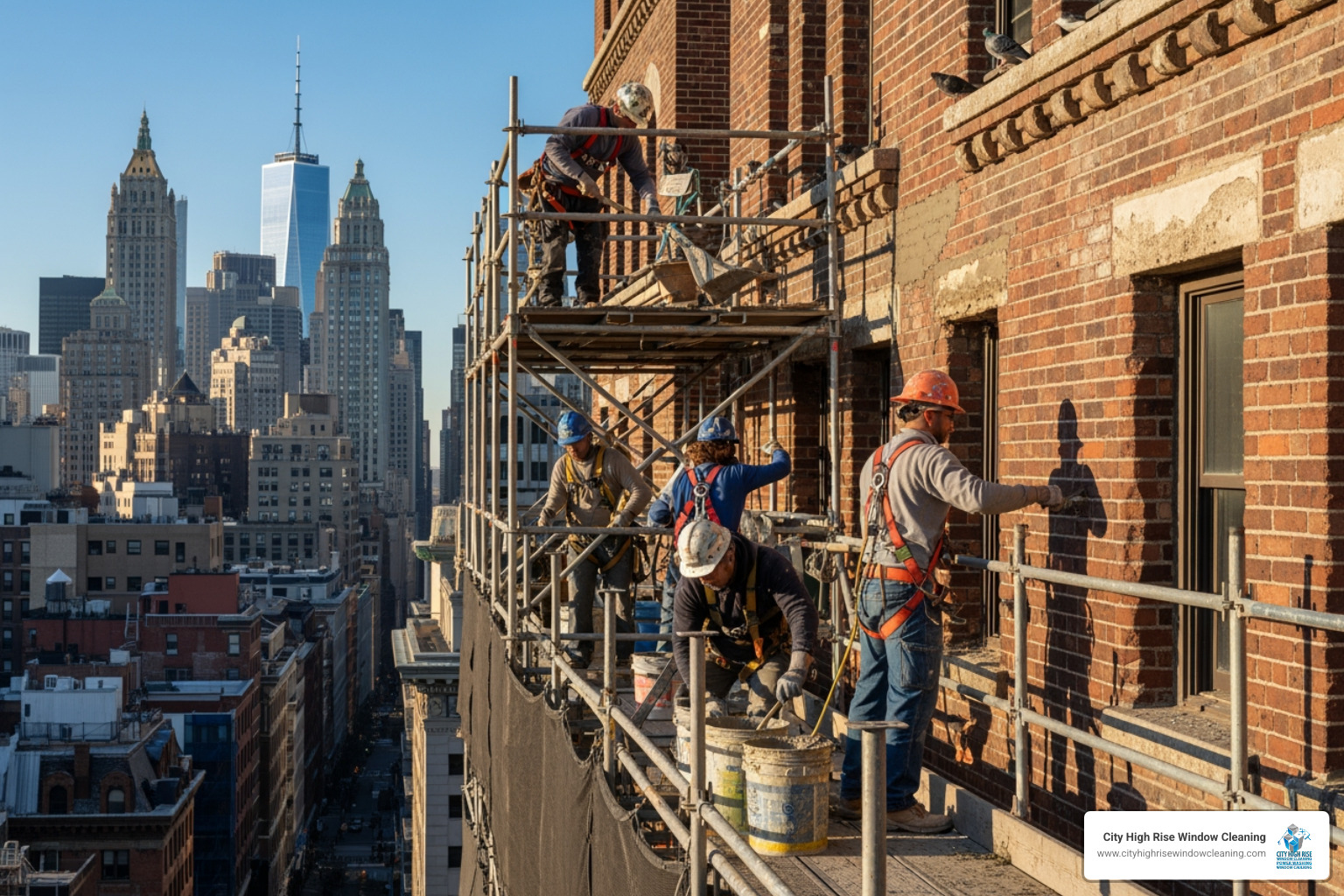
Essential Building Facade Repair Techniques
Building facade repair encompasses a range of specialized techniques, each custom to specific material and damage types:
- Masonry Repointing: This involves removing deteriorated mortar from between bricks or stones and replacing it with new, compatible mortar. It’s crucial for maintaining watertightness and structural integrity. For substantial repointing work on individual landmarks in NYC, a mortar analysis is often required. My team handles everything from single brick replacement to extensive re-pointing projects.
- Crack Injection: For concrete or masonry cracks, injecting specialized epoxy or polyurethane resins can seal the cracks, prevent water ingress, and restore structural continuity.
- Concrete Patching: Spalled or damaged concrete can be repaired using patching compounds that match the original concrete’s color and texture. For concrete restoration, we often address issues like delaminating over reinforcement.
- Stucco and EIFS Repair: Exterior Insulation Finishing Systems (EIFS) and stucco can crack or delaminate. Repairs involve patching, re-coating, and ensuring proper sealing at joints and penetrations.
- Lintel Replacement: Corroded or failed steel lintels must be replaced to prevent further structural damage to the masonry above.
- Waterproofing and Sealant Replacement: Old, cracked sealants around windows, doors, and expansion joints are removed and replaced with new, flexible, high-performance materials to prevent water and air leaks.
Beyond these, we also offer comprehensive Exterior High Rise Painting Services to protect and beautify your facade.
Facade Cleaning and Restoration
Cleaning is often the first step in any facade restoration project. It can reveal underlying issues and significantly improve a building’s appearance.
- Pressure Washing: A gentle yet effective method to remove dirt, grime, and environmental buildup. However, caution is key; pressure washing cannot exceed 500 psi on masonry or 300 psi on cast iron, and sandblasting is strictly prohibited on historic materials in NYC due to permanent damage. My team uses specialized equipment for High Rise Hot Water Power Washing to ensure effective cleaning without damage.
- Chemical Cleaning: For stubborn stains or specific types of biological growth (algae, mold), specialized chemical cleaners can be used. These must be applied carefully to avoid damage to the facade materials.
- Paint Removal: If a historic facade has been inappropriately painted, careful paint removal (never sandblasting) can restore its original appearance.
- Polishing Metal Panels: For modern facades with aluminum or other metal cladding, specialized cleaning and polishing can restore their luster. This is especially true for materials like Alucobond, where Alucobond Restoration can make a significant difference.
How Do You Navigate NYC Facade Regulations, Permits, and Costs?
New York City has some of the most stringent facade regulations in the country, and for good reason. Public safety is paramount. Understanding these regulations is critical for any property owner in NYC, Long Island, Westchester, or New Jersey.
Understanding NYC’s Facade Inspection Safety Program (FISP)
If your building is over six stories tall, you’re intimately familiar with the Facade Inspection Safety Program (FISP), formerly known as Local Law 11/98. This program mandates that buildings over six stories undergo a critical examination of their exterior walls every five years.
- 5-Year Inspection Cycle: Buildings must be inspected by a Qualified Exterior Wall Inspector (QEWI)—a licensed Professional Engineer (PE) or Registered Architect (RA)—every five years. The five-year reporting cycle is divided into three sub-cycles (A, B, and C) based on your building’s block number to assist property owners in filing timely reports.
- QEWI’s Role: The QEWI conducts a thorough, hands-on inspection (mandatory every 60 feet along street-facing facades) and submits a Technical Report (TR6) to the NYC Department of Buildings (DOB).
- Facade Conditions: The QEWI classifies the facade’s condition as:
- SAFE: No repairs needed.
- SAFE with a Repair and Maintenance Program (SWARMP): Requires repairs within five years, or by the next inspection cycle. Failure to correct SWARMP conditions by the next cycle can result in a $2,000 civil penalty.
- UNSAFE: Hazardous conditions that require immediate public protection (like sidewalk sheds) and prompt repair. Failure to correct unsafe conditions can result in a $1,000 per month penalty, plus additional penalties based on the linear footage of the sidewalk shed.
- Compliance is Key: Property owners are legally responsible for facade maintenance and repair. Failure to file reports or correct conditions can lead to significant fines. For instance, a late filing can cost $250 per month, and failure to file an initial report is $1,000 per year.
Staying compliant is crucial. The DOB’s Official NYC Façades Guide provides detailed information on these requirements.
Permits and Professionals: DIY vs. Hiring Out
While some minor repairs can be done without a permit, most significant building facade repair work in NYC requires professional involvement and permits.
- When Permits Are Required: Generally, any work that goes beyond routine maintenance or minor cosmetic fixes will require a permit. For example, replacing individual bricks is exempt if it’s a single outside wythe up to 10 sq. ft., not exceeding 4 ft. horizontally, and the cumulative area does not exceed 150 sq. ft. Similarly, cleaning or painting of masonry is often exempt. However, if your project involves structural changes, extensive material replacement, or impacts energy efficiency (e.g., new windows), you’ll likely need a permit and a Registered Design Professional (RDP).
- Minor Repairs vs. Major Alterations: NYC regulations provide clear guidelines on what constitutes “minor alterations and ordinary repairs” that may not require a permit. For example, replacement of existing windows and balcony doors is exempt if it doesn’t modify masonry openings, affect light/ventilation, or change the operable area. However, always verify with the DOB. The NYC Project Requirements for Façade Work outlines these distinctions.
- Role of Engineers and Architects: For any permitted facade work, an RDP (PE or RA) is required to ensure code compliance, design the repairs, and submit construction documents to the DOB.
- Hiring Licensed Contractors: For permitted work, you must hire licensed contractors who are properly insured and experienced in high-rise facade work. Emergency work, such as stabilizing unsafe conditions, can be performed by licensed contractors before obtaining a permit, provided the permit application is submitted within two business days.
For my clients, I always emphasize that professional help is essential for any structural issues or problems requiring specialized knowledge. It’s not just about compliance, it’s about safety.
Estimating the Cost of Your Building Facade Repair Project
The cost of building facade repair can vary widely based on several factors:
- Scope and Severity: Minor repointing or crack sealing will be far less expensive than extensive masonry replacement or structural repairs.
- Building Height and Accessibility: High-rise buildings require specialized equipment like scaffolds, boom lifts, or rope access, which significantly increases labor and equipment costs.
- Materials: The type of facade material (brick, stone, terra-cotta, concrete, glass curtain wall) and the need for historically accurate or specialized replacement materials will impact costs.
- Permit and Professional Fees: Expect to pay for DOB filing fees (e.g., $265 for an initial report), QEWI inspection fees, and RDP design fees.
- Public Protection: If an unsafe condition requires sidewalk sheds, the cost of installation and rental can be substantial.
While the upfront cost might seem daunting, consider the ROI: avoiding hefty fines, attracting better tenants, reducing energy consumption, and preventing catastrophic failures that could lead to astronomical expenses. Proactive facade care is an investment in your building’s future.
Frequently Asked Questions about Building Facade Repair
How often should a building facade be inspected?
In New York City, buildings taller than six stories must undergo a critical examination every five years under the Facade Inspection Safety Program (FISP). For smaller buildings or in other regions, a general inspection every 5-10 years is a good practice, with annual visual checks for obvious issues.
What is the difference between facade repair and facade restoration?
Facade repair addresses specific issues like cracks, spalls, or leaks to ensure safety and prevent further damage. Facade restoration is a more comprehensive process that aims to return the building’s exterior to its original condition, often involving cleaning, extensive repairs, and replacement of historical features.
Can facade repair improve a building’s energy efficiency?
Yes. Repairing failed window caulking, sealing cracks, and restoring the building envelope prevents air and water leakage. This reduces drafts and improves insulation, leading to lower heating and cooling costs and better energy efficiency.
What is the most common cause of facade failure?
Water infiltration is the most common culprit. Moisture gets behind facade materials, causing freeze-thaw damage, corroding steel supports (rust jacking), deteriorating mortar, and promoting mold growth, leading to a wide range of facade failures.
Secure Your Investment with Professional Facade Care
Your building’s facade is more than just an exterior. It’s a critical component of its structural integrity, energy performance, market value, and public safety. Neglecting building facade repair can lead to dangerous conditions, significant financial penalties, and a diminished asset.
I’ve seen the peace of mind and financial benefits that come from proactive facade maintenance. At City High Rise Window Cleaning, we’re committed to providing the highest quality building facade repair and facade restoration services across New York City, Long Island, New Jersey, and Westchester. With over 30 years of experience, our 100% customer satisfaction guarantee and unwavering commitment to safety mean you can trust us to protect your investment.
Ready for a free quote? City High Rise Window Cleaning offers 24/7 live consultation. Call 917-749-8342 to speak to a live representative.


