

Stop Ignoring Your Walls with These Outside Building Cleaning Techniques
Stop Ignoring Your Walls with These Outside Building Cleaning Techniques
Your Building’s Walls Are Costing You Money Right Now
Outside building cleaning is the process of removing dirt, mold, algae, biological growth, and environmental pollutants from a building’s exterior surfaces — including facades, windows, roofs, siding, and concrete — using methods like pressure washing, soft washing, and hand cleaning.
Here’s a quick overview of the main methods and when to use them:
| Method | Best For | PSI Range |
|---|---|---|
| Pressure washing | Concrete, brick, parking lots | 1,500 – 4,000 PSI |
| Soft washing | Roofs, stucco, EIFS, shingles | Low pressure + solution |
| Hand/soft brushing | Windows, screens, delicate stone | N/A |
| Hot water power washing | Stubborn grease, heavy grime | High PSI + heat |
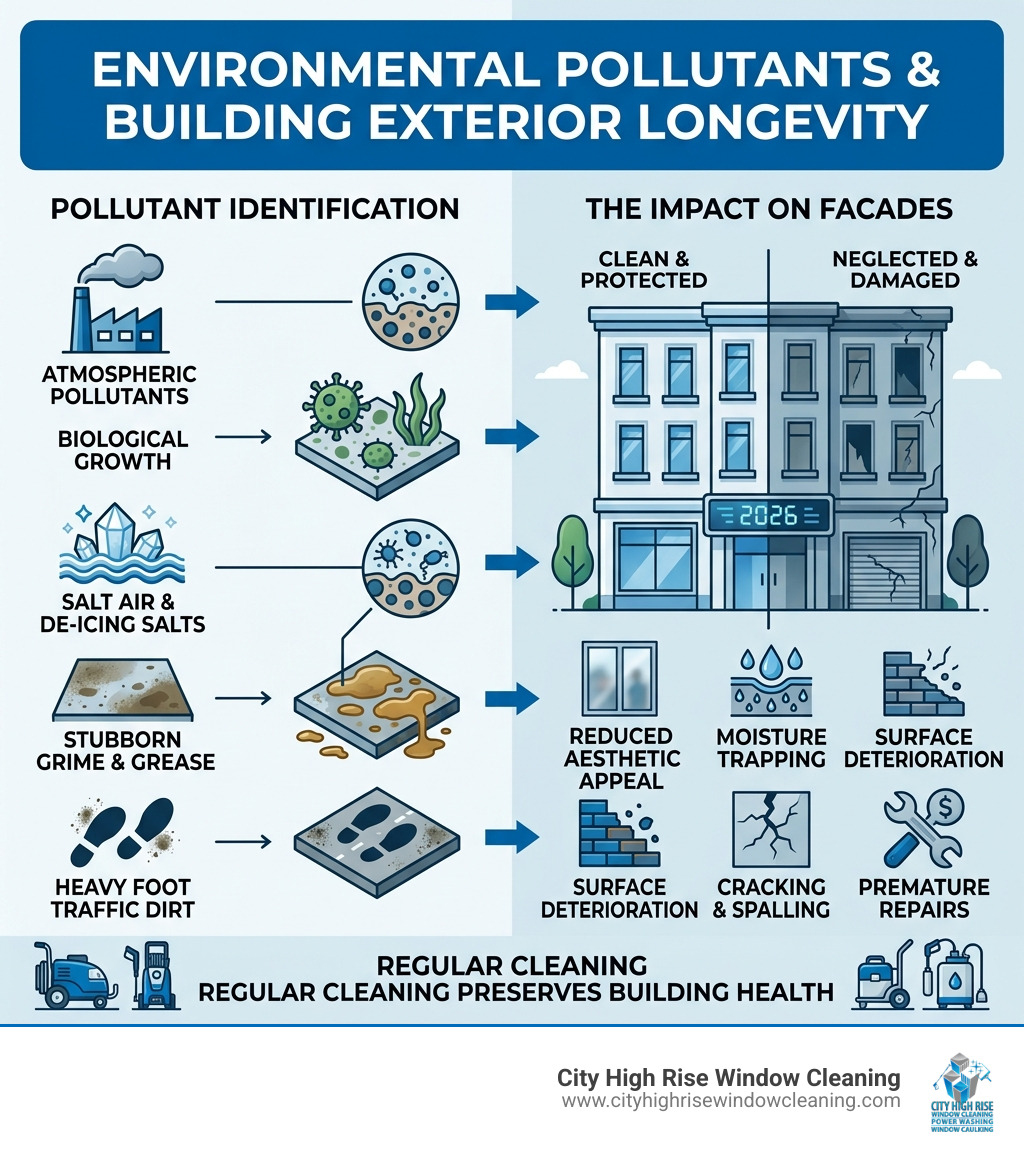
Most property owners don’t think about their building’s exterior until something is visibly wrong. By then, the damage is already happening. Mold traps moisture. Algae eats into roofing materials. Pollution embeds itself into porous substrates like brick and stucco, slowly restricting the surface’s ability to breathe — leading to cracks, spalling, and costly repairs.
In cities like New York and New Jersey, where pollution, salt air, and heavy foot traffic accelerate buildup, neglecting your exterior isn’t just an aesthetic problem. It’s a structural one.
I’m Brett Hochman, CEO of City High Rise Window Cleaning, and with over 48 years of hands-on experience in outside building cleaning across NYC, Long Island, Westchester, and New Jersey, I’ve seen how the right cleaning method at the right time can save property owners tens of thousands in avoidable repairs. In this guide, I’ll walk you through exactly what works, what doesn’t, and how to protect your investment.
Why Professional Outside Building Cleaning is Non-Negotiable for Property Value
When I walk through Manhattan or look at the storefronts in Long Island, I can immediately spot a building that has been neglected. It isn’t just about the “ugly” factor; it’s about the science of the building envelope. Most exterior substrates—whether they are stucco, brick, cement, or stone—are porous. This means they act like a sponge for NYC’s unique blend of exhaust fumes, salt spray from the Atlantic, and biological growth.
Professional outside building cleaning is essential because it addresses these contaminants before they become permanent. For instance, biological contaminants like algae, bacteria, fungus, and lichen don’t just sit on the surface; they root into it. Left unchecked, these organisms deteriorate roofing and siding materials.
Beyond aesthetics, regular cleaning ensures proper vapor permeability. If your building’s “pores” are clogged with grime, moisture gets trapped inside the walls. In our climate, where we deal with freeze-thaw cycles, trapped moisture leads to cracking and spalling. By investing in services like Window Restoration, you aren’t just making the glass shine; you’re removing corrosive minerals that can permanently etch the surface.

The Risks of Neglecting Outside Building Cleaning
Neglect is the fastest way to devalue a property in Westchester or New Jersey. The risks are both financial and physical:
- Surface Deterioration: Pollutants like sulfur and nitrogen oxides from city traffic react with moisture to create acidic compounds that eat away at stone and brick.
- Wood Rot: On residential properties, mold and mildew can quickly lead to wood rot on window frames and siding.
- Health Hazards: Mold and bacteria on the exterior can eventually migrate toward air intakes, affecting indoor air quality.
- Foundation Damage: Clogged gutters are a primary byproduct of a dirty roof. When gutters overflow, water pools at the base of the building, leading to foundation cracks and basement flooding.
- Pest Infestations: Pests love the damp, organic buildup found in uncleaned gutters and shaded, mossy walls.
Pressure Washing vs. Soft Washing: Choosing the Right Method
One of the biggest mistakes I see beginners and DIYers make is thinking that more pressure equals a better clean. In reality, high pressure can be a building’s worst enemy. Manufacturers of modern exterior products like Sto, Dryvit, and GAF specifically warn against high-pressure washing because it can cause physical damage to the substrate.
| Feature | Pressure Washing | Soft Washing |
|---|---|---|
| Pressure Level | High (1,500 – 4,000 PSI) | Low (similar to a garden hose) |
| Water Temp | Cold or Hot (Power Washing) | Usually ambient |
| Cleaning Agent | Water volume/force | Specialized eco-friendly solutions |
| Best Surfaces | Concrete, Brick, Stone, Metal | Shingles, Stucco, Wood, Vinyl |
| Risk Level | High (can strip paint/etch stone) | Low (safe for delicate materials) |
For heavy-duty grime on parking garages or sidewalks in New York, we often utilize High Rise Hot Water Power Washing. The heat acts as a degreaser, allowing us to lift oil stains and chewing gum without needing excessive, damaging pressure.
Selecting Techniques for Specific Building Materials
Different materials require a tailored touch. You wouldn’t use the same tool to clean a silk shirt as you would a denim jacket, and the same applies to outside building cleaning.
- Vinyl Siding: While durable, vinyl can be cracked by high pressure. We use a soft wash approach to kill the mold at the root.
- Limestone and Brownstone: These are incredibly porous and sensitive. High pressure can “burn” the stone, leaving permanent marks. We use non-damaging chemicals and low-pressure rinses.
- Modern Panels: For commercial buildings, Alucobond Restoration requires specific solutions to restore the factory finish without scratching the metal.
- Graffiti Removal: This often requires aggressive chemical applications followed by a careful rinse. It’s not just about blasting it off; it’s about dissolving the pigment without ghosting the brick underneath.
Essential Safety and Equipment for Outside Building Cleaning
In our industry, safety isn’t just a checkbox — it’s a lifeline. This is especially true in Manhattan, which has some of the highest safety standards in the world for high-rise work.
When we perform Commercial High Rise Window Cleaning, we rely on a variety of access methods. Our teams are often certified by IRATA or SPRAT for rope access, which is frequently the safest and most efficient way to reach difficult facades. For other projects, we utilize:
- Aerial Lifts: Including spider lifts that can reach up to 105 feet while fitting through a standard double door.
- Swing Stages: Essential for long-term restoration projects.
- Deionized Water Systems: These allow us to clean windows and facades to a spot-free finish without the use of harsh minerals.
Best Practices for Safe Outside Building Cleaning
Whether you are a property manager or a homeowner, safety protocols must be followed to avoid liability:
- Risk Assessments: Before a single drop of water hits the wall, we conduct a thorough walkthrough to identify hazards like electrical lines or delicate landscaping.
- Property Protection: We move or cover furniture, plants, and vehicles. We are especially careful with wood veneer screens, which can be destroyed by water — these should be dry-brushed instead.
- Environmental Compliance: We adhere to the Clean Water Act. This means reclaiming or properly disposing of rinse water to prevent storm drain contamination.
- Integrity Checks: Cleaning often reveals hidden issues. While cleaning, we check for failing sealant, which is why Window Caulking is a vital secondary service to prevent leaks.
Maintenance Schedules: How Often Should You Clean?
“How often should I do this?” is the most common question I get. The answer depends on your geography. A building in the heart of NYC faces different challenges than a home in the Hamptons.
- Windows (Urban): Every 3-4 months. Pollution and “city dust” create a film that can eventually become permanent if not addressed.
- Windows (Coastal): Every 2-3 months. Salt air is highly corrosive to both glass and metal frames.
- Facades and Siding: Once a year is the gold standard for preventative care.
- Roofs: Every 2-3 years, or whenever you see black streaks (Gloeocapsa magma algae).
- Awnings: Awning Cleaning should be done seasonally to prevent bird droppings and soot from rotting the fabric.
In New York City, we also have to consider FISP (Facade Inspection Safety Program), formerly known as Local Law 11. Regular cleaning isn’t just for looks; it allows inspectors to see the actual condition of the masonry, helping you avoid hefty fines and ensuring the safety of pedestrians below. For more on this, check out our article on The Importance of Regular Building Maintenance in NYC.
Frequently Asked Questions about Outside Building Cleaning
What is the difference between pressure washing and soft washing?
Pressure washing uses high-pressure water (1,500-4,000 PSI) to mechanically blast away dirt from hard, non-porous surfaces like concrete and stone. Soft washing uses low-pressure water (similar to a garden hose) combined with specialized, eco-friendly cleaning solutions. These solutions do the heavy lifting by killing organic growth like mold, algae, and moss at the root, making it the safest choice for roofs, stucco, and wood.
How often should high-rise windows be cleaned in urban areas?
In high-pollution urban environments like NYC and Jersey City, windows should ideally be cleaned every 3 to 4 months. The high volume of traffic and industrial pollutants creates a grime layer that can etch the glass over time. Coastal properties in Long Island may require cleaning every 2 to 3 months to prevent salt-induced corrosion.
Does exterior cleaning really prevent structural damage?
Absolutely. Contaminants like mold, algae, and lichen trap moisture against the building’s skin. In the winter, this moisture freezes and expands, causing cracks in masonry and wood rot in frames. Furthermore, acidic pollutants can eat away at the lime in mortar and stone. Regular outside building cleaning removes these destructive elements, significantly extending the life of your building’s envelope.
Is it safe to pressure wash my roof?
No. You should almost never use high pressure on a roof. For asphalt shingles, it can blast away the protective granules, shortening the roof’s life by years. For tile or slate, it can cause breakage. We always recommend a “Safe Wash” or soft wash approach for roofs.
Conclusion
Your building is likely your largest investment. Ignoring the exterior is like never changing the oil in your car — it might look fine today, but the internal damage is mounting. At City High Rise Window Cleaning, we bring over 30 years of specialized experience to every job across NYC, NJ, Long Island, and Westchester.
Whether you need a simple Post-Construction Cleaning to get a new build ready for tenants, a complex Exterior High Rise Painting project, or other Professional Exterior Services, our team is committed to a safety-first approach and a 100% satisfaction guarantee. Don’t wait for the cracks to appear — proactive maintenance is the key to a beautiful, long-lasting property.
Ready for a free quote? City High Rise Window Cleaning offers 24/7 live consultation. Call 917-749-8342 to speak to a live representative.


