

The Concrete Jungle’s Facelift: Navigating NYC Building Restoration
NYC building restoration: 2025 Essential Guide
NYC Building Restoration [Guide]: Avoid Fines & Boost Property Value
NYC building restoration is the essential process of repairing and preserving a building’s exterior to maintain structural integrity, comply with city safety laws, and protect property value. For property owners in New York City, it’s not optional—it’s a legal requirement and a critical financial safeguard.
What NYC Building Restoration Includes:
- Facade inspection and repair (FISP/Local Law 11 compliance)
- Masonry, brick, and terra cotta restoration
- Waterproofing and caulking
- Concrete and steel repair
- Cast iron and limestone restoration
- Window replacement and power washing
Why It Matters:
- Avoid DOB penalties and unsafe conditions
- Increase property value and curb appeal
- Protect tenants and pedestrians from falling debris
- Preserve historic architecture and meet LPC requirements
With over a million buildings, many of them historic, NYC’s infrastructure requires constant upkeep. Regulations like Local Law 11 (FISP) mandate facade inspections every five years for buildings over six stories, creating a steady demand for qualified restoration contractors. Environmental factors like freeze-thaw cycles and pollution cause defects that, if ignored, lead to costly damage and safety hazards.
As Brett Hochman, CEO of City High Rise Window Cleaning, I’ve led exterior building maintenance projects across the Tri-State area for over 30 years. Our team specializes in NYC building restoration services like facade repair, waterproofing, and masonry work, ensuring every project meets the highest standards of quality and regulatory compliance.
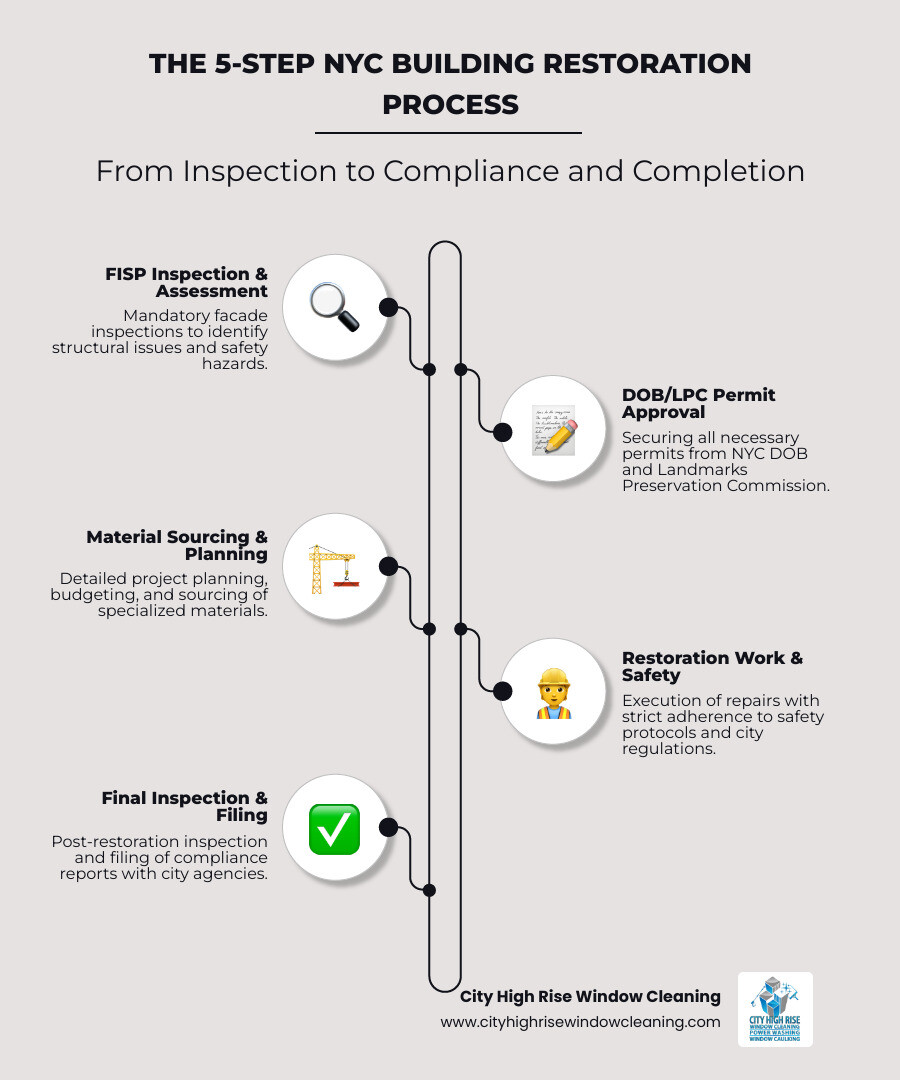
The Stakes Are High: Why Facade Restoration is Non-Negotiable in NYC
For any building owner or manager in New York City, facade restoration is not just about aesthetics—it’s about protecting people, avoiding massive fines, and preserving your largest financial asset. NYC’s unique climate, with its harsh freeze-thaw cycles and pollution, constantly wears down building materials. Combined with the city’s dense pedestrian traffic, this creates a high-stakes environment where facade safety is paramount.

The Facade Inspection Safety Program (FISP), or Local Law 11, was created to prevent injuries from falling debris. It mandates that owners take responsibility for their facades. Proactively investing in NYC building restoration means choosing to spend thousands now to avoid spending hundreds of thousands later. At City High Rise, we’ve seen that property owners who invest in regular maintenance, like High-Rise Hot Water Power Washing, catch problems before they become costly emergencies.
What is the Facade Inspection Safety Program (FISP)?
FISP is NYC’s mandate to ensure building facades are safe. If your building is over six stories, a Qualified Exterior Wall Inspector (QEWI) must conduct a detailed technical inspection every five years. The inspector searches for any potentially dangerous conditions, such as:
- Loose bricks or cracked terra cotta
- Deteriorating concrete and mortar joints
- Corroded steel
- Evidence of water infiltration
Based on the findings, the QEWI files a report with the NYC Department of Buildings (DOB), classifying the facade as “Safe,” “Safe with a Repair and Maintenance Program (SWARMP),” or “Unsafe.” An “Unsafe” status requires immediate protective measures (like sidewalk sheds) and prompt repairs. Ignoring FISP requirements leads to steep fines, potential lawsuits, and difficulty selling or refinancing the property.
The Benefits of Proactive Restoration
Treating facade maintenance as an ongoing investment always pays off. Here’s why proactive restoration is the smarter choice:
- Long-Term Cost Savings: Fixing a small crack today prevents it from becoming a major structural problem with a six-figure price tag tomorrow. Early intervention is always cheaper.
- Higher Property Value: A well-maintained facade improves curb appeal, which directly translates to higher property values and rental rates. It shows the building is cared for and commands respect.
- Improved Energy Efficiency: Restoration is an opportunity to seal air leaks and improve the building envelope. Proper waterproofing and window caulking services can significantly lower heating and cooling costs.
- Preserved Structural Integrity: Repairing deteriorating masonry and corroded steel isn’t just cosmetic—it preserves the building’s core structure, ensuring its longevity and safety.
- Stress-Free Compliance: Staying ahead of maintenance means you’re always prepared for FISP deadlines and can avoid the stress and penalties of DOB violations.
- Public and Tenant Safety: Most importantly, a well-maintained facade protects residents, employees, and the thousands of pedestrians on the streets below. It’s not just good business; it’s your responsibility.
The Architect’s Challenge: Common Materials & Problems in NYC Building Restoration
New York City’s architectural diversity, from 19th-century brownstones to modern towers, presents unique challenges for NYC building restoration. Restoring these structures is complicated by historic materials, dense urban logistics, and a harsh environment.
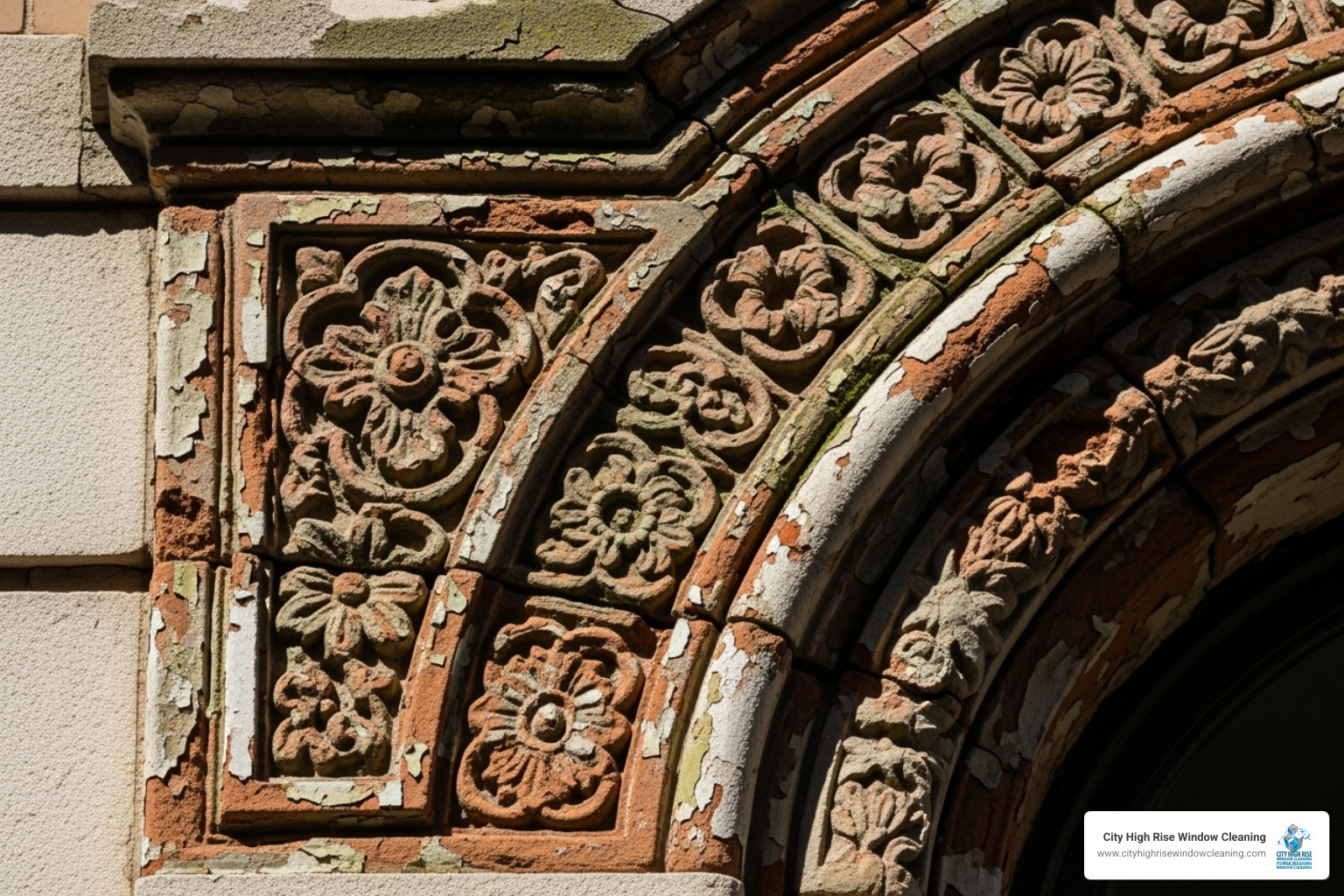
Coordinating a project on a busy Manhattan street, dealing with brutal freeze-thaw cycles, and adhering to Landmarks Preservation Commission (LPC) guidelines for over 37,000 properties requires specialized expertise. The LPC often requires exact replication of historic materials and techniques, adding another layer of complexity.
Common Building Materials That Require Restoration
- Masonry and Brick: Mortar joints are a primary failure point. Water intrusion leads to spalling and cracks, requiring repointing—the meticulous replacement of old mortar.
- Terra Cotta: This beautiful but fragile ceramic is prone to cracking when water gets behind its glaze. Restoration may involve patching or fabricating new pieces with modern, durable materials like Glass-Fiber Reinforced Concrete (GFRC).
- Cast Iron: Common in historic districts like SoHo, cast iron facades can corrode and crack. Restoration is highly specialized, often requiring recasting damaged sections. More on cast-iron facade projects can be found here.
- Limestone and Brownstone: These soft stones are susceptible to erosion and pollution damage. Repairs often involve careful cleaning or inserting a perfectly matched new piece of stone, known as a Dutchman repair.
- Composite Materials: Modern buildings also require expert care. Our team specializes in Alucobond Restoration, addressing issues specific to aluminum composite panels.
Primary Challenges in NYC Building Restoration
- Dense Urban Environments: Logistics are a nightmare. Staging materials, erecting scaffolding, and minimizing public disruption often require night or weekend work.
- Public Safety: Protecting pedestrians from falling debris is non-negotiable. Sidewalk sheds and safety netting are mandatory but add cost and complexity.
- LPC Guidelines: For landmark buildings, the LPC’s approval process for materials and methods can be lengthy. Planning and patience are essential.
- Matching Historic Materials: Finding or recreating materials to match 100-year-old originals requires deep industry knowledge and artisan skill.
- Unexpected Structural Issues: You never know what’s behind a facade until you open it up. Hidden water damage or corroded steel are common surprises that require experienced contractors to pivot quickly.
From Blueprint to Reality: A Guide to the Restoration Process
Successful NYC building restoration depends as much on navigating bureaucracy as it does on skilled craftsmanship. The NYC Department of Buildings (DOB) and Landmarks Preservation Commission (LPC) are essential partners in ensuring a project is safe, compliant, and successful.

The process begins with a comprehensive assessment to identify all issues and anticipate hidden challenges. This informs the budget, schedule, and permitting strategy. Understanding the DOB’s distinction between renovation (repairing) and alteration (changing use/layout) is key, as it impacts the entire permitting process. For landmark buildings, LPC approval is required before the DOB will even review an application, so building this time into your schedule is critical.
Key Services in NYC Building Restoration
A comprehensive restoration project addresses every part of the building envelope. Our key services include:
- Facade Repair: We address visible deterioration by repairing cracks, replacing loose materials, and fixing spalling surfaces.
- Masonry and Repointing: This painstaking work involves replacing deteriorated mortar to strengthen the facade and prevent water intrusion.
- Waterproofing: Absolutely essential in NYC, waterproofing protects against water damage, mold, and freeze-thaw cycles. Our Window Caulking Services are a critical part of creating a watertight building envelope.
- Concrete Repair: We patch cracks and restore the structural integrity of aging concrete elements damaged by weather and time.
- Steel Refurbishment: We remove rust, apply protective coatings, and replace corroded steel lintels and supports to ensure structural safety.
- Exterior Painting: More than just aesthetics, our Exterior High-Rise Painting Services provide a protective barrier against weather and pollution, extending the life of your facade.
Modern Technologies and Techniques
Today’s technology improves traditional craftsmanship, making restoration more precise and durable.
- Drone Inspections: Drones provide a safe, fast, and cost-effective way to assess facade conditions without immediately needing expensive scaffolding.
- 3D Laser Scanning: This technology creates precise 3D models of a building, allowing for perfect replication of historic architectural details.
- Advanced Materials: Modern repair mortars, epoxies, and coatings offer superior durability and weather resistance while matching historic aesthetics.
- Modern Waterproofing Membranes: Fluid-applied and sheet membrane systems create a seamless, highly effective barrier against moisture intrusion.
Building Your A-Team: Contractors, Consultants, and Safety Protocols
Successful NYC building restoration is a team effort, requiring a symphony of specialized expertise and an unwavering commitment to safety. Assembling the right team of contractors, consultants, and engineers is the most critical step in navigating New York City’s complex regulatory and physical environment.

Specialized contractors, like our team at City High Rise, bring the hands-on skills, while building envelope consultants and structural engineers provide the diagnostic and design solutions. Working with qualified, unionized professionals, such as those affiliated with the Building Restoration Contractors Association (BRCA), ensures adherence to rigorous safety and quality standards. In a city of high-rises and crowded streets, safety is the bedrock of every project.
The Role of Specialized Experts
- Forensic Investigators: Use scientific methods to diagnose the root cause of building failures, ensuring repairs are effective and long-lasting.
- Quality Assurance Consultants: Implement rigorous standards to ensure all materials and workmanship meet or exceed project specifications.
- Project Managers: Oversee scheduling, logistics, and execution to minimize disruption and keep the project on track and on budget.
- DOB/LPC Navigators: Local experts are essential for managing the complex permit and approval processes with the Department of Buildings and Landmarks Preservation Commission.
- Licensed Special Riggers: These DOB-licensed professionals are critical for safely installing and dismantling scaffolding and hoisting equipment on high-rise projects.
How Top Companies Ensure Safety
In a high-stakes environment like NYC, top firms prioritize safety above all else. Our approach includes:
- Site-Specific Safety Plans: We develop a detailed plan for every project, identifying hazards and outlining mitigation strategies before work begins.
- Rigorous Scaffolding and Rigging: All equipment is inspected daily and adheres to strict DOB and OSHA standards. Our crews are trained in all forms of specialized access.
- Pedestrian and Property Protection: We use robust sidewalk sheds, safety netting, and exclusion zones to protect the public and adjacent properties from debris.
- Continuous Employee Training: Our workforce holds key certifications (OSHA 30, Suspended Scaffold User, etc.) and receives ongoing training in the latest safety protocols.
- Strict Code Compliance: We maintain an intimate knowledge of all local, state, and federal regulations to ensure every project is fully compliant, avoiding penalties and legal risks.
Learning from the Masters: Notable NYC Restoration Projects
New York City’s skyline is a living museum, and its landmark NYC building restoration projects offer invaluable lessons in preserving history while embracing modern techniques. These case studies highlight the ingenuity required to overcome challenges and achieve remarkable results.
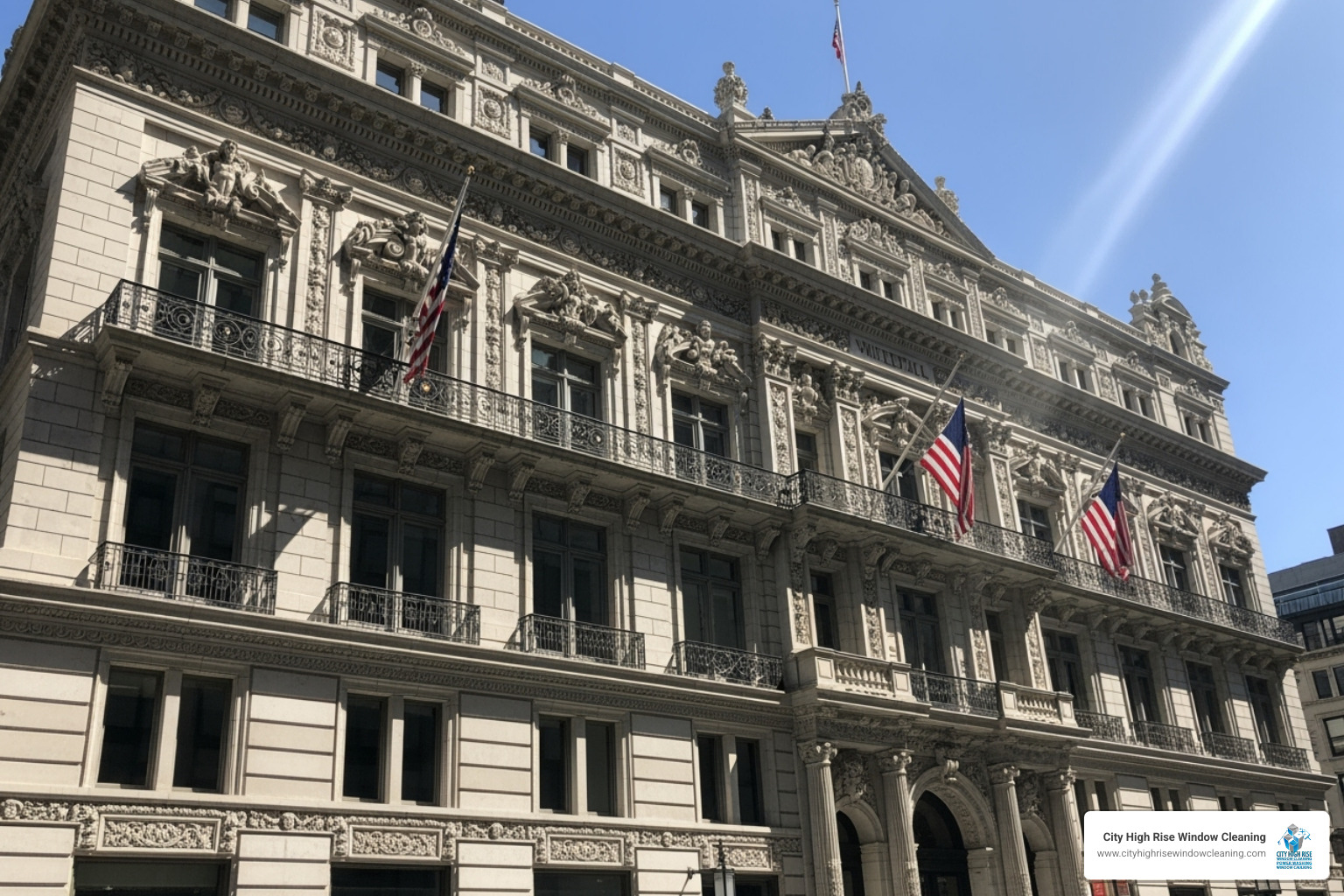
Case Study: The Whitehall Building
The restoration of the Whitehall Building at 17 Battery Place is a prime example of a monumental effort. A routine Facade Inspection Safety Program (FISP) inspection of this 1910 Renaissance Revival tower revealed substantial structural deterioration, triggering a massive two-year project to restore its exterior to its original glory.
Key aspects of the restoration included:
- Terracotta Replacement: Over 3,000 new ornamental terracotta pieces were fabricated and installed to match the originals.
- GFRC Replication: Deteriorated limestone elements and a complex arched cornice were replicated using Glass-Fiber Reinforced Concrete (GFRC), a durable, lightweight material approved by the NYC Landmark Preservation Commission.
This project demonstrates how a standard compliance inspection can uncover critical safety issues, leading to a best-in-class restoration. You can read more about this impressive renovation here.
Case Study: 27 Park Place, Tribeca
Another compelling case study is the renovation of 27 Park Place in Tribeca. This five-story commercial building underwent a full gut renovation and exterior restoration after a devastating fire in 2017. The project transformed a fire-damaged shell into a revitalized space, showcasing the resilience of NYC architecture.
Key elements included:
- Fire Damage Remediation: The project began with extensive work to address the structural and aesthetic damage from the fire.
- Facade and Storefront Restoration: The brick facade was carefully repaired and repainted, while the ground floor was upgraded with enlarged storefront windows to improve its commercial appeal.
This project shows how a building can be brought back from severe damage, preserving its historic character while adapting it for modern use. See the transformation of this Tribeca renovation here.
Frequently Asked Questions about NYC Building Restoration
How much does facade restoration cost in NYC?
Costs vary significantly based on building size, material, accessibility, and the extent of damage. A typical project can range from tens of thousands to millions of dollars. Key cost factors include scaffolding, labor, materials, and permit fees. A professional assessment is required for an accurate quote.
What is the difference between building restoration and renovation?
According to the NYC Department of Buildings, restoration aims to return a building to its original state or a good state of repair. Renovation involves improvements or remodeling that may change the layout or appearance but does not require a new Certificate of Occupancy. Major changes requiring a new Certificate of Occupancy are considered alterations.
How long does a building restoration project take?
The timeline depends on the project’s complexity. A simple FISP repair might take a few weeks, while a full facade restoration on a historic landmark could take over a year. Factors include weather, permit approvals, and material availability.
Do I need a permit for facade work in NYC?
Yes, most facade repair and restoration work requires permits from the NYC Department of Buildings (DOB). If the building is a designated landmark, approval from the Landmarks Preservation Commission (LPC) is also necessary before the DOB will issue a permit.
Your Partner in Preserving NYC’s Skyline
Navigating the complexities of NYC building restoration is essential for maintaining your property’s safety, value, and compliance. From understanding FISP regulations to choosing the right materials and expert team, a successful project protects your investment and the city’s architectural heritage. For over 30 years, City High Rise Window Cleaning has provided expert exterior services in New York City, Long Island, New Jersey, and Westchester, ensuring every project meets the highest standards of quality and safety.
Ready for a free quote? City High Rise Window Cleaning offers 24/7 live consultation. Call 917-749-8342 to speak to a live representative.


