

Dust Bunnies Beware: Your Guide to Post-Construction Deep Cleaning
Deep Cleaning Post Construction: 3 Essential Steps
Deep Cleaning Post Construction in NYC: Get a Move‑In Ready Space Fast (Without Overpaying)
Deep cleaning post construction is the final, critical step that transforms a job site into a safe, move-in-ready space. Here’s what you need to know if you want quality service, fair pricing, and fast turnaround in New York City, Long Island, Westchester, and New Jersey:
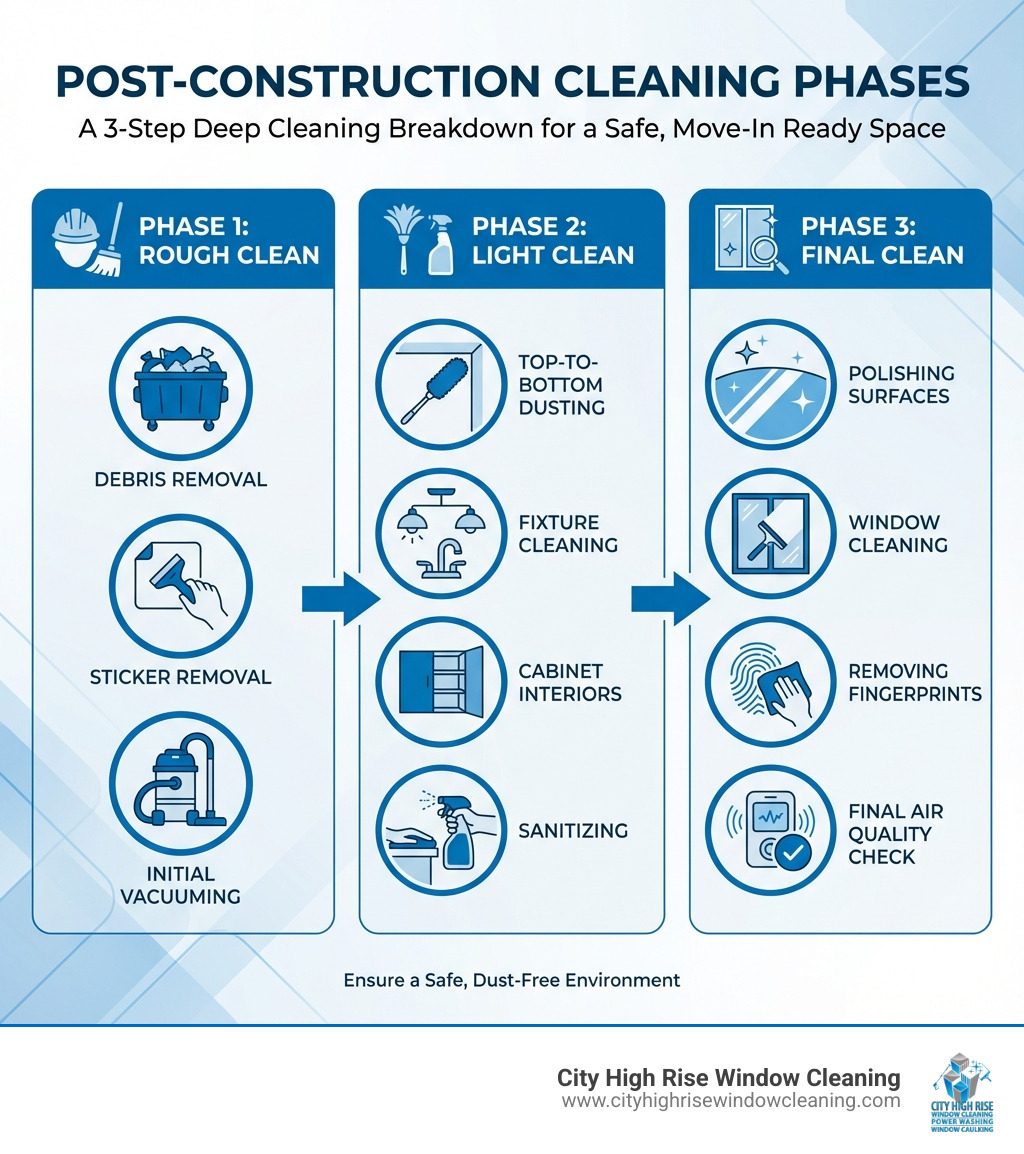
The Three-Phase Approach to Post-Construction Cleaning:
- Rough Clean – Remove large debris, leftover materials, and perform initial sweeping
- Light Clean – Detailed surface cleaning, dusting fixtures, and sanitizing kitchens/bathrooms
- Final Clean – Polish surfaces, remove settled dust, clean windows, and eliminate all fingerprints
Key Safety Concerns:
- Construction dust contains hazardous materials like silica, which can cause serious respiratory problems
- HEPA-filter vacuums are essentialhey remove at least 99.97% of dust particles
- Professional cleaning protects indoor air quality and prevents long-term health issues
Average Cost: Around $475 for professional post-construction cleaning
Moving into a new space after construction should be excitingut most contractors only leave sites “broom-swept,” meaning you’re left with fine dust coating every surface, paint splatters on windows, and debris in corners. That layer of grime isn’t just unsightly. Construction dust, particularly silica from concrete and drywall, can trigger allergies, irritate eyes, and cause significant respiratory problems if not properly removed.
I’m Brett Hochman, and for over 30 years I’ve led City High Rise Window Cleaning through countless post-construction projects across New York, New Jersey, and the Tri-State area, specializing in the final deep cleaning phase that makes buildings truly ready for occupancy. Our OSHA-certified team handles everything from high-rise window restoration to complete interior dust removal, ensuring your investment is protected and your space is safe.
Deep cleaning post construction glossary:
- construction cleaning company
- post construction cleaning
- commercial high rise window cleaning
- residential high rise window cleaning
Why a Final Clean is Non-Negotiable for Your Health and Safety
After the hammers stop swinging and the last coat of paint dries, you might think the hardest part is over. But trust me, as someone who’s seen it all in New York City, Long Island, and beyond, the real work for your health and safety is just beginning. Construction, whether it’s a small renovation or a brand-new high-rise, leaves behind a truly impressive amount of mess. This isn’t your everyday dust; it’s a concoction of various materials that can pose serious health risks.
One of the biggest culprits is construction dust itself. It’s an inevitable byproduct of any construction or renovation project, and it’s typically far more dangerous than the dust bunnies under your bed. According to the Canadian Center for Occupational Health and Safety, there are three main types:
- Silica Dust: This is the bad guy. It comes from working with materials like concrete, mortar, sandstone, and granite. When these materials are cut, drilled, sanded, or ground, tiny silica particles become airborne. Prolonged exposure to silica dust can cause significant respiratory problems, irritate eyes, and trigger allergies or asthma. The CDC’s NIOSH (National Institute for Occupational Safety and Health) provides detailed information on the dangers of silica dust.
- Wood Dust: Generated from cutting and sanding wood, this can also cause respiratory irritation and allergic reactions.
- Lower Toxicity Dusts: These come from materials like gypsum (drywall) or marble. While generally less hazardous than silica, they can still cause irritation and respiratory issues if inhaled in large quantities.
This fine, often invisible, dust permeates everything. It settles on every surface, gets into your HVAC system, and lingers in the air. This directly impacts indoor air quality, making the space unhealthy for occupants and visitors. Think about it: if you’re breathing in these particles, you’re exposing yourself to potential long-term health issues.
Beyond the health concerns, neglecting a thorough deep cleaning post construction can also impact your property’s value and appearance. Fine dust can scratch newly installed surfaces, stain fresh paint, and generally detract from the “new” feeling. A truly clean space isn’t just about aesthetics; it’s about protecting your investment and ensuring a safe environment.
What Are the 3 Phases of Deep Cleaning Post Construction?
When I approach a post-construction cleaning project, whether it’s a residential home in Long Island or a commercial building in Westchester, I always emphasize a systematic, phased approach. It’s like conducting an orchestra – every section has its role, and they all need to work in harmony to create a masterpiece. This ensures nothing is missed and the job is done efficiently and effectively.

Phase 1: The Rough Clean
This is where we tackle the big stuff. Think of it as the initial sweep of the battlefield after the war is over. The construction company is typically responsible for the initial cleanup, clearing the site of large materials, waste, and debris. They usually leave the site “broom-swept,” which means they’ve removed the obvious hazards but not the fine dust or hidden grime.
My team steps in to remove any remaining large debris, protective coverings, stickers, and labels from new fixtures and windows. We’ll also do an initial sweeping and vacuuming of floors to pick up larger particles like wood chips, screws, and other construction remnants. This phase is crucial because it sets the stage for the more detailed cleaning to come. It also includes the proper disposal of any hazardous waste, such as leftover paints, varnishes, adhesives, treated wood, or products containing mercury. In New York, New Jersey, and our service areas, we ensure all waste is disposed of according to strict state and country regulations to protect both the environment and future occupants.
Phase 2: The Light Clean
Now, the real deep cleaning post construction begins. This phase is all about getting into the nooks and crannies and working our way from top to bottom. Why top to bottom? Because dust always falls down! If you clean the floor first, all the dust you dislodge from higher surfaces will just settle back onto your freshly cleaned floor.
Here’s what typically happens during this phase:
- Detailed Dusting: Every surface gets a thorough dusting – ceilings, walls, light fixtures, ceiling fans, vents, baseboards, trims, and door frames. We use damp microfiber cloths to capture dust effectively, preventing it from recirculating.
- Cleaning Fixtures and Appliances: All newly installed fixtures, appliances, and cabinetry are wiped down, inside and out. Special care is taken with newly painted, stained, or lacquered surfaces to avoid scuffing, scratching, or removing fresh finishes.
- Wiping Walls and Baseboards: Walls are gently wiped to remove dust, smudges, and minor scuff marks. Baseboards and window sills are carefully cleaned.
- Cleaning Inside Cabinets and Closets: We make sure the interiors of all cabinets, drawers, and closets are spotless, ready for storage.
- Sanitizing Kitchens and Bathrooms: These areas receive special attention. Sinks, toilets, bathtubs, showers, countertops, and kitchen appliances are thoroughly cleaned and sanitized. We pay close attention to grout and tile lines.
Phase 3: The Final (Touch-Up) Clean
This is the perfectionist’s phase – the final polish that makes a space truly shine and ready for handover. After the light clean, we let any remaining airborne dust settle for a day or two. Then, we return for a meticulous touch-up.
This phase includes:
- Removing Settled Dust: A final pass with HEPA-filter vacuums and damp microfiber cloths to catch any dust that has settled since the light clean.
- Polishing Surfaces: All surfaces, including countertops, fixtures, and appliances, are polished to a streak-free sheen.
- Fingerprint and Smudge Removal: Every surface is checked for fingerprints, smudges, or minor imperfections.
- Final Floor Cleaning: Floors are vacuumed, mopped, buffed, or waxed as appropriate for the flooring type. Carpets might receive a final vacuum or steam clean.
- Window and Glass Polishing: This is where we truly excel. Windows, mirrors, and other glass surfaces are carefully cleaned to remove any residue, paint splatters, or film, leaving them sparkling. For high-rise buildings in New York City, our expertise in Commercial High-Rise Window Cleaning is invaluable in this final stage.
DIY vs. Hiring a Professional: What’s Right for Your NYC Project?
I often get asked, “Can’t I just clean it myself?” And my answer is always, “You can, but should you?” Especially in the , high-stakes environment of New York, Long Island, or Westchester construction projects, the difference between a DIY cleanup and a professional deep cleaning post construction can be monumental.
Let’s break down the factors:
| Factor | DIY Post-Construction Cleaning | Professional Post-Construction Cleaning |
|---|---|---|
| Cost | Appears lower initially (materials, equipment rental) | Higher upfront, but saves time, effort, and potential damage costs |
| Time | Significant time commitment, often underestimated | Efficient, completed quickly by trained teams |
| Equipment | Requires purchasing/renting specialized tools (HEPA vacs, etc.) | Professionals own commercial-grade, specialized equipment |
| Safety | High risk of exposure to hazardous dust, falls, chemical misuse | Trained teams with proper PPE, safety protocols, and insurance |
| Expertise | Learning curve for specific techniques, risk of damaging new finishes | Experienced teams know how to clean delicate new surfaces without damage |
| Final Result | Often “good enough,” but fine dust and details may be missed | Impeccable, move-in ready, health-safe, and aesthetically perfect |
The average cost of professional post-construction cleaning is around $475. While this might seem like an added expense, consider the value. Construction dust can spread throughout an entire house, even if only one area was worked on. Trying to tackle this yourself means hours, if not days, of labor, acquiring specialized tools you might only use once, and potentially exposing yourself to harmful dust. Plus, the humid environment of bathrooms can turn construction dust into a sticky, stubborn mess that can even clog plumbing if not properly removed.
My over 30 years in this business have taught me that a construction crew’s main concern is leaving a safe, stable structure, not necessarily a clean one. Unless your contract explicitly states otherwise, the responsibility for this detailed cleanup usually falls to the homeowner or property manager. For complex projects, particularly high-rises in New York City, or large commercial spaces in New Jersey, the sheer scale and specialized cleaning needs make professional services a smart investment.
The Power of Professional Equipment
One of the biggest advantages of hiring a professional for your deep cleaning post construction is access to specialized equipment. We’re not just showing up with a broom and a bucket!
- HEPA Filter Vacuums: These are non-negotiable. Construction dust, especially silica, is extremely fine and can easily pass through standard vacuum filters, recirculating back into the air. High Efficiency Particulate Air (HEPA) filters are designed to remove at least 99.97% of dust, pollen, mold, and bacteria. This is crucial for truly clearing the air and surfaces. You can learn more about their effectiveness from the EPA: HEPA filter vacuums.
- Industrial-Grade Solutions: We use professional-grade cleaning solutions specifically formulated to tackle construction-related grime, paint splatters, and adhesive residues without damaging delicate new surfaces.
- Air Scrubbers: These portable filtration systems pull air from the environment, pass it through a series of filters (including HEPA), and then discharge clean air. They’re essential for continuously cleaning the air during and after the cleaning process.
- Floor Buffers and Carpet Cleaners: Different flooring types require different approaches. Our equipment allows for deep cleaning, buffing, and polishing of all floor surfaces, from polished concrete to delicate hardwoods, ensuring they look their best.
Having the right tools, combined with trained personnel, saves you time, reduces the risk of damage to your newly renovated or constructed property, and most importantly, ensures a safe and healthy environment for everyone. For more detailed information about our professional offerings, please visit our More info about our professional services page.
What’s on Your Essential Post-Construction Cleaning Checklist?
Getting a newly constructed or renovated space truly clean requires a meticulous approach. From residential remodels in Long Island to commercial fit-outs in New Jersey, a detailed checklist is my secret weapon to ensure no dust particle or smudge is overlooked.
Essential Tools for Deep Cleaning Post Construction
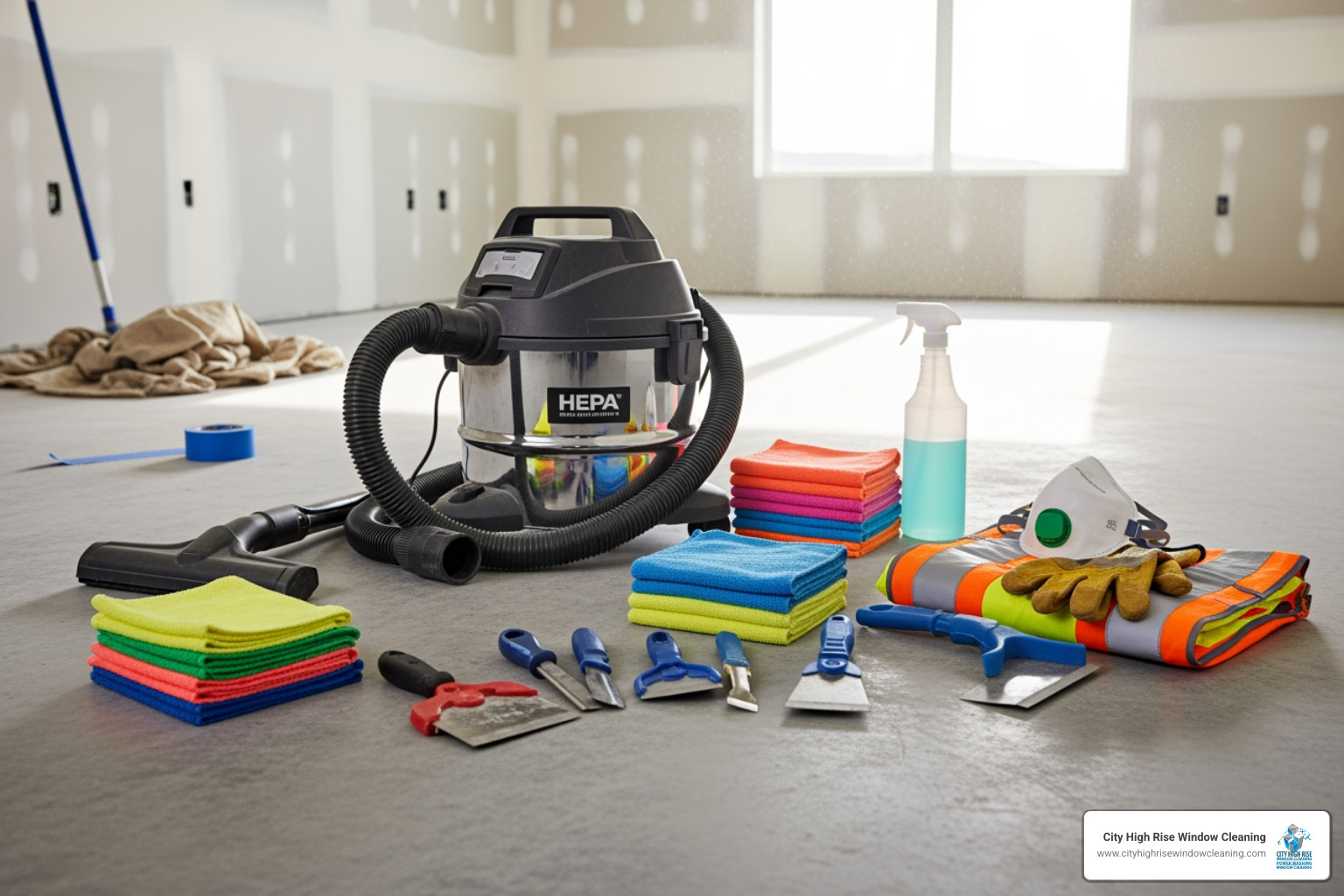
Before we even start, ensuring we have the right arsenal of tools is paramount. You wouldn’t build a house with just a hammer, and you can’t properly clean one with just a household vacuum. Here’s what my team always has on hand for a thorough deep cleaning post construction:
- HEPA-filter Vacuum: Absolutely crucial for capturing fine construction dust without recirculating it.
- Shop-vac (Wet/Dry): For larger debris, spills, and to handle any water from wet cleaning.
- Microfiber Cloths (Damp and Dry): These are fantastic for trapping dust and polishing surfaces without leaving lint.
- Putty Knife/Scraper: Essential for carefully removing paint splatters, caulk, or adhesive residue from hard surfaces.
- Buckets and Mops: For floor cleaning, often using a two-bucket system to keep clean and dirty water separate.
- Squeegee: A high-quality squeegee is vital for streak-free windows and glass.
- All-purpose Cleaner: A good, professional-grade cleaner for general surface wiping.
- Glass Cleaner: For windows, mirrors, and other glass surfaces.
- Degreaser: For kitchen areas or any greasy residue left behind.
- Personal Protective Equipment (PPE): N95 masks (to protect against fine dust), gloves (to protect hands from chemicals and debris), and safety glasses (to protect eyes).
Room-by-Room Checklist for Deep Cleaning Post Construction
This isn’t just about making things look clean; it’s about making them be clean and safe. Heres a general roadmap we follow:
- Ceilings and Walls: Dust all ceilings, light fixtures, and ceiling fans. Wipe down walls from top to bottom to remove dust, scuffs, and fingerprints.
- Kitchen Cleaning:
- Wipe down all countertops and backsplashes.
- Clean inside and outside of all cabinets and drawers.
- Thoroughly clean appliances (inside and out), including the range hood and filter.
- Sanitize sinks and faucets.
- Bathroom Sanitization:
- Clean and disinfect toilets, tubs/showers, sinks, and faucets.
- Clean mirrors and polish chrome fixtures.
- Wipe down all cabinets and countertops.
- Vacuum exhaust fans.
- Flooring:
- Vacuum all carpets, ideally with a HEPA-filtered vacuum, and consider professional carpet cleaning.
- Sweep, vacuum, and mop all hard floors (tile, wood, laminate, concrete).
- Buff or polish as needed.
- Windows and Glass:
- Clean all windows (interior and exterior), mirrors, and glass surfaces until they sparkle. This includes removing stickers, paint splatters, and adhesive residue.
- Don’t forget to clean window frames, sills, and tracks! My team often uses specialized scrapers for this delicate work.
- For taller buildings in New York City and Westchester, we often combine interior cleaning with our window restoration and facade restoration services so the exterior looks as new as the interior.
- Doors and Trim: Wipe down all doors, door frames, and trim to remove dust and smudges.
- Air Vents and HVAC System: Dust all air vents. It’s also crucial to clean or replace HVAC filters, and for optimal indoor air quality, consider professional HVAC duct cleaning, as construction dust often infiltrates these systems.
- Exterior Cleanup:
- Remove any remaining construction debris from the yard, walkways, and driveways.
- Sweep or pressure wash driveways, sidewalks, and entrances.
- For buildings in New York City, Long Island, and Westchester, we often use High-Rise Hot Water Power Washing for cleaning facades, decks, patios, and even fences and gates, ensuring the exterior is as pristine as the interior.
For a deeper dive into hiring the right team for this work, see our related blog guide on choosing a construction cleaning company.
Frequently Asked Questions about Post-Construction Cleaning
Who is responsible for post-construction cleanup?
Typically, the contractor’s responsibility ends at a “broom-swept” condition, meaning they remove large debris but are not responsible for the detailed deep clean. This responsibility usually falls to the property owner unless specified otherwise in the contract.
How do you get rid of fine construction dust everywhere?
The most effective method is a multi-step process: start with a thorough vacuuming of all surfaces (walls, ceilings, floors) using a HEPA-filter vacuum. Follow up by wiping every surface from top to bottom with damp microfiber cloths. Running air purifiers with HEPA filters during and after cleaning also helps capture airborne particles.
When is the best time to schedule post-construction cleaning?
The ideal time is after all construction work, including touch-ups and inspections, is 100% complete, but before any furniture is moved in. This allows cleaners to access every surface without obstruction for the most thorough result.
How long does deep cleaning post construction take for a NYC or NJ property?
For a typical apartment or small office in New York or New Jersey, a professional crew can often complete the clean in 12 days. Larger homes, high-rise units, or commercial spaces in Long Island or Westchester may take 23 days, depending on size and the amount of construction dust.
Is professional post-construction cleaning worth the cost?
Yes. In markets like New York City, Long Island, Westchester, and New Jersey, hiring specialists prevents damage to new finishes, protects indoor air quality, and gets the space truly move-in ready faster than DIY. This often saves money compared with fixing scratched glass, damaged floors, or lingering dust problems later.
From Construction Site to Spotless Space
Completing a construction or renovation project is a huge accomplishment. Youve invested time, money, and effort into creating a new space, and you deserve to enjoy it without the lingering remnants of construction. A thorough deep cleaning post construction isn’t just about aesthetics; it’s a vital step for the health, safety, and longevity of your property.
Ive seen how a meticulous cleanup transforms a dusty, hazardous construction site into a welcoming, pristine environment. From minimizing respiratory risks associated with silica dust to protecting newly installed finishes from scratches and stains, the benefits are undeniable. With over 30 years of experience, my team at City High Rise Window Cleaning brings unparalleled expertise, specialized equipment, and a commitment to safety to every project across New York, Long Island, Westchester, and New Jersey. We pride ourselves on our 100% customer satisfaction guarantee, ensuring that when we’re done, your space is not just clean, but truly spotless and ready for its new chapter.
We also offer complementary services that many post-construction clients add on, including exterior high rise painting services and Alucobond Restoration to restore and protect modern building facades.
Ready for a free quote? City High Rise Window Cleaning offers 24/7 live consultation. Call 917-749-8342 to speak to a live representative.


