

The Ultimate Guide to the Best Way to Power Wash a Deck
The Ultimate Guide to the Best Way to Power Wash a Deck
Pressure Washing vs. Power Washing: What is the Difference?
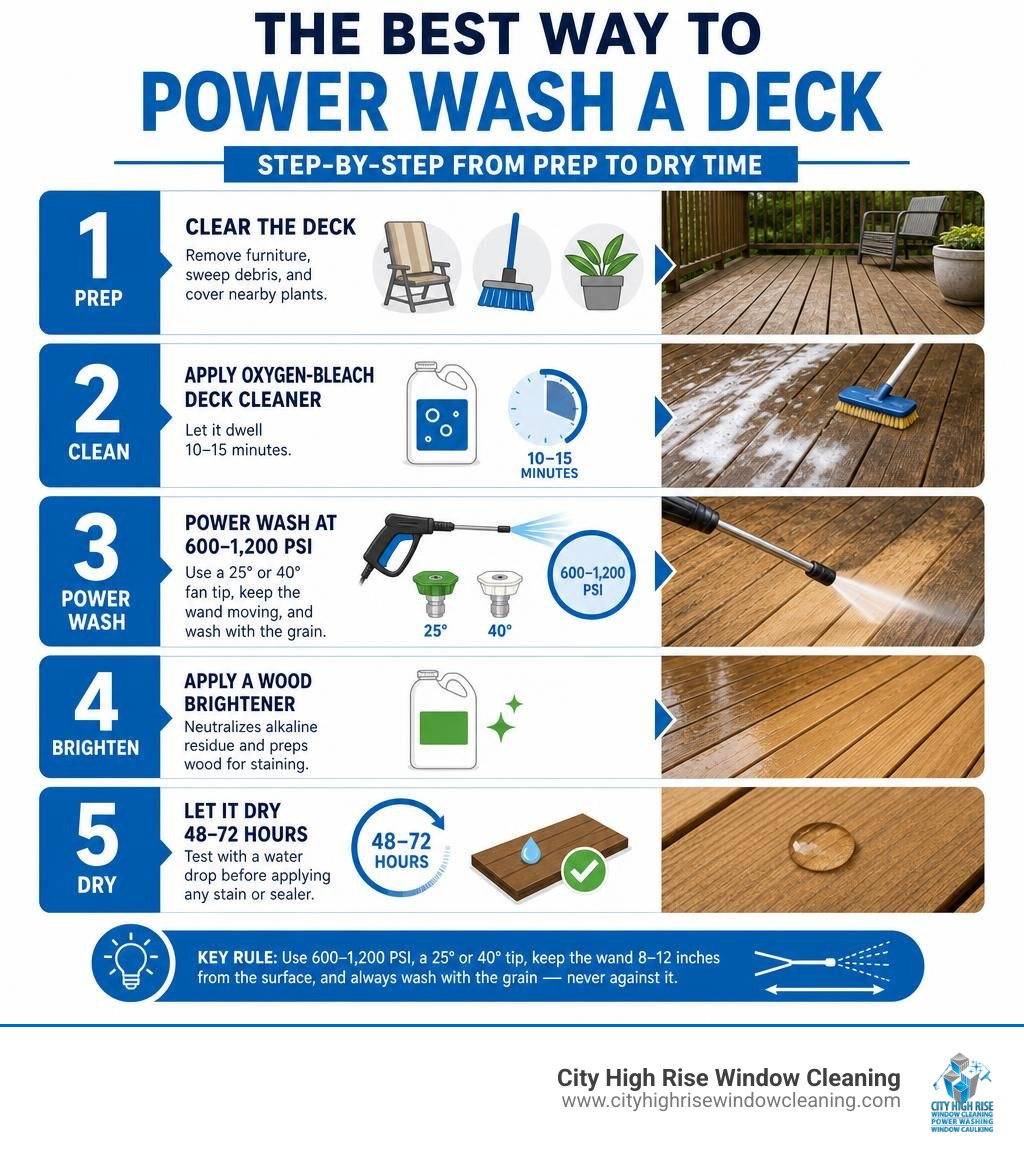
The best way to power wash a deck is to use 600–1,200 PSI with a 25- or 40-degree fan tip nozzle, hold the wand 8–12 inches from the surface, and sweep with the grain of the wood — never against it. Here’s the quick version:
- Clear the deck — remove furniture, sweep debris, cover nearby plants
- Apply an oxygen-bleach deck cleaner — let it dwell 10–15 minutes
- Power wash at 600–1,200 PSI — use a 25° or 40° fan tip, keep the nozzle moving
- Apply a wood brightener — neutralizes alkaline residue and preps wood for staining
- Let it dry 48–72 hours — test with a water drop before applying any stain or sealer
A weathered, gray deck isn’t just an eyesore — it’s a warning sign. Mold, mildew, and trapped moisture quietly eat away at wood fibers, and if you wait too long, cleaning alone won’t save it.
Power washing can reverse years of grime and discoloration in a single afternoon. But done wrong — wrong PSI, wrong nozzle, wrong technique — it can splinter boards, raise wood grain, and leave gouges that make staining nearly impossible.
That’s the catch most guides skip.
Whether you’re managing a property in New York City, Long Island, New Jersey, or Westchester, knowing how to clean a deck the right way protects your investment and keeps surfaces looking sharp season after season.
I’m Brett Hochman, CEO of City High Rise Window Cleaning, with over 48 years of hands-on exterior building maintenance experience — including power washing across the NYC metro area. The best way to power wash a deck comes down to matching your technique and pressure settings to your specific wood type, and I’ll walk you through exactly how to do that.
Handy best way to power wash a deck terms:
While most homeowners use these terms interchangeably, there is a fundamental difference between pressure washing and power washing. Understanding this distinction is crucial to selecting the right method for your deck.
- Pressure Washing: This method relies entirely on cold water propelled at high pressure to blast away dirt, mold, and surface contaminants. It is highly effective for standard deck cleaning, vinyl siding, and general outdoor maintenance.
- Power Washing: The defining element of power washing is heat. A power washer heats the water before pressurizing it. This thermal pressure is incredibly efficient at breaking down stubborn grease, heavy oils, tree sap, and deeply embedded grime.
For a standard wood deck, cold-water pressure washing paired with the right cleaning agents is usually more than enough. In fact, using excessively hot water on wood can occasionally soften the natural lignin holding the wood fibers together, making it easier to accidentally gouge. However, if your deck is heavily contaminated with grease from years of backyard barbecues, a professional, temperature-controlled hot water wash is highly effective. You can explore more info about power washing services to see how specialized equipment handles different properties.
The Best Way to Power Wash a Deck Safely
Wood is a natural, organic material. Unlike concrete or brick, it is relatively soft and highly susceptible to physical damage. If you approach a wood deck with a “more power is better” mindset, you will ruin it.
To clean wood safely, we must consider its density, which is measured on the Janka hardness scale. Softwoods like pressure-treated pine, cedar, and redwood have a low Janka rating (typically between 300 and 900). Hardwoods like Ipe, teak, or mahogany are incredibly dense, with Janka ratings often exceeding 1,500 to 3,000.
Because softwoods etch easily, the physical pressure must be dialed down. Your goal is wood preservation — removing the organic grime, mold, and gray oxidized wood cells without tearing into the healthy wood fibers underneath. When done correctly, the water pressure gently lifts away the debris, opening up the wood pores so that future stains or sealers can penetrate deeply. For a detailed breakdown of wood-specific limits, you can refer to the safety guidelines on How to Pressure Wash a Deck (Best PSI & Technique) | Decks.com.
Choosing the Right PSI and Nozzle for Wood Decks
Water pressure is measured in Pounds per Square Inch (PSI), and the concentration of that pressure is controlled by your nozzle tip.
Using a narrow nozzle tip (like a 0-degree red tip or a 15-degree yellow tip) is like using a physical knife on your wood. It focuses the water into a tight, aggressive stream that will instantly gouge your deck boards. Instead, you should always use wide-angle fan nozzles — specifically a 25-degree (green) tip or a 40-degree (white) tip. These tips spread the water stream into a wider, gentler fan pattern that safely sweeps away dirt.
For wood decks, keep your pressure settings within the safe zones outlined below:
| Material Type | Recommended PSI Range | Preferred Nozzle Tip | Safe Distance from Surface |
|---|---|---|---|
| Softwoods (Cedar, Redwood, Pine) | 500 – 1,000 PSI | 40-degree (White) | 10 – 12 inches |
| Hardwoods (Ipe, Teak, Mahogany) | 1,000 – 1,500 PSI | 25-degree (Green) | 8 – 10 inches |
| Composite Decking (Trex, TimberTech) | 800 – 1,000 PSI | 40-degree (White) | 12 inches (or brush only) |
| Metal Railings / Hardware | 1,500 – 2,000 PSI | 25-degree (Green) | 8 – 12 inches |
Why This is the Best Way to Power Wash a Deck Without Damage
The secret to a pristine, damage-free deck is maintaining a consistent, sweeping motion. You must always work in the direction of the wood grain.
If you spray across the grain, you will slice the wood fibers, leading to severe splintering and wood etching. Keep the wand moving at all times. If you pause the wand in one spot while the trigger is pulled, you will leave a permanent, ugly U-shaped gouge in the board.
Always start your sweeping pass with the wand already in motion, sweeping down toward the deck, moving along the length of the board, and then lifting the wand up and away at the end of the pass — much like the motion of a pendulum. This “flicking” technique at the beginning and end of each stroke prevents lap marks and uneven cleaning lines. For more expert tips on maintaining this physical control, check out the manual on DIY Pressure Cleaning: Tips for Wood Deck Maintenance (Home Care Hacks).
Step-by-Step Guide to Preparing and Cleaning Your Deck
Now that you understand the mechanics of pressure and wood sensitivity, let’s look at the actual step-by-step cleaning sequence. Proper preparation and chemical application do 80% of the heavy lifting, allowing you to use much lower water pressure to rinse the grime away.
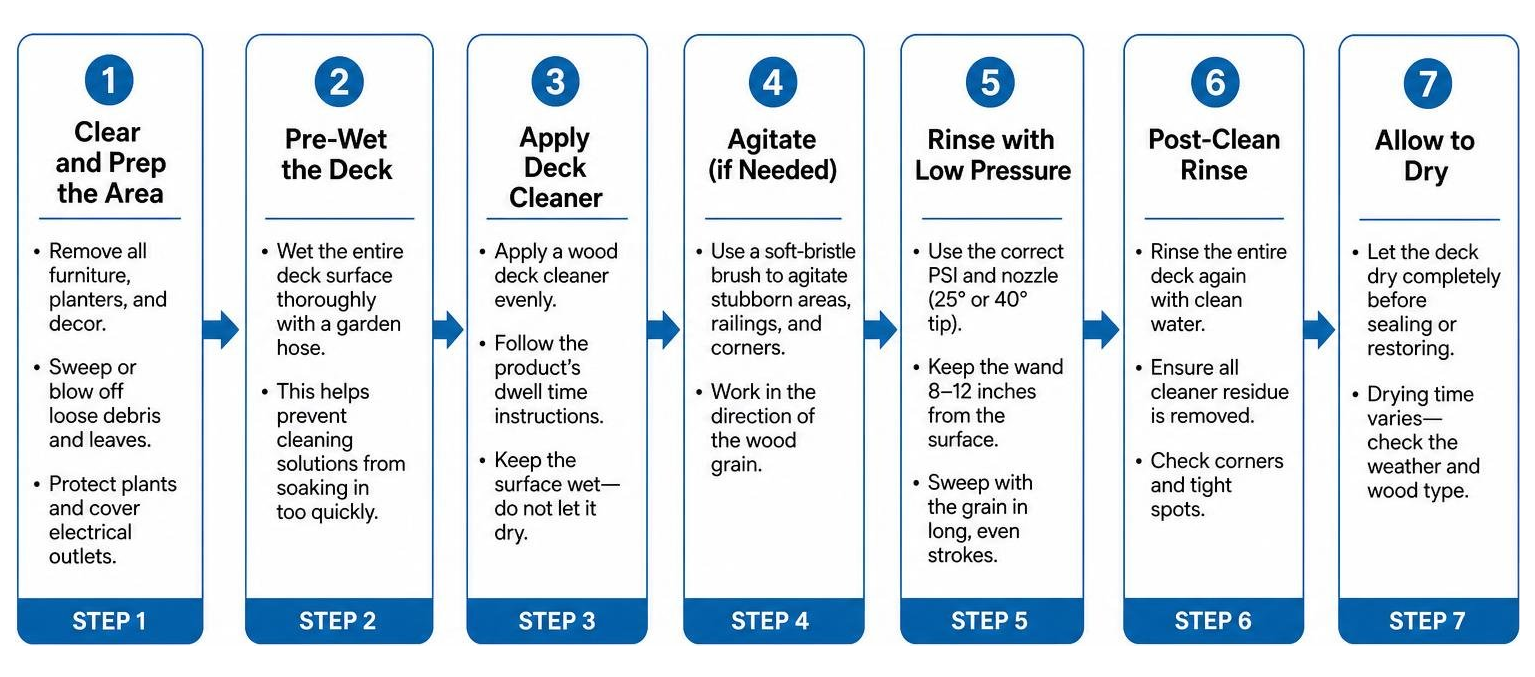
Step 1: Clear and Prep the Area
Before you even plug in your pressure washer, you must prepare the workspace:
- Remove all furniture: Clear off tables, chairs, grills, planters, and toys.
- Protect surrounding plants: Pressurized water and deck cleaners can damage delicate landscaping. Cover nearby shrubs, flower beds, and grass with lightweight plastic sheeting. Alternatively, heavily pre-wet the soil and plants with a garden hose; wet leaves and soil will not absorb chemical runoff as easily as dry ones.
- Sweep the deck: Use a stiff-bristle outdoor broom to sweep away loose leaves, pine needles, dirt, and twigs.
- Clear the gaps: Use a putty knife or a narrow tool to clean out any dirt, leaves, or debris trapped between the deck boards. This ensures proper drainage and prevents moisture traps that breed rot.
Step 2: Apply the Right Deck Cleaner and Detergent
Never rely on pure water pressure alone to clean a dirty deck. If you do, you will have to use dangerously high PSI to strip away the mold and mildew, which will inevitably damage the wood. Instead, let chemistry do the work.
When choosing a deck cleaner, look for oxygen-bleach-based cleaners (sodium percarbonate) rather than chlorine bleach (sodium hypochlorite).
- Oxygen bleach is highly effective at killing mold, mildew, and organic stains, yet it is environmentally safe and will not damage the wood’s cellular structure.
- Chlorine bleach is highly caustic. It strips the natural color from the wood, leaving it looking unnaturally white or gray, and it destroys lignin — the natural organic glue that binds wood fibers together. Over time, chlorine bleach causes wood to become soft, fuzzy, and structurally weak.
Apply your oxygen-bleach cleaner using a pump-up garden sprayer. Allow the cleaner to sit (dwell) on the wood for 10 to 15 minutes. It is absolutely critical that the deck remains wet during this dwell time. If the cleaner starts to dry out, lightly mist it with a garden hose. For more details on choosing the safest chemical mixtures, see How to Clean a Deck: Power Wash vs. Scrub, and What to Do Next (2026).
Step 3: The Best Way to Power Wash a Deck Board-by-Board
Once the cleaner has dissolved the surface grime, it is time to rinse.
Connect your pressure washer, select your 25- or 40-degree nozzle, and adjust your machine to the correct PSI. Start in an inconspicuous corner of the deck to test your pressure and distance.
Hold the tip of the wand 8 to 12 inches from the surface of the wood. Begin sweeping along the length of individual boards, working from the house outward toward the edge of the deck. Keep your passes overlapping by about 50% to ensure even cleaning without leaving “stripes” or streaks. If you need to stop mid-board, remember to sweep the nozzle up and away before releasing the trigger, as explained in the instructional steps on How to Properly Pressure Wash Deck | How-To Videos | Mi-T-M.
Step 4: Neutralize with Wood Brightener
This is the most overlooked step in deck restoration, yet it is the key to achieving professional-grade results.
Most heavy-duty deck cleaners are alkaline. This high pH darkens the wood and leaves alkaline residues behind. To fix this, you must apply a wood brightener (typically containing oxalic acid) immediately after rinsing, while the wood is still damp.
The wood brightener performs two vital functions:
- It neutralizes the pH of the wood, restoring its natural, light golden color.
- It opens up the wood cells, making the timber highly receptive to absorbing new stains and sealers.
Apply the brightener with a pump sprayer, let it dwell for 5 to 10 minutes (keeping it wet), and then thoroughly rinse the entire deck with a gentle spray from your garden hose.
Wood vs. Composite Decking: Material-Specific Cleaning Rules
If you own a composite deck (such as Trex or TimberTech), your cleaning strategy must change completely. While composite decks are incredibly durable and low-maintenance, they are actually much softer than natural hardwoods.
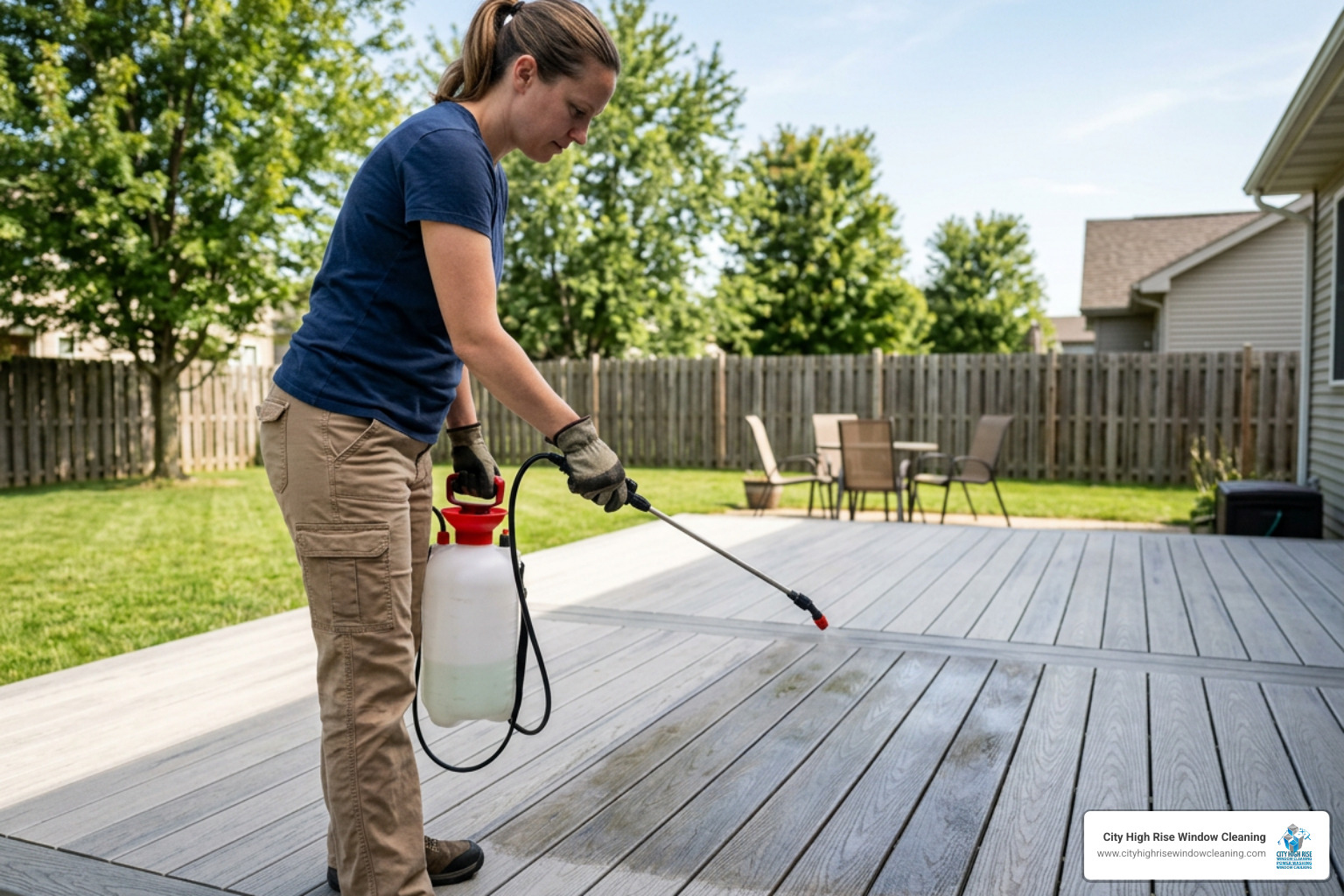
Most composite decking is made from a blend of recycled wood fibers and plastics. Because of this composition, high-pressure water can easily etch the plastic outer shell, leaving permanent scars and voiding the manufacturer’s warranty.
Furthermore, you must never use chemical strippers or wood brighteners on composite decking, as these harsh chemicals can permanently discolor and degrade the synthetic materials.
For composite decks, the safest cleaning method is to use a specialized composite deck cleaner, a soft-bristle scrub brush, and a standard garden hose. If you must use a pressure washer, keep the pressure strictly under 800 to 1,000 PSI, use a wide 40-degree fan nozzle, and maintain a distance of at least 12 inches from the surface. For a comprehensive look at composite material care, you can read A Full Guide to Power Washing the Deck | Family Handyman.
Post-Wash Care: Drying Times and Staining Preparation
Once your deck is clean and bright, you might be tempted to break out the stain and sealer immediately. Don’t do it.
Applying stain or sealer to damp wood is the number one cause of premature coating failure. When moisture is trapped inside the wood fibers, it cannot escape. As the sun heats the deck, that trapped water turns into vapor, pushing upward and causing your brand-new stain to blister, peel, and flake off within a few months.
Before applying any finish, you must let the deck dry for a minimum of 48 to 72 hours of clear, dry weather. If your deck is heavily shaded or if the humidity is high, it may need up to a week to dry completely.
To verify that the wood is dry enough to stain, perform the water drop test:
- Sprinkle a few drops of clean water onto several areas of the deck.
- If the water beads up and sits on the surface, the wood is still too wet or has an existing sealer blocking penetration.
- If the water quickly sinks into the wood fibers within 30 seconds, your deck is dry, open, and ready for finishing.
For a deeper dive into the relationship between cleaning, drying, and coating adhesion, check out our guide on pressure washing and painting.
Safety Precautions and Common Mistakes to Avoid
Pressure washers are incredibly powerful tools that demand respect. A pressurized stream of water can easily slice through skin, boots, and safety gear.
Always keep these safety guidelines in mind:
- Wear personal protective equipment (PPE): Always wear safety goggles to protect your eyes from flying wood splinters and chemical splashes. Wear sturdy, closed-toe shoes or rubber boots (never sandals), and wear long pants.
- Watch your footing: Wet wood covered in soap or deck cleaner is slicker than ice. Walk slowly and carefully.
- Avoid electrical hazards: Never point the spray wand at outdoor electrical outlets, lights, or exposed wiring.
- Avoid the “chainsaw” mistake: Never hold the wand too close to the wood or let it sit in one place. Treat the pressure stream with the same caution you would a physical blade.
If you are shopping for a pressure washer or looking to upgrade, you can read what the online community recommends in Amazon and Reddit Agree These Are the Best Power Washers to find a reliable, controllable unit.
Frequently Asked Questions About Deck Power Washing
How often should you power wash a deck, and when is the best time of year to do it?
You should wash your deck at least once a year to prevent mold, algae, and dirt from building up and degrading the wood. The best time of year to do this is in the late spring (April or May) or early fall (September or October). During these periods, temperatures are consistently above 50°F, which is ideal for chemical cleaners to work effectively, and the mild weather allows for natural, even drying without the harsh, direct summer sun baking the wood too quickly. For more seasonal maintenance planning, refer to Power Washing Your Home’s Exterior in 2026: Complete DIY Guide for Siding, Decks, and Driveways | Clean Envy.
Will pressure washing remove old deck stain or paint?
No, pressure washing is not an effective or safe way to remove old, peeling deck stain or solid paint. Trying to blast away old finishes using water pressure alone requires extreme force (often exceeding 2,500 to 3,000 PSI), which will permanently gouge and destroy the wood fibers underneath. To remove old finishes, you must apply a dedicated chemical wood stripper, let it soften the coating, and then wash it away at low pressure (under 1,000 PSI) or sand the deck down manually. To understand the costs involved in professional stripping and cleaning, read The Real Cost of Clean: Average Pressure Washing Rates Explained.
How long should a deck dry after power washing before applying stain or sealer?
You must wait a minimum of 48 to 72 hours of dry, rain-free weather before applying any stain or sealer. If the deck is located in a heavily shaded area or if you experience high humidity, extend this drying time to 4 to 7 days. Always perform the water drop test to confirm the wood’s moisture levels have dropped sufficiently before applying your finish.
Conclusion
At the end of the day, restoring a deck is a highly rewarding project, but it requires patience, the right chemical sequence, and precise physical control. One wrong move with a high-pressure wand can turn a beautiful outdoor living space into a splintered hazard.
If you have a large deck, delicate historic wood, or simply want the peace of mind that comes with professional execution, we are here to help. At City High Rise Window Cleaning, we bring over 30 years of exterior restoration experience to every project across New York City, Long Island, New Jersey, and Westchester.
We don’t just blast away dirt; we use specialized, temperature-controlled equipment and eco-friendly, wood-safe chemistry to safely restore your deck’s natural beauty. Backed by our 100% customer satisfaction guarantee and a strict commitment to safety, we ensure your property gets the premium care it deserves. Learn more about our specialized High-Rise Hot Water Power Washing Services to see how we handle tough exterior cleaning challenges.
Ready for a free quote? City High Rise Window Cleaning offers 24/7 live consultation. Call 917-749-8342 to speak to a live representative.


