

The Clean Slate: Your Guide to Post Construction Debris Removal
The Clean Slate: Your Guide to Post Construction Debris Removal
Post Construction Debris Removal [2026]: Clear Your Site Fast, Avoid Fines, Keep Costs Fair
Post construction debris removal is the process of clearing leftover materials, waste, and hazardous items from a building site after construction or renovation work is complete.
Here is a quick breakdown of your main options:
| Method | Best For | Typical Cost |
|---|---|---|
| Full-service junk removal | Single-phase projects, tight timelines | $100 – $800 |
| Dumpster rental | Ongoing projects with steady waste | $300 – $500 |
| DIY / landfill drop-off | Very small projects only | $20 – $50 per ton |
The bottom line: For most high-rise, commercial, or large residential projects in New York or New Jersey, hiring a full-service professional crew is the fastest, safest, and most compliant option.
Construction wraps up — and then the real mess becomes visible. Piles of drywall, concrete chunks, scrap metal, roofing materials, and packaging cover a site that needs to be handed over, inspected, or occupied. Construction and demolition waste accounts for roughly 600 million tons of debris generated in the U.S. every year — nearly twice the volume of all municipal solid waste combined. That scale creates serious pressure on project timelines, safety compliance, and budgets.
Getting debris off-site quickly and correctly is not just about appearances. It directly affects worker safety, regulatory compliance, and whether your project closes on schedule.
I’m Brett Hochman, CEO of City High Rise Window Cleaning, with over 48 years of experience in exterior building maintenance and post-construction cleaning across New York City, Long Island, Westchester, and New Jersey. In that time, I’ve seen how improper post construction debris removal delays occupancy, triggers code violations, and drives up final project costs — and how the right approach prevents all of it.
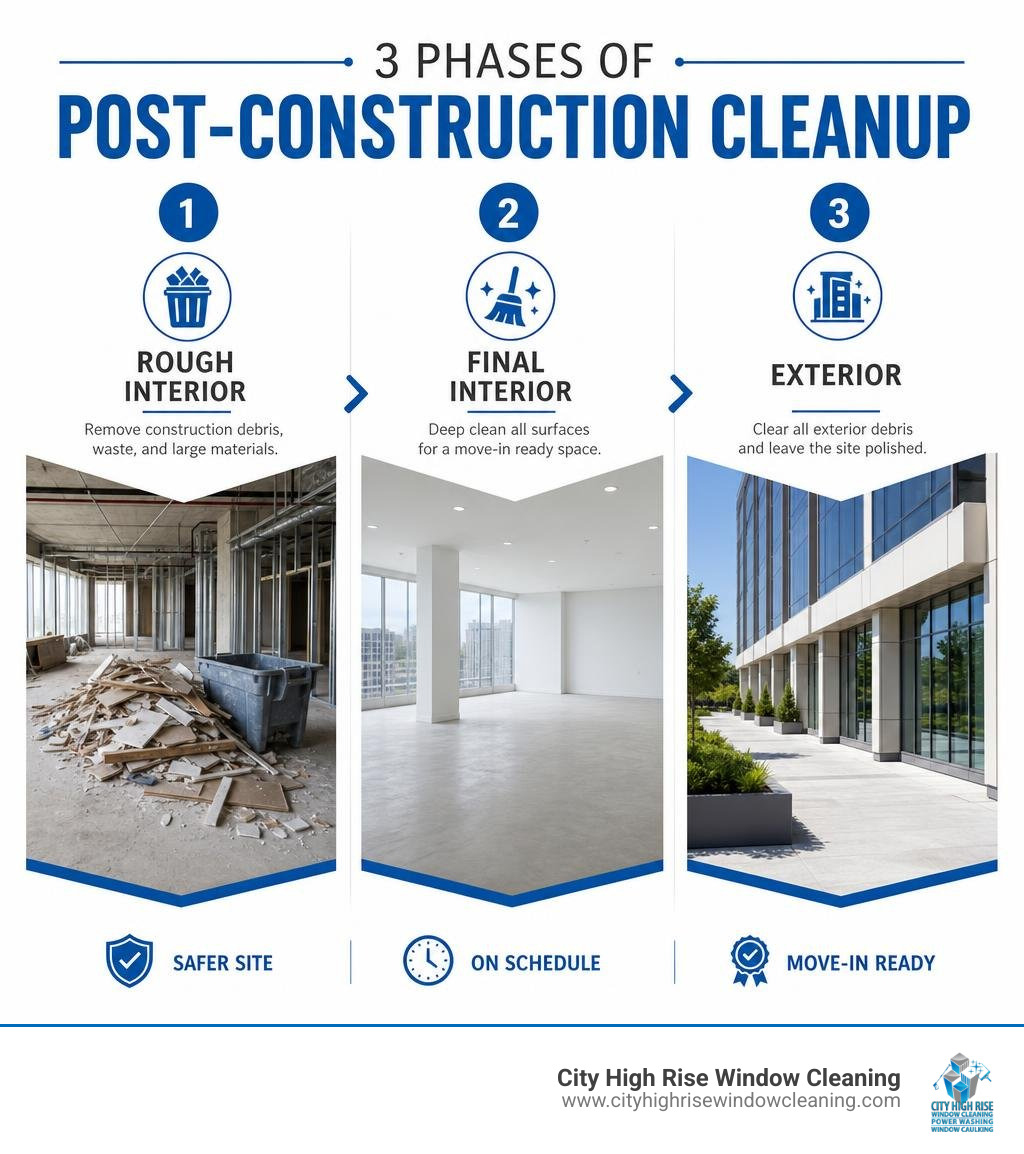
Similar topics to Post construction debris removal:
Why Professional Post Construction Debris Removal is Critical for Your Project
When a building project wraps up, the sheer volume of waste generated can be overwhelming. In my decades of managing major properties across New York and New Jersey, I have watched project managers try to cut corners on cleanup, only to face massive delays.
Leaving piles of mixed lumber, electrical wiring, and masonry around is a recipe for disaster. It presents immediate safety hazards, such as puncture wounds from stray nails, slip-and-trip accidents, and respiratory issues from fine concrete and drywall dust.
Furthermore, local municipalities do not take illegal dumping or poorly managed jobsites lightly. In NYC and New Jersey, failing to manage your construction waste properly can result in heavy fines and stop-work orders.
Outsourcing this massive task to a professional crew ensures that your project stays on schedule. Instead of forcing your skilled tradespeople to spend their expensive hours sweeping up concrete dust and dragging heavy drywall to a dumpster, you let a specialized team handle the heavy lifting. To understand how debris clearing fits into the broader picture of getting a building ready for occupancy, you can read our Post-Construction Cleaning Complete Guide.
Common Materials and Waste Generated During Construction
Every renovation or new build produces a unique cocktail of waste. Properly sorting these materials is the first step toward safe disposal and maximizing recycling rates. Here are the most common materials we encounter on jobsites:
- Drywall and Sheetrock: Gypsum board is highly bulky and must be kept dry if it is going to be recycled.
- Concrete, Brick, and Masonry: Extremely heavy materials that require specialized weight-rated hauling equipment.
- Wood Scraps: Cut lumber, framing pieces, and pallets. Untreated wood can often be salvaged or mulched, while treated wood requires special handling.
- Roofing Shingles: Asphalt shingles are heavy and take up massive space, but they can often be crushed and recycled into road base.
- Scrap Metal: Copper piping, steel studs, and brass fixtures are highly recyclable and often worth separating to offset project costs.
- Hazardous Waste: This includes old paint, chemical solvents, mercury-containing lightbulbs, and lead-based paint debris.
- Asbestos: A highly regulated carcinogen found in older insulation, flooring, and roofing. It must never be thrown in a standard trash bin or dumpster.
If you are running a project in New York City, it is vital to know the distinction between professional and DIY disposal rules. The Department of Sanitation outlines strict guidelines on what can be placed curbside versus what requires a certified private hauler on the Construction Debris – DSNY page.
Full-Service Post-Construction Cleanup vs. DIY Site Clearing
When deciding how to tackle the mess, you generally have two paths: hiring a full-service hauling and cleanup company or attempting a DIY site clearing using rented dumpsters and your own labor.
| Feature | Full-Service Professional Cleanup | DIY Site Clearing (Dumpster Rental) |
|---|---|---|
| Labor Requirement | None. The crew loads, sweeps, and hauls everything. | High. Your team must sort, lift, and load all debris. |
| Pricing Model | Volume-based (how much space is used in the truck). | Flat rate for the dumpster size plus potential overage fees. |
| Safety Risk | Low. Licensed and insured pros handle heavy/sharp items. | High. Risk of strain, cuts, or improper hazardous handling. |
| Convenience | Fast. Debris is loaded and gone in a single visit. | Slow. Dumpster sits on-site for days or weeks. |
| Compliance & Permits | Handled by the service provider. | You must secure street permits for public property placement. |
While a DIY approach with a rented dumpster might look cheaper on paper, it often costs more in the long run when you factor in your crew’s labor rates, potential street permit fees, and landfill overage charges. To get a clear picture of how these expenses break down, check out The Ultimate Post-Construction Cleaning Cost Guide for 2026.
Choosing the Right Post Construction Debris Removal Method
To choose the right method, evaluate the physical footprint of your jobsite. In congested urban areas like Manhattan, Brooklyn, or Jersey City, leaving a massive roll-off dumpster on the street for two weeks is either incredibly expensive or physically impossible due to parking regulations.
If you are dealing with heavy materials like concrete, asphalt, or dirt, a full-service hauling truck with weight-rated loading equipment is often safer and more practical. Professional site clearing crews also come equipped with the right safety protocols, ensuring that hazardous materials are identified and isolated before they contaminate a local landfill.
Understanding the Costs of Construction Waste Disposal
How much should you expect to budget for post construction debris removal in 2026? Nationally, the average cost ranges from $300 to $800, with many mid-sized residential renovation cleanups averaging around $450.

However, pricing is highly dependent on several key factors:
- Volume: Professional construction debris removal services typically charge around $50 per cubic yard. Full truckloads generally range between $500 and $800.
- Weight: Heavy materials like brick, concrete, and soil will trigger weight surcharges because landfills charge by the ton.
- Hazardous Materials: If your debris contains chemicals, solvents, or old batteries, expect to pay an extra hazardous waste disposal fee averaging $150 to $300.
- Location: Disposal fees (tipping fees) at transfer stations in the New York metropolitan area are among the highest in the country.
How to Estimate Post Construction Debris Removal Costs
To get an accurate estimate, try to visualize your waste in terms of standard pickup truck beds. A standard 10-yard dumpster holds about 4 pickup truck loads, while a large 40-yard dumpster holds about 16 pickup truck loads.
When you call a hauling company, they will ask for the approximate cubic yardage or the number of truckloads. To save money, wait until the end of a project phase to take advantage of bulk pricing, rather than scheduling multiple small, quarter-truck pickups.
Regulations, Recycling, and Environmental Guidelines
Disposing of construction waste is heavily regulated to protect our local environment. In New York and New Jersey, waste management plans are increasingly requiring high recycling diversion rates.
Fortunately, a huge portion of C&D waste is highly recyclable. Concrete is regularly crushed and reused as aggregate for new building foundations. Clean, untreated wood can be turned into mulch or wood fuel. Even asphalt shingles are processed and reused in paving projects.
However, hazardous materials require strict compliance. For example, asbestos removal must be handled by certified abatement specialists, and lead paint debris cannot be mixed with general trash. In NYC, any private hauler you hire must be certified by the Business Integrity Commission (BIC) to ensure they are dumping legally and ethically.
Working with a professional team that understands these complex regional laws is essential for keeping your site compliant with local county environmental regulations across New York City, Long Island, Westchester, and New Jersey.
Frequently Asked Questions About Construction Site Cleanup
How much does post construction debris removal cost in New York or New Jersey?
Most projects cost $300 to $800, but large commercial or high-rise jobs can cost more based on volume, weight, access, and disposal fees. Heavy debris like concrete, brick, and dirt usually increases the price.
Who is responsible for removing construction debris?
In most professional projects, the general contractor is responsible for cleanup and debris removal as outlined in the construction contract. For DIY renovations, the property owner is responsible for arranging legal disposal.
Can I throw away concrete and heavy materials in a standard dumpster?
Yes, but only within the dumpster’s weight limit. Concrete, brick, and soil can quickly overload a standard container, causing extra fees or pickup refusal. Heavy materials often require a smaller masonry-rated dumpster.
Do I need a permit for debris removal in NYC or New Jersey?
You usually do not need a permit if a full-service crew loads debris and removes it the same day. You may need a permit if a dumpster sits on a public street, sidewalk, or right-of-way.
What is the fastest way to clear construction debris before inspection?
The fastest option is a full-service debris removal crew. They load, sort, haul, and dispose of debris in one coordinated visit, helping New York, Long Island, Westchester, and New Jersey projects stay inspection-ready.
Conclusion
At the end of any construction project, clearing the debris is what officially transitions your site from a chaotic work zone into a beautiful, usable space. While it is tempting to treat waste removal as an afterthought, planning your disposal method, understanding local environmental regulations, and budgeting for the weight of your materials will save you time, money, and legal headaches.
At City High Rise Window Cleaning, we have spent more than 30 years helping property managers, developers, and homeowners across New York City, Long Island, Westchester, and New Jersey put the perfect finishing touches on their buildings. We back all of our specialized exterior cleaning, power washing, and post-construction cleaning with a 100% customer satisfaction guarantee and an uncompromising commitment to safety.
Ready for a free quote? City High Rise Window Cleaning offers 24/7 live consultation.


