

Seal of Approval: The Ultimate Guide to Outdoor Window Silicone Products
Stop Window Leaks in 48 Hours: Silicone for Outdoor Windows That Lasts 20–50 Years [NYC/NJ, Fair Pricing]
Silicone for outdoor windows is the best defense against air leaks, water damage, and high energy bills. A quality seal creates a waterproof, flexible, and long-lasting barrier that protects your building’s integrity and value.
When choosing a sealant, focus on these key properties:
- Flexibility: Accommodates joint movement of up to ±50% from temperature changes.
- UV Resistance: Prevents cracking and degradation from sunlight.
- Adhesion: Bonds securely to your window frame material (vinyl, metal, wood, etc.).
- Cure Time: Look for a rain-ready time of 30-60 minutes, with a full cure in 24 hours.
Failed window seals are a major liability, especially in the harsh climates of New York City and New Jersey. Water intrusion can lead to rot, mold, and structural damage. The right silicone flexes with your building, resists UV rays, and keeps the elements outside.
I’m Brett Hochman, CEO of City High Rise Window Cleaning. With over 48 years of experience maintaining NYC building exteriors, I know that selecting the right silicone for outdoor windows is critical. Our team specializes in professional high-rise window caulking to protect your investment. This guide will help you choose the right product for the job.
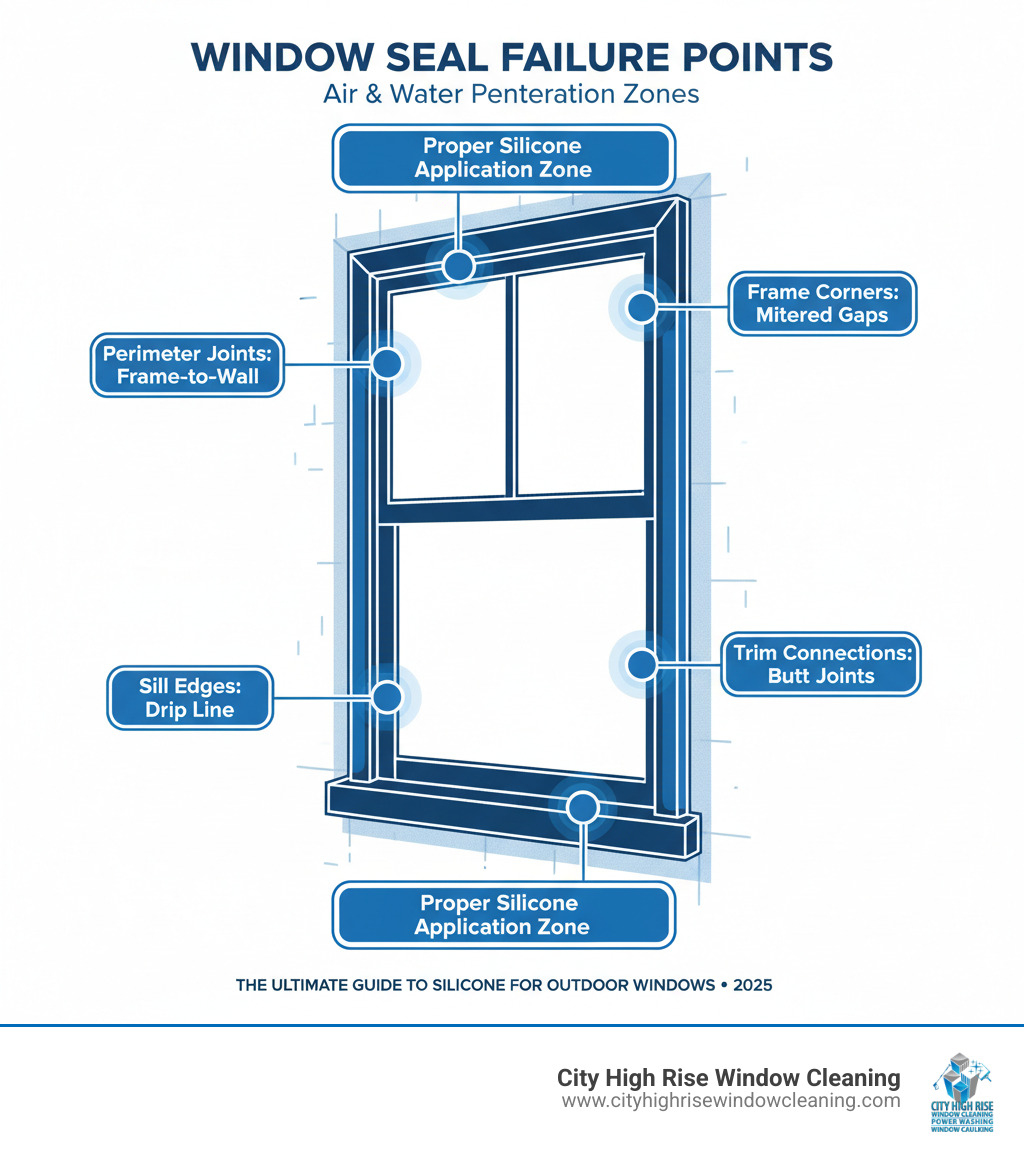
Why Silicone Reigns Supreme for Exterior Sealing
Choosing the wrong caulk leads to seals that crack and peel within a few seasons, a common sight on buildings across the New York metro area. That’s why silicone for outdoor windows is the industry’s gold standard—its material properties outperform other sealants for exterior use.
Flexibility is Key: Windows and frames expand and contract with temperature swings, from 10°F in a Manhattan winter to 95°F in summer. Most sealants crack under this stress, but silicone accommodates joint movement up to ±50% without tearing or losing its grip. It moves with your building, ensuring a long-term seal.
Best UV Resistance: Direct sunlight degrades inferior caulks, causing them to chalk and crumble. Silicone’s molecular structure naturally resists UV radiation, maintaining its integrity for decades even on sun-drenched properties on Long Island. This is essential for any exterior application.
A Truly Waterproof Barrier: Silicone creates a 100% waterproof seal, not just a water-resistant one. It bonds tenaciously to vinyl, metal, fiberglass, and wood, forming an impenetrable barrier that is non-negotiable during the driving rainstorms we see in Westchester.
Durability and Longevity: Silicone withstands the full spectrum of weather, from freezing temperatures to high humidity, without becoming brittle or soft. This resilience means a single professional application can protect your windows for 20 years or more. While the upfront cost may be slightly higher, its long lifespan makes it the most economical choice over time.
For these reasons, when we handle professional window caulking projects, silicone is our top recommendation. It’s the material I trust to protect my clients’ investments with a combination of flexibility, durability, and weather resistance that no other sealant can match.
Silicone vs. The Competition: A Head-to-Head Comparison
The caulk aisle can be overwhelming, but for exterior windows in climates like New York and New Jersey, the choice becomes clear when you compare materials. Here’s how silicone for outdoor windows stacks up against the competition.
| Feature | 100% Silicone Caulk | Polyurethane Caulk | Hybrid Sealants (e.g., SMP) | Acrylic Latex Caulk (Siliconized) |
|---|---|---|---|---|
| Flexibility | Excellent (up to +/- 50% joint movement) | Very Good (up to +/- 25-50% joint movement) | Excellent (up to +/- 50% joint movement) | Good (up to +/- 12.5-25% joint movement) |
| Durability | Excellent (20+ years) | Very Good (5-10 years, can be less in direct sun) | Excellent (10-20 years) | Good (5-10 years, less resistant to extreme weather) |
| UV Resistance | Excellent (retains properties, won’t degrade) | Poor to Fair (can chalk, harden, and degrade with UV) | Excellent (highly resistant to UV) | Fair (can crack and lose elasticity with UV) |
| Paintability | No (paint won’t adhere, will crack and peel) | Yes (can be painted once fully cured) | Yes (can be painted once fully cured) | Yes (paintable, often quickly) |
| Curing Time | Rain-ready in 30 mins, full cure 24 hrs | Initial set 2-24 hrs, full cure 7-10 days | Rain-ready 30 mins to a few hours, full cure 24-48 hrs | Rain-ready a few hours, full cure 24-72 hrs |
| Ideal Use Case | Exterior windows/doors (unpainted), bathrooms, glass | Concrete, masonry, high movement joints, painted surfaces | Exterior windows/doors (painted), varied substrates | Interior, low movement joints, painted surfaces, trim |
Polyurethane Caulk: This is a tough sealant used for concrete and masonry, but it has a critical weakness for windows: poor UV resistance. Direct sunlight causes it to harden, chalk, and crack. Its long cure time (7-10 days) also leaves it vulnerable to weather.
Hybrid Sealants: These products offer the best of both worlds, combining the flexibility and UV resistance of silicone with the paintability of polyurethane. If you must paint your window seals to match the trim, a hybrid is an excellent choice for performance and aesthetics.
Acrylic Latex Caulk (Siliconized): While cheap, easy to use, and paintable, this caulk is best suited for interior use. The added silicone provides some water resistance, but it lacks the flexibility and durability to withstand exterior temperature swings and weather, often failing within a few years.
For the most critical exterior window applications, 100% silicone for outdoor windows remains the superior choice. Its best flexibility, UV resistance, and permanent waterproof seal deliver the longest-lasting, most reliable protection. When performing professional window caulking, we rely on materials with proven real-world performance, and for most exterior windows, that means silicone.
Your Checklist for Choosing the Right Silicone for Outdoor Windows
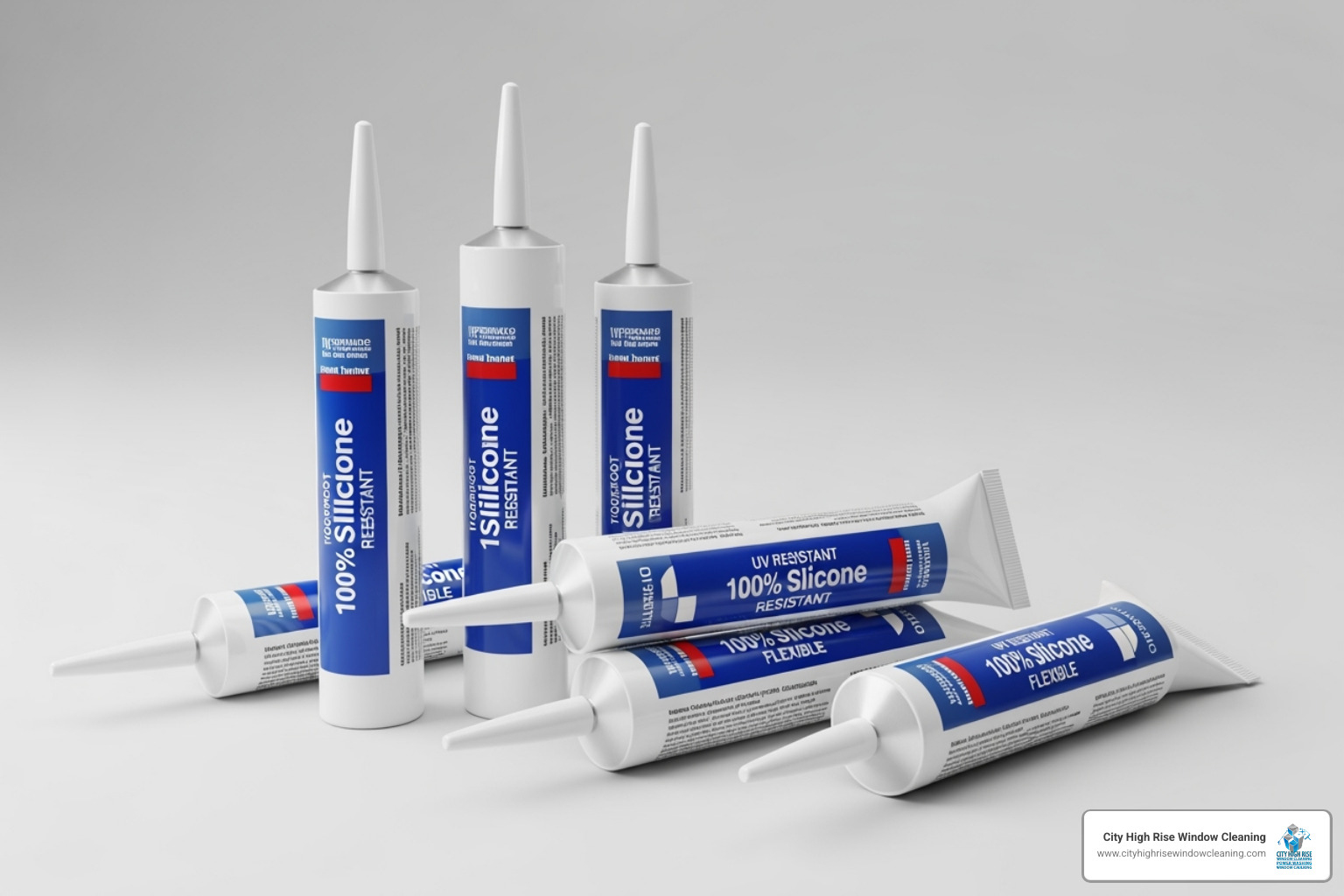
Not all silicones are created equal. To ensure your seal lasts for decades in a demanding climate like New York City’s, you must focus on specific performance characteristics. Here’s what to look for when selecting silicone for outdoor windows.
-
Adhesion Properties: The silicone must bond tenaciously to your specific window frame material—vinyl, aluminum, wood, or fiberglass. Always check the product label to confirm compatibility. High-performance silicones use adhesion promoters to create a chemical bond, not just surface tension.
-
Joint Movement Capability: Buildings expand and contract. Your sealant must stretch and compress without failing. Look for products rated for ±50% joint movement. Anything less is a gamble against the weather.
-
Weather Resistance: A quality sealant must be 100% waterproof and engineered to withstand rain, snow, sun, and humidity without hardening or cracking. Excellent UV resistance is crucial to prevent the material from becoming chalky and brittle.
-
Cure Time: Check for two figures: the rain-ready time (often 30 minutes), which is when a skin forms, and the full cure time (typically 24 hours), when it reaches maximum strength. Plan your work around a dry weather forecast to allow for a full cure.
For specialized commercial projects, you may need high-performance silicones for construction engineered for specific building envelope requirements.
100% Silicone vs. Siliconized Latex: What’s the Difference for Outdoor Use?
This is a common point of confusion. Though both have “silicone” in the name, their performance is vastly different.
-
100% Silicone Caulk: This is pure silicone polymer, the champion of exterior sealing. It offers the best flexibility, superior UV resistance, and a permanent waterproof seal that can last over 20 years. Its only trade-off is that it is not paintable. Use it where maximum protection is needed and the caulk line will not be painted.
-
Siliconized Latex Caulk: This is an acrylic latex caulk with a small amount of silicone added to improve water resistance and flexibility. Its main advantage is that it is paintable, making it popular for matching exterior trim. However, it is significantly less durable and flexible than 100% silicone and will break down much faster in exterior conditions.
The Rule: Choose 100% silicone for maximum durability where paint is not needed. Choose siliconized latex or a hybrid sealant only when you must paint the caulk line, and be prepared for a shorter lifespan.
Special Considerations for Different Window Frames
Silicone adheres well to most common window frame materials, but proper preparation is key.
-
Metal (Aluminum) & Vinyl Frames: These non-porous surfaces are a great match for 100% silicone. Its flexibility is ideal for handling the significant expansion and contraction of metal. Ensure the surface is completely clean and dry before application.
-
Wood Frames: Wood is porous, so surface prep is even more critical. The wood must be clean, dry, and free of loose paint or rot. For painted wood, you’ll need a paintable hybrid or siliconized latex. If the wood is compromised, consider our window restoration services first to ensure a sound substrate.
-
Fiberglass Frames: This stable, non-porous material pairs perfectly with 100% silicone, creating a durable, watertight seal that lasts for decades.
Always read the product label to confirm it is recommended for your specific substrate. That simple check can prevent a failed seal.
Ready for a free quote? City High Rise Window Cleaning offers 24/7 live consultation. Call 917-749-8342 to speak to a live representative.
A Step-by-Step Guide to a Flawless Silicone Application
Even the best silicone for outdoor windows will fail if applied incorrectly. Proper preparation and technique are just as important as product selection. Follow these steps for a professional-grade seal that lasts.
1. Surface Preparation: The Foundation of Success
This is the most critical step. Never apply new caulk over old caulk, as new silicone will not stick to cured silicone.
- Remove Old Caulk: Use a putty knife, utility knife, or caulk removal tool to scrape out all old material.
- Clean the Joint: Use a stiff brush to remove loose debris. Wipe the surfaces with a rag dampened with rubbing alcohol to remove dust, grease, and residue.
- Ensure Dryness: Silicone requires a completely dry surface to bond properly. Allow ample time for the joint to dry after cleaning, especially in humid weather.
- Use Backer Rod (for large gaps): For gaps wider than 1/4 inch, insert a foam backer rod to control bead depth and create a stronger, more flexible two-point seal.
2. Applying a Consistent Bead
Cut the tip of the caulk tube at a 45-degree angle, making the opening slightly smaller than the joint. Puncture the inner seal. Hold the caulk gun at a 45-degree angle and apply steady, even pressure while moving smoothly along the gap. The goal is a continuous bead that completely fills the joint and makes contact with both sides.
3. Tooling for a Perfect Seal
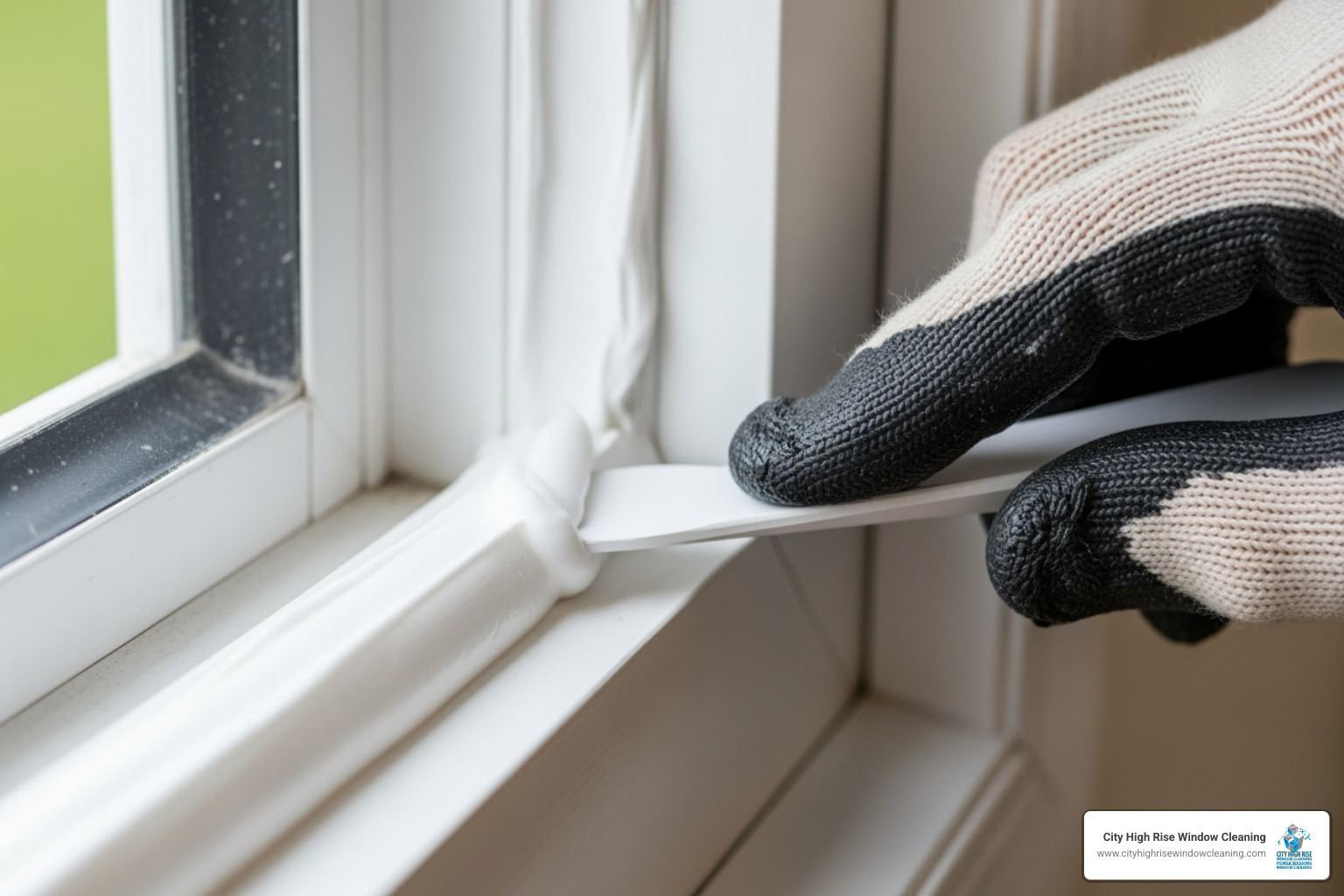
Immediately after applying the bead (within 2-5 minutes), tool the caulk. This step is not just for looks; it forces the silicone into the joint, eliminates air pockets, and ensures a watertight bond. Use a caulk finishing tool or a gloved finger, applying gentle, firm pressure in one smooth motion. Wipe excess caulk from your tool as you go.
4. The Curing Process
Many silicones are rain-ready in 30 minutes, but this is not the same as fully cured. The sealant needs a full 24 hours (or as specified on the label) to achieve maximum strength and waterproofing. Avoid stressing the joint during this time. Ensure adequate ventilation, as some silicones release a vinegar-like odor as they cure.
Common Mistakes to Avoid When Caulking Exterior Windows with Silicone
- Applying over old caulk: The number one cause of failure. New silicone won’t stick to old.
- Improper surface cleaning: A dirty, dusty, or wet surface prevents proper adhesion.
- Using the wrong type of caulk: Don’t use interior-grade caulk for exterior jobs or 100% silicone where paint is needed.
- Not tooling the bead: This compromises the seal’s strength and water resistance.
- Ignoring weep holes: Never caulk over the small drainage holes at the bottom of window frames. This traps water, leading to rot and damage.
- Applying in poor weather: Extreme heat, cold, or rain can prevent proper curing.
For complex jobs, especially on high-rise buildings, consider professional window caulking services. Doing it right the first time is always cheaper than fixing a failure.
Ready for a free quote? City High Rise Window Cleaning offers 24/7 live consultation. Call 917-749-8342 to speak to a live representative.
Maintenance and Lifespan: How Long Will Your Seal Last?
A key benefit of using quality silicone for outdoor windows is its incredible longevity. With proper application, a high-quality 100% silicone seal can last 20 to 50 years, offering decades of protection and making it a smart long-term investment.
Several factors can influence this lifespan:
- Sun Exposure: While highly UV resistant, decades of intense, direct sunlight can eventually affect any material. Silicone, however, maintains its flexibility and integrity far longer than alternatives.
- Weather Extremes: The freeze-thaw cycles of New York winters and the heat of New Jersey summers cause constant expansion and contraction. Silicone’s flexibility is designed for this, but the most extreme environments are demanding.
- Application Quality: A poor initial application on a dirty or wet surface will drastically shorten the seal’s life.
Annual Inspection Tips
I recommend a quick walk-around inspection of your window seals each year. Look for these signs of failure:
- Cracking, peeling, or shrinking
- Gaps where the caulk has pulled away from the frame or glass
- Mold or mildew growth, indicating moisture intrusion
- Brittleness (the caulk should feel flexible, not hard)
Catching these issues early can prevent costly water damage. For cleaning, use a soft brush with mild detergent and water. Avoid harsh chemicals. During our high-rise window cleaning services, we take care to inspect and clean around seals, helping to extend their life.
A quality silicone seal is a long-term investment in your building’s health. A brief annual check ensures you get the maximum return on that investment.
Frequently Asked Questions about Silicone for Outdoor Windows
Here are concise answers to the most common questions I’ve received over decades of working on building exteriors across New York and New Jersey.
Is 100% silicone the best for outdoor windows?
Yes—if you won’t paint it. It delivers top flexibility, UV resistance, and a waterproof seal that lasts 20+ years in NYC/NJ weather.
Can you put new silicone over old silicone?
No. It won’t bond. Remove all old caulk, clean and dry the joint, then apply new silicone.
How long does exterior silicone need to dry before it rains?
Most are rain-ready in about 30 minutes; full cure is roughly 24 hours. Check the label and plan for a dry window.
What should I use if I need to paint my window caulk?
Use a high-quality hybrid or siliconized acrylic latex. 100% silicone is not paintable. For larger projects, we can recommend products and handle sealing plus finish work via our window caulking and exterior high-rise painting services.
Suggested FAQ schema (JSON-LD):
{
  "@context": "https://schema.org",
  "@type": "FAQPage",
  "mainEntity": [
    {
      "@type": "Question",
      "name": "Is 100% silicone the best for outdoor windows?",
      "acceptedAnswer": {
        "@type": "Answer",
        "text": "Yes—if you won’t paint it. It offers top flexibility, UV resistance, and long-lasting waterproofing (20+ years)."
      }
    },
    {
      "@type": "Question",
      "name": "Can you put new silicone over old silicone?",
      "acceptedAnswer": {
        "@type": "Answer",
        "text": "No. Remove all old caulk, clean and dry the joint, then apply new silicone."
      }
    },
    {
      "@type": "Question",
      "name": "How long does exterior silicone need to dry before it rains?",
      "acceptedAnswer": {
        "@type": "Answer",
        "text": "Most silicones are rain-ready in about 30 minutes and fully cured in roughly 24 hours; check the label."
      }
    },
    {
      "@type": "Question",
      "name": "What should I use if I need to paint my window caulk?",
      "acceptedAnswer": {
        "@type": "Answer",
        "text": "Use a paintable hybrid or siliconized acrylic latex. 100% silicone is not paintable."
      }
    }
  ]
}
Conclusion: Secure Your Home with the Right Seal
Choosing the right silicone for outdoor windows is a critical investment in your property’s health and longevity. As we’ve covered, silicone’s superior flexibility, UV resistance, and waterproof properties make it the clear winner for protecting your building against the elements. A proper seal prevents costly water damage, reduces energy loss, and preserves your property’s value.
The key takeaways are simple: use 100% silicone for unpainted areas, choose a paintable hybrid for cosmetic needs, and never underestimate the importance of meticulous surface preparation and application.
In the demanding climates of New York City, Long Island, and New Jersey, a mediocre seal is a liability. For residential projects, this guide provides the knowledge to achieve a lasting result. For high-rise buildings, however, the stakes are much higher. The risks associated with working at height and the precision required for a perfect seal demand professional expertise. A single failure can lead to widespread water infiltration and catastrophic damage.
At City High Rise Window Cleaning, we have over 30 years of experience protecting NYC’s most iconic buildings. Our window caulking services are performed by trained experts who understand the unique challenges of the urban environment. We protect your investment with a 100% satisfaction guarantee, ensuring your building’s first line of defense is its strongest.
Want deeper tips? Read our related guide: Exterior Window Caulking: 7 Costly Mistakes to Avoid.
Ready for a free quote? City High Rise Window Cleaning offers 24/7 live consultation. Call 917-749-8342 to speak to a live representative.


