

High-Rise Heroes: Keeping Your Commercial Property Pristine
High-rise building maintenance: 4 Essential Steps
NYC High-Rise Maintenance [2025]: Cut Costs & Boost Property Value
High-rise building maintenance is the total upkeep of all systems and structures, inside and out, that keep tall buildings safe, functional, and valuable. It covers everything from HVAC servicing and elevator inspections to facade cleaning and waterproofing, with the goal of preventing failures, ensuring compliance, and protecting your investment.
Core components of high-rise building maintenance include:
- Safety Systems – Fire alarms, sprinklers, emergency exits, and structural inspections
- Building Envelope – Facade cleaning, window caulking, waterproofing, and roof maintenance
- Mechanical Systems – HVAC, plumbing, electrical, elevators, and escalators
- Compliance & Inspections – NYC Local Law 11 (FISP), DOB requirements, and OSHA standards
- Preventive vs. Reactive – Scheduled servicing to avoid costly emergency repairs
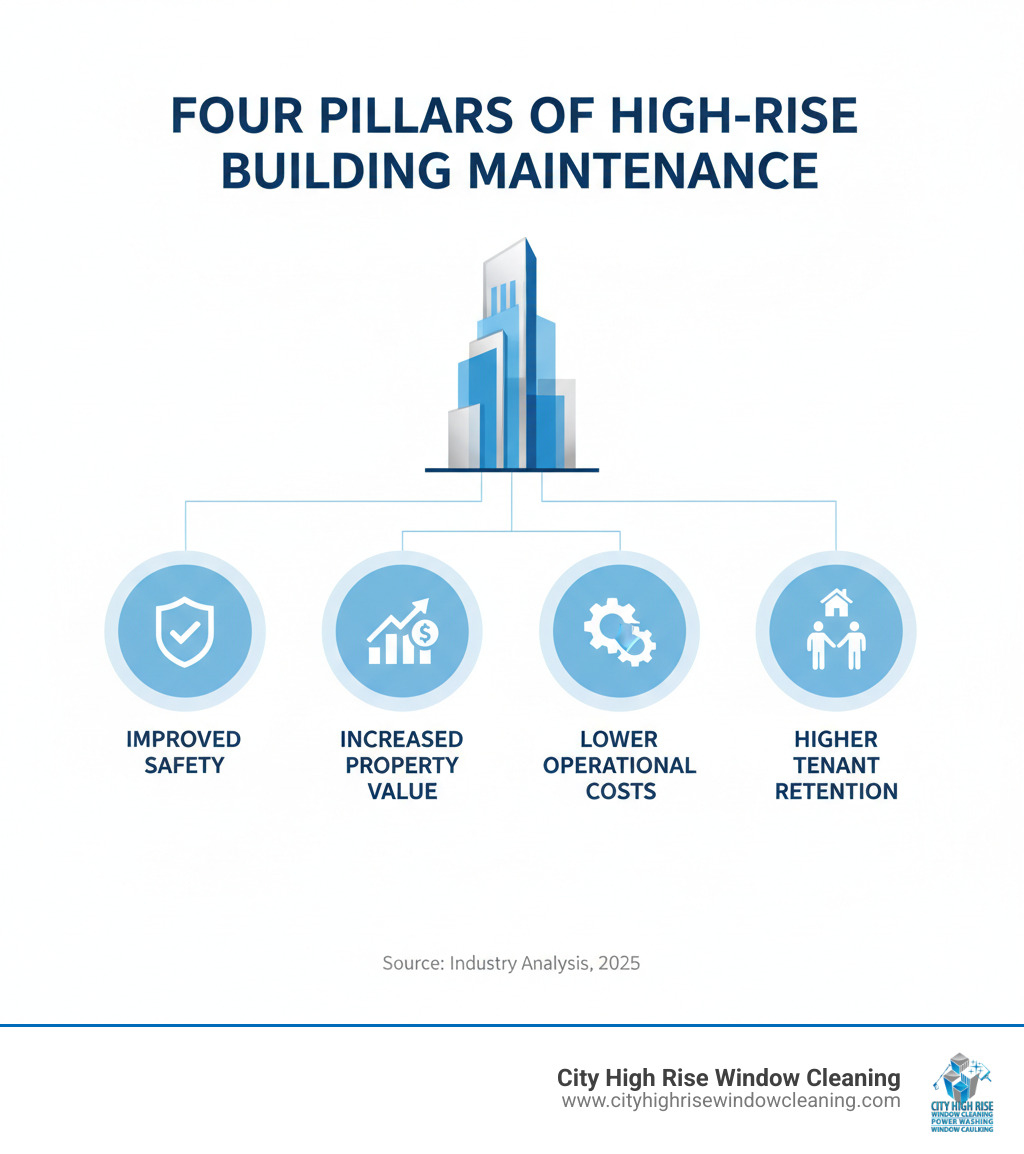
For property owners in NYC, Long Island, and New Jersey, high-rise maintenance is a strategic necessity. Buildings face constant stress from pollution, weather, and wind, while interior systems serve thousands. A single failure can cause tenant complaints, violations, and expensive downtime. Research shows preventive maintenance saves you from costly repairs and disruptions. Proactive care leads to higher tenant retention, lower operational costs, and stronger long-term value. Reactive approaches—fixing things only after they break—result in poor service, user dissatisfaction, and endless backlogs.
I’m Brett Hochman, CEO of City High Rise Window Cleaning, and I’ve been managing exterior building maintenance across the Tri-State area since 1977. Over nearly five decades, I’ve seen how consistent high-rise building maintenance protects both property value and occupant safety, and I’ve built a team that specializes in keeping New York’s tallest buildings pristine and compliant.
The Critical Role of Safety and Compliance
For high-rise owners in New York City, safety is a profound responsibility. Regular maintenance is essential to protect everyone in your building. This goes beyond basic fire safety to include addressing hazards like faulty wiring, malfunctioning equipment, or blocked exits. Inspections and repairs aren’t just good practice; they’re mandated by local regulations.
For businesses, a safe workspace means keeping internal spaces free from hazards. This includes up-to-date fire extinguishers, fire drills, and clear exits. As the USFA emphasizes, protecting people in high-rises is a multifaceted effort. In a high-rise, fire safety is a critical concern. Adhering to NYC building codes, like Local Law 11 (FISP) for facades and Local Law 126 for parking structures, isn’t just about avoiding fines; it’s about safeguarding lives.
Protecting Your Asset: Property Value and Sustainability
A well-maintained high-rise is a valuable asset. A building’s physical condition directly impacts its market value. Neglecting maintenance leads to deterioration and lower property value, while proactive care attracts high-value tenants and better rates.
Smart high-rise building maintenance also boosts sustainability. For example, preventive HVAC maintenance can reduce energy consumption by 41-60% and increase airflow by up to 46%. This is good for the planet and your bottom line. Energy-efficient practices reduce operating costs, increase market value, and can even lead to more favorable insurance rates. It’s a win-win for asset longevity and a healthier environment.
Enhancing the Occupant Experience
Imagine a building with constant AC breakdowns, flickering lights, or broken elevators. It’s a recipe for unhappy occupants and high turnover. My goal is to create comfortable, safe, and productive environments. Employee productivity is directly linked to well-maintained HVAC, lighting, and ventilation systems. When these systems run efficiently, employees are more focused.
Regular maintenance of air vents and thermostats prevents uncomfortable conditions. For residents, reliable amenities and a clean environment lead to higher satisfaction and retention. A building that runs smoothly and looks great leads to a happier community and a healthier investment.
The Unique Challenges of Maintaining Buildings in the Sky

Maintaining a high-rise in New York City, Long Island, Westchester, or New Jersey is far more complex than a smaller structure. These buildings present unique challenges: vertical infrastructure, extreme heights, weather exposure, and tenant coordination. Combined with Manhattan’s logistical problems, high-rise building maintenance is a specialized field.
Façade Access and Exterior Upkeep
A high-rise exterior is its protective shield. Keeping it pristine and sound is a constant challenge against NYC’s wind, rain, sun, and pollution. My team at City High Rise Window Cleaning has specialized techniques to tackle this.
Accessing these soaring facades for cleaning, inspections, or repairs is often the biggest hurdle. We use sophisticated methods, including Building Maintenance Units (BMUs), scaffolding systems, and rope access techniques. Safety is our top priority. For example, NYC’s strict regulations for BMU wire rope systems mandate daily visual checks, monthly expert inspections, and annual certifications. Ropes must be replaced every 18 months or sooner if worn.
This constant exposure leads to window and façade material degradation. Regular care isn’t just about looks; it’s about preserving your building’s integrity. That’s why services like professional Commercial High Rise Window Cleaning and meticulous Window Caulking are so important. They protect your building’s envelope from the elements. We also offer High Rise Hot Water Power Washing to restore its sparkle. For a deeper dive, the CTBUH’s guide on Façade Access & Maintenance for High-Rise Buildings details these complexities.
Managing Complex Internal Systems
While my team handles the exterior, a high-rise’s internal systems are equally complex. These include vast, centralized HVAC networks for thousands of occupants, high-pressure plumbing, and vertical electrical risers powering the entire building.
Think about it: the elevator and escalator mechanics are the arteries of your building. Any downtime causes massive disruption. Integrated security and fire alarm networks require constant monitoring and testing to ensure safety. Even waste management chutes need regular maintenance to prevent odors and pests. These systems are all interconnected. A minor issue in one can ripple through the building, impacting comfort, safety, and efficiency. This makes a comprehensive, integrated approach to high-rise building maintenance essential for smooth operation.
A Deep Dive into High-Rise Building Maintenance Systems
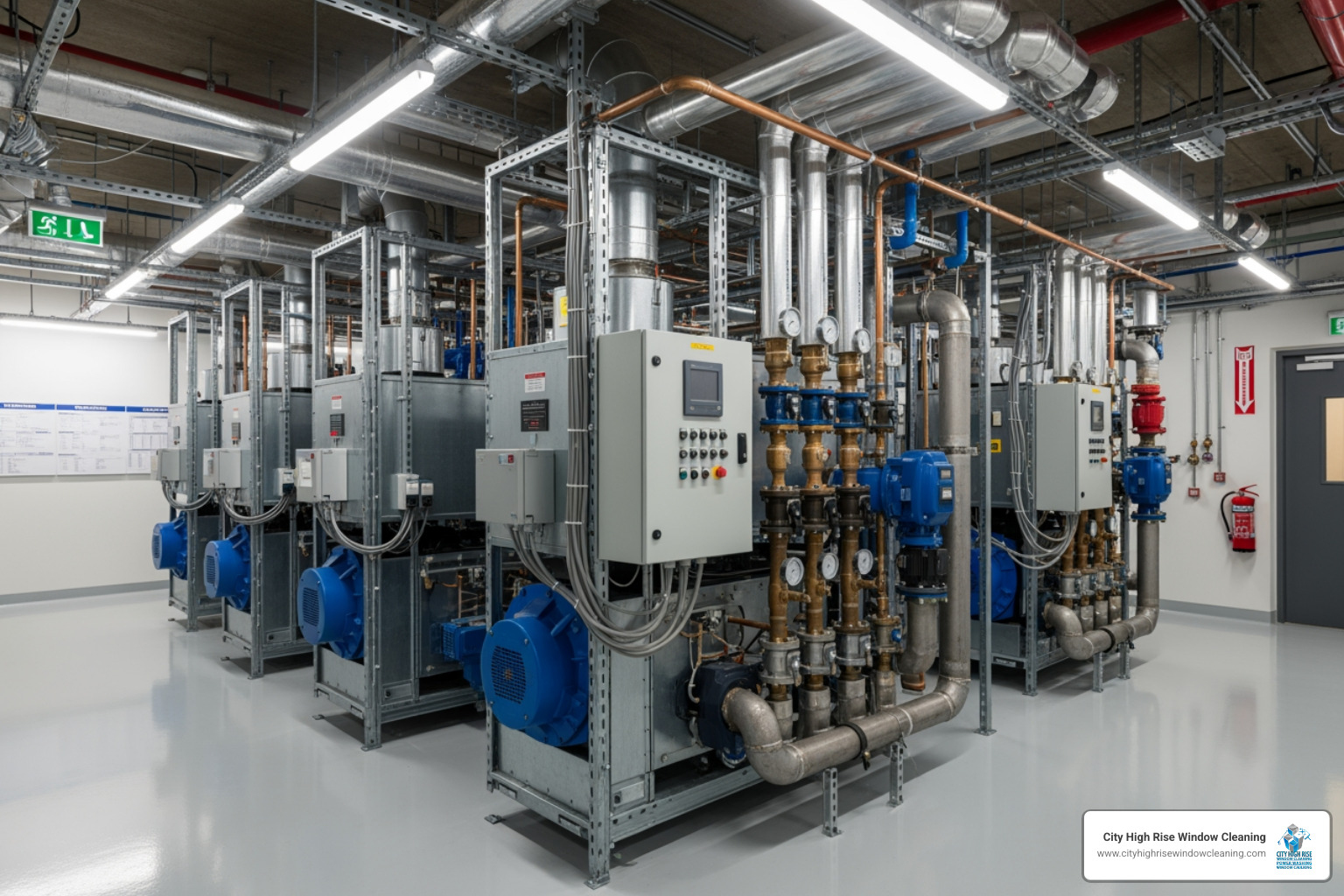
Effective high-rise building maintenance means preventing problems before they start. It covers every part of your property, ensuring all systems work perfectly, inside and out.
Preventive vs. Reactive Maintenance: A Cost-Benefit Analysis
Property managers often ask whether to wait for something to break or prevent it. The answer is always prevention.
Preventive maintenance is a proactive approach involving scheduled check-ups and routine inspections to fix small issues before they become expensive problems. This extends asset life and reduces unexpected failures.
Reactive maintenance, the “fix it when it breaks” approach, is sometimes unavoidable but often leads to unhappy tenants, higher costs, and more disruption. Emergency repairs are always more expensive than planned maintenance.
Here’s a quick look at why being proactive pays off:
| Metric | Preventive Maintenance | Reactive Maintenance |
|---|---|---|
| Average Cost | Lower (scheduled, planned) | Higher (emergency, unplanned) |
| Asset Lifespan | Extended (regular care, early problem detection) | Shortened (stress from failures, delayed repairs) |
| Tenant Disruption | Minimal (scheduled downtime, planned communications) | High (unexpected outages, prolonged repairs) |
| Safety | Improved (systems regularly checked, hazards prevented) | Compromised (unexpected failures can create hazards) |
A proactive approach saves money and keeps occupants in your New York, Long Island, or New Jersey high-rise safe and happy. It catches small issues before they become large, expensive problems, reducing stress and disruption.
Key Interior Systems Requiring Regular High-Rise Building Maintenance
The systems inside your high-rise are essential for comfort, safety, and productivity.
HVAC and Ventilation. Temperature and air quality affect tenant comfort. Regular preventative HVAC maintenance is crucial, as it can cut fan energy use by 41-60% and boost airflow by up to 46%—a big win for comfort and your energy bill.
Electrical and Lighting Systems. Properly maintained electrical systems are vital. Faulty wiring can cause outages or fire risks. Regular checks ensure workspaces are well-lit, with a full contractor inspection recommended every three to five years.
Plumbing and Water Supply. Regular maintenance of a high-rise’s vast plumbing network prevents water damage, reduces waste, and maintains water quality. Key tasks include checking for leaks and testing backflow devices.
Elevators and Escalators. These are the lifeblood of a high-rise. Preventive maintenance prevents accidents, ensures reliability, and extends their lifespan. Annual inspections and regular operational checks are essential.
Fire Safety Systems. In a high-rise, fire safety is a top priority. Beyond building-managed systems, internal measures like up-to-date fire extinguishers and clear exits are crucial. All systems require regular inspections to ensure compliance and functionality.
Essential Exterior High-Rise Building Maintenance
My team at City High Rise Window Cleaning excels at exterior maintenance. Your building’s exterior is its first impression, its protective shield, and a key part of its value.
Façade Inspections. Regular façade inspections, often using drones, help spot cracks, wear, and hazards early. This is crucial for meeting NYC Local Law 11 (FISP) requirements.
Cleaning and Power Washing. Pollution and grime make high-rises look tired. My team’s High Rise Hot Water Power Washing services blast away stains, restoring your building’s sparkle across New York, Long Island, New Jersey, and Westchester.
Roofing and Waterproofing. Well-maintained roofing and waterproofing prevent water damage and protect your interior. We recommend inspections twice a year and after severe weather.
Structural Component Checks. Regular assessments of the building’s main structural parts help ensure its long-term strength, especially after severe storms.
Window Caulking. Degraded window caulk leads to leaks and energy waste. Our expert Window Caulking services create a tight, energy-efficient seal, keeping your building comfortable and lowering energy bills.
Alucobond and Metal Panel Care. These modern façade materials require specific cleaning and restoration techniques to prevent degradation and maintain their appearance.
Building Your High-Rise Maintenance Master Plan
A comprehensive high-rise building maintenance plan is a strategic roadmap to ensure your property’s longevity, safety, and value. It requires careful planning, a dedicated team, and smart budgeting.
Assembling Your Maintenance Team and Defining Roles
Effective high-rise maintenance is a team effort. Building management handles large systems, while businesses manage their own spaces. A robust team includes:
- Building Manager/Property Manager: The orchestrator, responsible for planning, budgeting, and vendor management.
- Chief Engineer: Oversees technical systems, manages staff, and troubleshoots complex issues.
- Maintenance Technicians: Perform routine checks, repairs, and preventive maintenance tasks.
- Housekeeping Staff: Maintain cleanliness and hygiene in common areas.
- Specialized Third-Party Vendors: For specialized tasks like exterior facade work or elevator servicing, experienced third-party vendors are crucial. My team, for example, provides expert exterior maintenance that in-house teams often can’t match.
Defining clear responsibilities for common areas versus tenant spaces is paramount to avoid confusion.
4 Steps to Creating a Comprehensive Maintenance Plan
Follow these four steps to create a robust maintenance plan:
- Conduct a Full Asset Inventory and Condition Assessment: Document all building systems, their age, and their current condition. This is crucial for knowing what you have and what state it’s in.
- Develop Detailed Inspection Checklists for Each System: Create checklists for every system based on manufacturer recommendations and regulatory requirements, such as monthly filter changes for HVAC units.
- Create a Tiered Maintenance Schedule (Daily, Weekly, Monthly, Annually): Organize tasks by frequency. Daily tasks might include cleaning, while annual tasks would involve major inspections and certifications.
- Establish a Budget, Including Operational Costs and a Sinking Fund: A plan needs funding. Your budget must cover routine operational costs and a separate reserve fund for major capital repairs like roof replacement or facade restoration. Tracking repair costs and asset lifespans helps management anticipate and allocate funds.
The Future of Maintenance: Technology and Trends
The world of high-rise building maintenance is evolving with technology. My team is always exploring new ways to improve our services.
- Drones for Façade Inspections: Drones with high-resolution cameras quickly and safely identify cracks, spalling, or sealant failures in hard-to-reach areas, improving safety and cutting costs.
- IoT Sensors for Predictive Maintenance: IoT sensors monitor equipment like elevator motors or HVAC units, sending predictive alerts before a failure occurs. This allows teams to address issues proactively.
- AI-Powered Analytics: AI analyzes maintenance data to predict failures and optimize schedules, leading to significant cost savings and efficiency.
- Automated Building Management Systems (BMS): These systems centralize control and monitoring of building systems (HVAC, lighting, security), making maintenance more streamlined.
- Smart Technology for Energy and Water Conservation: Smart lighting and advanced water management systems that detect leaks help make high-rise buildings more sustainable and cost-efficient.
These innovations are becoming integral to effective high-rise building maintenance in leading properties across New York and New Jersey.
Frequently Asked Questions about High-Rise Maintenance
Here are answers to common questions about high-rise maintenance in New York City, Long Island, Westchester, and New Jersey.
How is maintenance cost calculated in high-rise buildings?
Maintenance costs are typically included in Common Area Maintenance (CAM) fees. These fees are calculated based on a tenant’s pro-rata share of the building’s total square footage. CAM fees cover the upkeep of all shared spaces and systems, including security, janitorial services, landscaping, HVAC, elevators, and exterior maintenance, ensuring the entire property operates efficiently.
What is the difference between preventive and reactive maintenance?
Preventive maintenance is proactive. It involves scheduled tasks like inspections and cleaning to prevent failures, extend asset life, and reduce unexpected breakdowns. Reactive maintenance is the “break-fix” approach, addressing problems only after they occur. This method is often more costly, disruptive, and can lead to tenant dissatisfaction and safety issues.
How often should a high-rise facade be cleaned in NYC?
In dense urban areas like NYC, we recommend professional facade and window cleaning at least once or twice a year. High-rises are constantly exposed to pollution, wind, and grime. Regular cleaning protects exterior materials from degradation, preserves property value, and maintains curb appeal. Services like our High-Rise Hot Water Power Washing and Commercial High Rise Window Cleaning are designed to tackle these exact challenges.
Your Partner in Pristine High-Rise Exteriors
Effective high-rise building maintenance is an essential investment in your property’s safety, value, and longevity. For property managers in New York, Long Island, Westchester, and New Jersey, a proactive plan lowers long-term costs, increases tenant satisfaction, and ensures your building remains a premier asset.
While your dedicated in-house teams are perfect for managing the complex interior systems, the exterior of your skyscraper is a whole different challenge. It needs specialized care, a touch that only proven experts can provide. That’s where we come in.
At City High Rise Window Cleaning, we’re dedicated to keeping your building’s facade pristine and protected. We understand the unique challenges of battling the elements high above the city streets. Whether you need to bring back your building’s sparkle with our High-Rise Hot Water Power Washing services, or you’re looking for crystal-clear views with our Residential High Rise Window Cleaning services, we’ve got you covered. Want to dive deeper into our methods and tips for maintaining your building’s exterior? You can always visit our Blog for more insights!
Ready for a free quote? City High Rise Window Cleaning offers 24/7 live consultation. Call 917-749-8342 to speak to a live representative.


