

From Grime to Grandeur: Expert Exterior Restoration in New York City
Exterior Restoration NYC: Expert 2025 Guide
Exterior Restoration NYC [2025]: 30-Day Turnarounds, Fair Line-Item Pricing—Avoid LL11 Fines
Exterior restoration NYC is the comprehensive process of repairing, revitalizing, and protecting your building’s facade to meet safety codes, prevent structural damage, and preserve property value. If you’re searching for restoration experts in New York City, here’s what you need to know:
Quick Answer: Finding the Right Exterior Restoration NYC Expert
- Verify NYC DOB Compliance – Ensure they meet all Department of Buildings site safety requirements and hold proper certifications
- Check Insurance Coverage – Look for $10,000,000+ liability insurance and licensed riggers
- Confirm Local Law Expertise – They must understand Local Law 11 (FISP) and Local Law 126 requirements
- Review Their Portfolio – Ask for completed projects in your neighborhood (Manhattan, Brooklyn, Queens, Bronx, or Staten Island)
- Get Transparent Pricing – Request line-by-line cost breakdowns and detailed project timelines
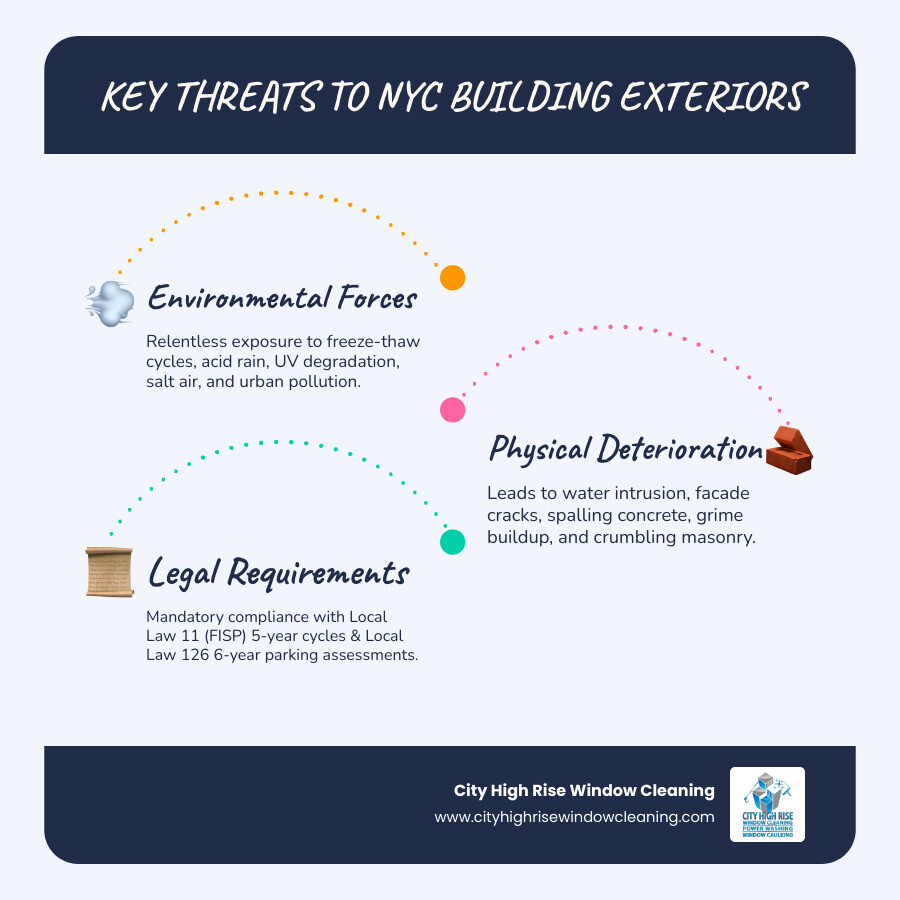
New York City’s building exteriors face relentless attack. Every single day, your facade battles freeze-thaw cycles, acid rain, UV degradation, salt air from the coast, and pollution from millions of vehicles. As one restoration expert puts it: “Buildings are always under attack from natural elements such as wind or rain or even wildlife.”
The result? Water intrusion. Facade cracks. Grime buildup. Spalling concrete. Crumbling masonry.
Ignoring these issues doesn’t just hurt curb appealit creates safety hazards and legal liabilities. Buildings over six stories must comply with Local Law 11’s five-year inspection cycle. Parking structures fall under Local Law 126’s six-year assessment mandate. Violations mean fines, unsafe conditions, and plummeting property values.
But here’s the good news: professional restoration transforms deteriorating buildings back into architectural assets. The process addresses root causes, not just surface symptoms. It combines advanced techniques like non-destructive testing with artisan-quality craftsmanship for materials ranging from historic brownstone to modern curtain walls.
Whether you manage a landmark building in Greenwich Village, a residential co-op on the Upper West Side, or a commercial property in Long Island City, choosing the right restoration partner protects your investment for decades.
I’m Brett Hochman, CEO of City High Rise Window Cleaning, and I’ve led exterior restoration NYC projects since 1977over 48 years of hands-on experience navigating DOB requirements, complex facade repairs, and historic preservation challenges across Manhattan, Brooklyn, Queens, the Bronx, Staten Island, Long Island, Westchester, and New Jersey. My team and I specialize in everything from facade restoration and high rise window caulking to Alucobond restoration, ensuring every project meets the highest safety and quality standards.
Why Your NYC Building’s Facade is Under Constant Attack
Living in or owning property in New York City, Long Island, Westchester, or New Jersey means your building’s exterior is constantly battling a unique combination of environmental and man-made challenges. These relentless forces conspire to accelerate wear and tear, necessitating regular exterior restoration NYC to maintain structural integrity and aesthetic appeal.
The exterior envelope of a building is a complex system, composed of numerous integrated components, materials, and assemblies. From the foundation to the roof, every part is exposed to the elements. What exactly are these common issues that necessitate exterior restoration in NYC buildings?
- Facade Cracks: These are often the first visible signs of trouble. Cracks can appear in masonry, concrete, or stone due to thermal expansion and contraction, structural movement, or material degradation. Left unaddressed, they become direct pathways for water.
- Water Intrusion: This is perhaps the most insidious threat. NYC’s frequent rain and snow, combined with wind, push moisture into every tiny crack and crevice. Water intrusion leads to a host of problems including mold growth, efflorescence, rusting rebar (spalling concrete), and deterioration of interior finishes. Promptly addressing water intrusion prevents further damage and costly repairs.
- Grime Buildup: Pollution from vehicle exhaust, industrial emissions, and even general urban dust accumulates on facades. This grime not only makes a building look neglected but can also contain corrosive elements that slowly eat away at the building materials. Regular, professional cleaning, often involving High Rise Hot Water Power Washing, is crucial.
- Freeze-Thaw Cycles: This is a major culprit in colder climates like New York. Water seeps into cracks, freezes, expands, and then thaws, creating larger cracks and eventually causing material to break off (spalling). This cycle is particularly damaging to masonry and concrete.
- Acid Rain: Atmospheric pollutants, when combined with moisture, create acid rain. This acidic precipitation slowly corrodes stone, metal, and concrete surfaces, contributing to the discoloration and deterioration of historical facades.
- UV Degradation: The sun’s ultraviolet (UV) rays relentlessly break down sealants, coatings, and some facade materials, causing them to become brittle, crack, and lose their protective qualities. This is why materials like silicone caulk, with its superior UV resistance, are often preferred for exterior applications.
- Salt Air: For buildings near the coast in Long Island, New Jersey, or even parts of NYC, salt spray carried by the wind can be highly corrosive to metal components and can accelerate the deterioration of masonry.
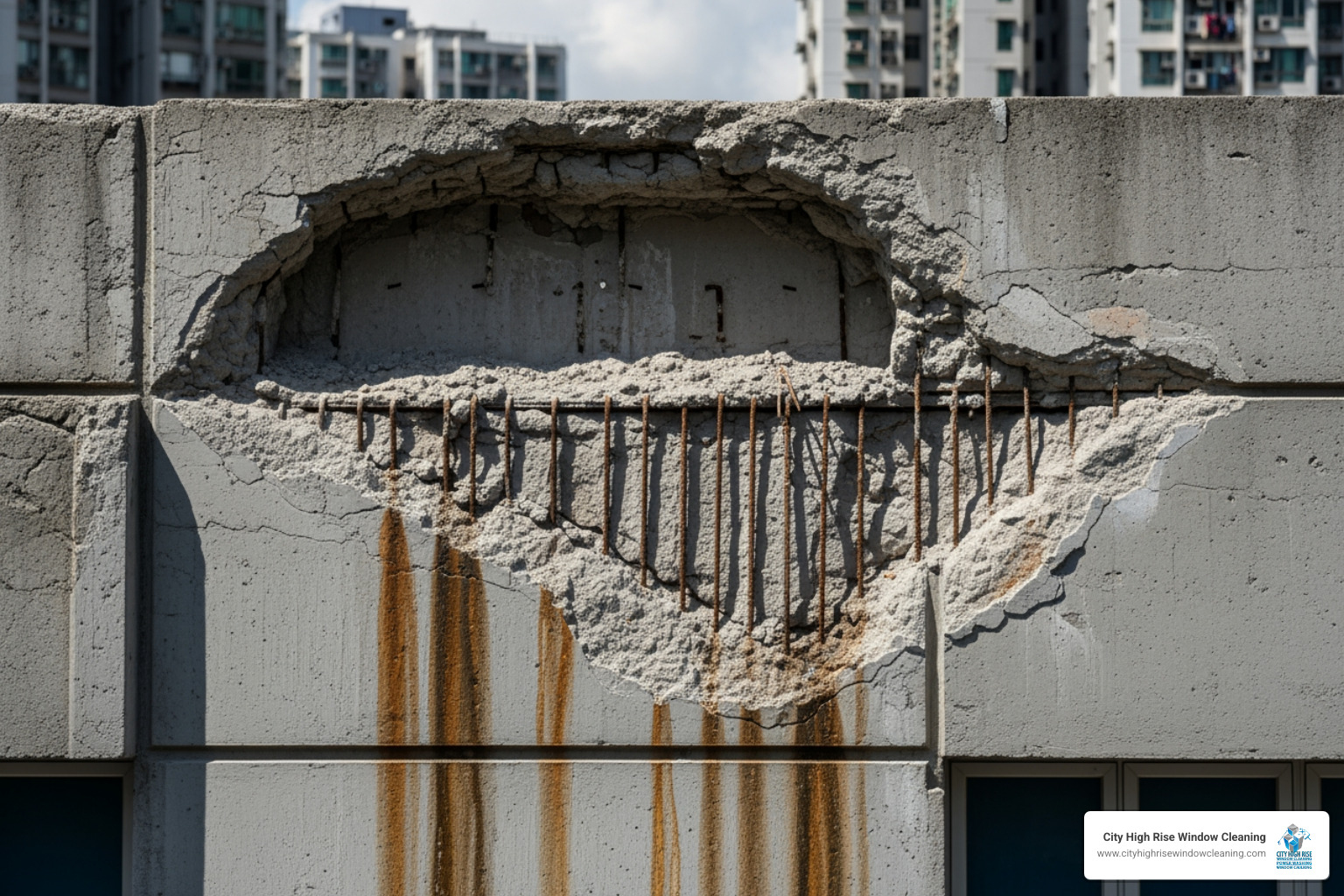
These environmental forces, including thermal movement, solar heat gain, and even seismic and wind forces, constantly impact building exteriors. The constant environmental cycles cause weathering, exacerbate defects, and create the need for building repairs and restoration. Without proactive exterior restoration NYC, these issues can compromise a building’s structural integrity, pose significant safety risks to occupants and pedestrians, and drastically reduce its property value.
Navigating NYC’s Legal Maze: A Guide to Local Law 11 & 126
Owning a building in New York City, especially a high-rise, comes with a unique set of responsibilities, largely dictated by local laws designed to ensure public safety. These regulations aren’t just bureaucratic problems; they are critical safeguards against potential hazards posed by deteriorating building exteriors. Understanding and complying with these laws is paramount for building owners and managers in NYC, Long Island, Westchester, and New Jersey. Failing to do so can result in hefty fines, legal liabilities, and, most importantly, compromise public safety.

Understanding Local Law 11 (FISP): The Facade Inspection Safety Program
Perhaps the most well-known and impactful regulation for NYC building owners is Local Law 11 of 1998, also known as the Facade Inspection Safety Program (FISP). This law mandates the periodic inspection of exterior walls and appurtenances of buildings taller than six stories.
- Buildings Over Six Stories: If your building exceeds six stories in height, it falls under the purview of Local Law 11.
- Five-Year Inspection Cycle: These buildings must have their facades inspected by a Qualified Exterior Wall Inspector (QEWI) every five years. The inspection cycle is divided into specific filing windows, and missing your window can lead to penalties.
- SWARMP vs. Unsafe Conditions: The QEWI will classify the building’s facade into one of three categories:
- Safe: No conditions that pose a threat to public safety.
- Safe With a Repair and Maintenance Program (SWARMP): Conditions that, if not addressed, could become unsafe in the future. A plan for repair must be submitted.
- Unsafe: Conditions that pose an immediate threat to public safety. These require immediate protective measures (like scaffolding or netting) and rapid repair.
- Qualified Exterior Wall Inspector (QEWI): Only a licensed architect or engineer with specific experience in facade inspections can serve as a QEWI. They perform close-up observations at all levels of a building’s exterior, ensuring nothing is overlooked.
Local Law 11 compliance is not just about avoiding fines; it’s about proactively identifying and addressing potential hazards before they become critical. It’s a key driver for exterior restoration NYC projects. You can Learn more about Local Law 11 for detailed information. For a step-by-step owner checklist, see our blog: Local Law 11 (FISP) Checklist for Building Owners.
Local Law 126: Ensuring Parking Structure Safety
While Local Law 11 focuses on facades, Local Law 126 of 2021 extends similar mandatory assessment requirements to parking structures. This newer regulation addresses a critical need for structural integrity and public safety in these heavily used facilities.
- Mandatory Assessments: All parking structures in NYC must undergo periodic assessments.
- Six-Year Cycle: These assessments are required every six years to ensure they are maintained in a safe condition.
- Structural Integrity: The law aims to prevent catastrophic failures by identifying and addressing structural defects, deterioration, and maintenance issues in parking garages.
- Preventing Collapses: Given the weight and constant stress on parking structures, regular inspections are vital to public safety.
Just like with facades, proactive maintenance and timely repairs are essential for compliance with Local Law 126. For more detailed information, visit Details on Local Law 126. Additionally, building owners in NYC should also be aware of Local Law 37 of 2008, which mandates similar inspection requirements for retaining walls every five years. These laws collectively underscore the city’s commitment to ensuring all elements of its urban infrastructure are safe and well-maintained.
The Complete Guide to Exterior Restoration NYC Services & Process
Starting on an exterior restoration NYC project can seem daunting, but with a comprehensive approach and experienced professionals, it becomes a well-managed change. My team and I understand that every building, whether a historic landmark or a modern high-rise, has unique needs. We combine traditional craftsmanship with modern technology to deliver exceptional results.
Primary Services for Exterior Restoration NYC
The scope of exterior restoration NYC is broad, encompassing a variety of specialized services designed to address every aspect of a building’s exterior envelope. Here are some of the most common and crucial services we provide:
- Facade Repair: This is often the centerpiece of exterior restoration. It involves repairing or replacing damaged elements of the facade, such as brickwork, terra cotta, stone, or concrete. This can range from patching cracks and repointing mortar joints to complete reconstruction of sections of the facade.
- Masonry and Brick Replacement: Deteriorated bricks or masonry units are carefully removed and replaced with new ones that match the existing facade in color, texture, and size. This is particularly important for historical preservation.
- Waterproofing and Caulking: Essential for preventing water intrusion, these services involve sealing cracks, joints, and penetrations in the facade. This includes applying new sealants around windows and doors, and installing waterproof membranes on roofs, plazas, and balconies. High-performance elastomeric coatings and silicone caulks are often used for their durability and UV resistance, offering warranties of up to 20 years.
- Concrete Restoration: For concrete structures, this involves repairing spalling concrete, patching cracks, and applying protective coatings to prevent further deterioration, often caused by rusting rebar.
- Window Restoration: Beyond just cleaning, window restoration addresses deteriorating frames, sashes, and glazing. This can involve repairing or replacing rotted wood, rusted metal, or damaged glass, often improving energy efficiency.
- Alucobond Restoration: Alucobond and similar aluminum composite materials are popular for modern facades. Restoration involves cleaning, repairing minor damage, and sometimes refinishing or recoating to restore their aesthetic appeal and protective qualities.
- Exterior High Rise Painting Services: Painting high-rise exteriors requires specialized equipment and expertise. This service not only improves curb appeal but also provides an additional layer of protection against weather elements.
The Typical Restoration Project Workflow
A successful exterior restoration NYC project follows a systematic process, ensuring thoroughness, safety, and compliance with all regulations. My team and I guide building owners through every step:
- Initial Inspection and Assessment: This crucial first step involves a comprehensive visual inspection, often supplemented by digital technology and high-definition imaging. For buildings over six stories, this would often be the Local Law 11 FISP inspection. We identify existing conditions, potential hazards, and the root causes of deterioration.
- Non-Destructive Testing (NDT): To gain a deeper understanding of the building’s condition without causing damage, we might employ NDT techniques. This can include radar, infrared thermography, or ultrasonic testing to detect hidden moisture, voids, or structural weaknesses within the facade.
- Detailed Proposal and Scope of Work: Based on the assessment, we develop a precise plan outlining the recommended repairs, materials to be used, estimated timelines, and a transparent, line-by-line cost breakdown. We work with management and ownership to meet their needs and requirements for a safe, functioning, and efficient structure.
- Permitting and Regulatory Compliance: Navigating NYC Department of Buildings (DOB) permits is complex. We handle all necessary paperwork, ensuring compliance with Local Law 11, Local Law 126, and other relevant codes before any work begins.
- Site Setup and Safety: Before physical work commences, the site is secured. This involves erecting scaffolding, installing safety netting, and implementing strict safety protocols in line with OSHA regulations. Licensed riggers and comprehensive insurance ($10,000,000) are non-negotiable for high-rise work.
- Restoration Work: This is where the change happens. Our skilled technicians, utilizing both time-honored techniques and modern equipment, carefully execute the approved scope of work, whether it’s masonry repointing, concrete repair, waterproofing, or painting.
- Quality Control and Supervision: Throughout the project, our project managers provide expert oversight, ensuring precision planning and flawless execution. Regular quality checks are performed to guarantee the highest standards.
- Final Inspection and Sign-Off: Upon completion, a final inspection is conducted to ensure all work meets contractual obligations, quality standards, and regulatory requirements. A final report is submitted to the DOB where applicable.
This systematic approach minimizes disruption, ensures safety, and delivers a lasting restoration that improves your property’s value and extends its lifespan.
Maximizing Your Investment: Choosing a Contractor and Long-Term Benefits
Investing in exterior restoration NYC is a significant decision for any property owner. It’s not merely an expense but a strategic investment that yields substantial returns in structural integrity, safety, energy efficiency, and overall property value. Choosing the right partner for this critical work is paramount.
How to Choose the Right Exterior Restoration NYC Contractor
With so many firms vying for your business, selecting the ideal contractor can feel overwhelming. Here’s what I recommend looking for:
- Experience (20+ Years): Restoration work, especially in a dynamic environment like NYC, requires deep expertise. Look for contractors with a long track record. My team at City High Rise Window Cleaning has over 30 years of experience specifically in high-rise exterior services across New York, Long Island, Westchester, and New Jersey.
- Insurance ($10M): High-rise work carries inherent risks. Ensure your contractor carries comprehensive insurance, preferably $10,000,000 or more in liability coverage, to protect your assets and third parties.
- Licensed Riggers: For any work involving scaffolding or suspended access equipment on high-rise buildings, licensed riggers are a legal and safety necessity.
- NYC DOB Compliance: The contractor must be intimately familiar with and strictly adhere to all NYC Department of Buildings regulations, including Local Law 11 (FISP) and Local Law 126. They should handle all permitting and compliance aspects seamlessly.
- Project Portfolio: Ask for examples of completed projects, ideally similar to yours in scope and architectural style. A strong portfolio, particularly in your local area (Manhattan, Brooklyn, Queens, Bronx, Staten Island, Long Island, Westchester, or New Jersey), demonstrates their capability.
- Transparent Pricing: Demand clear, line-by-line cost breakdowns. Avoid vague estimates. A reputable contractor will provide detailed proposals, including conceptual budgets, schedules of events, and value engineering options.
- Client Testimonials & References: What do other building owners say? Look for positive feedback regarding professionalism, timeliness, quality of work, and adherence to budget.
Proactive Maintenance vs. Costly Repairs
Many building owners fall into the trap of waiting for major issues to develop before initiating exterior restoration NYC. However, a proactive approach through regular maintenance offers significant advantages:
- Cost Savings: Addressing minor issues like hairline cracks or failing sealants early prevents them from escalating into costly structural problems. Think of it like taking your car for regular oil changes rather than waiting for the engine to seize.
- Extending Building Lifespan: Regular maintenance, including services like Commercial High Rise Window Cleaning and routine facade inspections, significantly prolongs the life of your building’s exterior components, delaying the need for extensive and expensive restoration projects.
- Preventing Catastrophic Failure: Proactive inspections can identify hidden dangers, such as compromised structural elements or severely deteriorated facades, preventing potential collapses or injuries.
- Maintaining Property Value: A well-maintained exterior signals quality and care, preserving and even enhancing your property’s market value. Neglected facades detract from curb appeal and can deter potential tenants or buyers.
- Energy Efficiency: Properly sealed facades, windows, and roofs prevent air and moisture infiltration, leading to lower heating and cooling costs.
Special Considerations: Historical Preservation
New York City boasts an incredible array of historic buildings, from iconic brownstones to intricate Beaux-Arts structures. Exterior restoration NYC for these landmark properties demands a specialized approach:
- Artisan-Quality Restoration: This isn’t just about repair; it’s about preserving architectural heritage. It often requires skilled artisans trained in traditional techniques, such as historic masonry repointing, stone carving, or terra cotta repair.
- Matching Original Materials: A key principle is using materials that match the original in composition, color, and texture. This ensures the restoration is historically accurate and maintains the building’s aesthetic integrity.
- Stone Restoration: Many historic facades feature intricate stone details. Restoration involves cleaning, patching, Dutchman repairs (inserting new stone), and consolidating deteriorating stone to prevent further loss.
- Terra Cotta: This glazed ceramic material was popular in early 20th-century architecture. Restoring terra cotta requires specialized knowledge to repair cracks, spalls, and recreate missing units.
- Brownstone Restoration: Iconic to many NYC neighborhoods, brownstone facades require delicate handling. Restoration involves cleaning, patching, resurfacing, and sometimes replacing damaged blocks to restore their distinctive appearance.
For these sensitive projects, a contractor with a deep understanding of historical architecture and conservation principles is essential. My team has extensive experience working on landmark properties, ensuring every project respects the building’s legacy while securing its future.
Frequently Asked Questions about NYC Exterior Restoration
How often does a building in NYC need exterior restoration?
Buildings over six stories require a FISP (Local Law 11) facade inspection every five years; parking structures follow Local Law 126 every six years. Do quick annual visual checks to catch issues early.
What is the difference between restoration and simple repairs?
Repairs fix isolated problems (a crack, a loose brick). Restoration is a building-wide plan that finds root causes, fixes them, and brings the exterior back to safe, code-compliant condition.
How much does facade restoration cost in NYC?
Costs vary by height, access/scaffolding needs, materials (brick, stone, terra cotta), and damage. We provide transparent, line-by-line proposals after a site visit in NYC, Long Island, Westchester, and New Jersey.
How fast can you mobilize?
We can usually schedule a site visit within 48 hours and deliver a line-item proposal in 3–5 business days. Emergency protection (e.g., sidewalk sheds/netting) can be arranged rapidly where required.
Do you handle DOB permits and LL11 filings?
Yes. We manage DOB permits, coordinate with QEWI partners for FISP filings, and use licensed riggers with $10M insurance for full compliance.
Your Partner in Preserving NYC’s Architectural Legacy
In summary, professional exterior restoration NYC is not just a maintenance task; it’s a critical investment in your property’s safety, compliance, and value. From navigating complex regulations like Local Law 11 to executing flawless repairs, the right partner makes all the difference. By addressing issues proactively, you protect your asset and contribute to the enduring grandeur of the New York City skyline.
Ready for a free quote? City High Rise Window Cleaning offers 24/7 live consultation. Call 917-749-8342 to speak to a live representative.


